Minimize Downtime to Protect Fire Protection System Uptime
Quick Answer: Integrated fire protection systems stay reliable when service teams plan visits, verify zones quickly, and fix faults before they snowball. By tracking fire protection system uptime, coordinating shutdown windows, and using clear documentation, facilities reduce downtime and keep compliance confidence high. Kord Fire Protection can act as a vital partner to streamline this work across Australia.
In the industrial, retail, and commercial world across Australia, a shutdown rarely happens in perfect weather and perfect timing. Yet the goal stays simple: protect people and property while keeping critical operations moving. That is where fire protection system uptime matters. When the system is online, monitoring continues, alarms stay trustworthy, and faults get caught early rather than during the busiest shift, when everyone suddenly forgets where the keys are.
Over the rest of this article, third person guidance will walk through practical methods to minimize downtime for integrated fire protection systems, including how Kord Fire Protection becomes a reliable partner for facilities that need speed, accuracy, and calm execution. For teams reviewing broader support options, full fire protection services fit naturally into uptime planning because maintenance, inspections, testing, and repairs all work better when they are coordinated instead of chased one by one.
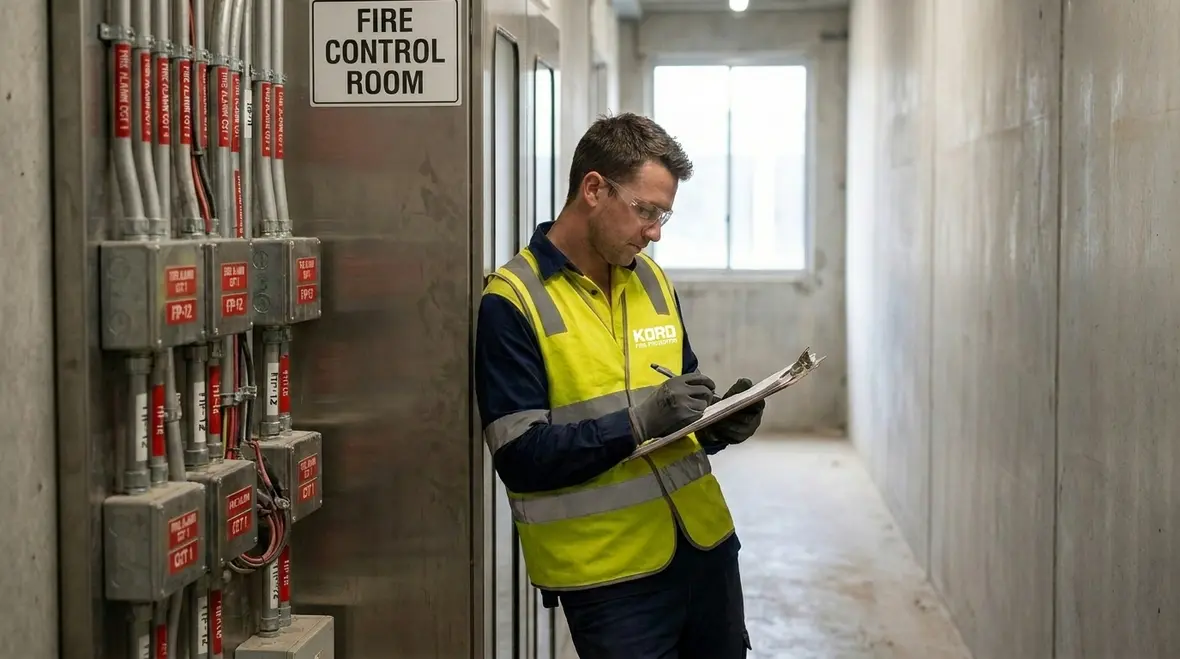
Why integrated downtime happens in the first place
Downtime usually shows up for reasons that sound harmless at first. A technician arrives, but the site access process takes longer than expected. A controller needs a new configuration, yet the paperwork is not ready. Then, a test requires a partial shutdown, and the operations team hears the word “test” and imagines the worst possible scene from a movie montage.
In reality, integrated systems include layers such as detection, alarm, suppression interfaces, smoke control, and building management signals. Therefore, a “small” maintenance action can ripple into multiple subsystems if the team does not plan for how signals flow. Consequently, downtime grows when technicians lack a clear map of interconnections, when replacement parts take time, or when testing requires more iterations than expected.
To protect fire protection system uptime, the right approach starts before any hardware touches a panel. It continues through the job with tight coordination, then ends with validation that every link still works. This is also why Kord Fire Protection’s guidance around system component integration matters in practice. When teams understand how devices, outputs, and monitoring paths interact, they spend less time guessing and more time restoring full protection.
The ripple effect of one delayed task
One delayed permit, one mislabeled zone, or one uncertain interface can hold up detector checks, output testing, notifications to occupants, and return-to-service approvals. That chain reaction is why integrated downtime rarely feels small once the clock actually starts running.
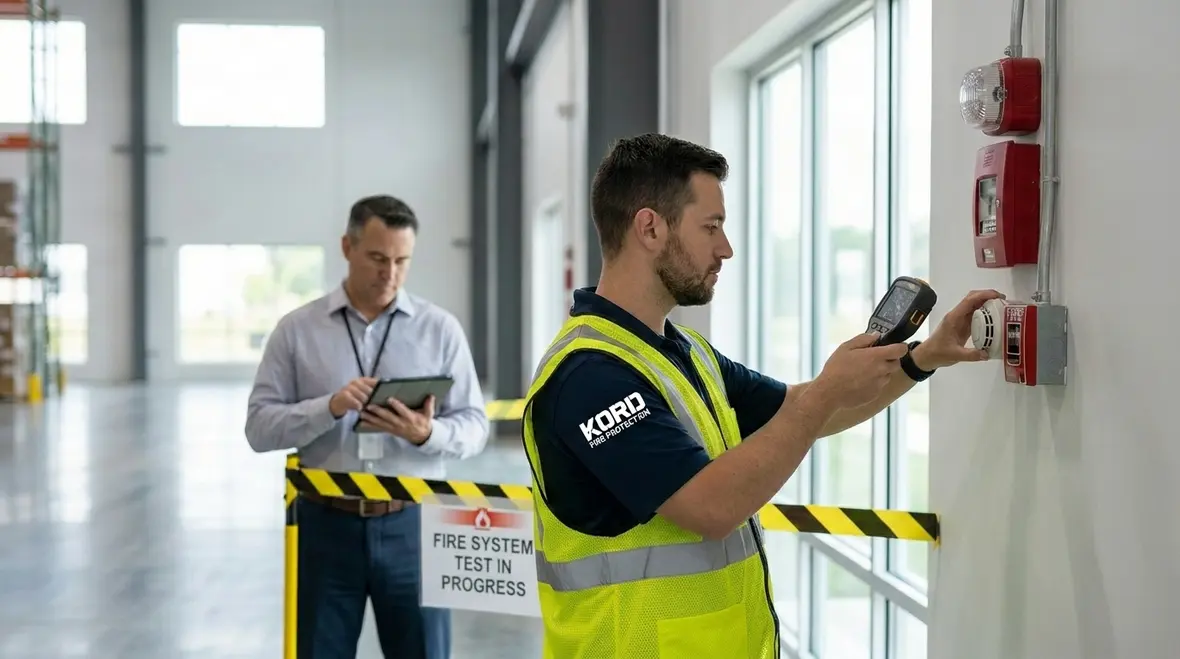
Plan maintenance like a controlled operation, not a surprise party
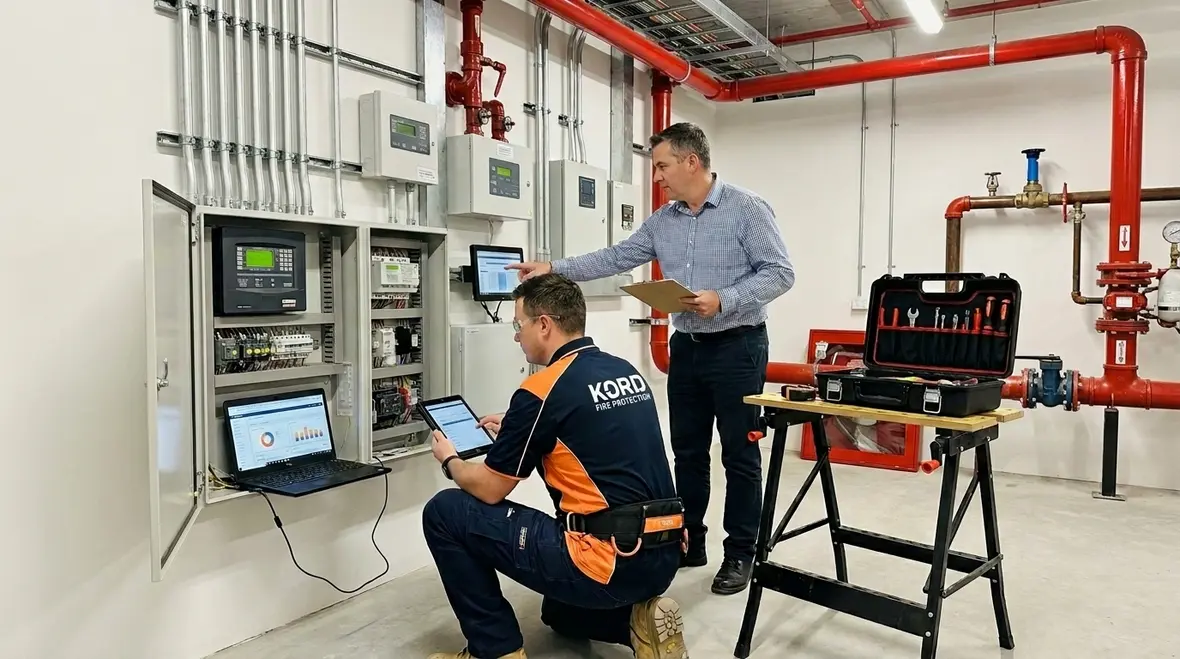
Successful teams treat maintenance windows as planned operations, not interruptions. First, they confirm the system scope: what zones, devices, and interfaces connect to the control panel and what software points map to each interface. Next, they schedule the smallest possible interruption window for the specific task.
Then they prepare logistics. That means staged parts, preloaded software, and correct test equipment on hand. Also, it means assigning one person to coordinate with operations, security, and any site contractor. If the facility has multiple tenants, the coordination gets even more important, because the fire system does not care whose lease is expiring.
Additionally, a simple but effective step improves speed: create a service checklist based on the site’s integration layout. This checklist reduces guesswork and ensures the job follows a consistent rhythm. As a result, the system spends less time in degraded mode and more time protecting the site.
What strong preparation looks like
- Confirmed access details and contact points
- Prechecked parts compatibility and software needs
- Defined shutdown window with fallback options
- Clear zone priorities for the most critical operations
- One coordinator keeping technicians and operations aligned
This approach lines up neatly with Kord Fire Protection’s broader view of fire protection servicing across the full lifecycle, where inspections, preventive maintenance, repairs, and upgrades are treated as connected responsibilities rather than isolated events. That mindset helps reduce the classic last-minute scramble before someone starts asking why the panel is still in trouble mode.
How to test integrated systems without taking them offline too long
Testing should prove function while minimizing operational impact. Teams typically use staged verification, meaning they test one section at a time and confirm correct behavior before moving on. For example, they may verify detector inputs and sounder outputs in a limited area, then expand only if the first phase passes.
They also apply smart sequencing. Instead of running broad tests across multiple zones, technicians validate key interfaces first, such as panel signaling paths and fault monitoring. After that, they test alarm notification and, where relevant, the interfaces that trigger other building functions.
Transition matters here. During each step, the job team communicates what will change, for how long, and what the fallback looks like if a fault appears. That is how facilities keep critical processes running while still achieving proof of compliance. In short, they test like professionals, not like someone experimenting with a DIY smoke alarm at 2:00 a.m.
Stage testing to contain risk
A zone-by-zone method gives the team a smaller problem space if anything behaves unexpectedly. It also helps operations know exactly which area is affected and when full coverage is restored. That structure is especially useful in integrated environments where one signal can trigger a surprisingly long list of responses.
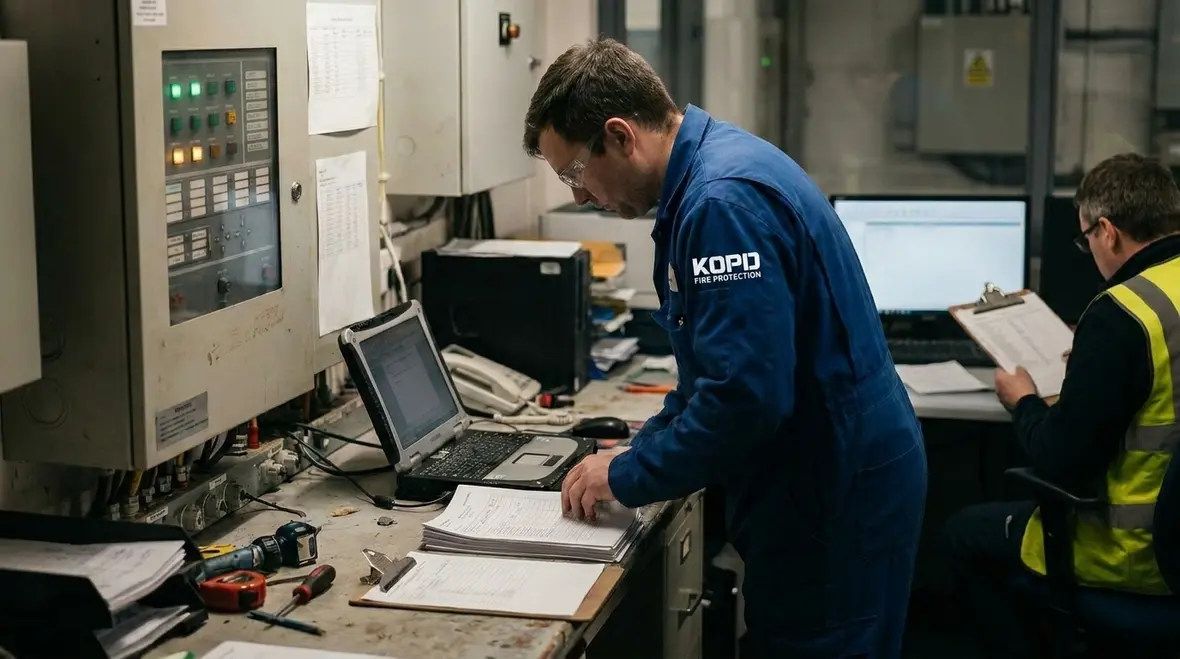
Use data to track and protect fire protection system uptime
Data turns downtime from guesswork into a controlled metric. Therefore, teams should capture baseline performance and then monitor changes after each service event. This includes recording device health, event logs, fault history, and time spent in any reduced capacity mode. Over time, the records show patterns such as repeat faults, recurring communication issues, or zones that require more frequent attention.
When managers see these trends, they can adjust maintenance frequency and ordering practices. For instance, if a particular circuit shows frequent trouble, they can investigate the root cause early instead of responding after a disruption. Furthermore, data helps the next service visit start faster. Technicians can review the last findings and walk straight to the likely causes.
In practice, this approach supports reliable fire protection system uptime because it reduces surprise failures. And yes, surprise failures can feel like a plot twist, but regulators and operations teams prefer steady, boring facts. Kord Fire Protection has also covered how to streamline fire alarm maintenance schedules, which fits naturally here because better scheduling and clearer records usually mean fewer avoidable outages.
Useful uptime metrics to track
- Time spent in reduced capacity mode
- Repeat faults by circuit, zone, or device type
- Verification results for interfaces and outputs
- Delay causes such as access, parts, or approvals
- Return-to-service time after maintenance or repair
Faster repairs through better parts, better access, and clear handover
Downtime often spikes when a repair turns into a waiting game. Maybe a component arrives late. Maybe the replacement model requires different configuration. Maybe the system needs a change approval that the facility has not prepared. To avoid that, service providers should bring the right parts strategy and the right process.
First, they verify parts compatibility before leaving the warehouse. Second, they confirm access routes, electrical isolation requirements, and safe work method procedures. Third, they keep documentation tight and current. When the handover package includes test results, device updates, and interface confirmations, the site team can approve the work quickly without chasing missing details.
Also, integrated systems demand clean handovers. If suppression interfaces or building management signals change, the facility needs to know exactly what was verified. Then, operations can return to normal with confidence, rather than wondering if the fire system is now smarter or just more confused.
This is where impairment planning and preventive maintenance support one another. Kord Fire Protection’s impairment management guidance reinforces the same point: extended downtime should be treated as an active risk, not a passive inconvenience while everyone waits for a signature.
Kord Fire Protection as a vital partner for integrated systems
In integrated environments, speed and precision matter, but so does calm communication. Kord Fire Protection supports facilities that operate across industrial, retail, and commercial settings in Australia by working like a partner, not a visitor with a tool bag.
That partnership shows up in three practical ways. First, Kord Fire Protection plans the service flow around operations priorities, so testing and repairs start quickly and finish without unnecessary holds. Next, it focuses on integrated verification, meaning technicians validate how devices and interfaces behave together, not just as isolated components. Finally, it strengthens continuity by improving documentation, so each service event builds on the last one.
As a result, facilities protect fire protection system uptime through fewer delays, fewer repeat visits, and faster approvals after testing. And in a world where “busy” can mean “we forgot about that until now,” that reliability becomes the difference between smooth compliance and a late-night scramble that no one wants. Facilities that want a wider readiness lens can also explore Kord Fire Protection’s article on fire protection for compliance and readiness in Australia, which complements uptime planning with broader operational context.
FAQ
Conclusion
Minimizing downtime for integrated fire protection systems requires planning, staged testing, and tight handovers, all aimed at protecting fire protection system uptime. When facilities track performance data and coordinate access and approvals, service becomes faster and less disruptive.
Kord Fire Protection can help your team execute integrated maintenance with precision and calm communication. If you want fewer interruptions and stronger confidence in compliance, contact Kord Fire Protection to plan your next service window.

Join Our Newsletter!
Get the latest fire safety tips delivered straight to your inbox From our Newsletter.