Commercial Fire Alarm Power Tips for Stable Safety in Australia
Quick Answer: Managers can keep commercial fire alarm systems reliable by pairing the right power design with routine testing. They should verify backup batteries, supervise power loss signals, and schedule inspections before faults turn into late-night surprises. To do this well across Australia, kord fire protection can act as a hands on partner for planning, installation support, and ongoing service.
Near the start of that effort, it helps to review broader fire alarm systems support and practical fire alarm service options so the site plan is tied to real maintenance, not just good intentions.
Why stable power matters for commercial fire alarm systems
Commercial fire alarm systems do not forgive wishful thinking. When smoke or heat detection must work, the control panel needs steady voltage, clean signal paths, and dependable backup energy. That is where Commercial Fire Alarm Power becomes a core management issue, not a “nice to have.”
In industrial, retail, and facilities across Australia, power stability affects everything from notification appliance behavior to panel supervision and fault reporting. And if you have ever watched an alarm system “briefly” misbehave, you know the punchline: it always happens when people least want a mystery. So managers should build a practical, test based approach that protects life safety and reduces downtime.
Power reliability is part of the whole fire safety picture
Stable alarm power is not just an electrical issue sitting quietly in a plant room. It shapes whether detection, notification, and supervision all perform the way teams expect during normal operations and during an actual incident. That bigger systems view aligns well with Kord Fire’s discussion of how commercial building fire safety systems work, where each layer of protection depends on the others staying predictable.
Build a power plan that matches the site reality
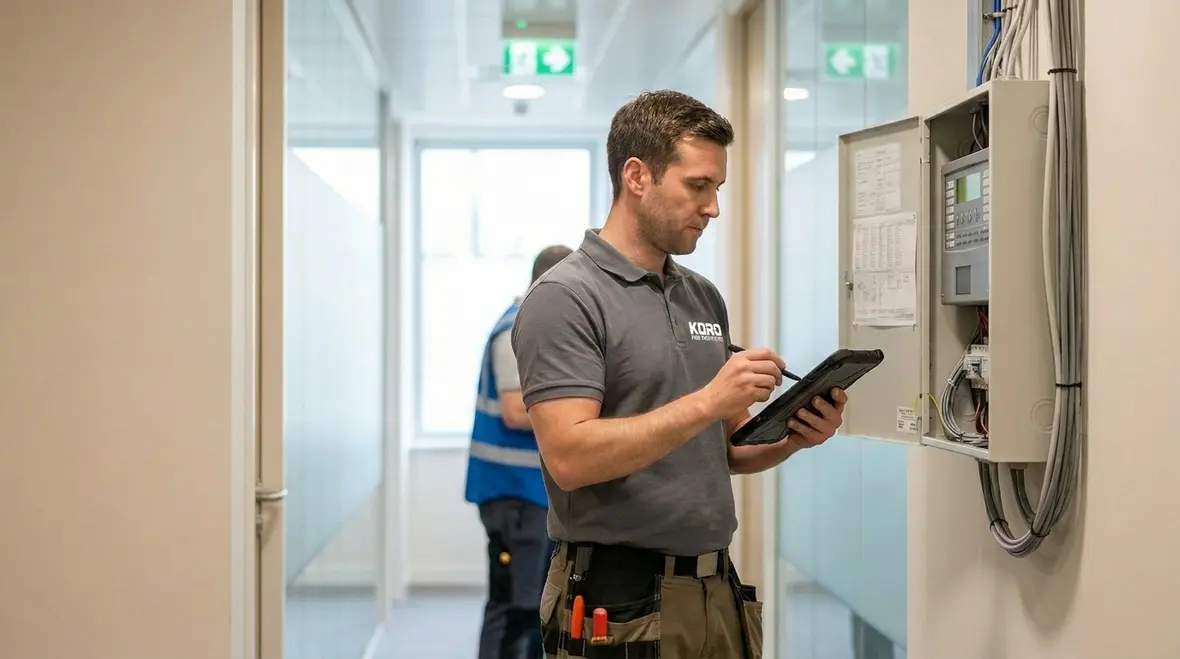
First, a stable power strategy should reflect how the building actually operates. For example, warehouses often face spikes from heavy machinery, while retail sites can see frequent tenant fit out changes that touch wiring routes. As a result, managers should ensure the system design accounts for load characteristics, cable quality, and panel location.
Next, they should confirm that the power source selection aligns with local expectations and your facility’s electrical setup. If a site uses shared transformers or experiences variable supply from upstream, the alarm power must be engineered for that environment. Additionally, managers should avoid vague statements like “the electrician said it’s fine.” Fine is not a standard. Supervised performance is.
Then they should document expected operating modes. This includes normal conditions, alarm activation, and power loss events. A clear plan helps teams respond fast, and it prevents “tribal knowledge” from replacing procedures.
Site conditions should shape decisions, not assumptions
Good planning gets much easier when managers review how the fire alarm system interacts with other building systems, power sources, and operational changes. That same practical mindset appears in Kord Fire’s article on commercial fire alarm integration for safe building automation, which reinforces the idea that life safety systems should behave predictably, not improvisationally.
Battery backup: treat it like safety critical equipment, not a checkbox
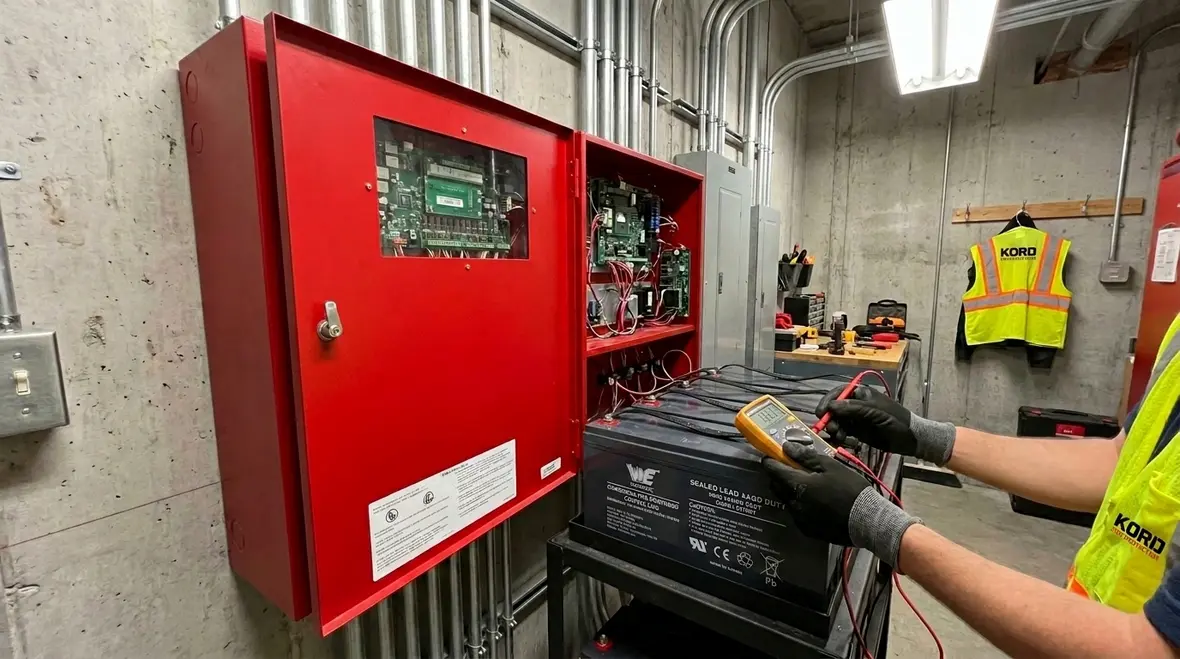
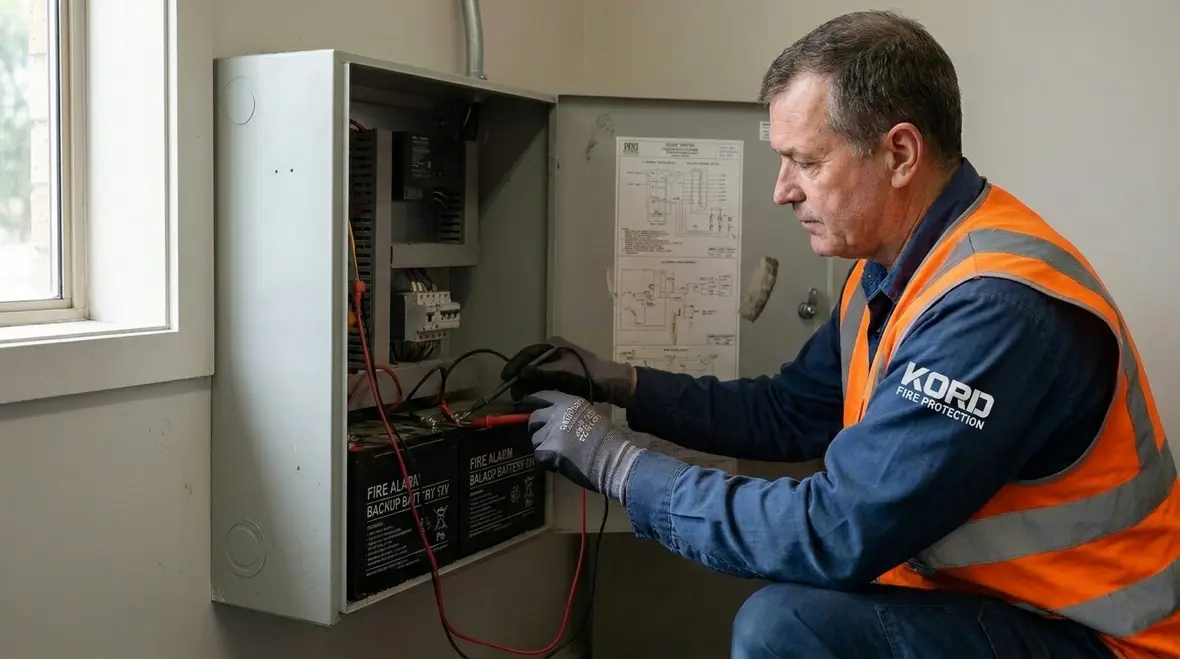
When power drops, the battery backup becomes the difference between an alarm that works and one that only looks busy. Therefore, managers should verify battery capacity and runtime requirements based on the actual load, including sounders, strobes, and any auxiliary devices.
Also, they should watch for the silent killers: aging batteries, poor maintenance, and temperature extremes. Batteries do not age evenly. Some fail early, some sag slowly, and some decide to “perform” right after a service visit. That is why routine checks matter, and why Commercial Fire Alarm Power planning should include ongoing battery health monitoring.
To keep it practical, managers can require service providers to report specific metrics such as voltage under load and charge stability. Moreover, they should schedule replacements based on manufacturer guidance and observed test results, not the calendar alone. In facilities with frequent changes, battery readiness must be revisited after major upgrades.
Redundancy matters when the building power does not cooperate
For a useful companion read, Kord Fire’s fire alarm system power redundancy article explains why backup power is not “extra for extra’s sake.” It is the quiet reason a system can still supervise, alert, and support evacuation when the main supply decides to disappear at the worst possible time.
Supervision and fault reporting: catch problems before occupants do
A good power setup includes supervision that can detect trouble conditions and alert the right people. Consequently, managers should confirm that the panel monitors key power paths, including incoming supply and regulated outputs. If the system only logs faults without notifying the correct parties, the time to react shrinks fast.
Then they should test the notification and fault pathways, not just the alarm circuit. For instance, a supervised loop fault might show up on the panel but never reach the monitoring workflow your team relies on. So managers should ensure alarms and faults route to intended response channels.
It also helps to review how staff handle trouble signals. If the response process is unclear, a fault message becomes office folklore. Therefore, teams should define who investigates, how quickly they act, and how they record outcomes. That way, the system stays trusted, and the investigations stay boring. Boring is good. Boring means predictable.
Monitoring workflows should be as reliable as the panel itself
This is also where broader service support earns its keep. The Kord Fire fire alarm systems page highlights installation, monitoring, maintenance, inspections, and repairs, which fits naturally with a manager’s need to keep trouble signals from turning into unresolved background noise.
Power quality controls that reduce nuisance faults and downtime
Stable Commercial Fire Alarm Power is not only about keeping voltage present. It is also about keeping it stable. Power quality problems such as voltage dips, noise, and harmonics can create intermittent faults, delayed device operation, or repeated resets.
Managers can reduce these risks by coordinating with facilities and electrical teams to understand site power behavior. Then they can choose the right protection approach for the alarm panel and related equipment. That might involve surge protection, proper grounding practices, and careful routing of alarm cables away from high noise sources.
Additionally, they should verify that any changes in the building do not undermine the alarm power plan. New HVAC controllers, large motors, and recent retrofit work can alter electrical conditions. As a result, change management should include a “fire alarm power impact” check. If you skip that step, you are basically asking the alarm system to file an incident report in real time. Spoiler: it will.
Finally, managers should keep installation details sharp. Proper cable termination, correct device addressing, and clean connections protect the system when power conditions are less than perfect.
How kord fire protection can support managers across Australia
Keeping commercial fire alarm power dependable takes more than good intentions and a laminated checklist. It takes coordinated service, documentation, and clear communication between site teams and the fire protection partner. That is where kord fire protection can become a vital ally.
They can help managers by supporting audits of power readiness, advising on battery and power supervision expectations, and aligning service schedules with the way the facility actually runs. Moreover, they can assist with ongoing maintenance that focuses on performance, not just paperwork.
In industrial, retail, and multi site operations, managers often juggle competing priorities like production targets, store openings, and contractor schedules. kord fire protection can help reduce the friction by bringing structured processes that keep response times clear and testing outcomes traceable. In other words, they help keep your alarm system from turning into a plot twist.
And because Australia spans diverse climates and building types, having a partner that understands site conditions helps managers stay confident that the power strategy remains effective, not theoretical.
Support works best when it is tied to real operating demands
Managers looking for a wider context can also point teams to Kord Fire’s article on commercial fire alarm integration for building automation safety. It reinforces a simple truth: when alarm systems coordinate cleanly with building operations, response becomes calmer, clearer, and less dependent on heroics.
Service cadence, testing, and records that stand up to scrutiny
Managers should set a maintenance cadence that matches risk, usage patterns, and system complexity. Then they should define what gets checked each service cycle, including battery condition, power supervision operation, and any loop or notification equipment tied to power load. This avoids the common trap: doing “enough” until the system proves otherwise.
Next, they should ensure service records tell a clear story. Each entry should show what was tested, what values were measured, and what actions occurred. If a fault appears, the records should reveal whether it is a recurring issue or a new one caused by recent changes.
Additionally, they should align testing with operational windows. Testing during peak production or peak customer hours can raise safety and business risk. Therefore, scheduling matters, and so does coordinating access with site teams.
To keep leadership informed, managers can present short summaries that explain risk status, upcoming actions, and any power related concerns. That keeps the conversation businesslike, and it prevents alarm maintenance from becoming an annual surprise party.
Clear records make trends easier to spot
This is one of those areas where discipline beats drama. A clean service history helps teams see battery decline, repeat troubles, and post retrofit issues before they stack up into a major reliability problem. It also gives managers a more confident way to discuss risk, budgets, and service priorities with leadership.
FAQ: stable alarm power for facility managers
Conclusion: act now to protect uptime and safety
Managers can keep commercial fire alarm systems dependable by planning power properly, testing battery backup, and using supervision to catch faults early. They should also treat change management as a power risk exercise, not a quick sign off. The real win is not just fewer faults. It is a safer, calmer building where the alarm system behaves like a professional, not a prankster.
If you want a partner who can help you run this program across industrial, retail, and facilities sites in Australia, contact kord fire protection today. Your alarm system will thank you, even if it never says it out loud.

Join Our Newsletter!
Get the latest fire safety tips delivered straight to your inbox From our Newsletter.