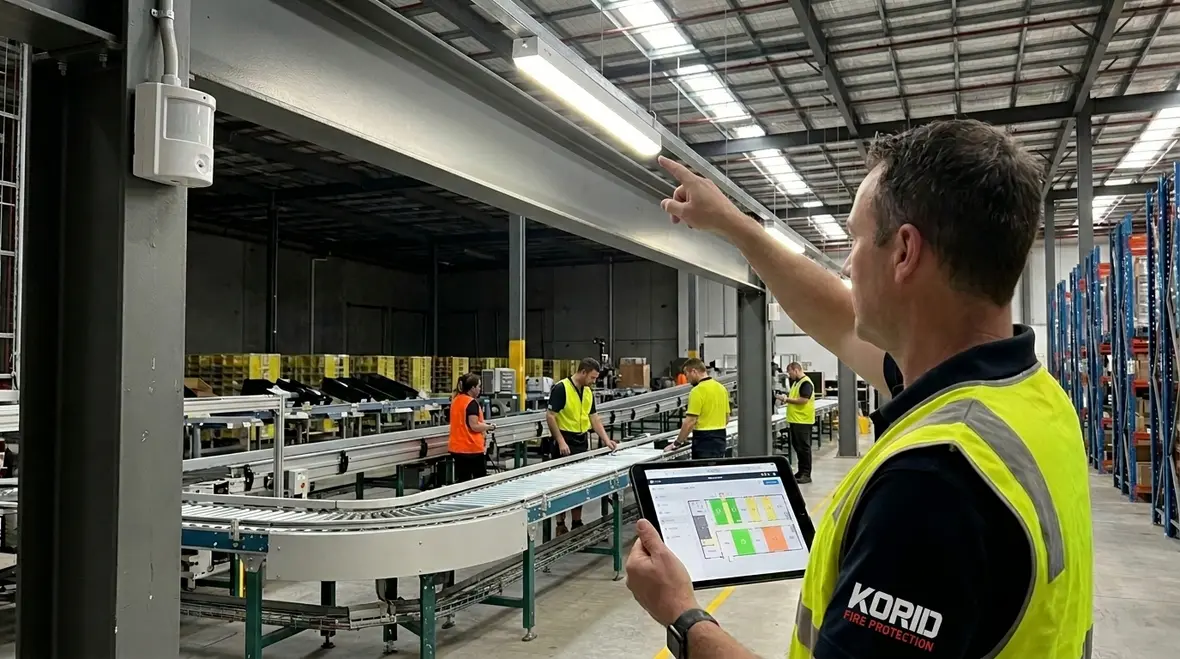
Commercial Lighting Control Optimization for Australia
Quick Answer: Commercial sites cut bills when their lighting systems stop wasting electricity. Through commercial lighting control optimization, facilities fine tune schedules, dimming levels, sensor settings, and zoning so lights only run when people need them. The result lowers energy use, extends lamp life, and reduces maintenance calls.
In Australia’s industrial and retail spaces, lighting often runs like a reluctant extra in a bad movie: it shows up when it is not needed, stays too long, and drains the budget while doing it. That is why commercial lighting control optimization matters. Done well, it reduces energy waste without dulling the experience for workers or customers. And when facilities pair that work with the right partner for safety, operations get calmer, steadier, and more reliable. For teams planning broader coordination across building systems, emergency lighting and fire safety controls should be part of the conversation early, not bolted on after everyone is already tired and mildly annoyed.

What commercial lighting control optimization fixes first
Facilities usually start with obvious waste. Lights run at full output long after occupancy ends, or controls act like they are “guessing” instead of measuring real conditions. With commercial lighting control optimization, teams typically audit four things early, then correct them in order of impact:
- Schedules that drift away from real shift patterns, including nights, weekends, and seasonal changes
- Zoning that does not match how spaces actually work, such as loading bays, aisles, corridors, and break areas
- Sensor and photocell thresholds that stay too sensitive or not sensitive enough, causing frequent on off cycles or unnecessary dimming
- Dimming setpoints that fail to balance comfort with energy savings, making “saving power” feel like “working in a cave”
Then the site moves from guesswork to control. Instead of treating lighting as a simple switch, the facility treats it like a system with inputs, outputs, and performance targets. In other words, lights stop acting like the intern who reads the room wrong.
The early wins that usually matter most
The first gains rarely come from flashy hardware. More often, they come from correcting settings that no longer match how the building actually behaves. A warehouse may have expanded a picking area, a retailer may have changed trading patterns, or a workshop may now run staggered shifts that the original schedule never expected. Controls that once made sense slowly become expensive habits. Optimization pulls those habits into the light and asks whether they still deserve a spot in the budget.

How optimized controls reduce operational costs in real terms
Operational cost reduction comes from electricity savings, less maintenance, and fewer downtime headaches. When commercial lighting control optimization aligns with how a building behaves, it reduces waste in multiple lanes at once.
Electricity
Optimized strategies reduce lighting load by using dimming and switching intelligently. For example, daylight can carry a portion of the work in retail and warehouse adjacent areas, while dimming preserves the target lux levels where people actually perform tasks. As a result, the facility avoids “always on” behavior and stops paying premium rates for light nobody is using.
Maintenance
Better control logic extends the life of lamps and drivers by reducing unnecessary cycling. Also, it lowers the number of service visits tied to nuisance faults. Fewer call outs means fewer interruptions, fewer admin hours, and less time spent chasing symptoms instead of solving root causes. That is the unglamorous kind of improvement that operations managers tend to love because it makes the week less noisy.
Compliance and risk
Lighting control logic also supports safer operations. That includes correct behavior for emergency related lighting interfaces, occupancy based scenes, and consistent operation across zones. In busy industrial sites, small inconsistencies turn into big frustrations. Optimization helps remove those surprises.
And just to keep it human, if lights behave properly, staff stop joking that the building is “running on vibes.” That is not scientific, but it does improve morale.
There is also a financial side effect that often gets missed in the first conversation: cleaner control strategy can make fault finding faster. When zones, scenes, and sensor responses behave predictably, technicians spend less time untangling whether the problem is a failed component, a bad setting, or a schedule somebody forgot to update three managers ago. Less diagnostic confusion means faster restoration and less disruption to the people trying to do real work under those lights.
Design smarter zoning and scheduling for industrial and retail
Industrial sites and retail facilities rarely follow a one size schedule. Therefore, optimization must reflect reality, not the brochure version of reality. Commercial teams often start by mapping lighting zones to actual use patterns.
Zoning that matches behavior
Instead of grouping everything by floor, teams group by function. Loading areas, production corridors, storage zones, and checkout environments can demand different control strategies. For example, a warehouse walkway might tolerate deeper dimming during low occupancy, while a retail fitting area needs stable light levels for display quality.
Schedules that respect shifts
Then they build schedules that follow staffing and workflow. A schedule should cover not only open hours, but also pre start ramp up, post close cool down, and cleaning cycles. In many facilities, these “in between” periods are where waste hides.
Seasonal daylight planning
In Australia, sunlight patterns shift through the year. Photocell based control works best when the facility sets appropriate daylight reference behavior. As daylight changes, the system maintains target lighting levels without flipping into constant adjustments.
Ultimately, commercial lighting control optimization becomes an operational tool. It supports consistent conditions, which helps workers see hazards clearly and shoppers experience products as intended. It also creates better conversations between facilities, operations, and safety teams because each group can understand why a zone behaves the way it does instead of treating the controls as mysterious ceiling politics.
Use sensors and dimming with the right targets
Controls fail when they aim for the wrong numbers. If sensors detect movement, but the system still assumes the space is empty, staff complain. If sensors react too fast, the lighting cycles. If dimming drops too far, performance suffers. Therefore, optimization uses measurable targets and practical rules.
Set occupancy delay wisely
Facilities tune hold times so lights stay on long enough for tasks to finish. For example, a picking station needs enough time for movement between steps, while an office area might require a shorter hold time. The goal is fewer transitions, not constant “light blinking,” unless the site is secretly filming a music video.
Calibrate photocell behavior
Teams verify how the system reacts to changing daylight, including glare and reflections. They also ensure the photocell location represents the area it controls. A sensor placed too near a bright window can undercut performance in darker zones.
Protect the experience at lower output
Dimming setpoints should preserve visual comfort. Many facilities use layered control: lights near work zones hold steadier output, while peripheral areas dim more aggressively. That reduces energy without making the whole space feel “dark by design.”
When these targets align, the system runs smoothly. Then staff stops noticing the controls, which is the highest compliment in building operations. Invisible competence is still competence, and in facilities management it might be the best kind.
Commissioning and tuning: where savings become real
Even great hardware can underperform without commissioning. Commercial lighting control optimization must include tuning steps that verify behavior across time, zones, and occupancy patterns. Otherwise, the building ends up with an expensive control panel that behaves like a fancy alarm clock.
During commissioning, teams typically:
- Validate switching and dimming behavior during peak and low occupancy periods
- Review fault logs and confirm sensor health and coverage
- Test schedule overrides for cleaning, maintenance, and events
- Confirm integration points, including emergency related interface requirements
- Document settings so future staff can maintain performance
Next, facilities run a tuning phase after go live. That matters because real life brings surprises: rearranged work areas, new equipment, altered foot traffic, and unexpected usage patterns. As a result, optimization improves over time instead of freezing at launch.
This is also the point where strong documentation earns its keep. If schedules, sensor thresholds, and override behaviours are clearly recorded, future adjustments take minutes instead of turning into a scavenger hunt. Good commissioning is not just about proving that the system works today. It is about making sure the next team can keep it working when the building changes, because the building always changes.

Why kord fire protection becomes a vital partner
Lighting controls do not operate in isolation, especially in commercial environments where safety systems must work consistently. That is where kord fire protection can become a vital partner with this service or job. They help facilities treat safety and operational performance as one plan, not two separate checklists.
When lighting and life safety systems interact, coordination matters. For example, control strategies may influence how areas behave during events, and how staff navigates spaces in low light conditions. Therefore, facilities benefit from aligning lighting operation with fire safety design intent, documentation, and compliance needs. For broader support across alarms, sprinklers, extinguishers, and coordinated service planning, full fire protection services fit naturally into that bigger operational picture.
In practical terms, partnering with kord fire protection supports smoother handover and fewer late changes. It helps ensure that lighting control decisions do not accidentally conflict with safety expectations. And when teams coordinate early, they reduce rework, protect schedules, and keep the building operating like it should, not like it is improvising.
Think of it as the difference between a well rehearsed play and a spontaneous school production. One has timing, the other has chaos and a lot of apologising.
FAQ: Commercial lighting control optimization
Final CTA: reduce waste, protect safety, and move with confidence
Facilities across Australia can cut electricity use, reduce maintenance, and improve day to day operations when they implement commercial lighting control optimization with careful zoning, commissioning, and ongoing tuning. The point is not to make lighting complicated. The point is to make it intentional, measurable, and responsive to how the site actually functions.
To keep safety and performance aligned, partner your lighting work with kord fire protection so the building runs smoothly, not unpredictably. Reach out to plan an audit, define targets, and schedule a commissioning pathway that delivers measurable results without leaving operations to cross their fingers and hope for the best.

Join Our Newsletter!
Get the latest fire safety tips delivered straight to your inbox From our Newsletter.