
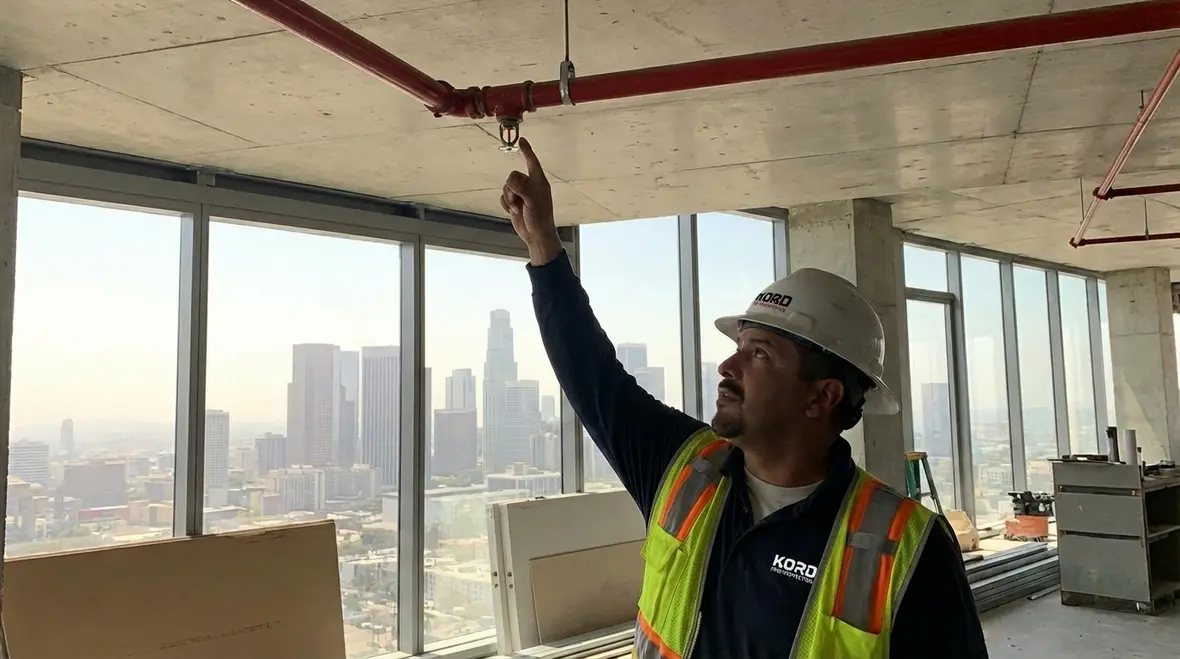
Los Angeles Commercial Fire Sprinkler Requirements Guide
In Los Angeles, where ambition rises as high as the skyline and wildfires make the evening news far too often, safety is not a suggestion. It is a requirement. Los Angeles commercial fire sprinkler requirements exist to protect lives, property, and business continuity in a city that does not tolerate preventable disaster. From high rise offices in Downtown to neighborhood retail shops in Silver Lake, every commercial structure must meet strict codes designed to reduce fire risk and limit damage.
And while the regulations may read like a stack of bedtime stories written by engineers, professionals such as Kord Fire Protection technicians break them down into plain language. They explain what matters, why it matters, and how to meet the standards without losing sleep or budget. Because in this town, safety is not just compliance. It is survival with style.

Understanding Fire Sprinkler System Requirements for Commercial Buildings in Los Angeles
To understand the local rules, one must start with the framework behind them. California adopts the California Fire Code, which Los Angeles then amends with city specific provisions. Therefore, commercial property owners must follow both state and local regulations, including city driven programs like Chief’s Regulation 4 testing requirements for many fire protection systems.
Most new commercial buildings require automatic fire sprinkler systems. In fact, the city mandates sprinklers in nearly all newly constructed commercial occupancies, often once the fire area exceeds key thresholds under local amendments to the fire code. Older buildings undergoing major renovations often trigger retrofit requirements as well. So while that charming brick warehouse might look like it belongs in a superhero movie, it still needs modern protection.
Kord Fire Protection technicians often explain that requirements depend on occupancy type, square footage, height, and fire hazard classification. For example, a restaurant kitchen presents different risks than a corporate office. Therefore, the sprinkler design must match the specific use of the space and align with guidance similar to the city focused overview in their Commercial Fire Sprinkler System Requirements 101 (Los Angeles Edition) resource.
Additionally, Los Angeles enforces strict water supply standards. Systems must connect to approved water mains and, in many cases, include backflow prevention devices. This ensures clean public water remains uncontaminated. Safety, after all, should not come with side effects.
How Do Los Angeles Commercial Fire Sprinkler Requirements Apply to Different Building Types?
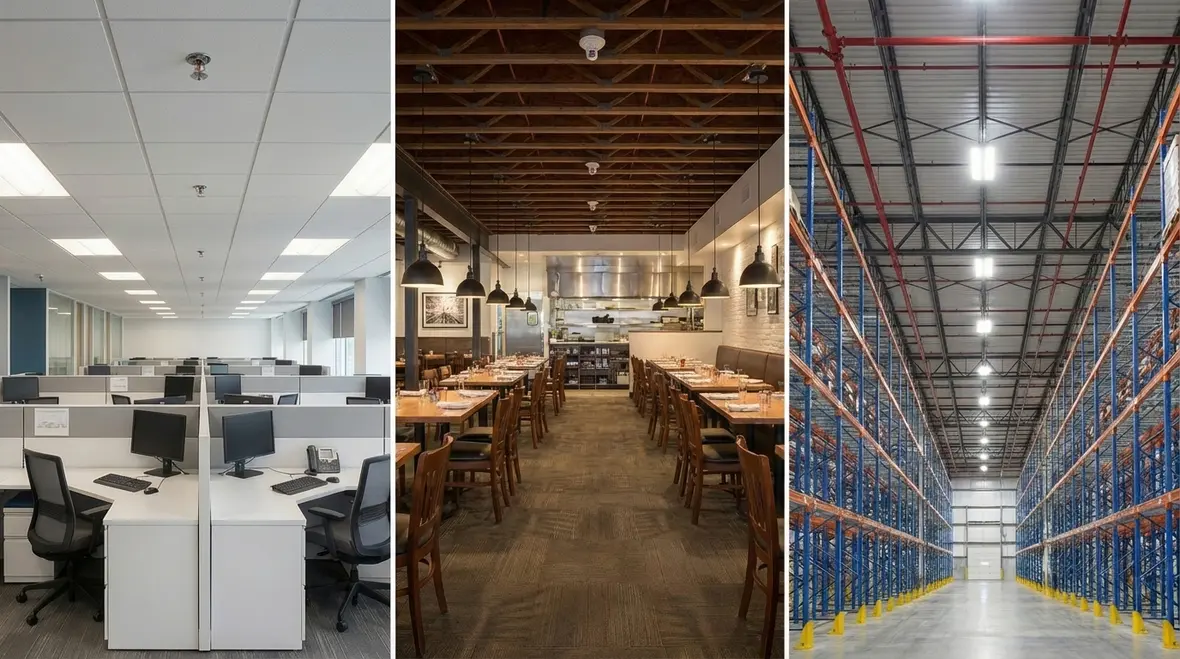
Business owners often ask how these regulations apply to their specific property. The answer depends on occupancy classification. The fire code groups commercial buildings into categories such as:
Assembly Occupancies
Restaurants, theaters, and event venues where people gather in large numbers. Because crowd safety is critical, sprinkler coverage must be thorough and often includes additional alarm integration. In these spaces, Kord Fire Protection frequently pairs automatic sprinklers with monitored fire alarm systems and voice evacuation features to support safe, fast egress.
Business Occupancies
Offices and professional services. While fire loads may be lower, open floor plans require carefully calculated sprinkler head spacing to ensure full coverage. Changes such as new partitions, added conference rooms, or tenant improvements can alter sprinkler effectiveness and may trigger layout adjustments or even sprinkler clearance reviews.
Mercantile Occupancies
Retail stores and shopping centers. Storage height plays a key role here. Higher shelves mean different sprinkler designs to control fast spreading flames. Merchandising decisions, seasonal stock, and back of house racking all influence hazard classification and required sprinkler density.
Industrial Occupancies
Manufacturing and warehouses. These spaces often require specialized systems such as ESFR sprinklers designed for high piled storage. Combustible pallets, plastics, and flammable liquids raise the stakes, making tailored system design essential for compliance and protection.
Because each occupancy presents unique hazards, system design must follow detailed hydraulic calculations. Kord Fire Protection technicians frequently note that a one size fits all approach does not work. Fire does not negotiate, and neither should compliance.
Design Standards and Technical Components That Matter
Behind every sprinkler head sits a network of engineering decisions. Although the visible components may look simple, the design process demands precision and careful alignment with standards like NFPA 13 for installation and NFPA 25 for ongoing inspection, testing, and maintenance.
Water demand and hydraulic calculations
First, engineers calculate water demand. They determine how much water must flow and for how long to control a fire. Consequently, pipe sizing, pressure requirements, and supply connections must align with those calculations. In areas with low city water pressure, this may mean adding a fire pump and dedicated tank to meet flow requirements.
Sprinkler head placement and obstructions
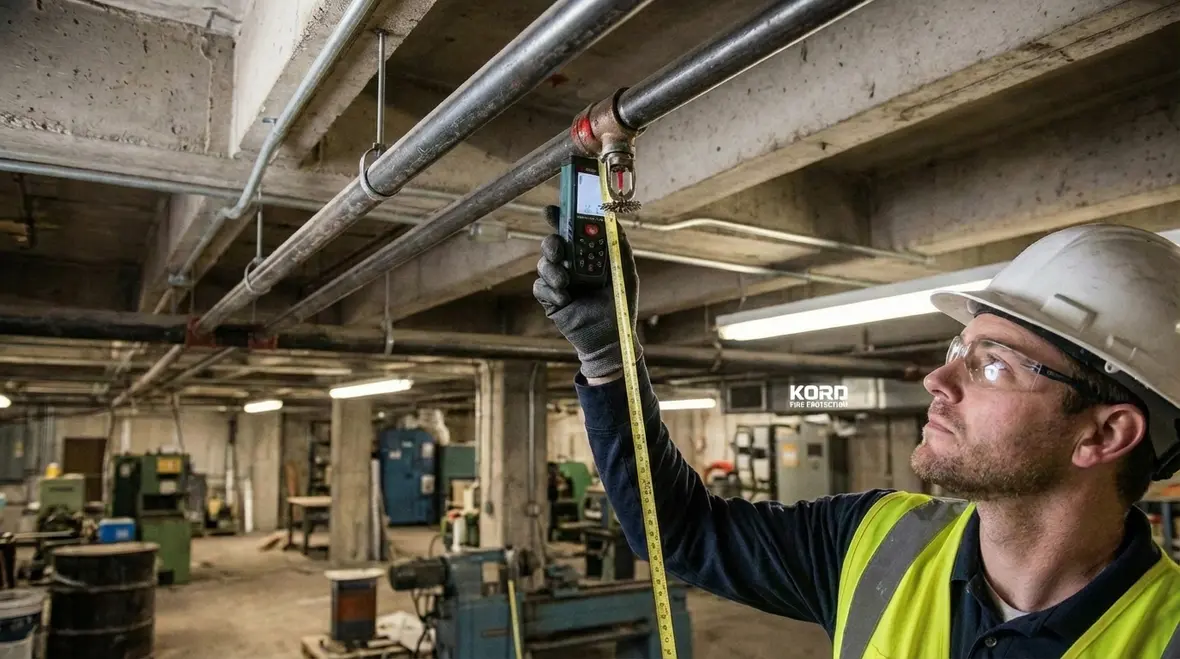
Next comes sprinkler head placement. Spacing depends on ceiling height, obstruction presence, and hazard level. For example, exposed beams or ductwork can block spray patterns. Therefore, designers must adjust layout to prevent shadowed areas and maintain the critical 18 inch clearance below deflectors commonly referenced in Los Angeles sprinkler clearance rules.
Alarm integration and monitoring
Alarm integration also plays a central role. Commercial sprinkler systems in Los Angeles typically connect to monitored fire alarm systems. When water flows, the alarm triggers, alerting occupants and emergency services. In a city known for traffic, every saved minute counts, and central station monitoring helps ensure the fire department gets the message quickly.
Seismic bracing and local risk factors
Moreover, seismic bracing remains a major consideration. Because Los Angeles sits in earthquake country, sprinkler systems must withstand seismic movement. Proper bracing prevents pipe rupture during tremors. It is one thing to survive an earthquake. It is another to deal with a flooded office afterward.
Kord Fire Protection technicians often walk clients through these components step by step. They replace technical jargon with clear explanations. In doing so, they transform what feels overwhelming into something manageable.
Installation, Permits, and Inspections in Los Angeles
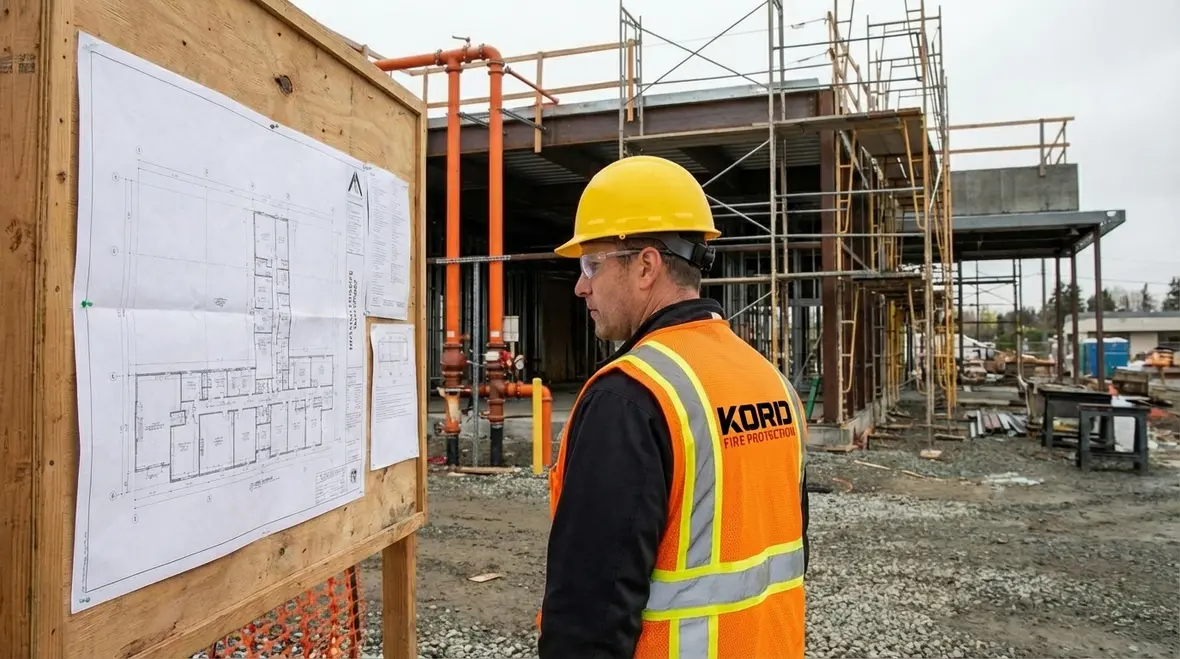
Compliance does not end with good design. The city requires permits before installation begins. Plans must pass review by the Los Angeles Fire Department. Only after approval can contractors proceed, and many projects must also align with Chief’s Regulation 4 testing and certification expectations for long term operation.
During installation, licensed professionals must follow approved drawings exactly. Any deviation may require additional review. Therefore, attention to detail saves time and avoids costly delays.
After installation, inspectors conduct thorough evaluations. They check pipe integrity, sprinkler head placement, alarm connections, and water flow performance. Hydrostatic testing ensures the system holds pressure without leaks. It is not unlike a final exam, except the stakes involve real flames instead of grades.
Once approved, the building receives sign off for occupancy. However, responsibilities do not end there. Regular inspections and testing remain mandatory under fire code provisions, NFPA 25, and local LA programs such as Regulation 4 auto sprinkler testing for qualifying buildings.
Kord Fire Protection technicians frequently coordinate with city officials to streamline this process. Because they understand local expectations, they help property owners move from blueprint to approval with fewer surprises.
Maintenance Obligations That Keep Systems Reliable
A sprinkler system is not a decorative ceiling accessory. It requires ongoing care. Los Angeles mandates periodic inspections, testing, and maintenance in accordance with national standards and local enforcement. As Kord’s overview of fire sprinkler testing in Los Angeles County explains, most systems need monthly or quarterly visual checks, plus annual testing and five year internal inspections.
Typically, visual inspections occur monthly or quarterly depending on components. Annual inspections involve more detailed testing, including alarm activation and valve checks. Additionally, internal pipe inspections may occur every five years to identify corrosion or obstruction.
Business owners sometimes assume that if sprinklers have never activated, they must be fine. However, that logic resembles assuming a car never needs an oil change because it has not broken down yet. Preventive maintenance protects reliability.
Kord Fire Protection technicians emphasize documentation. Inspectors often request service records during audits. Therefore, keeping organized maintenance logs helps demonstrate compliance with Los Angeles commercial fire codes.
Furthermore, prompt repairs matter. If a damaged sprinkler head or faulty valve goes unaddressed, the building may fall out of compliance. More importantly, it may lose critical protection during an emergency.
Costs, Timelines, and Planning Considerations
Budget concerns often surface early in conversations about sprinkler installation. Costs vary based on building size, hazard level, and water supply conditions. Nevertheless, delaying compliance can cost more in penalties, insurance premiums, or fire damage. According to Kord’s Los Angeles specific sprinkler overview, typical commercial installations may range per square foot, depending on system complexity and building conditions.
New construction projects typically integrate sprinkler systems into overall design, which reduces complications. Conversely, retrofitting older buildings may involve opening ceilings, upgrading water lines, or reinforcing structures. Therefore, early planning saves both money and disruption.
Insurance carriers frequently offer reduced premiums for fully compliant sprinkler systems. Over time, those savings can offset installation costs. In addition, many clients appreciate the peace of mind that comes from meeting all safety standards.
Kord Fire Protection technicians often provide detailed project timelines. They outline permitting stages, installation milestones, and inspection schedules. This transparency helps property owners plan around tenant needs and operational hours.
Common Compliance Challenges and Practical Solutions
Even well intentioned owners encounter obstacles. For instance, limited water pressure can complicate system design. In such cases, fire pumps may become necessary to meet required flow rates.
Historic buildings present another challenge. Preservation rules sometimes restrict visible modifications. However, experienced designers can use concealed sprinkler heads that blend with architectural features, including options like self-retracting telescoping sprinklers that stay hidden until activation.
Warehouse operators frequently struggle with changing storage layouts. When storage height increases, hazard classification may shift. Consequently, sprinkler systems may require upgrades. Staying proactive prevents last minute compliance headaches.
Below is a simple comparison to clarify common issues and solutions:
| Challenge | Practical Solution |
| Low municipal water pressure | Install fire pump and storage tank |
| Seismic risk concerns | Add code compliant seismic bracing |
| High piled storage | Upgrade to ESFR or in rack sprinklers |
| Aging pipes | Conduct internal inspection and replace corroded sections |
Because every property differs, personalized assessment remains essential. Kord Fire Protection technicians often conduct on site evaluations to identify hidden risks before they escalate.
FAQ About Commercial Fire Sprinkler Requirements in Los Angeles
Conclusion and Next Steps for Business Owners
Meeting Los Angeles commercial fire sprinkler requirements is not just about passing inspection. It is about protecting people, preserving investments, and building resilience in a city that demands readiness. Kord Fire Protection technicians stand ready to guide property owners through every phase, from design to maintenance. For those who value safety, compliance, and peace of mind, now is the time to act.
Schedule a professional assessment and secure protection that performs when it matters most. Whether you need new system design, Regulation 4 testing, or ongoing inspections, Kord’s Los Angeles fire protection team can tailor a plan for your property. Ready to move from “hoping we’re compliant” to “inspection ready and protected”? Contact Kord Fire Protection today and take the next step toward a safer building.
Know Your Weapon Before You Fight the Flame
Kord Fire Protection is your go-to when it comes to all things fire protection. For over 20 years, we’ve been serving Southern California with the quality service and equipment to keep your home or business safe at all times. Our competitive prices reflect our unwavering commitment to protecting what matters most in the event of a fire emergency. Give us a call, send an email, or use that form!

Join Our Newsletter!
Get the latest fire safety tips delivered straight to your inbox From our Newsletter.


