
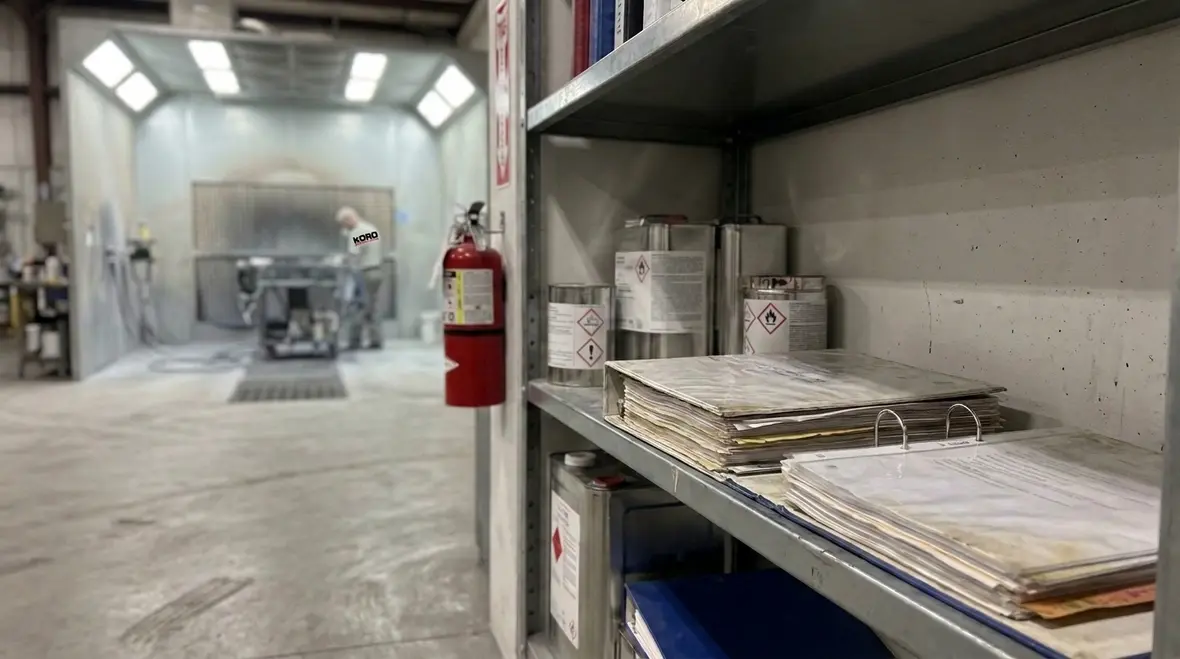
NFPA 33 Section 16.9: Material Safety Data Sheets for Coating Chemicals
Quick Answer
NFPA 33 Section 16.9 requires facilities using coating chemicals to maintain current, accurate Material Safety Data Sheets and make them available for employee use. Compliance supports safer handling, correct storage, and effective emergency response, especially during spill cleanup, ventilation adjustments, and maintenance activities.
What NFPA 33 Section 16.9 Requires for Coating Chemicals
NFPA 33 Section 16.9 focuses on ensuring employees and emergency responders can quickly access hazard information for coating chemicals used in spraying, dipping, coating, and related processes. For commercial and industrial facilities, this means more than collecting paper documents. It requires a controlled, usable system that keeps information current, accessible at the point of use, and aligned with the actual chemicals in service.
Facilities should treat NFPA 33 material safety data sheet coating chemicals as a live compliance component. When products change, hazard classifications and handling requirements often change too. Outdated sheets become an operational risk because they can drive the wrong storage segregation, PPE selection, or spill response actions.
If your documentation process is being reviewed alongside broader system readiness, Kord Fire’s fire protection services in Southern California can help connect paperwork, inspections, and field conditions into one practical compliance plan.
Why MSDS Control Fails in Real Facilities
Many facilities maintain a binder or a shared drive folder, but practical compliance breaks down during day to day operations. Common failure points include:
- Uncontrolled document versions: Employees access older SDS versions during an incident, even though a newer revision exists.
- Missing point of use access: SDS are stored in an office while the spray area or storage cage lacks rapid retrieval.
- New chemicals added informally: Purchasing substitutes a compatible product without updating the SDS list for the coating system.
- Third party or contractor operations: Temporary applicators bring their own products but do not provide updated SDS to the host facility.
- Inconsistent labeling: Chemical containers and bulk totes do not match SDS identifiers, creating confusion during transfer, maintenance, and emergency response.
From a fire safety perspective, SDS governance is tightly linked to ignition control. Coating operations depend on correct handling and proper ventilation. Wrong or outdated SDS information can lead to incorrect storage conditions, improper absorption materials for spills, and inadequate response steps that increase fire and exposure risk.
Operational Procedures: How to Run SDS Like a Safety System
NFPA 33 compliance becomes achievable when SDS management connects to production workflows. High performing facilities typically implement a repeatable process that covers receipt, verification, posting, and ongoing maintenance.
Step 1: Verify SDS accuracy against incoming products
Before a coating chemical enters service, the facility verifies:
- Product name and identifier match the SDS and container labels
- The SDS revision date is current and consistent across all storage locations
- Key hazard information aligns with the coating system configuration (for example, flammability, reactive hazards, and required PPE)
Step 2: Provide “usable” access for employees and responders
Documents must be available where they are needed. Facilities commonly deploy one or more of the following:
- Printed SDS binders at spray areas, mix rooms, and chemical storage zones
- Digitally accessible SDS terminals or QR code access with offline capability
- Clear job aids that point employees to SDS for each product used that shift
Step 3: Align SDS with training, ventilation controls, and housekeeping
SDS content supports practical requirements that affect fire risk. Facilities should cross check SDS information with:
- Training records for chemical handling and spill response
- Ventilation performance criteria and operating limits during coating
- Housekeeping procedures, including cleanup frequency and waste handling
- Compatible containers, transfer methods, and grounding or bonding requirements when applicable
When these elements align, the SDS stops being a static document and becomes a functional control that reduces incident likelihood and improves response performance.
Commercial Facility Standards and Inspection Readiness
Inspection readiness depends on demonstrating that the SDS program works in practice. Inspectors commonly evaluate whether employees can access the correct information quickly and whether SDS revisions match what is on site.
What to document for compliance
A defensible SDS program typically includes:
- A current chemical inventory that lists products used in each coating process
- An SDS register that captures revision dates and verification status
- Assigned responsibilities for SDS review and update triggers
- Evidence of employee orientation and refresher training tied to the SDS content
- Procedure details for substitutions, contractor deliveries, and product decommissioning
How fire safety teams connect SDS to hardware controls
Even when SDS paperwork is perfect, fire safety depends on engineering controls. Coating chemicals may create ignition and flammable atmosphere risks, so the SDS governance must integrate with the facility’s broader fire protection strategy, including ventilation, detection, and suppression planning.
Kord Fire Protection supports commercial facilities by helping teams validate that both documentation and operational controls work together during audits, upgrades, and ongoing maintenance. For related compliance planning, see Kord Fire Protection services.
Common SDS Gaps That Create Fire and Operational Risks
These issues frequently surface during internal reviews and third party audits:
- Missing waste guidance: SDS may outline disposal and cleanup materials, but facilities do not connect it to waste containers and labels.
- Incorrect segregation: Chemicals with incompatible hazard profiles stored together can increase severity if a release occurs.
- Incomplete spill response assumptions: Employees may use the wrong absorbent or cleanup sequence because the SDS is not accessible during the incident.
- Unverified contractor SDS: Temporary coating crews sometimes rely on their own documentation without aligning it to the host site inventory and labels.
- Failure to retire SDS: Old SDS remain in binders, and employees pull the wrong version under time pressure.
To reduce these gaps, facilities should standardize SDS availability, enforce product identifier consistency, and run periodic checks that confirm every SDS in circulation matches an active chemical in the coating system and storage areas.
Frequently Asked Questions
Conclusion and Call to Action
NFPA 33 Section 16.9 turns SDS availability into a measurable safety control. Facilities should verify that every active coating chemical has a current SDS, that documents match on site labels and product identifiers, and that employees can access them during the shift. Contact Kord Fire Protection to support ongoing compliance planning, inspections, and coordinated maintenance so your documentation and fire safety systems operate together reliably.

Join Our Newsletter!
Get the latest fire safety tips delivered straight to your inbox From our Newsletter.



