
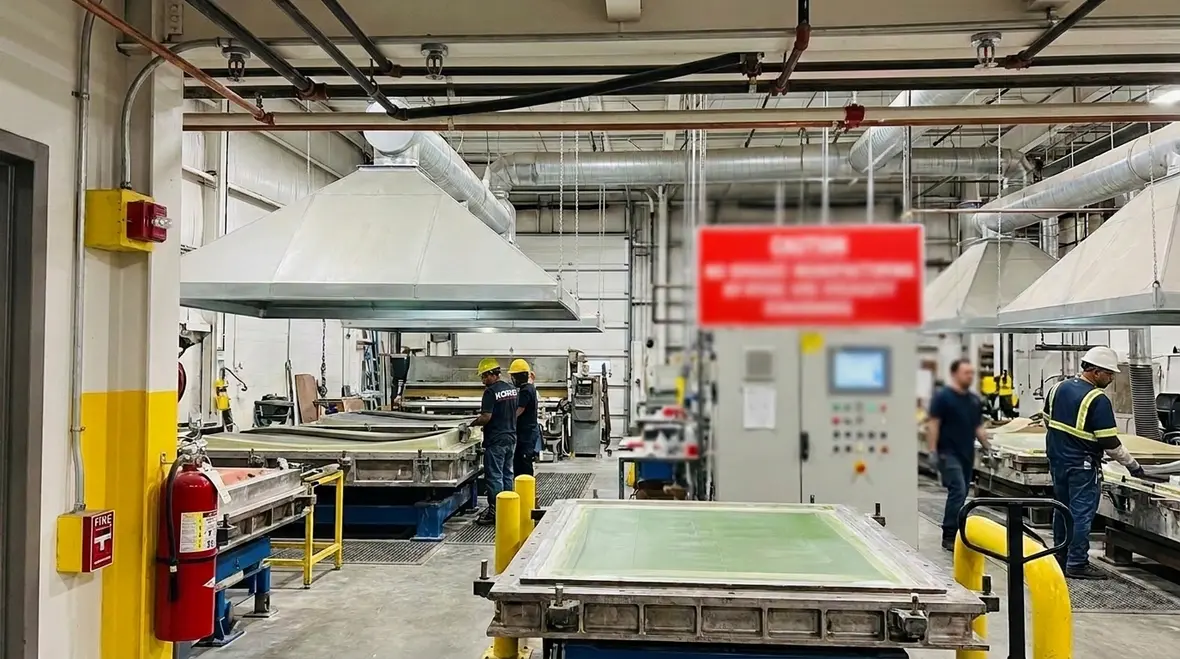
NFPA 33 Section 17.3: Fire Protection for Styrene Composite Manufacturing
Quick Answer
NFPA 33 Section 17.3 requires a practical fire protection approach for styrene composite manufacturing, emphasizing engineered protections, ignition source control, and reliable detection and suppression. Compliance depends on correct system selection, proper installation, and disciplined inspection, testing, and maintenance across all production modes.
What NFPA 33 Section 17.3 is trying to prevent
NFPA 33, under Section 17.3, addresses a specific reality in styrene composite manufacturing: styrene and related vapors can present a fire and explosion hazard when ignitable concentrations form. Fire protection therefore cannot rely only on general shop rules. The standard expects engineered controls that reduce the likelihood of an ignition source contacting flammable vapor or combustible residues, and it expects the facility to maintain these controls as conditions change.
In practical terms, NFPA 33 styrene composite manufacturing fire protection becomes a system of interlocking measures, not a single device. The most common compliance gaps occur when equipment is installed but not integrated into operations, when inspection routines do not match actual risk, or when modifications during production changes are not evaluated against the intent of the standard.
Where styrene fire risk concentrates in composite production
Fire protection decisions should start with how the process releases vapors and where ignition sources exist. In many composite plants, risk concentrates in areas such as:
- Mixing, batching, and transfer stations where styrene may be exposed to atmosphere during handling.
- Impregnation and layup areas where open operations can increase vapor release.
- Curing and post cure zones where heat, mechanical equipment, or electrical devices can contribute ignition energy.
- Washdown and cleaning activities that introduce flammable residues and waste loading.
- Waste and scrap handling including rags, absorbents, and contaminated materials.
A key local challenge for commercial, industrial, and retail facilities is variability. Tenants, contractors, and production schedules can change faster than documentation. NFPA 33 compliance requires maintaining fire protection effectiveness as the facility evolves, including after equipment upgrades, process changes, and line expansions.
How Section 17.3 drives fire protection system selection and layout
Section 17.3 focuses on the fire protection needed for the manufacturing process where styrene hazards exist. Facilities typically implement a combination of controls, with emphasis on how quickly and reliably the system can act when abnormal conditions occur.
1) Detection and alarm that match real hazards
Effective detection must correspond to the conditions that create risk. In practice, this often means pairing credible detection strategies with operational realities, such as ventilation patterns and vapor dispersion. When detection does not correlate to how vapors accumulate, alarms can become either nuisance events or late alerts.
Compliance is not only about having devices. It also requires:
- Correct placement based on airflow and process layout
- Calibration and functional testing at defined intervals
- Clear alarm response procedures tied to production operations
2) Suppression and control strategies that actually work during production
For styrene composite manufacturing, suppression and control measures must address both the fire scenario and the equipment environment. Systems selected for general occupancy may not perform reliably in industrial vapor and residue conditions.
Near the top of any long term compliance plan, it helps to connect process risk with structured inspection, testing, and maintenance support so protective systems stay ready when production conditions change.
Common failure points include:
- Systems installed but not integrated with shutdown sequences or ventilation control
- Inadequate protection coverage where vapors and ignition sources overlap
- Blocked or obstructed distribution routes due to housekeeping or new process equipment
- Improper separation from electrical components that create ignition hazards
3) Ignition source control as a primary layer
Detection and suppression do not replace ignition control. Facilities should treat ignition source control as a core element of NFPA 33 styrene composite manufacturing fire protection. This includes managing:
- Electrical equipment selection and maintenance condition
- Hot work procedures and permit controls
- Static electricity controls during transfer and handling
- Mechanical equipment that can generate heat, sparks, or friction
Inspection, testing, and maintenance: what auditors and insurers look for
NFPA 33 compliance is sustained through documented performance, not one time commissioning. Facilities should build inspection and testing plans that reflect real use, including seasonal production changes, staffing turnover, and contract labor.
Common compliance documentation gaps
- Missing test evidence or incomplete records that do not show results, dates, and corrective actions.
- Out of date procedures that do not match the current process line configuration.
- Undocumented modifications such as new mixing equipment or updated ventilation that change hazard conditions.
- Maintenance delays that allow degraded performance to persist.
How Kord Fire Protection supports ongoing compliance
Commercial facilities rely on dependable service to keep protection systems at the required readiness level. Kord Fire Protection provides maintenance and verification support that helps organizations keep systems functioning as designed. For facilities that manage multiple tenants, retrofit projects, or fast changing production schedules, ongoing test and inspection discipline can reduce operational downtime and improve audit confidence.
For additional context on inspection and fire protection program management, refer to this related guidance: Fire Protection Services Guide by Kord Experts.
Operational controls that make the standard workable on the floor
Section 17.3 expectations translate into operational procedures that staff can execute consistently. Where compliance breaks down most often is between written requirements and daily execution.
Production start up, shutdown, and upset conditions
Fire protection performance depends on correct handling of normal and abnormal conditions. Facilities should define procedures that address:
- Start up sequences that confirm protective systems are in service before ignition capable operations begin
- Shutdown sequences that manage residual vapor and ensure safe equipment state
- Upset conditions, such as spills or ventilation loss, that trigger defined actions and escalation
Housekeeping and waste management controls
Housekeeping directly affects fire load and ignition potential. Composite facilities should manage:
- Contaminated absorbents and rags stored in approved containers
- Removal frequency aligned to production pace and spill risk
- Cleaning methods that avoid generating ignition sources
Training and competency for industrial and commercial staff
Staff competency matters because fire protection systems often require coordinated actions. Training should cover alarm interpretation, evacuation or shelter protocols where applicable, and how to report and respond to system impairments without delaying critical actions.
Frequently Asked Questions
Conclusion and Call to Action
NFPA 33 styrene composite manufacturing fire protection works only when engineered systems, ignition control, and operational discipline operate as one. Facilities that want audit confidence and safer production should validate protection coverage, confirm system performance through documented testing, and keep procedures aligned with real process changes. Contact Kord Fire Protection to schedule a compliance focused review, inspection, and maintenance plan tailored to your manufacturing layout and risk profile.

Join Our Newsletter!
Get the latest fire safety tips delivered straight to your inbox From our Newsletter.



