
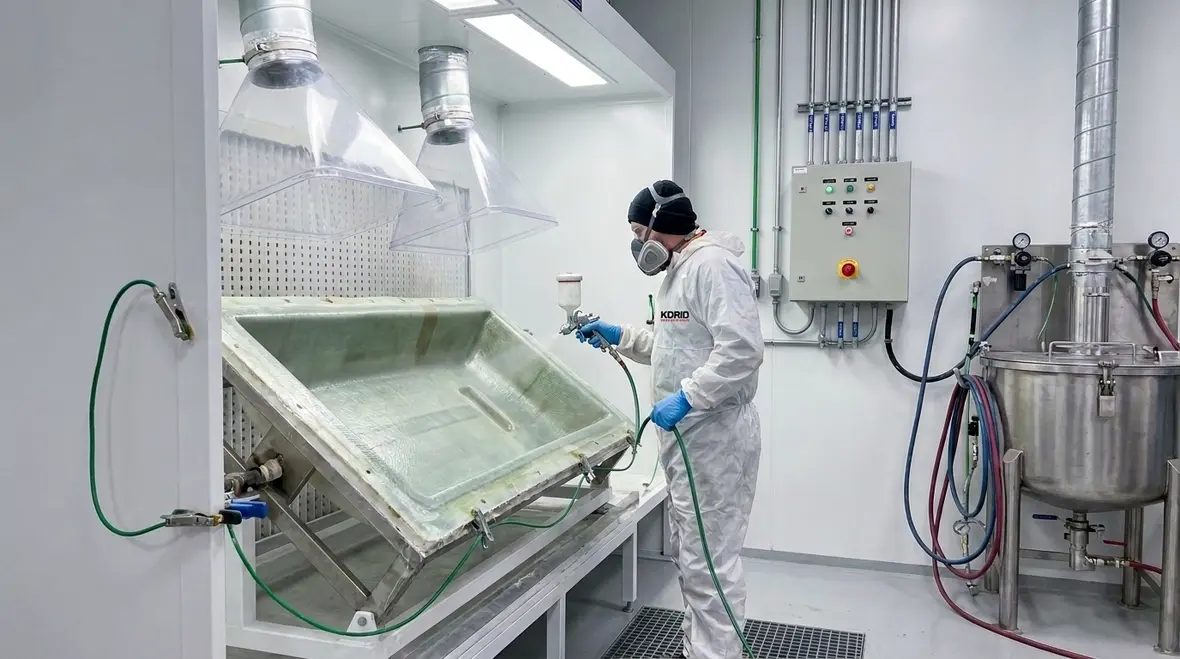
NFPA 33 Section 17.2: Resin Application Equipment for Glass Fiber Composites
Quick Answer
NFPA 33 Section 17.2 sets requirements for resin application equipment used with glass fiber composites, focusing on ignition control, ventilation, electrical safety, and proper condition. Compliance hinges on correct system setup, maintained components, and documented inspections that address common failure points.
If your team is tightening documentation and inspection routines around high-risk process areas, it is worth reviewing Kord Fire Protection’s fire marshal inspection preparation guidance near the start of this effort so your resin application area does not become the part of the facility that gets all the attention for the wrong reasons.
What NFPA 33 Section 17.2 actually requires for composite resin work
NFPA 33 resin application equipment glass fiber composites falls under a broader safety framework that treats spray and application operations as higher risk due to flammable vapors and residue. Section 17.2 specifically targets the equipment used to apply resins for composite fabrication, addressing how equipment supports safe operation, prevents ignition sources, and maintains control of hazardous conditions during normal use and foreseeable malfunctions.
From a compliance perspective, the practical objective is consistent: keep ignition sources from contacting flammable atmospheres and keep the process from producing uncontrolled releases. Commercial facilities that blend, catalyze, spray, or apply resin systems should expect auditors and insurers to look for evidence that the equipment design, installation, operating practices, and maintenance routines align with NFPA 33.
How resin application equipment works, and where ignition risks form
Most resin application setups use a combination of supply, mixing, transfer, and application components. When the system moves from storage to application, it typically introduces vapor, aerosol, mist, or solvent laden air streams. NFPA 33 controls focus on preventing these conditions from meeting ignition sources.
Common equipment components tied to NFPA 33 compliance
- Resin and catalyst supply lines: routing, bonding or grounding requirements, and leak tightness.
- Meters, valves, regulators, and hoses: selection and condition to reduce leaks and static generating flow.
- MIXING and metering stations: controls that limit uncontrolled release during start up, purge, and shutdown.
- Spray or application heads: proper alignment, seals, and maintenance to prevent overspray accumulation and residue buildup.
- Recirculation or filtration systems: failure to maintain filters can increase vapor loading and residue.
- Ventilation and ducting interface: the process exhaust path that maintains containment and reduces flammable atmosphere concentration.
Failure points inspectors commonly find
- Damaged hoses or loose fittings leading to intermittent vapor releases that do not trigger alarms immediately.
- Static discharge hazards caused by missing bonding, degraded conductors, or improper hose material.
- Inadequate containment and exhaust from obstructed ducting, incorrectly sized capture hoods, or failed fans.
- Electrical devices not suitable for the classified environment due to field substitutions or undocumented repairs.
- Build up on spray surfaces and around equipment that can create ignition points and complicate housekeeping.
Ventilation, containment, and housekeeping: the compliance triad
NFPA 33 emphasizes engineering and operational controls that keep flammable concentrations from forming at ignition source locations. For composite resin applications, that means ventilation and capture systems must remain effective through the full production cycle.
Ventilation performance that should be verifiable
Facility teams should be able to demonstrate that exhaust and capture systems support safe operation during typical production. Inspectors often look for physical condition and functional evidence, including duct integrity, fan operation, and absence of bypass flow.
- Capture design maintains containment at the spray and application zones.
- Ducts and plenums remain unobstructed and properly supported.
- Make up air supports exhaust balance without pushing vapors into occupied or ignition sensitive zones.
- Exhaust continues during start up and shutdown sequences when vapors are likely.
Housekeeping that aligns with residue reality
Resins and overspray residue do not behave like dust that can be ignored. Residue accumulation can contribute to ignition risk and can also interfere with equipment operation. A compliant housekeeping program should address overspray areas, floors, ledges, and equipment exteriors, using methods and materials that do not create additional ignition sources.
Electrical and ignition control for resin application equipment
NFPA 33 drives ignition control through proper electrical selection, bonding, grounding, and control of equipment conditions that could energize ignition sources. Resin application equipment glass fiber composites frequently involve solvent laden vapors, which increases the consequence of electrical faults.
What to check on installed systems
- Bonding and grounding continuity on hoses, carts, frames, and metallic components where applicable.
- Use of rated electrical components for the process environment and installation location.
- Condition of wiring and enclosures including seal integrity, cable entry systems, and strain relief.
- Controls interlocks that prevent equipment operation when ventilation is not operating.
- Stored energy and purge sequences that avoid powering ignition sensitive components during high vapor release.
Maintenance practices that prevent recurring noncompliances
Many compliance gaps appear after repairs or replacements. Maintenance programs should include verification that replacement parts match the required ignition protection approach and that modifications receive documentation and review.
- Use controlled procedures for hose and fitting replacement.
- Require functional checks after repairs to confirm ventilation and control sequences remain correct.
- Track recurring leak locations to correct root causes rather than patching.
- Inspect for damage after incidents, drips, or abnormal operating conditions.
Inspection, documentation, and ongoing compliance management
For commercial, industrial, and retail facilities that support composite production, compliance cannot rely on one time commissioning. NFPA 33 compliance works when facilities build a repeatable inspection and documentation process around the equipment used in resin application.
What a strong inspection package typically includes
- Equipment inventory that identifies resin application equipment, ventilation interfaces, and related electrical components.
- Maintenance records covering hose, seals, valves, filters, duct cleaning, and any electrical component replacements.
- Inspection checklists for leaks, residue accumulation, bonding and grounding condition, and ventilation performance observations.
- Operational procedure documentation for start up, normal operation, shutdown, and purge modes.
- Training records that confirm workers understand the hazards during vapor producing phases.
How Kord Fire Protection supports Section 17.2 readiness
Kord Fire Protection helps commercial facilities translate NFPA 33 requirements into practical field controls. The service focus typically includes inspection support, documentation readiness, and recurring maintenance verification that addresses the real failure points found in resin application areas. For an actionable compliance path, Kord Fire Protection assists teams in aligning installed equipment condition with the operational controls expected by inspectors and internal safety programs.
If your facility needs a broader safety framework to connect suppression, detection, and prevention strategies to process hazards, review Kord Fire Protection’s guidance here: fire prevention inspection services.
Practical compliance checklist for resin application equipment glass fiber composites
Use the list below as a practical starting point for internal audits of NFPA 33 resin application equipment glass fiber composites. It is not a substitute for the full code review and site specific hazard evaluation, but it captures common inspection priorities.
- Ventilation operates as designed during start up, application, and shutdown.
- Capture points remain unobstructed and equipment does not allow uncontrolled overspray release.
- Hoses, fittings, and connections show no leaks, cracking, or loss of integrity.
- Bonding and grounding are intact and verified after maintenance or component replacement.
- Electrical components and controls match the required ignition control intent and installation environment.
- Residue and overspray accumulation remains controlled through an established housekeeping program.
- Replacement parts and repairs are documented, controlled, and verified for compatibility with the safety design.
- Inspection and maintenance records support recurring checks, not only initial commissioning.
Frequently Asked Questions
Conclusion: act now to reduce downtime and audit risk
NFPA 33 Section 17.2 compliance depends on more than equipment placement. Facilities need repeatable inspections, correct ignition control practices, and maintenance that preserves ventilation performance, leak integrity, and electrical suitability. If your composite area has recent repairs, ongoing production changes, or inspection findings, Kord Fire Protection can help you assess current conditions and build an evidence based compliance plan. Contact Kord Fire Protection today to schedule a targeted review and next steps.

Join Our Newsletter!
Get the latest fire safety tips delivered straight to your inbox From our Newsletter.



