
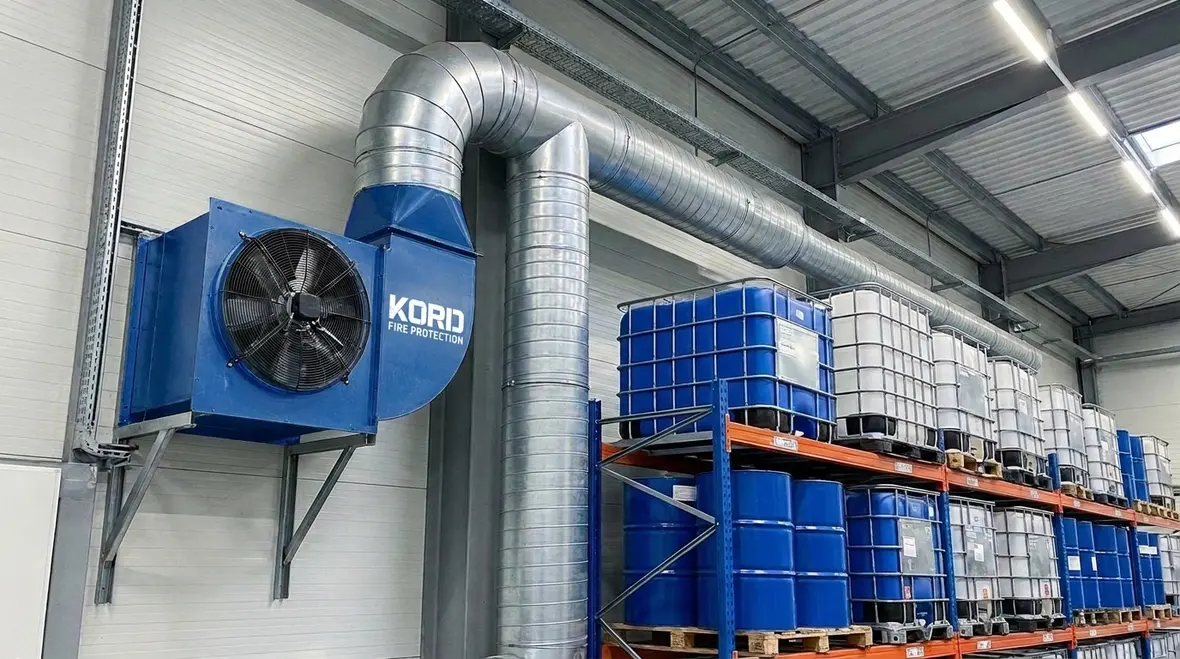
NFPA 30 Section 9.14: Ventilation Requirements for Liquid Storage
Quick Answer: NFPA 30 Section 9.14 sets the ventilation approach for liquid storage areas to control vapor accumulation and reduce ignition risk. It focuses on system design, air movement, and operational reliability, with emphasis on maintaining effective ventilation throughout the storage lifecycle.
Why NFPA 30 Section 9.14 matters in liquid storage areas
Vapor control drives fire and life safety outcomes in commercial, industrial, and retail settings that store flammable or combustible liquids. NFPA 30 Section 9.14 ventilation liquid storage areas requirements are not just about installing fans. They define how facilities should achieve and maintain adequate air movement, manage system performance, and prevent conditions that allow vapors to reach ignitable concentrations.
For many sites, the compliance gap occurs after initial installation, when operational changes, maintenance delays, or ventilation degradation go unnoticed. Common examples include obstructed louvers, failed fan belts, stuck dampers, incorrect door sequencing, or corrosion that reduces airflow. The result is a ventilation system that looks “in place” but no longer performs as designed.
Facilities that need a broader compliance support plan often pair ventilation review with a structured inspection, testing, and maintenance program so performance issues get caught before they turn into repeat deficiencies.
For a broader view of how NFPA 30 regulates flammable liquids, reference how NFPA 30 regulates flammable liquids.
What Section 9.14 expects from ventilation systems
Section 9.14 directs facilities to ventilate liquid storage areas in a manner that limits vapor concentration. In practice, the standard expects ventilation that is:
- Appropriate for the storage layout and container configuration: ventilation effectiveness depends on where vapors form and how air routes remove them.
- Configured to manage airflow pathways: supply and exhaust openings must promote air movement without creating stagnation zones.
- Capable of sustained performance: fans, motors, and ducting must remain functional and free of conditions that reduce delivery.
- Operationally reliable: controls and alarms should support safe operation during normal use and foreseeable disturbances.
Design intent: prevent hazardous vapor buildup, not just “move air”
A frequent misconception is that any exhaust system satisfies ventilation intent. In real facilities, vapor behavior matters. Vapors can pool low to the floor or accumulate near sources depending on density, temperature, and ventilation pattern. NFPA 30 Section 9.14 ventilation liquid storage areas requirements aim to ensure ventilation removes vapors before they can accumulate to hazardous levels.
Operationally, this means facilities must verify that:
- Exhaust discharge points are positioned to avoid recirculation of contaminated air.
- Ducts and openings remain unobstructed by stored materials, cable trays, or construction debris.
- Ventilation performance does not rely on “open door” behavior that varies by staff routine.
Common compliance challenges in commercial and industrial settings
Compliance failures typically occur where ventilation interacts with real-world operations. Commercial, industrial, and retail sites often face similar patterns, even when the systems were originally designed correctly.
1) Airflow degradation from maintenance and aging
Fans and ductwork degrade over time. Filters clog, dampers stick, bearings wear, and belts slip. Corrosion can reduce effective duct cross section, and vibration can loosen fittings. When airflow drops, vapor removal effectiveness drops with it.
Operational fix: facilities should implement periodic performance checks that validate ventilation operation against acceptance criteria, not just visual inspection.
2) Blocked vents and changed storage arrangements
Storage racks, pallets, seasonal inventory, and housekeeping changes frequently alter airflow paths. A vent that was clear during commissioning becomes partially blocked after restocking. In tight plant rooms and retail back-of-house areas, this happens quickly.
Operational fix: staff training and clear labeling should define what must remain clear around ventilation openings, duct inlets, and exhaust locations.
3) Incorrect damper positions and control sequencing
Ventilation systems often use dampers, interlocks, and control logic that coordinate with pumps, dispensing, or area operations. A common failure point is incorrect damper position after maintenance, renovations, or panel replacements.
Operational fix: controls should be verified through functional testing. Any change to actuators, control boards, or wiring should trigger a documented verification of system sequence.
4) Lack of inspection discipline for hazardous-area ventilation reliability
Some facilities perform “fire safety inspections” but do not treat ventilation performance as a critical life safety element. NFPA 30 Section 9.14 ventilation liquid storage areas requirements depend on ongoing reliability, which means inspection and maintenance discipline must be built into the safety management system.
Inspection, testing, and maintenance procedures that hold up under scrutiny
To support compliance, inspection and maintenance should be structured, repeatable, and defensible. The goal is to confirm that the ventilation system operates as required during routine operations and conditions that can impact performance.
Document what you check: the audit-ready approach
Commercial facility teams often struggle with documentation quality. Strong records typically include:
- Inventory mapping to ventilation coverage: where liquids are stored relative to air movement paths.
- System component lists: fans, motors, dampers, louvers, duct routes, and controls.
- Maintenance actions and parts used: especially for belts, bearings, actuators, and damper repairs.
- Functional testing outcomes and pass fail criteria.
- Photographic evidence where visual obstruction is a recurring issue.
Equipment mechanisms to focus on during service
Effective service targets the components most likely to cause airflow shortfalls:
- Fans and motors: confirm correct operation, vibration limits, and drive integrity.
- Dampers and louvers: verify full travel, correct orientation, and free movement.
- Ducting and penetrations: inspect for damage, corrosion, loose joints, and obstructions.
- Controls and interlocks: test sequence logic, permissives, and any area status signals.
- Electrical connections and ratings: ensure wiring and components match hazardous location requirements where applicable.
Where your site uses monitoring or control logic, maintenance should include verification that the control system still drives ventilation as intended during operational transitions.
Maintenance intervals: aligning service frequency with risk
Ventilation systems in liquid storage areas can be high risk because performance must remain stable and consistent. Facilities should align service frequency with:
- Usage intensity (for example, frequent deliveries or dispensing cycles).
- Environmental conditions (humidity, corrosive atmosphere, dust loads).
- History of failures or recurring obstruction events.
- Changes in layout, racking, or storage height.
A risk-based schedule helps reduce the most common failure mode: ventilation degradation that goes unnoticed until an incident or an inspection.
How Kord Fire Protection supports ongoing compliance for liquid storage ventilation
Meeting NFPA 30 Section 9.14 ventilation liquid storage areas requirements depends on more than one-time commissioning. Kord Fire Protection works with commercial and industrial clients to maintain ventilation reliability through structured inspection support, practical maintenance coordination, and ongoing compliance documentation that aligns with real facility conditions.
When facilities experience layout changes, new inventory patterns, or control upgrades, Kord Fire Protection helps ensure the ventilation system still performs to the required intent. This approach reduces the risk of airflow shortfalls caused by hidden failures, obstructed pathways, or degraded equipment performance.
Frequently Asked Questions
Get a practical compliance check for your ventilation system
If your facility stores flammable or combustible liquids, confirm that NFPA 30 Section 9.14 ventilation liquid storage areas requirements remain satisfied after routine operations and maintenance changes. Contact Kord Fire Protection to review your ventilation setup, identify common failure points, and build an audit-ready inspection and maintenance plan that keeps vapor control reliable.

Join Our Newsletter!
Get the latest fire safety tips delivered straight to your inbox From our Newsletter.



