Industry Fire Sprinkler Systems for Industrial Safety
In the world of manufacturing plants, distribution hubs, and heavy production floors, fire does not send a calendar invite before it arrives. It moves fast, feeds on fuel, and leaves very little time for debate. That is why Industry fire sprinkler systems remain one of the most critical layers of protection inside modern facilities. From steel fabrication plants to food processing centers, these systems stand guard day and night. And when Kord Fire Protection technicians explain how they work, they do so with the calm confidence of professionals who have seen what happens when preparation meets emergency. This article explores how these systems protect assets, people, and productivity, and why industrial leaders continue to invest in them.
The Role of Industry Fire Sprinkler Systems in Industrial Facilities
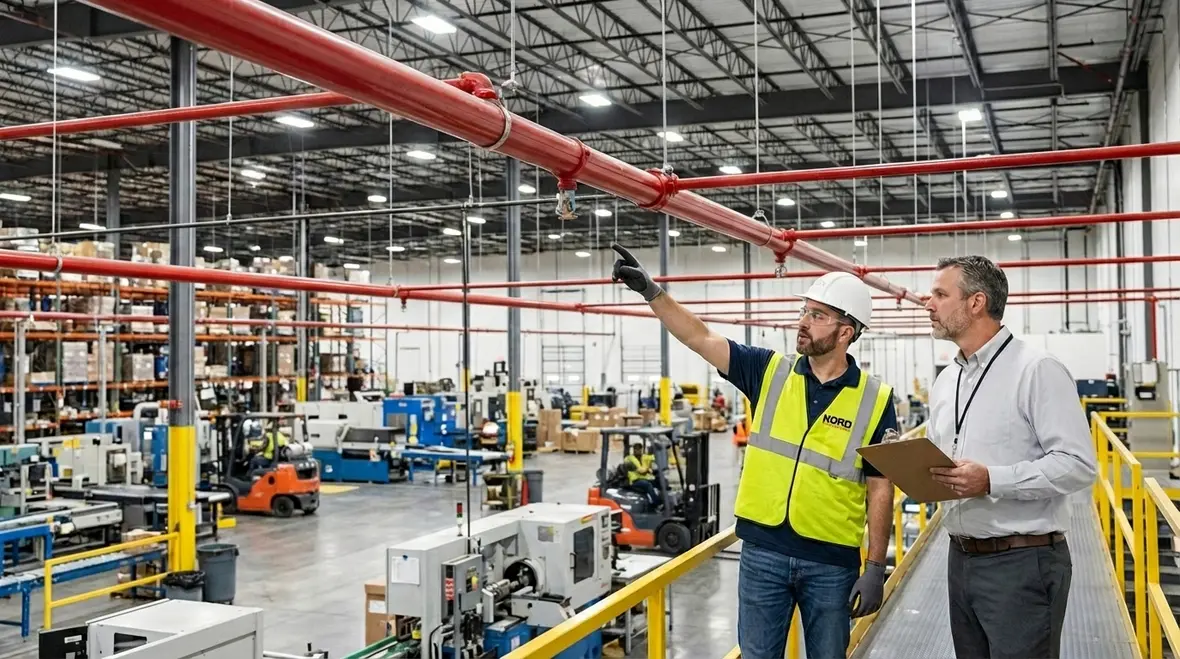
Industrial facilities operate in environments where heat, friction, chemicals, and electrical loads often share the same square footage. Consequently, the risk of ignition increases. Industry fire sprinkler systems are engineered to detect and suppress flames at their earliest stage, often before firefighters even arrive.
Unlike what Hollywood might suggest, sprinklers do not all activate at once. In fact, each sprinkler head reacts individually to heat. Therefore, only the heads exposed to high temperatures discharge water. Kord Fire Protection technicians often smile when they explain this myth, noting that movies have done more damage to sprinkler reputations than actual system failures.
More importantly, these systems reduce property loss, limit downtime, and protect lives. Because industrial operations often store high value inventory and equipment, a fast response can mean the difference between a short interruption and a permanent closure.
For facilities in complex jurisdictions like Los Angeles County, pairing a strong sprinkler strategy with a partner who understands industrial fire protection is essential. Many managers start with dedicated Industry Fire Protection Services to make sure their systems are designed for both safety and compliance.

How Do Fire Sprinkler Systems Protect Large Scale Operations?
When facility managers ask how these systems truly function, the answer is refreshingly practical. First, heat activates a glass bulb or fusible link within a sprinkler head. Next, water stored under pressure in the piping network releases directly onto the fire source. As a result, the system controls or extinguishes the fire before it spreads.
However, protection goes beyond simple water discharge. Engineers design industrial suppression systems based on:
- Hazard classification which identifies the level of fire risk
- Water supply capacity ensuring sufficient flow and duration
- Storage configurations especially in high rack warehouses
- Ventilation patterns that may influence fire spread
Because no two facilities operate the same way, system design requires careful planning. Kord Fire Protection technicians frequently walk clients through these factors step by step. They explain why a warehouse storing paper goods demands a different layout than a plant handling flammable liquids. And yes, they do it without making anyone feel like they just enrolled in engineering school.
Key Components Behind Reliable Industrial Fire Suppression
A sprinkler system may look simple from the ceiling, yet beneath that simplicity lies a network of coordinated parts. Each component plays a specific role.
Control valves regulate water flow and allow isolation during maintenance. Without them, even small repairs could shut down an entire facility.
Alarm devices trigger alerts when water begins to flow. Consequently, personnel receive immediate notification, and emergency response begins without delay.
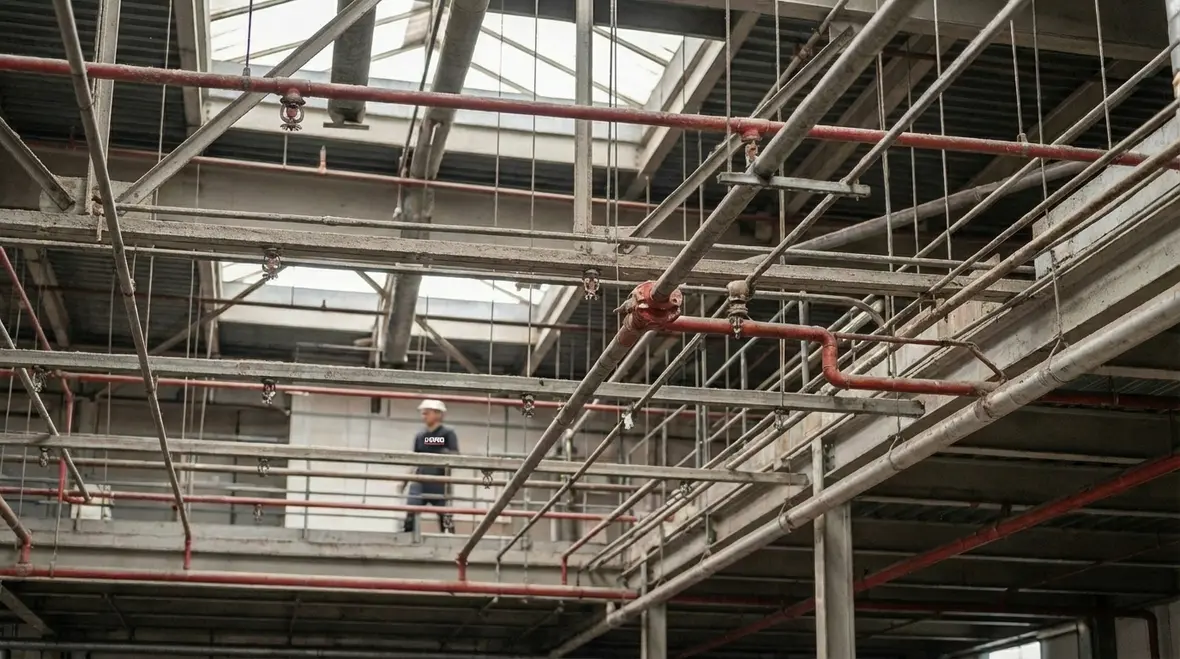
Piping networks distribute water across large areas. In industrial settings, these pipes often span expansive ceilings and complex layouts.
Sprinkler heads act as the final delivery point. They are selected based on temperature rating, spray pattern, and hazard level.
Because these components must work in harmony, routine inspection remains essential. Kord Fire Protection technicians emphasize that even the strongest system can fail if valves are closed or pipes are obstructed. In other words, owning a system is one thing. Maintaining it is another.

Choosing the Right System for Your Facility
Industrial leaders often ask which type of system suits their building. The answer depends on environment, materials, and operational risk.
| System Type | Best Application | Why It Works |
| Wet Pipe | Heated warehouses and manufacturing floors | Water remains in pipes for immediate discharge |
| Dry Pipe | Cold storage and unheated spaces | Air filled pipes prevent freezing |
| Preaction | Data centers and sensitive equipment rooms | Requires detection confirmation before water release |
| Deluge | High hazard chemical processing areas | Rapid, large scale water application |
While the table offers a quick reference, design always requires deeper evaluation. For example, a food processing plant may need corrosion resistant materials due to wash down procedures. Similarly, facilities storing aerosols demand specialized calculations.
Kord Fire Protection technicians often conduct on site evaluations, reviewing building drawings, production processes, and storage methods. Because industrial operations evolve, they also recommend reassessing systems when layouts change. After all, adding taller storage racks without updating suppression coverage is like buying a bigger television and keeping the same tiny sound system. It technically works, but it is not ideal.
Compliance, Codes, and Insurance Considerations
Regulations shape every industrial fire protection plan. Local building codes, national standards, and insurance requirements all influence system design. Therefore, compliance is not optional. It protects both people and financial stability.
Authorities typically require adherence to recognized standards that define water density, spacing, and inspection intervals. Meanwhile, insurers often provide incentives for properly maintained systems. In many cases, facilities with robust suppression measures secure lower premiums.
Kord Fire Protection technicians help facility managers navigate these requirements. They explain inspection schedules, documentation practices, and testing procedures in clear language. Consequently, managers gain confidence that their systems meet regulatory expectations.
Moreover, documented maintenance can support claims if a fire occurs. Without records, proving system integrity becomes difficult. As technicians sometimes note, paperwork may not be glamorous, but it can save a company millions.
Maintenance and Inspections That Keep Systems Ready
Even the most advanced system requires consistent oversight. Over time, valves can shift, corrosion can develop, and storage layouts can change. Therefore, routine inspections ensure continued performance.
Standard maintenance typically includes:
- Quarterly valve checks to confirm proper positioning
- Annual flow tests to verify water supply strength
- Visual inspections of sprinkler heads for damage or obstruction
- Internal pipe assessments when conditions suggest buildup
Because industrial environments can be harsh, dust and debris sometimes collect on sprinkler heads. Surprisingly, even a thin layer of buildup can alter spray patterns. Kord Fire Protection technicians demonstrate this during training sessions, showing how small obstructions create uneven coverage.
Additionally, facility managers should coordinate changes in operations with fire protection professionals. When new machinery or storage systems enter the building, suppression layouts may require modification. Staying proactive prevents gaps in coverage.
Protecting Productivity and People at the Same Time
Industrial leaders measure success in output, efficiency, and safety. Fortunately, properly designed fire suppression systems support all three. By containing fires early, they reduce structural damage and shorten recovery time. Consequently, operations resume faster.
More importantly, these systems protect employees. In large facilities, evacuation can take time. Early suppression slows fire growth, providing critical minutes for safe exit. That margin can mean everything.
Kord Fire Protection technicians often frame the conversation in human terms. Machines can be replaced. Buildings can be rebuilt. Lives cannot. Therefore, investment in fire protection reflects a commitment to workforce wellbeing as much as asset preservation.
And yes, while sprinklers may not receive applause during daily operations, they perform like quiet guardians above the production line. No spotlight. No theme music. Just readiness.
FAQ About Industrial Fire Sprinkler Systems
Secure Your Facility with Confidence
Industrial facilities face complex risks, yet the solution does not need to be complicated. With expert design, routine maintenance, and guidance from Kord Fire Protection technicians, businesses can operate with assurance. Fire may be unpredictable, but preparation is not. Take the next step toward stronger protection, safer employees, and uninterrupted productivity.
Connect with professionals who understand your environment and build a system that stands ready when it matters most. If your facility needs full-service support beyond sprinklers alone, explore Kord Fire’s Full Fire Protection Services to coordinate alarms, extinguishers, suppression, and more under one reliable partner.
Know Your Weapon Before You Fight the Flame
Kord Fire Protection is your go-to when it comes to all things fire protection. For over 20 years, we’ve been serving Southern California with the quality service and equipment to keep your home or business safe at all times. Our competitive prices reflect our unwavering commitment to protecting what matters most in the event of a fire emergency. Give us a call, send an email, or use that form!

Join Our Newsletter!
Get the latest fire safety tips delivered straight to your inbox From our Newsletter.