Automatic Sprinkler Control Valves Maintenance
In automated sprinkler systems, electrical control valves do not “just sit there.” They do their job, quietly and reliably, until the moment they must open, close, and protect. That is why automatic sprinkler control valves maintenance matters from day one, not after a problem shows up in the annual test. When Kord Fire Protection technicians handle the work, they bring a practical approach: they check wiring, verify valve response, and confirm the system matches the design intent.
Now, let us walk through how pros manage these valves in the real world, with real timing, real field observations, and the kind of calm explanations that make you feel like you have a plan, not a mystery. And yes, sometimes it is as exciting as watching paint dry, but with water safety involved. That is a respectable type of boring.

Why electrical control valves matter in automated sprinkler systems
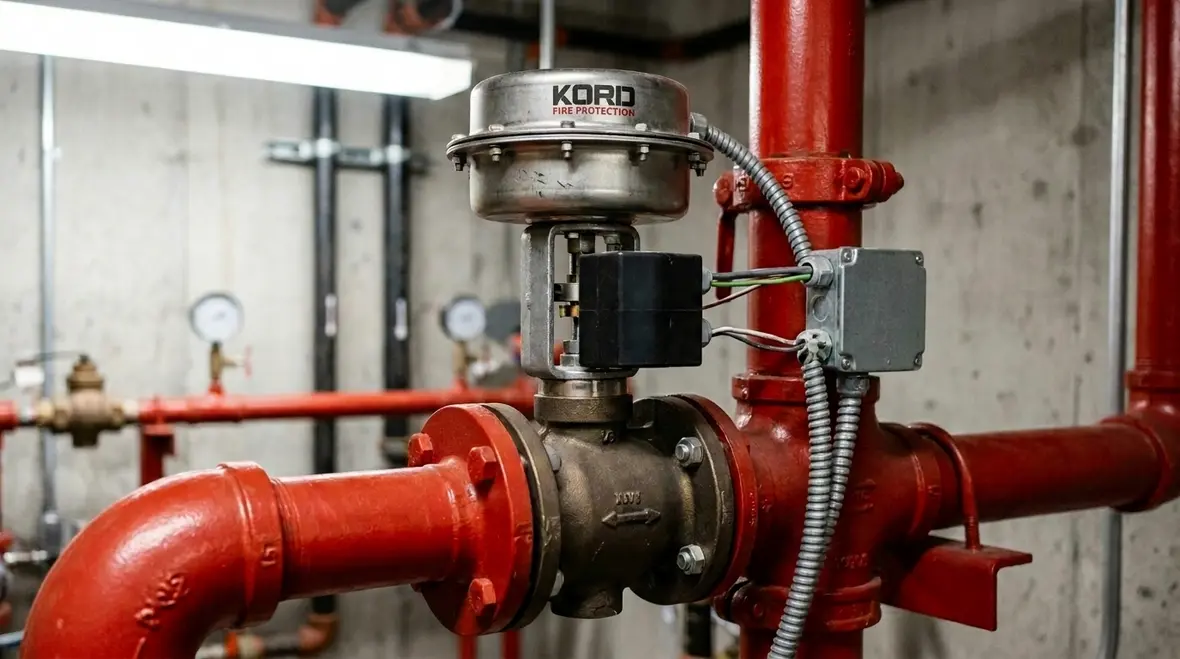
Electrical control valves sit at the heart of zone control. They respond to signals from the fire alarm or control panel and then shift water flow to the correct sprinkler area. When they work, the system responds fast and in the right sequence. When they do not, the system can delay water delivery or fail to operate as required.
To keep them dependable, Kord Fire Protection technicians typically focus on three areas: control power, valve actuation, and system feedback. First, they confirm the control circuit provides stable voltage. Then they verify the valve can move fully, without sticking. Finally, they confirm the control panel receives the expected status signals. This matters because the panel depends on accurate feedback to manage supervisory and alarm events.
This is also where regular inspection ties into bigger system reliability. A control valve is never really working alone. It has a relationship with the panel, the wiring path, the zone layout, and the sprinkler system as a whole. If one part begins to drift, the rest of the system may still look normal on the surface. That is the sneaky part. Fire protection problems often arrive wearing a perfectly calm face.
Building teams that already schedule broader sprinkler service often benefit from pairing valve checks with related system reviews. That is one reason many property managers also reference Kord Fire Protection’s wet sprinkler system inspection guide when planning service intervals and documenting what should be reviewed during a visit.
How automatic sprinkler control valves maintenance prevents surprises
Automatic sprinkler control valves maintenance is not a “check the box” task. It is a process that finds small issues before they become big ones. For example, a slow solenoid can still move the valve, but only after it warms up. That delay might not show up during a quick inspection, yet it can matter during an actual emergency.
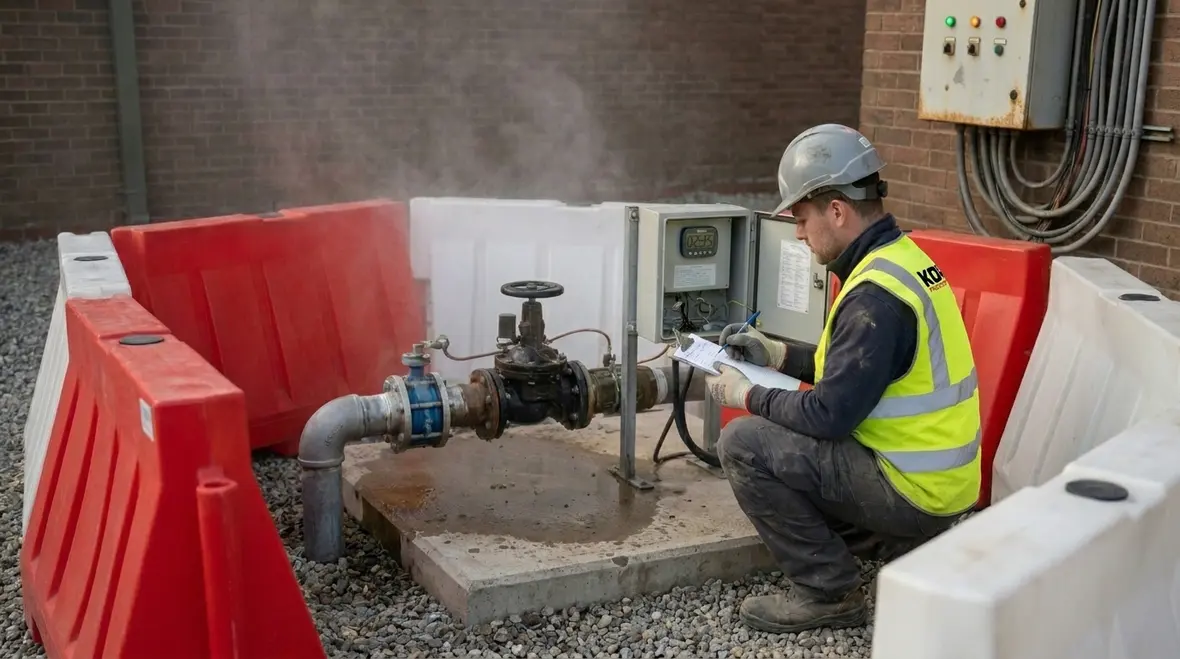
Therefore, Kord Fire Protection technicians often use a steady routine that is simple on paper and extremely useful in practice. They inspect valve housings for debris and signs of water intrusion. They check actuator wiring condition, terminations, and strain relief. They test operation at the right intervals and record results. They confirm end switches and position feedback, where installed.
- Inspect valve housings for debris and signs of water intrusion
- Check actuator wiring condition, terminations, and strain relief
- Test operation at the right intervals and record results
- Confirm end switches and position feedback, where installed
Also, they look for patterns. If one zone shows repeated slow response, the cause often lives in power quality, control wiring, or the valve itself. In other words, they stop guessing and start diagnosing. It is the difference between “maybe” and “we know.”
What Kord Fire Protection technicians check first during inspection
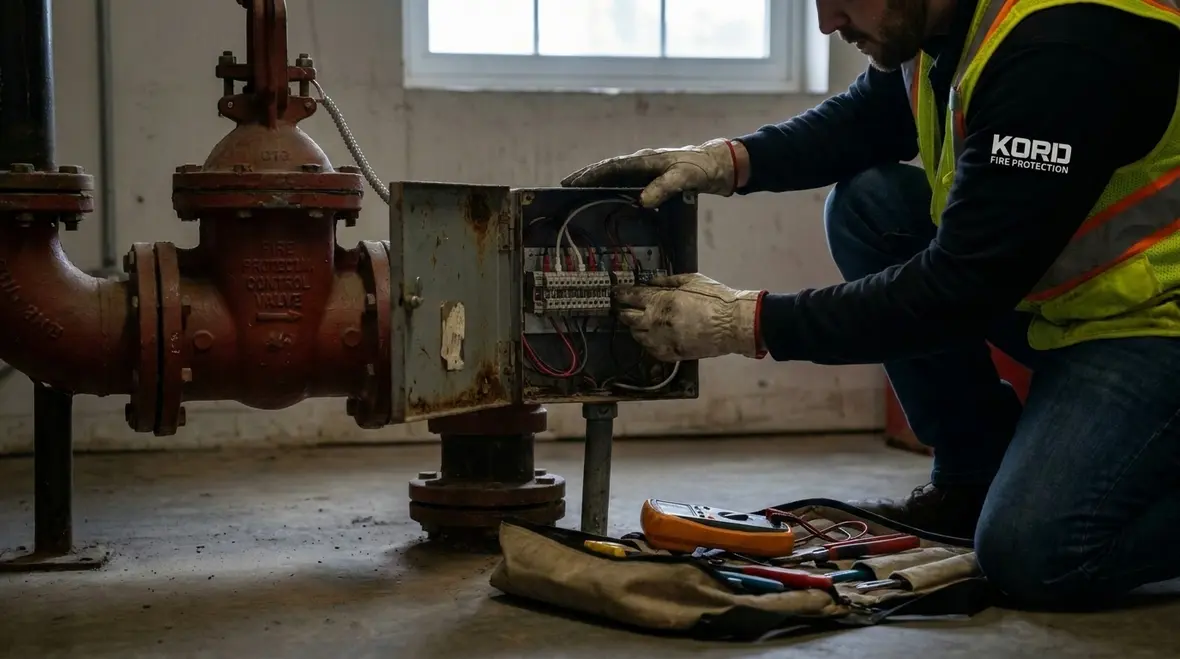
When a technician arrives, they do not start by poking the valve and hoping for the best. Instead, they begin with the control environment. Then they move toward the field device in a logical order.
First, they confirm the control panel and power sources match the documented requirements. Next, they inspect conduit routing and cable damage risks, since vibration and heat can degrade insulation over time. After that, they inspect the valve assembly itself. They look for corrosion, loose mounting, and signs of water seepage around seals.
Finally, they verify operation and feedback. They also compare measured response to prior records. If response time drifts, the system may still function, but it signals that maintenance should happen sooner than the next scheduled cycle.
A logical sequence beats random troubleshooting
That order matters more than it may seem. If technicians skip ahead and test the valve before reviewing upstream controls, they can miss the actual source of the problem. A delayed valve may be a valve issue, but it might also be a signal issue, a voltage issue, or a feedback issue that only looks mechanical from a distance. Calm process wins. Wild guessing mostly produces colorful service notes and not much else.
Managing wiring, signals, and solenoid response
Electrical control valve performance depends on clean wiring and dependable signal timing. A weak connection can act like a false ghost. The system may seem normal during most tests, and then fail when conditions change.
So, technicians manage wiring using a few practical rules. They ensure terminations are tight and free of corrosion. They confirm grounding and check for proper polarity on control circuits where required. Then they examine wiring paths to reduce interference and physical stress.
For solenoid valves, response matters. Technicians verify that the solenoid pulls in fully and does not chatter. Chatter can result from unstable voltage or a mechanical restriction in the valve path. Additionally, they consider environmental factors, such as temperature swings and moisture exposure, because coils and insulation can age faster under harsh conditions.
And here is the business casual truth: if the wiring looks “fine,” that is not the end of the story. Even small issues can produce inconsistent timing. Electrical systems rarely fail in a dramatic Hollywood way. They fail quietly, like a villain who never raises their voice.
How to test valve operation without disrupting service
Testing needs a plan. In many buildings, automated sprinkler systems support life safety and also the daily flow of work. Therefore, technicians coordinate with site leadership, review schedules, and select test methods that avoid unnecessary downtime.
- Verify the correct zone and device address before any operation
- Use controlled test sequences to confirm valve movement and water delivery logic
- Check supervisory and alarm signals at the control panel
- Record timing data, then compare to prior results
If a valve needs more attention, they isolate the issue without creating broader risk. They also confirm no mechanical binding exists after testing, since debris can shift when a valve moves.
In addition, they document what happened. Documentation prevents repeat work and helps the next team member understand the history. It turns maintenance from a one time task into a long term system improvement.
For larger properties, this kind of planning is easier when service partners can address more than one life safety system during a coordinated visit. That is why many owners review Kord Fire Protection’s full fire protection services when they want inspections, repairs, testing, and scheduling handled through one team instead of five phone calls and a whiteboard that has seen too much.
Replacing components and keeping the system balanced
Eventually, electrical control valves may require component replacement. That might include actuators, solenoids, end switches, seals, or wiring components. The goal is to restore performance without changing system behavior in a way that undermines the design.
So, technicians choose parts that match the original specification or approved equivalents. They verify compatibility with the control panel, confirm correct electrical ratings, and ensure the mechanical interface stays aligned. After replacement, they run operation tests and confirm the valve responds as expected.
Technicians also keep the system balanced. If one zone’s valve response speed changes, it can affect the timing of downstream alarms or supervisory transitions. Therefore, they recheck related components, including fittings and strain on conduits, to ensure the entire control path stays stable.
Once again, Kord Fire Protection technicians bring calm rigor here. They know that “it moved” is not enough. The system must move, report, and perform the way the code and the design intended. Anything less is like installing a new TV remote and expecting it to control the house thermostat.
Common issues with automated sprinkler control valve circuits
Every site has its own quirks. Still, many recurring problems show up across different buildings. Understanding them helps teams plan maintenance instead of reacting to failures.
| Issue | What it causes | How technicians respond |
|---|---|---|
| Loose or corroded terminations | Intermittent control signal and unstable operation | Inspect, clean, tighten, and verify continuity |
| Moisture near enclosures | Corrosion and damaged insulation | Check seals, reroute, and verify insulation condition |
| Mechanical restriction in valve path | Slow or incomplete valve movement | Inspect for debris, verify travel, and re test |
| Drift in response time | Late actuation and unreliable feedback | Compare historical data and replace worn parts |
Furthermore, technicians watch for “near misses.” A valve might still operate, but it could do so at the edge of acceptable performance. That is when maintenance earns its keep.
Planning maintenance with the bigger sprinkler picture in mind
Control valves are one piece of a larger reliability story. Facilities that wait until a valve becomes obviously problematic usually end up dealing with related issues at the same time, whether that means aging supervisory devices, worn trim components, or missed performance trends that were visible in prior reports. Scheduled review creates breathing room. Emergency troubleshooting creates stories no one wanted.
For teams building a longer-range sprinkler maintenance strategy, it can also help to review Kord Fire Protection’s five year fire sprinkler inspection overview and the broader fire sprinkler overview and system guide. Those resources help place valve maintenance in context, so inspections do not happen in isolation from the rest of the system.
FAQ: Electrical control valves and maintenance
Final call for reliable valve performance
Electrical control valves should behave like trusted equipment, not like a guess in a dark room. To keep automated systems dependable, building owners should schedule automatic sprinkler control valves maintenance with qualified Kord Fire Protection technicians. They inspect wiring, confirm valve response, verify feedback, and document results so your team can act with confidence.
If you want fewer surprises and smoother testing cycles, connect with Kord Fire Protection for a coordinated service visit. Explore their fire alarm services for related control and signaling support, or review full fire protection services to keep your system ready when seconds matter.

Join Our Newsletter!
Get the latest fire safety tips delivered straight to your inbox From our Newsletter.