Sprinkler System Water Damage Prevention Tips by Kord
Sprinklers do their job fast, and that is exactly the problem when a small leak turns into a big mess. When water shows up where it should not, equipment can suffer hidden damage long before anyone notices the puddle. That is where sprinkler system water damage prevention starts to matter. In this guide, our Kord Fire Protection technicians walk through practical steps that help keep leaks from spreading, reduce downtime, and protect costly gear. And yes, we will talk about leaks without making it feel like a bedtime story. Because nobody wants their server rack to meet a bathtub.
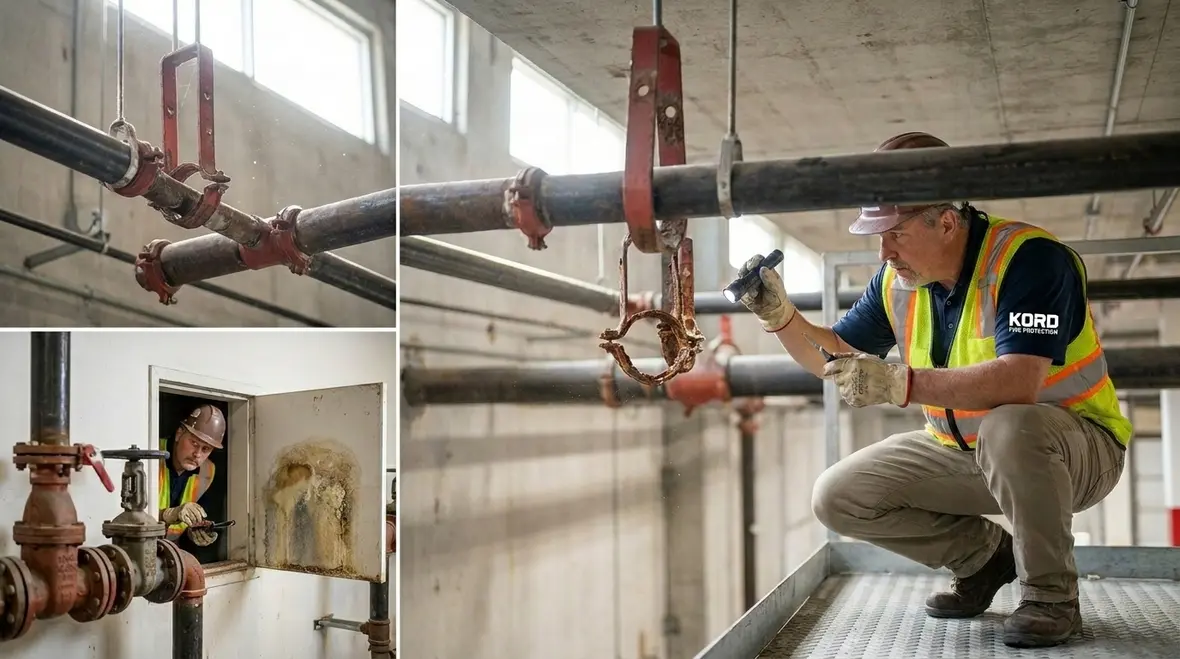
1) Spot risks early before they become water problems
First, equipment protection begins with finding the weak points before water runs free. Kord Fire Protection technicians typically start with a walkthrough and a review of the fire protection layout. They look for signs that change over time, including corrosion on pipe hangers, damp spots behind access panels, and mineral buildup that hints at slow seepage. Then they check where equipment sits close to valves, sprinkler drops, and drain lines.
Next, they confirm that the system uses proper pressure control and that devices stay within spec. If a component ages faster than expected, it can turn into a leak risk even when nothing “looks broken.” Therefore, scheduled checks matter, and the goal stays simple: catch the issue while it is still small enough to fix cleanly.
Why early leak clues deserve attention
The tricky part is that small warning signs rarely arrive with a dramatic soundtrack. A faint stain above a ceiling tile, a little rust around a fitting, or a hanger that looks slightly off can all point to a larger issue waiting for bad timing. Facilities that treat these details seriously usually avoid the expensive version of the same story later.
2) How do technicians prepare equipment zones for leaks
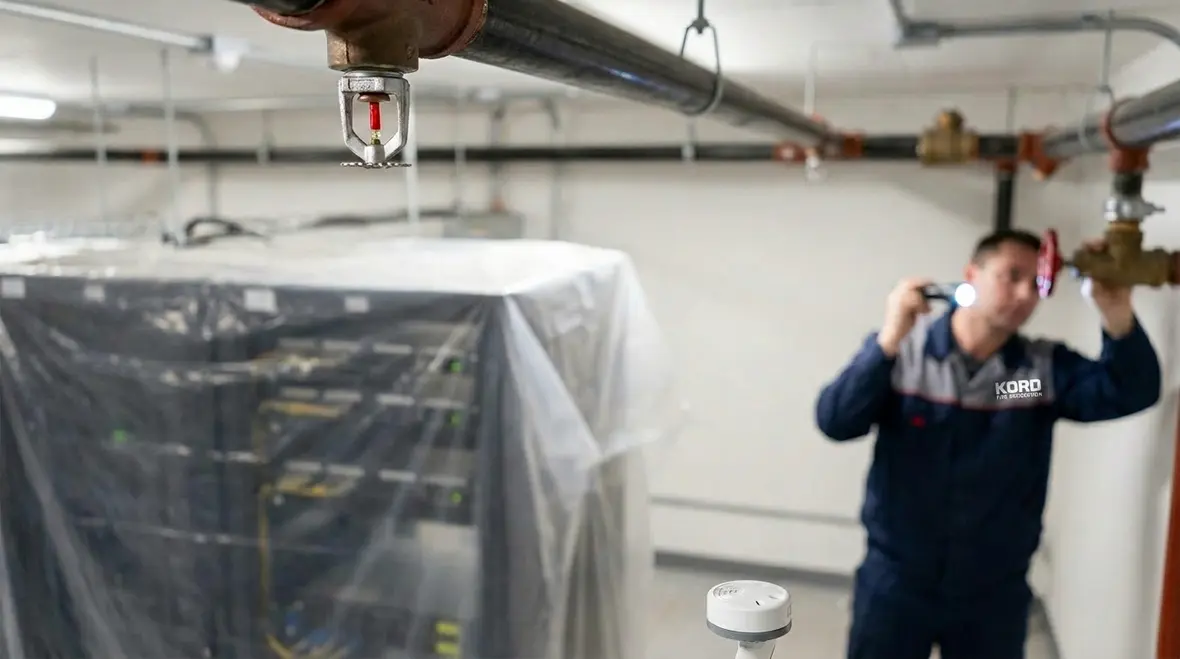
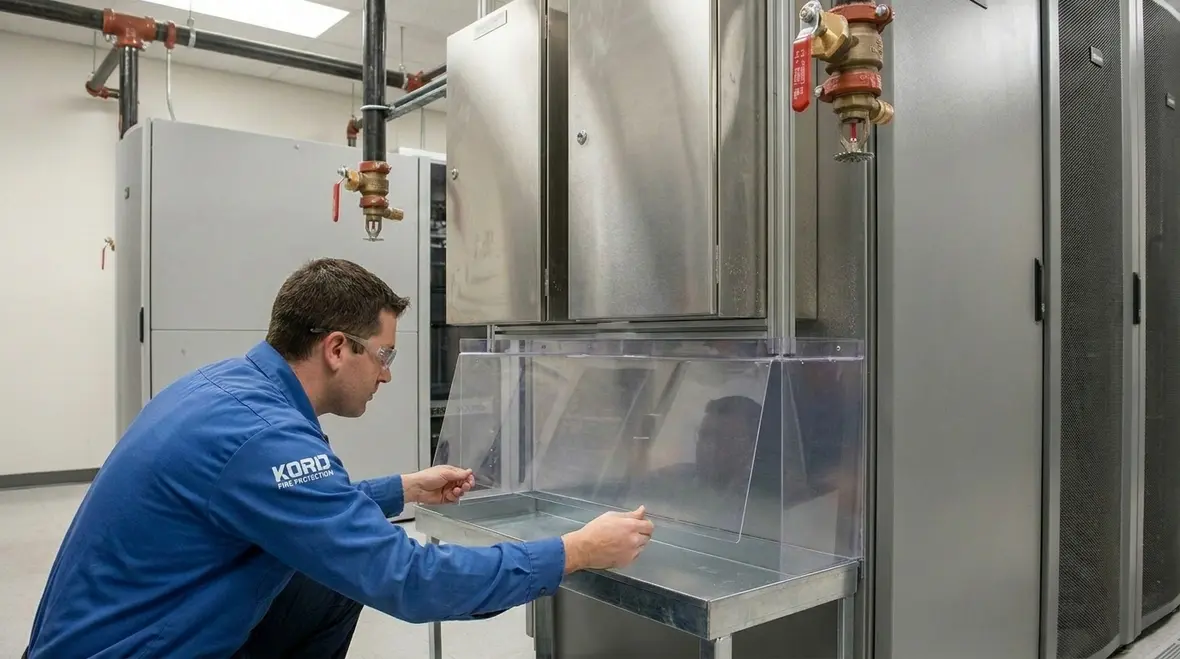
Now the focus shifts to the area around the equipment. Kord Fire Protection technicians often recommend simple barriers and staging methods that do not interfere with fire response. For example, they may suggest drip protection around sensitive units such as electrical panels, control cabinets, and HVAC components. They also help teams plan access routes so maintenance staff can reach shutoff valves quickly if a problem appears.
In addition, they pay attention to how water moves. Gravity does not care about brand names or budgets, and it will follow the lowest path. So technicians consider nearby slopes, cable tray placement, and the presence of floor drains. As a result, they guide teams to use catch systems that contain drips and slow spread, buying time and reducing clean up.
That preparation matters most in rooms packed with electronics, controls, or process equipment. One controlled drip is annoying. One unnoticed drip above critical hardware is a future budget meeting nobody enjoys. Setting up the zone correctly can mean the difference between a simple repair and an outage that ruins everybody’s afternoon.
3) Prevent sprinkler system leaks with smart maintenance habits
Maintenance is where sprinkler system water damage prevention becomes real work, not wishful thinking. Kord Fire Protection technicians typically follow a plan that includes visual checks, functional testing, and verification of clearances and supports. They also watch for recurring wear points, such as threaded joints, fittings near vibration sources, and areas where someone previously modified the piping.
To reduce leak chances, technicians also recommend keeping protection caps, seals, and protective wraps in good condition. Even minor damage to a seal can allow moisture to migrate over time. Moreover, they coordinate inspection schedules with facility operations so tests happen when staff can respond and when equipment can be temporarily protected.
Habits that keep minor issues from graduating into disasters
Good maintenance habits are not glamorous, and that is exactly why they work. Regular documentation, follow-up on repeat trouble spots, and a clear repair timeline turn maintenance from a checkbox into actual prevention. When teams know what changed since the last visit, they are far less likely to be surprised by the same leak wearing a fake mustache.
4) Protect valves, gauges, and fittings like they matter
Valves, gauges, and fittings act like the “plumbing headquarters” of a sprinkler system. If they fail, water finds the quickest route. Kord Fire Protection technicians focus on these components because they see leaks start at the exact points people overlook.
They recommend the right protective steps around these assets, such as using drip trays or approved containment where local codes allow. They also suggest labeling the valves clearly and keeping the areas dry and accessible. Then, when inspections happen, technicians can confirm there is no seepage at seals, no seep lines around flanges, and no signs of tampering.
And because reality loves jokes, think of fittings as the office gossip: when something is “not a big deal,” it still tends to show up everywhere later.
This is also the point where clear labeling pays off. During a leak event, nobody wants to play a guessing game with shutoffs while water keeps moving. Marked components, open access, and dry surroundings help staff respond faster and help technicians inspect without turning a small issue into an obstacle course.
5) Use sensors and monitoring to catch slow leaks fast
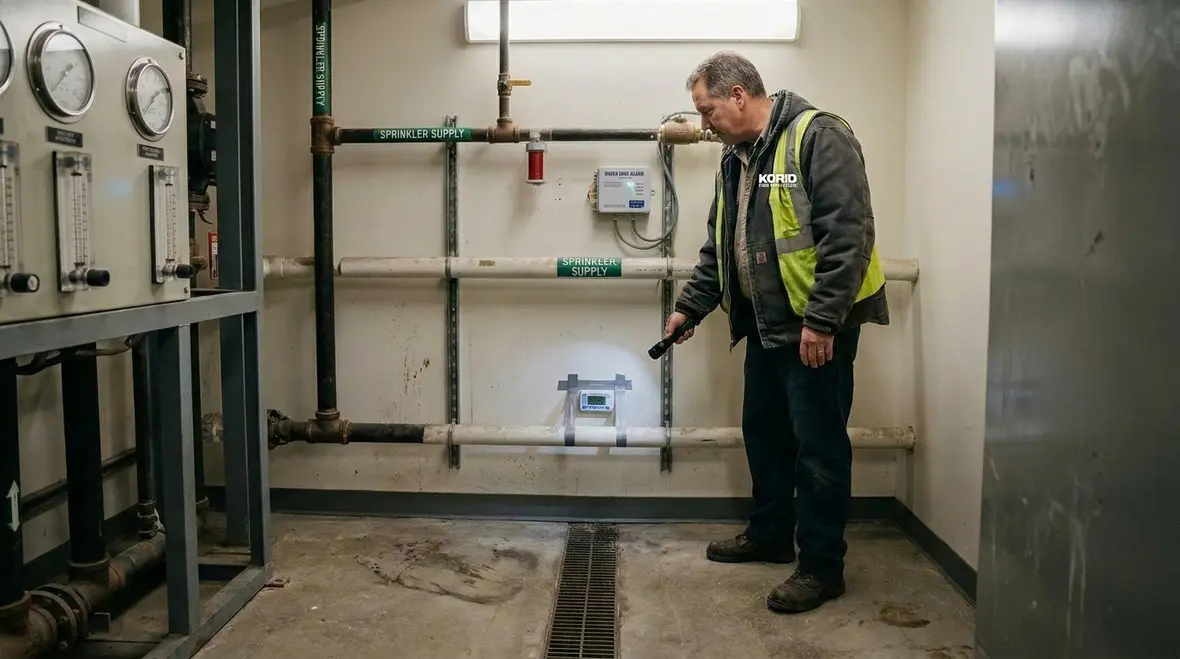
Not every leak screams right away. Some leaks start as dampness that never makes a splash, which is exactly why monitoring helps. Kord Fire Protection technicians can advise on where leak detection should sit, especially near high cost equipment and under routed piping.
These sensors can support sprinkler system water damage prevention by alerting staff early, sometimes hours before an issue becomes visible. For example, moisture sensors near control cabinets can trigger an alert before water reaches the electronics. Pressure and flow monitoring can also help detect changes that hint at a problem before it escalates.
Then the facility team can act sooner, whether that means shutting down a zone, placing equipment into a safe state, or arranging a targeted repair. In other words, early detection turns chaos into a manageable task.
Where monitoring adds the most value
Monitoring makes the biggest difference in places where water can hide before anyone sees it. Ceiling cavities, riser-adjacent rooms, cabinet rows, and spaces under branch lines are all candidates. If the building already depends on uptime, adding leak detection in the right spots is usually easier than explaining a shutdown later.
6) Maintain clearances, routing, and drainage paths
Even when the sprinkler system itself stays intact, water can still travel into wrong places. Therefore, technicians evaluate how piping routes through the facility and whether it creates pathways toward equipment rooms. They look for places where condensation, washdown, or minor seepage can pool and then migrate.
They also focus on drainage paths. If a floor drain clogs or a slope directs water toward equipment, prevention efforts suffer. Kord Fire Protection technicians commonly recommend keeping drains clear and confirming that containment systems empty correctly. As a result, water that does show up moves away instead of spreading.
This sounds simple because it is simple, but simple problems are still expensive when they are ignored. A clear drain and a good slope will never win employee of the month, yet both can save a room full of equipment from becoming an accidental indoor water feature.
7) Dual column guide to protection priorities
To keep teams aligned, Kord Fire Protection technicians often organize priorities by urgency and location. Here is a simple dual column view that facilities can use during planning.
| Priority area | What to do |
| Valve assemblies and gauges | Inspect seals, add approved containment where needed, label and keep access clear |
| Electrical panels and control cabinets | Use drip protection, add moisture monitoring, keep equipment serviceable and protected |
| Equipment rooms near risers | Confirm clearances, verify drainage paths, check supports for corrosion and movement |
| Ceilings with dense piping | Look for staining, verify access panel fit, schedule routine checks before seasons change |
Keep your response plan tied to your protection plan
Prevention works better when the response plan is not living in a binder nobody has opened since the last office carpet color was popular. Teams should know who gets notified, where shutoffs are located, what equipment needs immediate shielding, and when to bring in qualified service. That kind of coordination shortens downtime and keeps a leak from turning into a building-wide headache.
If your facility also needs a plan for reduced system coverage during maintenance or emergency conditions, Kord Fire Protection’s fire protection impairment management guide is a useful related resource. For broader support across inspections, repairs, alarms, extinguishers, and sprinkler work, Kord also offers full fire protection services for facilities that want one partner handling the moving pieces.
8) FAQ on sprinkler system water damage prevention
Conclusion: act now to protect equipment and downtime
Equipment damage from leaks rarely starts as a dramatic disaster. More often, it begins quietly and grows while everyone assumes it is “nothing.” To strengthen sprinkler system water damage prevention, facilities should schedule inspections, protect key equipment zones, confirm drainage paths, and add leak monitoring where it matters most. Then Kord Fire Protection technicians can verify the system and help build a practical response plan.
If this season has taught anything, it is that prevention beats cleanup. For broader support with inspections, maintenance, and system readiness, explore Kord Fire Protection’s full fire protection services. If your facility also needs related system support, Kord offers dedicated fire alarm services to help keep life safety systems coordinated and inspection-ready. Contact Kord Fire Protection to set up an equipment protection assessment.

Join Our Newsletter!
Get the latest fire safety tips delivered straight to your inbox From our Newsletter.