City of Industry Fire Safety for Industrial Buildings
Fire Safety Guidelines for Industrial Buildings in Industry
In the heart of Southern California, City of Industry fire safety is not just a checklist. It is a living, breathing responsibility. Warehouses hum, machines spark to life, and forklifts glide through aisles like quiet workhorses. Yet behind that steady rhythm lies risk. Fire does not send a calendar invite. It shows up unannounced. That is why industrial fire prevention in the City of Industry demands precision, planning, and professionals who understand the stakes. As Kord Fire Protection technicians often explain, preparation is not paranoia. It is smart business.
What follows is a grounded, practical guide to protecting industrial buildings, delivered with the calm authority of experience and just enough wit to keep everyone awake through the safety meeting.
Understanding Industrial Fire Risks in City of Industry
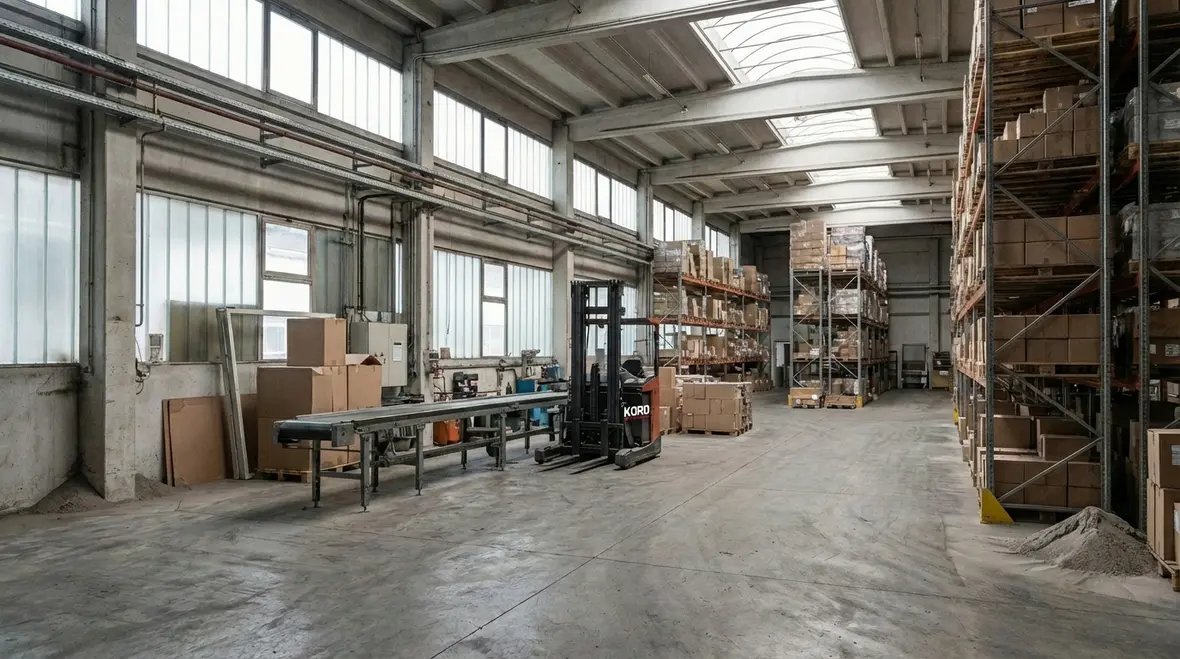
Industrial buildings carry unique fire hazards. Unlike office spaces, they house heavy machinery, high voltage systems, flammable liquids, combustible dust, and large storage racks. Consequently, a small spark can travel faster than gossip in a break room.
Kord Fire Protection technicians frequently point out that most industrial fires begin with three root causes. First, electrical faults. Second, improper storage of flammable materials. Third, poor housekeeping that allows dust and debris to build up. While each issue may seem minor on its own, together they form the perfect storm.
Moreover, large open floor plans common in warehouses allow flames and smoke to spread rapidly. High ceilings delay sprinkler activation if systems are not properly designed. Therefore, City of Industry fire safety planning must account for building layout, inventory type, and daily operations. One size does not fit all. This is not a one size fits most hat. It is tailored protection.
If your facility stores palletized goods, operates manufacturing lines, or runs 24/7 shifts in Industry, it is worth pairing this guide with a site-specific plan. For many businesses, that starts with a professional assessment such as the Industry Fire Protection Services that Kord Fire provides across the City of Industry area.
Top hazards to watch in City of Industry warehouses
- Overloaded electrical circuits running conveyors, chargers, and production equipment
- Battery charging stations for forklifts without proper ventilation or separation
- Flammable liquids stored outside approved cabinets or too close to ignition sources
- Combustible dust from cutting, grinding, or packaging processes accumulating on beams and equipment
- Narrowed aisles and blocked egress paths from ad hoc storage
How Should Industrial Buildings Be Designed for Fire Protection?
Design plays a powerful role in prevention. Before a single pallet hits the floor, fire protection must already be built into the structure. In fact, Kord Fire Protection technicians often collaborate with engineers during early construction phases to ensure compliance and efficiency.
Key design elements include:
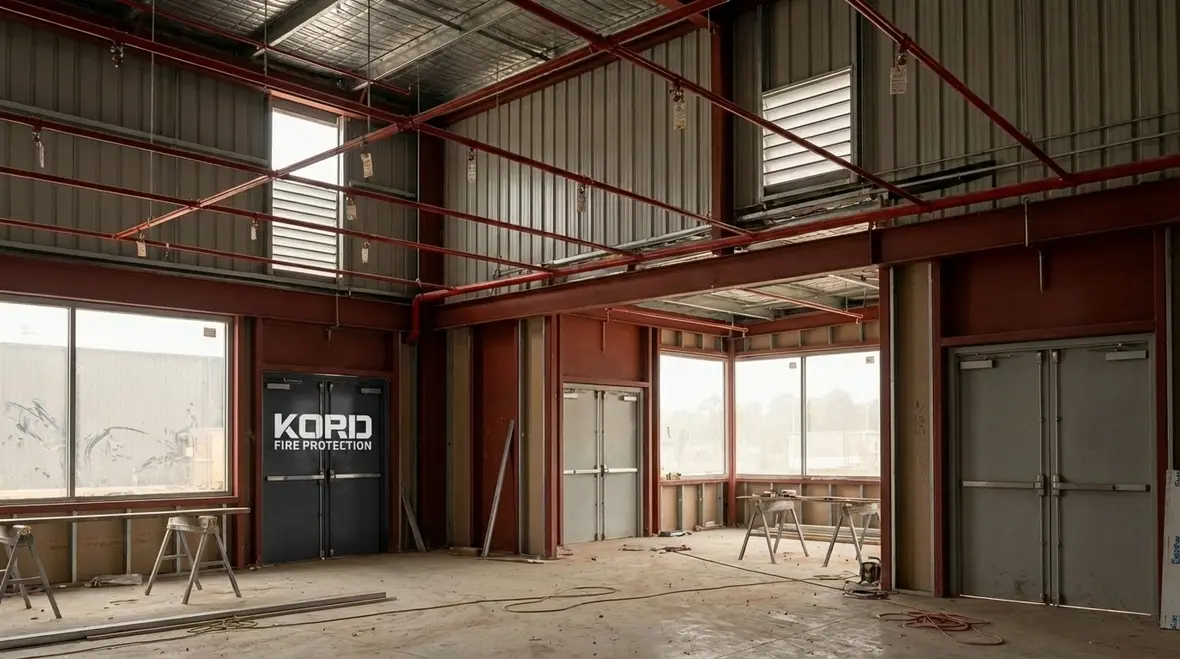
- Automatic sprinkler systems engineered for ceiling height and commodity classification
- Fire rated walls and doors to compartmentalize potential fire spread
- Clearly marked egress routes with illuminated exit signage
- Accessible fire department connections for quick response
- Smoke and heat vents to release trapped heat
Additionally, storage configuration matters. High piled storage requires specific sprinkler density and clearance. When pallets are stacked too close to sprinkler heads, the system cannot perform effectively. As technicians sometimes say with a knowing smile, sprinklers need space to do their dance.
Above all, compliance with local fire codes supports both safety and smooth inspections. City of Industry fire safety standards are clear, and ignoring them is like ignoring a flashing dashboard light. Eventually, it will cost more than you hoped.
Design decisions that pay off during inspections
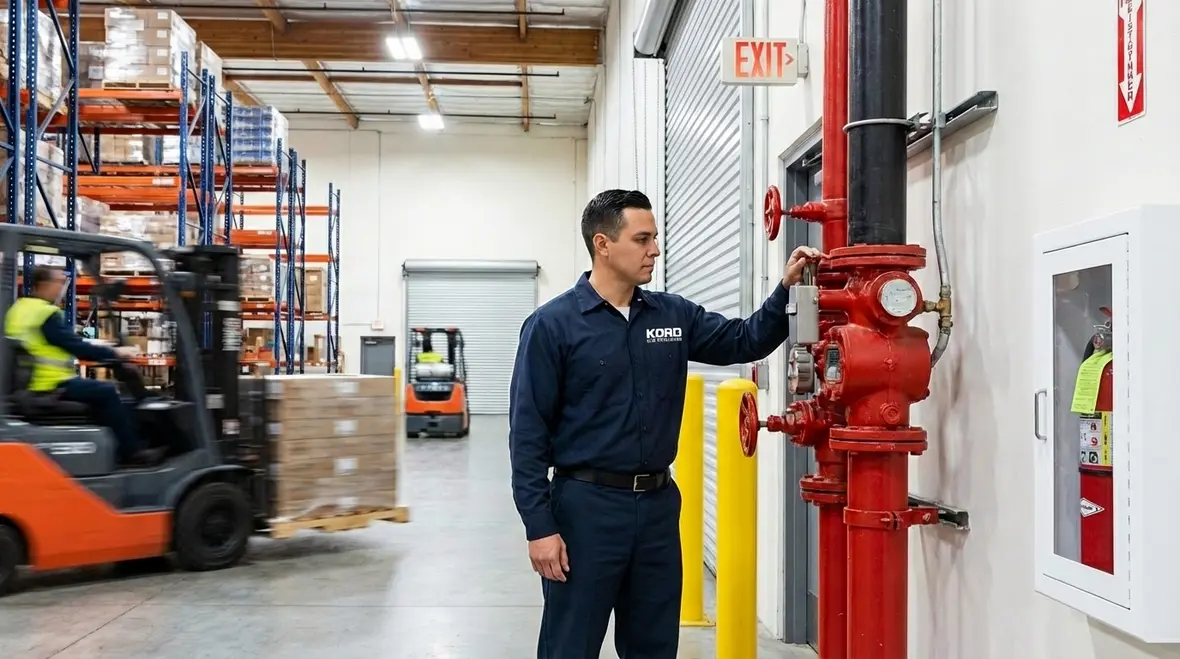
- Locating riser rooms and fire alarm panels where inspectors can reach them without navigating a maze of pallets
- Providing clear labeling on valves, control panels, and shutoffs
- Planning for future expansion so additional racking or mezzanines do not outgrow system capacity
- Coordinating early with a full-service partner like Kord Fire, whose fire sprinkler, fire alarm, and extinguisher services cover design, install, and testing under one roof
Fire Suppression Systems That Actually Do the Heavy Lifting
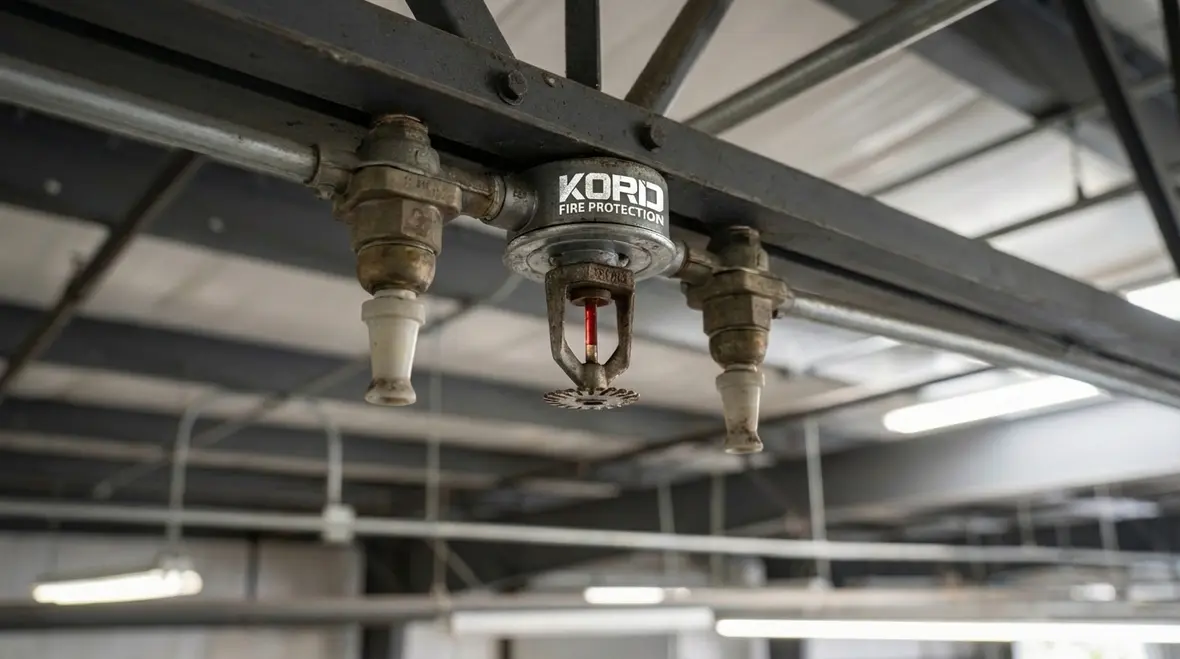
Sprinklers are the backbone of most industrial fire suppression systems. However, not all sprinklers are created equal. Some facilities require ESFR systems designed for fast response. Others depend on in rack sprinklers to reach deep storage configurations.
Furthermore, facilities that handle chemicals, oils, or specialized manufacturing may require foam systems or clean agent suppression. These systems target specific fire types without damaging sensitive equipment. Think of them as precision tools rather than blunt instruments.
Kord Fire Protection technicians emphasize routine inspections. A system installed once and forgotten is like buying a gym membership and never going. It looks responsible on paper, but it does not build strength. Regular testing, valve checks, pressure monitoring, and alarm verification ensure that systems perform when seconds matter.
As part of broader City of Industry fire safety compliance, facilities must maintain detailed inspection records. Therefore, management should establish clear schedules and assign accountability. Because when an emergency hits, paperwork should not be the only thing that is well organized.
Matching systems to Industry’s industrial operations
- High piled storage of boxed goods: ESFR sprinklers or carefully engineered standard spray heads
- Hazardous materials or flammable liquids: foam systems and specialty suppression
- Server rooms, control panels, and sensitive equipment: clean agent systems that leave no residue
- Large pump driven systems: properly tested fire pumps with weekly, monthly, and annual testing built into the schedule
Daily Operational Practices That Reduce Fire Risk
While systems provide protection, daily behavior prevents ignition in the first place. In many cases, human action determines whether a hazard becomes a headline.
Strong operational practices include:
- Routine cleaning to prevent combustible dust buildup
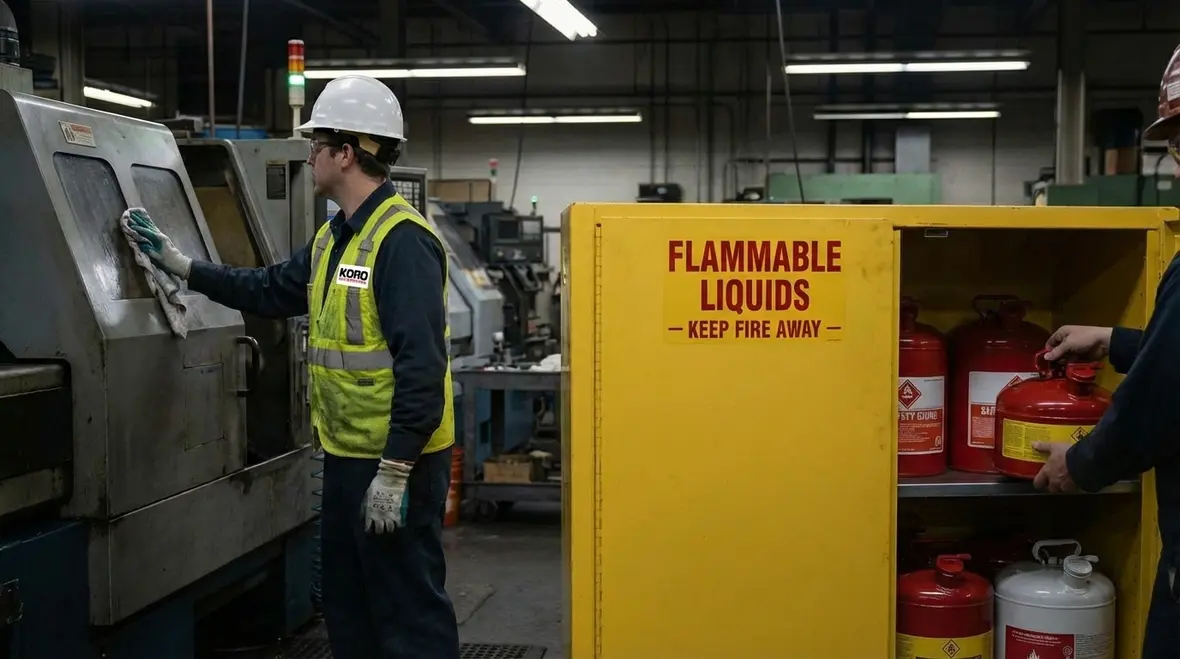
- Safe storage of flammable liquids in approved cabinets
- Regular inspection of cords, panels, and machinery
- Strict no smoking policies in designated areas
- Proper disposal of oily rags in metal containers
In addition, training employees to recognize hazards creates a culture of awareness. When workers understand why rules exist, compliance improves. Kord Fire Protection technicians often conduct on site training sessions, explaining fire behavior in clear terms. They break down how quickly heat builds, how smoke travels, and why early reporting saves lives.
City of Industry fire safety is not only about equipment. It is about habits. And habits form through repetition, leadership, and clear communication. After all, even the best sprinkler system cannot fix careless welding next to cardboard boxes.
Simple daily checks for supervisors
- Walk main aisles and confirm exits, extinguishers, and pull stations are unobstructed
- Verify forklift charging areas are clean, ventilated, and free from cardboard or plastic wrap
- Check that sprinkler riser rooms and fire alarm panels are accessible and clearly labeled
- Spot check that staff know how to report hazards and who to call for after hours issues
Emergency Planning and Evacuation Strategy
Even with strong prevention, emergency planning remains essential. Therefore, every industrial facility should maintain a written fire prevention and evacuation plan.
This plan should identify:
- Primary and secondary evacuation routes
- Assembly points outside the building
- Designated fire wardens or supervisors
- Procedures for accounting for employees
- Communication protocols with local fire authorities
Moreover, regular drills turn theory into muscle memory. During an actual emergency, adrenaline spikes and clarity drops. Practice creates calm under pressure. As Kord Fire Protection technicians explain, a drill may feel inconvenient, yet it builds confidence that cannot be faked.
Facilities operating under City of Industry fire safety expectations should coordinate with local fire departments. Sharing site maps and hazard details improves response time. In a crisis, familiarity can shave off precious minutes.
Make drills realistic, not ridiculous
The best evacuation drills in industrial buildings match real world conditions. That means considering night shifts, loud machinery, language barriers, and employees who are new to the site. Rotate scenarios, vary exit routes, and occasionally run a drill during busy production hours so teams practice under pressure, not just when the floor is quiet.
Inspection, Compliance, and Documentation Made Simple
Compliance is often viewed as paperwork. However, documentation tells the story of preparedness. It demonstrates that systems work, training occurs, and leadership takes responsibility seriously.
Below is a simplified dual column overview that facilities can use as a reference framework.
Column One: Inspection Focus Areas
- Sprinkler head condition and clearance
- Control valve accessibility
- Fire alarm panel functionality
- Emergency lighting operation
- Fire extinguisher placement and charge level
Column Two: Required Actions
- Schedule quarterly and annual professional inspections
- Maintain written and digital inspection logs
- Correct deficiencies immediately
- Train staff on extinguisher use
- Review compliance after layout changes
When layout changes occur, such as new racking or expanded production lines, fire protection systems must be reevaluated. City of Industry fire safety regulations require that modifications do not compromise coverage. Consequently, involving experienced technicians during upgrades prevents costly redesigns later.
The Role of Professional Fire Protection Technicians
There is a reason experienced technicians are called in rather than relying solely on internal maintenance teams. Fire protection systems combine engineering, hydraulics, code knowledge, and practical field expertise.
Kord Fire Protection technicians approach each facility with a diagnostic mindset. They evaluate water supply, hazard classification, occupancy type, and future growth plans. Then, they tailor solutions that align with both operational needs and City of Industry fire safety standards.
Additionally, they translate complex code requirements into clear action steps. Instead of drowning clients in technical jargon, they explain what must be done and why it matters. That clarity builds trust. And trust builds long term safety partnerships.
In many ways, these technicians act as quiet guardians. They work behind the scenes so that daily operations continue without disruption. Like stage crew in a theater production, they rarely seek applause. Yet without them, the show would not go on.
For many industrial facilities in the City of Industry, partnering with a local, full service provider is the easiest way to keep everything aligned. Kord Fire’s broader Los Angeles County fire protection services and dedicated Industry Fire Protection Services give you one point of contact for inspections, repairs, upgrades, and emergency calls.
Frequently Asked Questions
Conclusion
Industrial fire protection is not a luxury. It is a duty. Strong design, disciplined operations, and expert guidance form the backbone of effective City of Industry fire safety. Kord Fire Protection technicians stand ready to assess, upgrade, and maintain systems that protect people and property.
Do not wait for smoke to start the conversation. Reach out today, schedule a professional evaluation, and turn preparation into peace of mind. If your facility operates in the City of Industry or anywhere in Los Angeles County, explore Kord Fire’s dedicated Industry Fire Protection Services or their broader full fire protection services to get a customized plan in place before the next inspection—or the next emergency.
Know Your Weapon Before You Fight the Flame
Kord Fire Protection is your go-to when it comes to all things fire protection. For over 20 years, we’ve been serving Southern California with the quality service and equipment to keep your home or business safe at all times. Our competitive prices reflect our unwavering commitment to protecting what matters most in the event of a fire emergency. Give us a call, send an email, or use that form!

Join Our Newsletter!
Get the latest fire safety tips delivered straight to your inbox From our Newsletter.