Commercial Fire Alarm Design Australia for Reliable Safety
Quick Answer
Commercial fire alarm design is not a “set it and forget it” task. It is a disciplined process that balances life safety, code compliance, and real building conditions. When the design gets the details right, it helps systems respond fast and reduces false alarms. The right partner makes it easier to deliver that outcome.
In the real world, commercial spaces across Australia do not behave like a textbook. Corridors change, plant rooms get noisy, retail fitouts shift, and tenants ask for “one more upgrade” that somehow affects the whole system. That is why commercial fire alarm design must start with how the building actually runs, not just what the drawings say. A strong design sets the foundation for faster detection, clear evacuation cues, and reliable operation over time.
Of course, design alone does not protect anyone. It must translate into hardware placement, signalling logic, power calculations, and documentation that inspectors and maintenance teams can trust. That is where Kord Fire Protection becomes a vital partner. They help turn the design intent into a job that works on day one, stays compliant, and remains serviceable as the site evolves. And yes, avoiding false alarms matters. Nobody wants the fire system to act like a dramatic extra in a reality show.
If you want a practical service partner near the top of the process, Kord also offers full fire protection services that fit naturally alongside alarm planning, installation coordination, and long term site support. For teams focused specifically on alarms, their dedicated fire alarm service page is also worth a look.
Understand the building first, then design
Why real building behavior matters more than tidy drawings
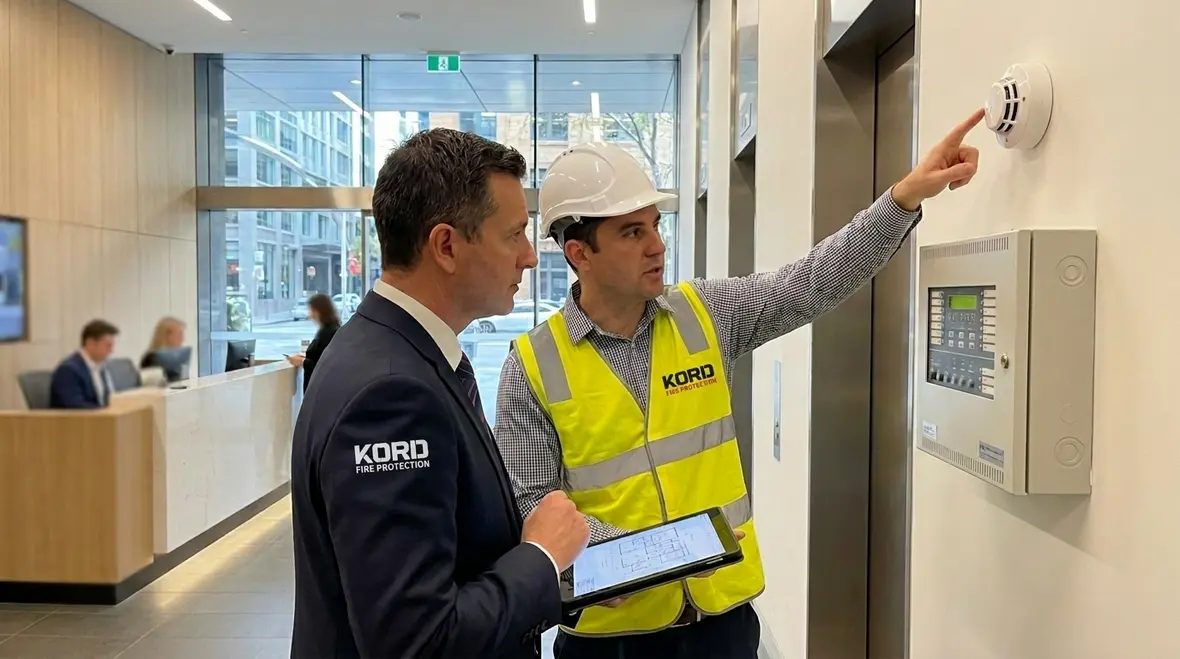
A designer who starts with the building avoids expensive surprises. They should review floor layouts, occupancy types, ceiling heights, material finishes, and airflow patterns. Then they should confirm where smoke will likely travel during a fire, because smoke does not respect office politics or “temporary” partitions.
In practice, this means walking the site or reviewing detailed scans and as built records. Next, the designer should map potential fire sources, such as electrical switchboards, cooking equipment in retail areas, charging points in industrial zones, and storage risks in warehouses. After that, they can select detection types and place them where they can actually work.
Transitioning from theory to reality, the team also needs to consider how people move and how they behave under stress. For retail and facilities, that means thinking about queue areas, back-of-house corridors, and exits that get crowded during peak trading. For industrial sites, it means factoring in machinery layouts, high bays, and areas with dust or steam that can affect detectors. A design that ignores movement patterns can look fine on paper and still underperform when a real evacuation begins.
Choose devices that match the hazard and the environment
Detector selection is where good intentions either survive or fall apart
Commercial alarm systems fail when the device does not fit the environment. So the design must align detector type with hazard level and conditions. For example, heat detection may suit spaces where smoke detectors would be triggered by steam, cooking vapour, or dust. Meanwhile, optical smoke detectors may fit clean areas where smoke obscuration is the main concern.
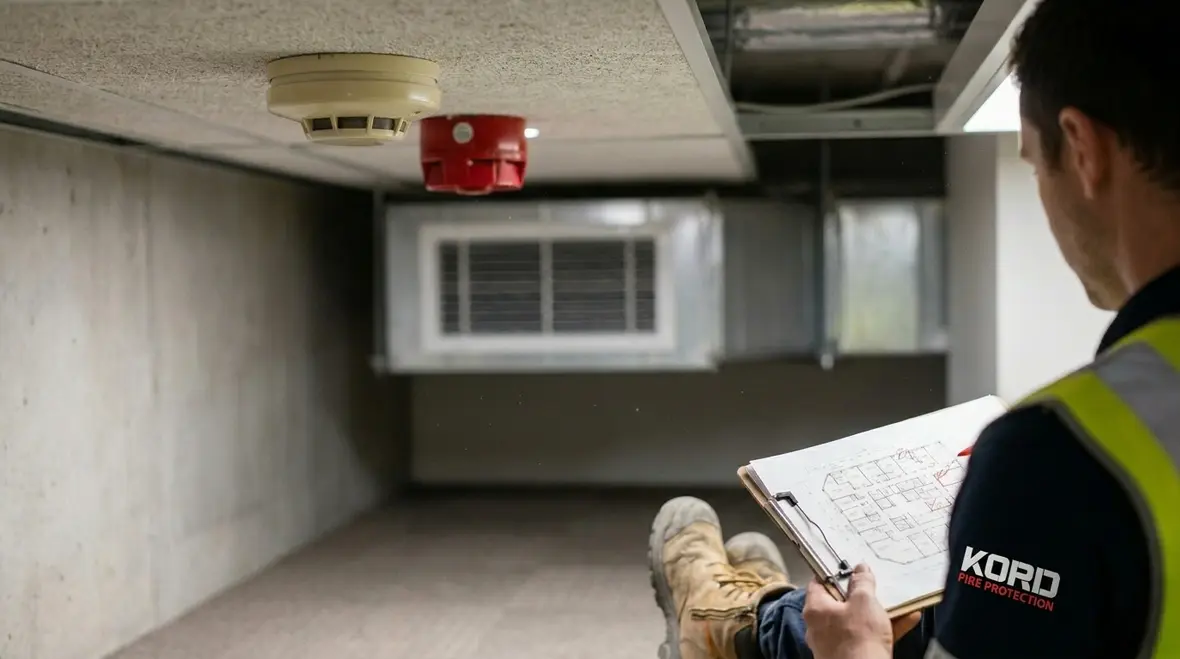
Then comes the placement detail that many people underestimate. Proper spacing and mounting height influence how quickly the system detects developing smoke. Additionally, airflow from HVAC systems can push smoke away from detectors, so designers should coordinate with ventilation layouts. If the building has large mechanical supply vents, the design needs to reflect that reality.
Another practical layer involves how the system deals with maintenance. Designers should plan for access, cleaning cycles, and replacement routines. Otherwise, the “perfect” design becomes a long term nuisance for facilities teams. When Kord Fire Protection partners early, they can validate device suitability and placement with an installer and service perspective. That means fewer redesign cycles, fewer call backs, and less time spent arguing about whether a detector “should have seen it.” In fire safety, hindsight costs lives and budgets.
Plan signalling and evacuation so alarms mean something
Clear notification should reduce confusion, not create panic theatre
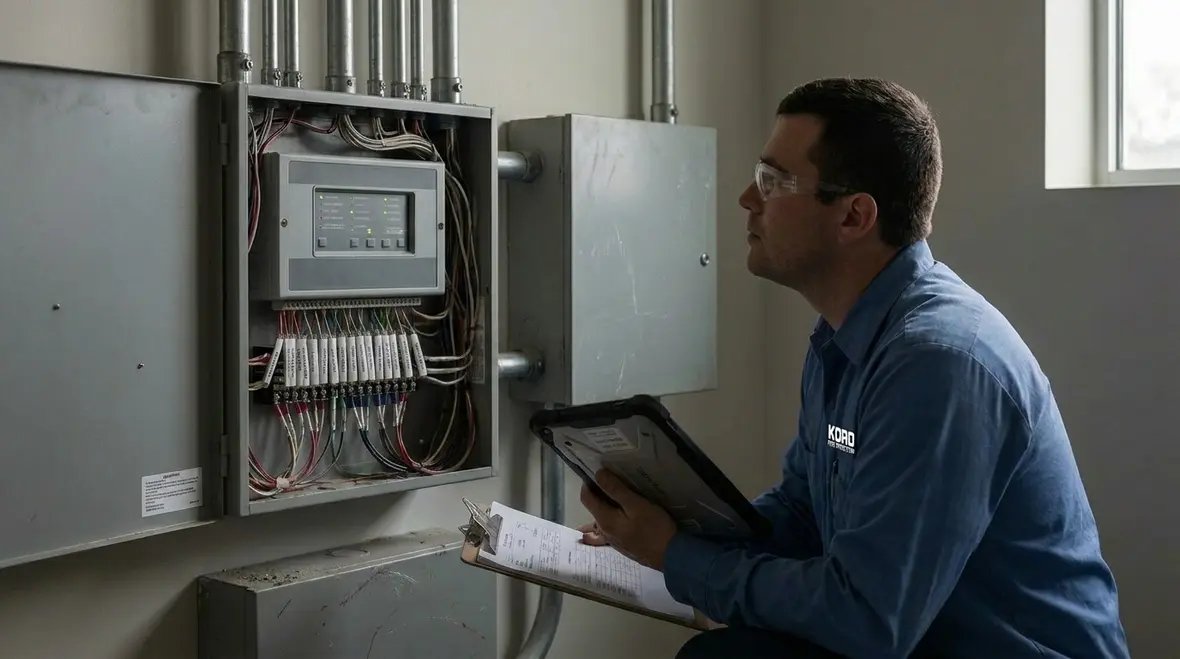
A commercial fire alarm system must communicate clearly. So the design should establish who hears or sees the alarm, where they receive information, and how the system handles zones across the site. In retail and commercial facilities, sound levels, strobe locations, and message clarity matter for staff, customers, and contractors.
Designers should also consider how alarms interact with business operations. For instance, car parks, loading bays, and plant rooms often need coordinated alerting without creating confusion for workers. Therefore, the design should use notification devices in a way that supports fast, calm evacuation rather than “panic theatre.”
Additionally, system logic matters. Alarm control panels should map signals to locations and functions. This supports faster response by security teams and fire wardens, and it helps the fire brigade interpret the site. If the system groups signals poorly, responders spend time guessing, and guessing is a luxury nobody can afford. Because requirements differ between sites, Kord Fire Protection can help align design intent with commissioning outcomes and service workflows, so the system stays meaningful after handover.
Handle power, standby, and monitoring like it is non negotiable
Reliability is not dramatic, but it is everything
Reliable power is the backbone of any commercial system. Designers must calculate voltage drop, panel load, and required standby duration based on the risk profile and site rules. Then they should design battery capacity and charging behaviour accordingly, so the system keeps working during mains failure.
However, power is not only about batteries. Monitoring inputs and supervision also matter. Cable supervision, fault reporting, and link integrity help the system detect problems before they turn into emergencies. In industrial environments, where cabling pathways face vibration, heat, and heavy foot traffic, supervision planning becomes essential.
For facilities teams, this can reduce downtime. For inspectors, it shows due diligence. For everyone else, it prevents the dreaded moment when the panel announces a fault and no one can pinpoint where the problem sits. That is not a plot twist; it is a preventable failure point. Strong monitoring design also makes troubleshooting faster later, which is helpful when nobody wants to spend their afternoon decoding fault history like it is an ancient text.

Make code compliance practical, not just a checkbox
Documentation should support the build, the test, and the next upgrade
In Australia, fire alarm design must meet relevant regulations and standards. Yet codes are written to guide safety, not to create paperwork for paperwork’s sake. So the design should link each requirement to a real outcome: detection speed, signal clarity, and system reliability.
To make compliance practical, the designer should produce documentation that matches the build. That includes zone charts, device schedules, wiring diagrams, and installation details that reflect what will actually be installed. Then, during commissioning, the team should test alarms, verify coverage, and confirm system behaviour under fault and alarm conditions.
Because businesses change, the design should also anticipate future works. Retail fitouts and industrial expansions often add areas, re-route services, or modify ceilings. Therefore, a well planned system allows updates without chaotic rewiring. It also supports ongoing service with consistent labelling and clear records. Kord Fire Protection can act as a vital partner in this stage, helping ensure design documents stay buildable and commissioning stays smooth. In other words, they help avoid the classic story where the design looked fine on paper, and then reality arrived wearing boots.
Coordinate the whole job, including commissioning and handover
A good system is connected to the broader fire safety strategy
Commercial fire alarm systems do not work alone. They integrate with building fire safety strategies, sometimes including shutdown functions, ventilation control, and emergency power behaviour. So the design should coordinate interfaces early rather than late.
That coordination reduces gaps between disciplines. It helps electrical teams plan cable routes properly. It helps builders manage penetration details. And it helps facilities teams understand what the system does, why it does it, and how to maintain it.
Commissioning should verify not only that the panel powers on, but that detection and notification perform as designed. Therefore, testing should include verifying sounder and strobe output, zone mapping, signalling paths, and fault conditions. After that, handover should provide as built documentation and service guidance that actually matches the installed system. Transitioning from installation to long term operation, Kord Fire Protection adds value by supporting the service side of the lifecycle. That means quicker issue resolution and fewer “mystery faults” when maintenance staff troubleshoot later. It is a partnership that protects both safety and the budget.
Prepare for change: expansions, upgrades, and false alarm control
The best commercial fire alarm design is the one that still works after the site changes
Most commercial sites evolve. Retail spaces remodel. Warehouses expand. Industrial plants add lines and new hazard areas. When the system is designed with flexibility, upgrades become manageable instead of disruptive.
Designers should plan spare capacity where appropriate, document zones clearly, and select devices and methods that support future additions. Additionally, they should focus on false alarm control. That means selecting detection types that suit the environment, avoiding poorly located devices, and considering nuisance sources such as steam, dust, and cooking vapour.
Sometimes a site team thinks false alarms are “just part of the job.” However, frequent alarms reduce trust. So the design and maintenance strategy must support stable operation and clear response procedures. When false alarms do occur, the system should log events in a way that allows fast root cause analysis. With Kord Fire Protection working as a vital partner, the project team can align design choices with ongoing service practices. That alignment helps ensure the system stays dependable as the site changes. If the alarm system feels like it is always crying wolf, then it needs tuning, not more meetings.
FAQ
Conclusion
Commercial fire alarm systems succeed when design decisions match real conditions, commissioning verifies outcomes, and service keeps performance steady over time. For industrial, retail, and multi-facility sites across Australia, Kord Fire Protection can become that reliable partner who connects the dots from intent to installation and beyond.
Talk to Kord Fire Protection
If the goal is dependable life safety without chaos, reach out to Kord Fire Protection today to discuss your project needs and explore the right next step for your site.

Join Our Newsletter!
Get the latest fire safety tips delivered straight to your inbox From our Newsletter.