Fire Extinguisher Placement Strategy by Kord Fire Protection
Fire safety looks simple until someone tries to “wing it” with extinguisher locations. A smart fire extinguisher placement strategy starts with a quick site walk, maps hazards first, then places units so staff can reach them fast and use them without tripping over furniture, racking, or that one cart that always blocks the path. Next, Kord Fire Protection Technicians confirm mounting height, travel distance, visibility, and door swing issues, then they document everything so the plan holds up during drills and inspections. In other words, they build protection that works like a good action scene in a movie: clear, fast, and without the dramatic confusion. And yes, that includes making sure the extinguisher is where people can actually grab it, not where it sounds good on paper.
How Kord Fire Protection Technicians approach placement decisions
Kord Fire Protection Technicians treat extinguisher placement as a safety system, not a last minute sticker on a wall. First, they review the facility layout and identify where fire risk starts and spreads. Then, they match extinguisher type and size to likely fuel sources and ignition sources. After that, they plan the locations around human movement. Even the best extinguisher is useless if the path is blocked by a locked gate, a seasonal storage pile, or a door that swings the wrong way.
Next, they check how far a person must travel to reach equipment. They also look at sightlines so units stand out in real conditions, not only during a clean walkthrough with lights on and everyone cooperating. Finally, they verify mounting details and inspection access, because a unit that is hard to service might as well be invisible. It is business casual protection, with no “we will fix it later” energy.
Define hazards, then place extinguishers where fires start
Facilities do not burn randomly. Fire tends to begin in specific areas like kitchens, electrical closets, machine rooms, loading docks, flammable storage, and areas with frequent vehicle traffic. Therefore, placement should follow hazard flow. If a room contains solvents or finishes, the location should support rapid response. If a workspace holds hot equipment, the plan should focus on where ignition can happen and where employees can safely access the extinguisher.
To make this practical, the technicians often sort risks by fuel and heat source. Then they align extinguisher selection and placement with that reality. For example, they may add units near likely ignition points and along expected egress paths, rather than placing them only at corridor corners. Meanwhile, they keep in mind that many fires start small and grow fast. Thus, the strategy aims for quick grab-and-use, not a heroic sprint that ends with a sore ankle and a shrug.

What mounting height and access rules protect real people
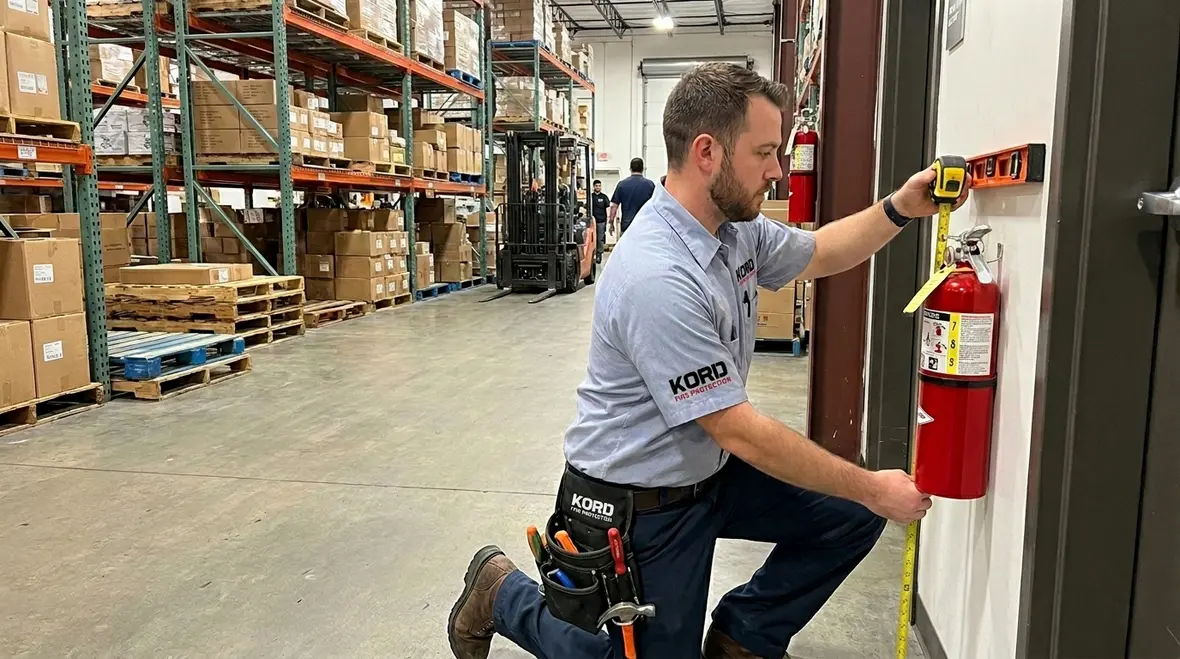
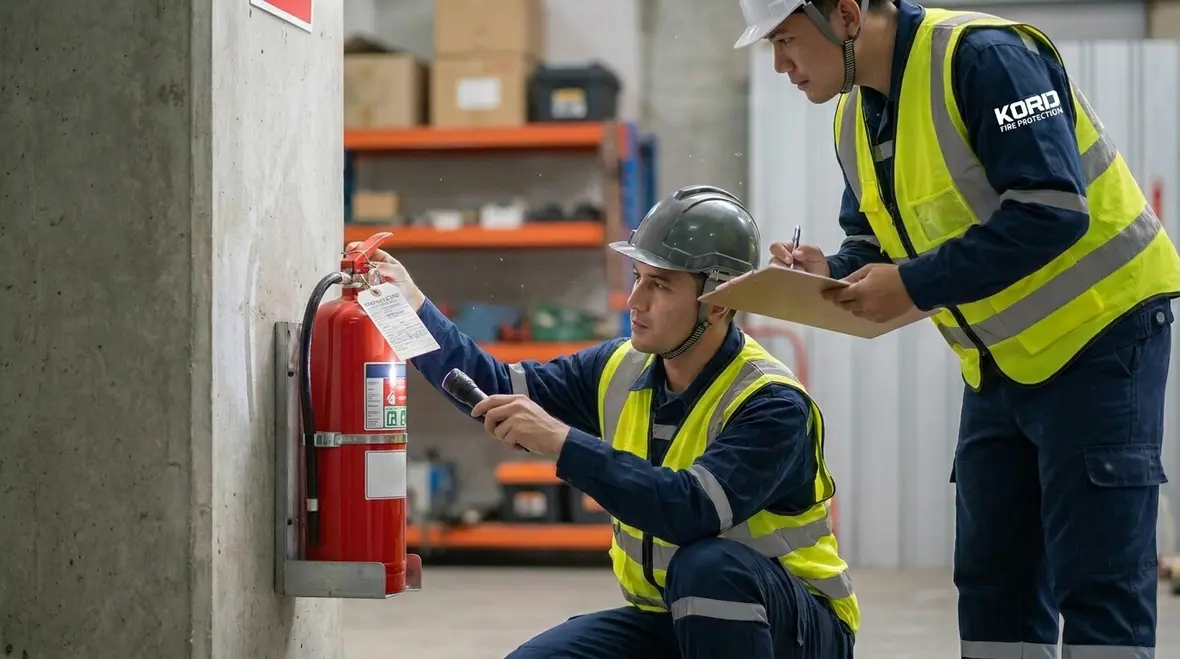
Placement fails when the extinguisher is technically “there” but not reachable under stress. Kord Fire Protection Technicians focus on mounting height, reach, and clear access. They place units so an employee can identify them quickly and grab the handle without climbing on stacked items or leaning past obstacles. In addition, they check that the extinguisher sits where it will not be hidden behind hanging materials, tool boards, or seasonal signage.
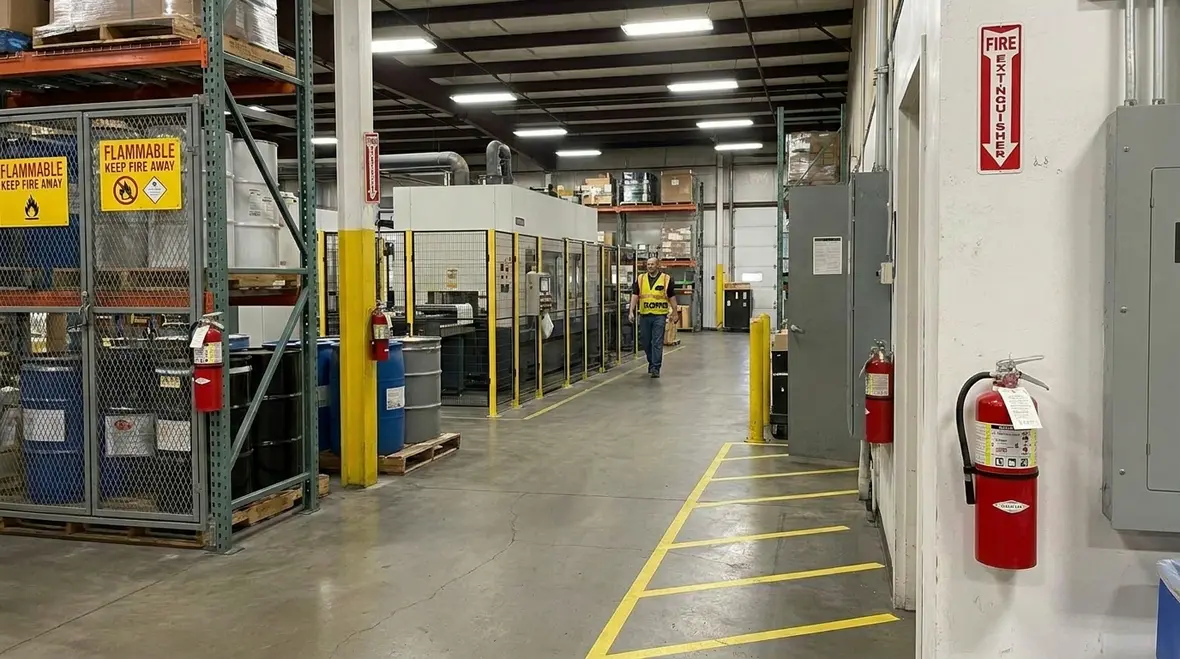
Access also includes the path. Technicians ensure that the route remains clear, even during shift change when carts roll in, pallets get staged, and someone inevitably says, “It is only for today.” Also, they verify that doors and gates do not trap people at the wrong side of the opening. A door that blocks access or swings into the extinguisher area turns a safety plan into a frustrating obstacle course.
How far should an extinguisher be from a person in danger
Distance matters because the early stage of a fire often gives the best chance of control. Therefore, the placement strategy balances coverage along travel routes with the idea that people may be moving under stress. Kord Fire Protection Technicians evaluate typical routes from work areas, then they place extinguishers so employees do not need to cross open floor hazards or travel through smoke-prone zones to reach help.
At the same time, they consider facility size and layout. A one wing corridor might need fewer units than a multi-tenant warehouse with long aisles. However, a long aisle with high shelving can reduce visibility and create blind spots. In those cases, technicians may place units at more frequent intervals or at points where employees can see them from normal positions. Consequently, the plan supports quick action instead of forcing people to search.
Pick the right type, then verify it matches the environment
Placement should never ignore extinguisher type. Kord Fire Protection Technicians select units based on class of hazard, expected fuel, and risk level. A facility that includes electrical hazards needs a different approach than one focused on paper, plastics, or cooking oils. So even if units are perfectly mounted, the wrong classification can slow the response or increase danger.
Moreover, technicians evaluate the surrounding environment. In dusty areas, visibility matters. In places with frequent mist or steam, employees may confuse discharge patterns. In high-traffic areas, mounting locations should consider how people move and where they naturally pause. Then technicians confirm that each unit is placed so it can be reached, assessed, and used without delay.
Dual-column planning example for placement and service readiness
To show how placement and service readiness connect, Kord Fire Protection Technicians often align the details below. Here is a simple example of how a team might map the strategy across two key needs.
Common mistakes facilities make when they place extinguishers
Even well-meaning teams make the same mistakes again and again. First, some facilities place extinguishers near the office because it feels responsible, even though the real risk sits in the shop or storage area. Then, people add units after renovations without updating the plan. The result looks fine on a floor plan, but it breaks in the real world when new racks, signage, or partitions change movement patterns.
Another frequent error involves blocked access. A unit can sit at the perfect height, yet it still becomes unusable when pallets stack too close or when temporary staging becomes a permanent habit. Additionally, some teams mount units so they face the wall or hide behind doors. And yes, doors can be sneaky, like a cat that acts innocent right up until it knocks your coffee over.
Finally, facilities sometimes forget training and documentation. Kord Fire Protection Technicians not only place units but also help teams understand how the placement supports fast action. When staff knows where equipment sits and why it is there, the response becomes calmer. That calm is not just nice. It can save property and lives.
How to keep your plan strong after changes
Fire safety is not a one-time project. Facilities change. Equipment gets replaced. Storage shifts. New contractors move in and suddenly the “temporary” staging becomes permanent. Therefore, the extinguisher placement strategy needs a maintenance cycle that follows operational reality.
Kord Fire Protection Technicians recommend reviewing extinguisher locations after major layout changes, new processes, or changes to hazard areas. They also check whether access routes remain clear and whether the extinguisher type still fits the current risks. If a company adds flammable materials, changes a cooking process, or modifies electrical setups, the risk profile shifts. Then the placement and selection should follow.
Also, teams should track inspections, service records, and maintenance schedules. Regular checks keep the plan credible. And when staff sees that the facility treats fire protection like a real system, people pay attention. Not because they love paperwork, but because it prevents the “where is it?” moment during an emergency.
FAQ on extinguisher placement
Conclusion: upgrade coverage and protect your facility
Every facility deserves a fire safety plan that works when it counts. Kord Fire Protection Technicians help teams use a practical fire extinguisher placement strategy based on real hazards, safe access, and clear visibility. If your layout has changed, if staff struggles to find units quickly, or if you want stronger coverage with fewer surprises, now is the time to act. Contact Kord Fire Protection for a placement review and a plan your team can trust. Because in an emergency, “close enough” is not a safety standard.
Know Your Weapon Before You Fight the Flame
Kord Fire Protection is your go-to when it comes to all things fire protection. For over 20 years, we’ve been serving Southern California with the quality service and equipment to keep your home or business safe at all times. Our competitive prices reflect our unwavering commitment to protecting what matters most in the event of a fire emergency. Give us a call, send an email, or use that form!

Join Our Newsletter!
Get the latest fire safety tips delivered straight to your inbox From our Newsletter.