Industrial Fire Protection Upgrades in Australia for Compliance
Quick Answer (40 to 60 words)
Industrial facilities in Australia upgrade fire systems to match modern risks, codes, and faster response needs. Industrial fire protection upgrades typically include better detection, smarter alarm design, compliant suppression, and reliable water supply testing. Kord Fire Protection can partner with owners to plan, install, and verify upgrades with minimal downtime.
Facilities that need broader support across inspections, testing, alarms, sprinklers, and pumps can also explore Kord Fire Protection’s full fire protection services to see how upgrade planning fits into a larger compliance strategy.
Why modern industrial fire protection upgrades matter now
In the first place, industrial sites face risks that never sit still. New racking layouts, changed processes, higher storage density, and newer electrical loads all shift the fire profile. Industrial fire protection upgrades help facilities respond faster, protect people, reduce business interruption, and meet evolving Australian standards.
Next, many facilities were built for the problems of their day. Then the building evolves, but the fire protection sometimes stays on the same old schedule. And yes, that can feel like running a 1990s printer on a 2026 network. It prints… eventually. It just wastes everyone’s time.
So, facilities that upgrade early avoid costly surprises during audits, insurer reviews, or major shutdowns. Also, they can build a system that supports operations, not one that constantly interrupts them. That is a big reason many teams start with a sitewide review of detection, suppression, water supply, controls, and documentation instead of patching one device at a time.
Start with the parts of the system that affect operations most
A practical upgrade path usually focuses first on systems that create the highest risk if they fail or drift out of spec. That often means alarms that no longer match the building layout, sprinklers serving changed storage arrangements, and fire pumps or water supplies that have not been validated under real demand conditions. Kord Fire Protection’s recent guide on the full lifecycle of fire protection also highlights why planning, commissioning, and later testing all need to connect instead of living in separate silos.
Assessing risks across warehouses, workshops, and retail zones
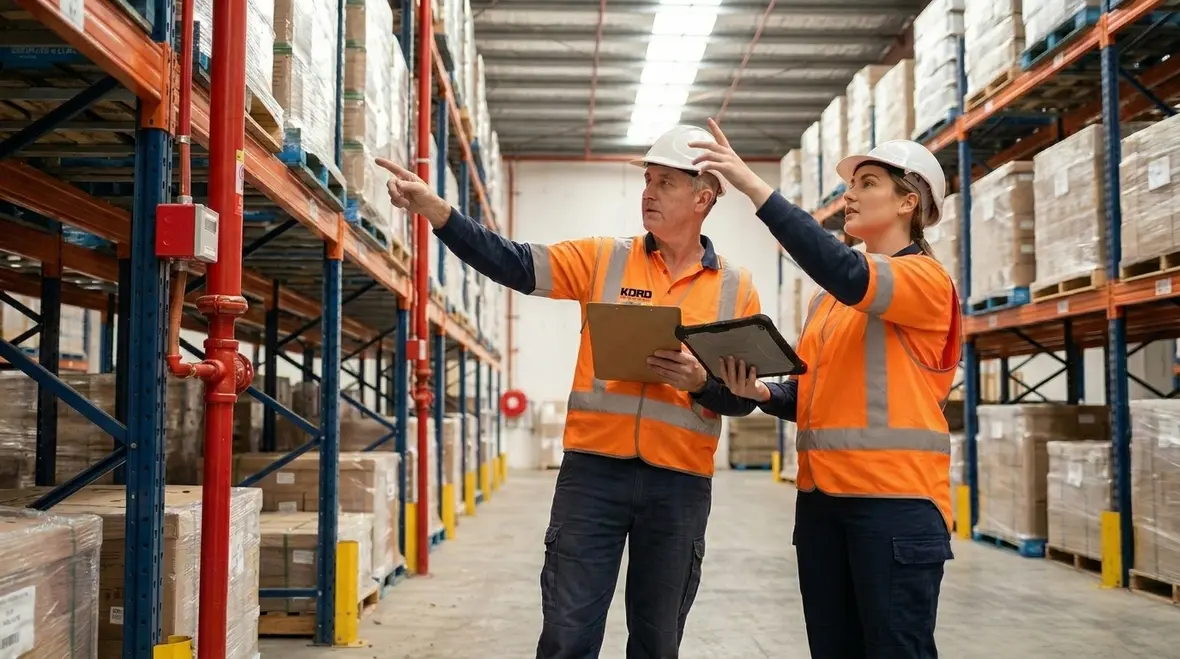
Upgrading begins with a clear picture of what could burn, where smoke would travel, and how quickly conditions would worsen. A proper assessment looks at the whole site, not just a single storeroom. For instance, a logistics warehouse has different hazards than a fabrication workshop or a mixed-use retail floor.
Then teams map ignition sources such as welding, hot work, battery charging, forklifts, electrical panels, and dust collection systems. After that, they identify fuel loads like packaging, plastics, timber, chemicals, solvents, and even accumulated lint or dust. If someone says, “It is probably fine,” that is usually a moment to smile politely and ask for evidence.
Finally, the assessment checks egress paths, compartment boundaries, and how airflow from loading docks affects smoke spread. When the analysis is done well, the design team can plan detection and suppression that actually fit the way the facility operates.
Different occupancy zones create different upgrade priorities
A warehouse may need focused review of storage height, rack configuration, and sprinkler coverage density. A workshop may need closer attention to sparks, machinery, and hot work controls. A retail zone may care more about occupant movement, clear exits, and alarm intelligibility. The point is not to force one answer onto every space. The point is to match the fire protection strategy to the risk that actually exists on the floor.
That tailored approach is one reason owners often avoid blanket replacements and instead phase upgrades based on exposure, occupancy, and inspection findings. It keeps spending pointed at the places where compliance risk and business interruption risk overlap most sharply.
Detection and alarm systems that keep pace with change
Once risk is understood, detection and alarms become the heartbeat of the upgrade. Modern systems can include multi-sensor detection, improved zoning design, and smarter control interfaces. As a result, the system can differentiate between nuisance sources and real fire conditions.
Also, many industrial environments need alarms that stay reliable despite dust, vibration, steam, and temperature swings. That means choosing devices rated for the specific conditions and placing them where smoke will move naturally. Otherwise, the alarm becomes a smoke alarm for the next postcode, not your ceiling.
In addition, facilities often need upgrades to public address, evacuation strategies, and integration with building management systems. When the alarm plan coordinates with plant operations, response time improves and staff follow procedures with less confusion.
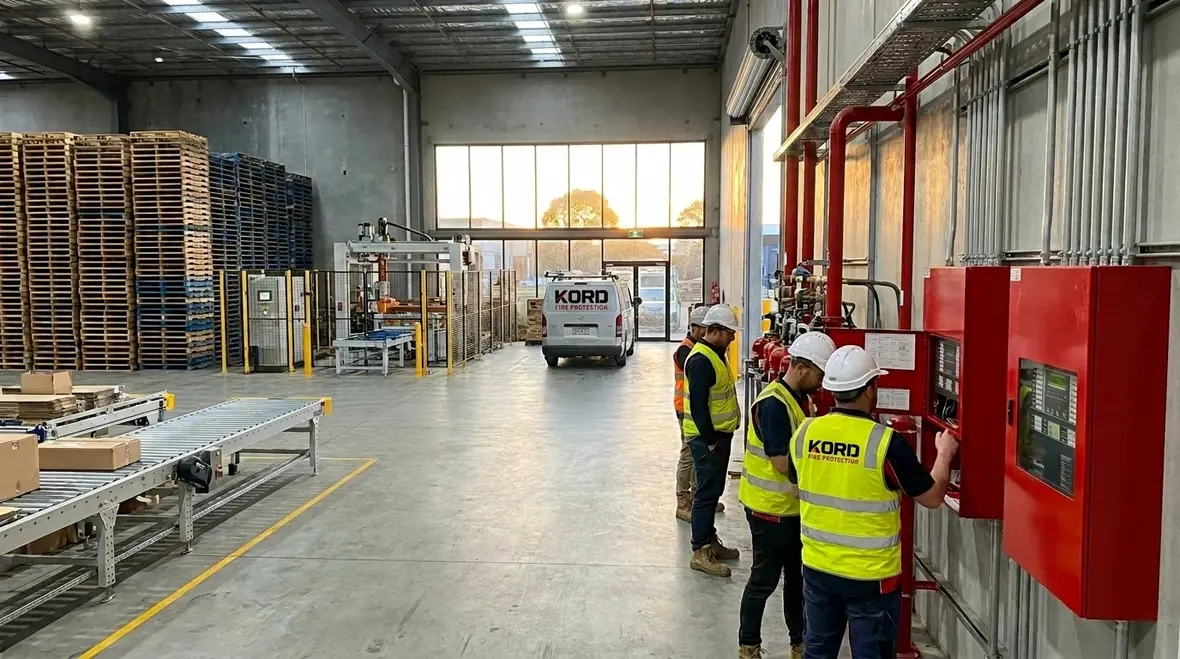
Kord Fire Protection can become a vital partner at this stage by aligning the alarm design with the site’s operational realities and commissioning requirements, so the system works the way it was promised.
Commissioning matters as much as device selection
A panel full of new hardware is not automatically a better system. Performance depends on programming logic, cause and effect sequences, interface verification, and realistic testing. Kord’s article on fire suppression control panels and power distribution is a useful reminder that testing should prove the design works in practice, not just in a submittal package.
When teams test alarms against likely operational scenarios, they catch issues such as delayed signals, poorly planned zoning, confusing notifications, and control interfaces that looked good on paper but behave like they have their own opinions. Fire systems are allowed to be serious. They are not allowed to be dramatic.
Suppression upgrades and water supply performance in real conditions
Detection tells you something is happening. Suppression helps stop it from growing. Therefore, industrial fire protection upgrades commonly include sprinkler system improvements, alternative suppression where water is not ideal, and support systems such as hydrants and pumps.
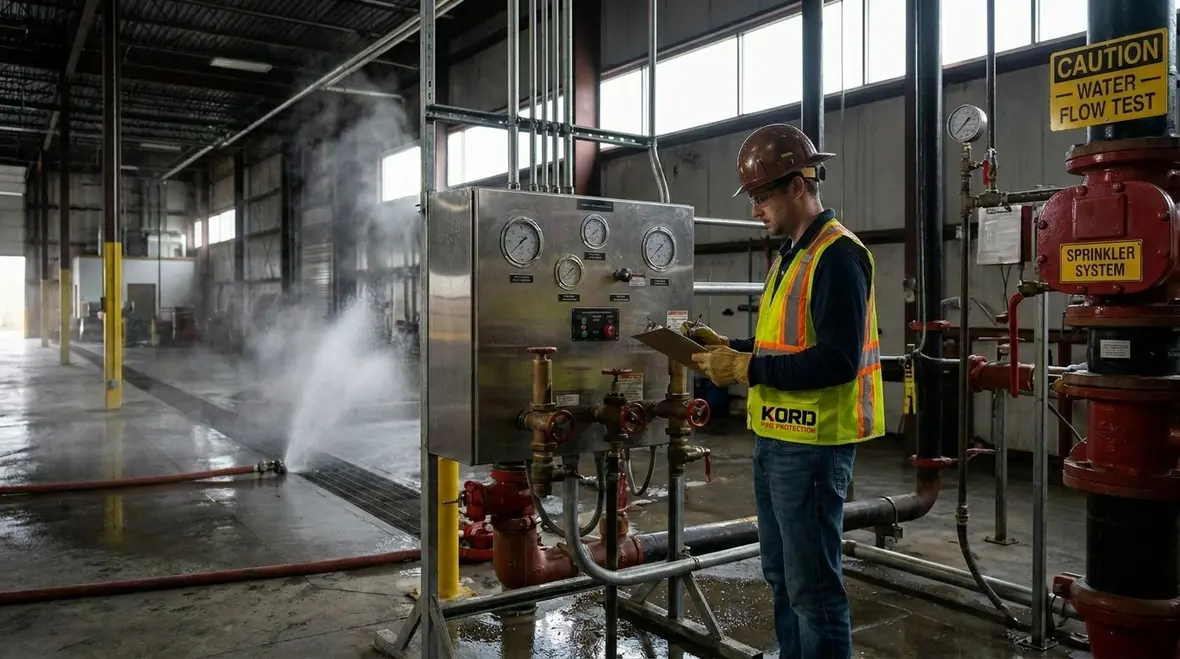
However, a suppression system is only as good as its water supply performance. That is why pressure, flow, and demand must be tested under realistic conditions. If the supply is weak, the system can be compliant on paper and still fall short in an actual incident. And that is the kind of gap that does not show up until it is too late.
Additionally, facilities often require upgrades to control valves, alarms, drainage, and local isolation to support safe maintenance. Better compartmentation also changes what suppression should protect. When the design accounts for layout and occupancy, suppression becomes targeted rather than generic.
Moreover, Kord Fire Protection can support the process by coordinating technical planning, install sequencing, and verification testing, so upgrades do not create downtime headaches that last longer than necessary.
Testing water supply before handover saves painful surprises later
Owners tend to remember the dramatic parts of a project, but the quiet tests matter just as much. Main drain observations, pump checks, valve supervision, and supply verification are where teams find the problems that could otherwise wait until an inspection, an insurer review, or an actual fire event. Kord’s articles on wet sprinkler system inspection and fire sprinkler testing requirements both reinforce the value of regular testing discipline and clear reporting.
Compliance, testing, and documentation that stand up to audits
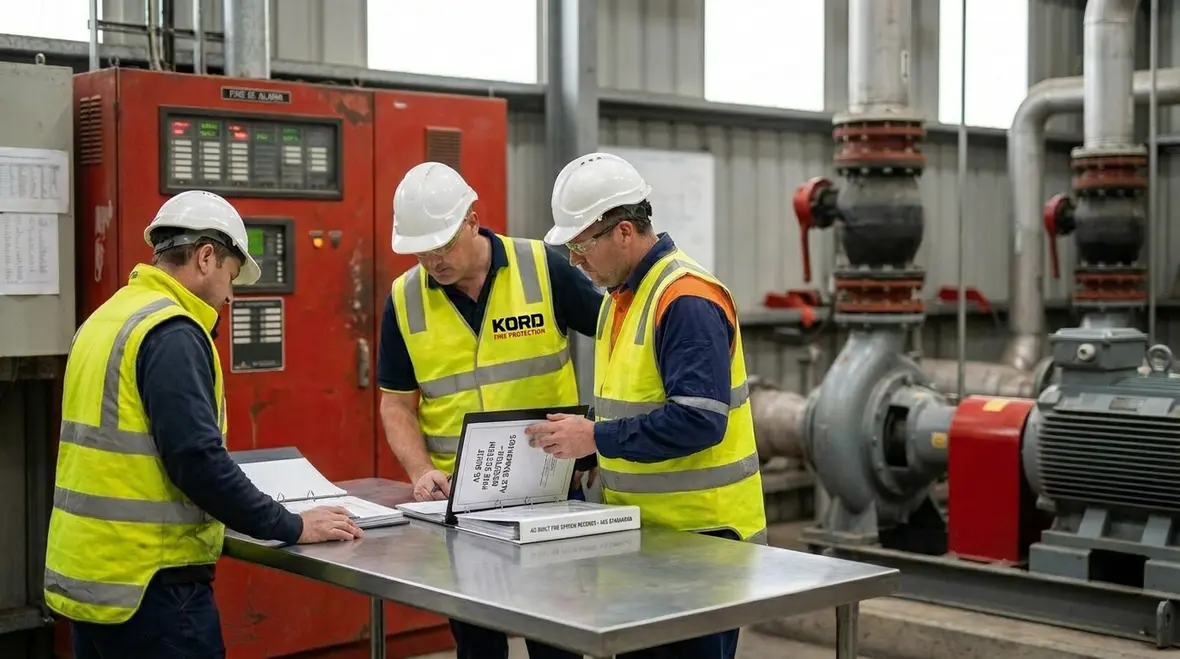
In Australia, compliance is not a box to tick. It is a living requirement that depends on evidence. So industrial fire protection upgrades must include commissioning records, test results, and clear documentation for ongoing maintenance.
During installation, teams should capture device configuration details, setpoints, and as built changes. Then they run system tests that match operational scenarios, such as alarm activation paths, pump starts, valve supervision, and time to signal.
After that, facilities plan maintenance schedules that align with manufacturer recommendations and local requirements. Without good maintenance, even a strong system starts drifting out of spec. It is like keeping a gym membership but never showing up. The benefit fades.
Kord Fire Protection helps facilities by bringing structure to the upgrade process, supporting commissioning, and ensuring records are ready for insurers, regulators, and internal audit teams.
Good records make future testing easier
Clear records reduce friction long after the project team leaves site. Technicians can compare current performance to prior baselines, managers can answer audit questions faster, and owners can make better upgrade decisions later because the last project did not vanish into a folder named final final newest version. Everyone wins.
Minimizing downtime while upgrading across active facilities
Most industrial sites cannot simply shut down fire protection to “install later.” So upgrade planning should protect operations and staff at every step. This often means phased works, temporary safeguards, and careful scheduling around production cycles.
For example, teams may isolate zones section by section, coordinate shutdowns with the highest risk windows, and stage materials so work crews move efficiently. Then they verify functionality after each phase, not at the end of a long project where issues get harder to solve.
Also, staff communication matters. When managers and crews know what to expect, they can follow safety controls without panic. A calm site is a safer site, and nobody likes a surprise evacuation that turns out to be a test of a valve. That gets old fast.
Kord Fire Protection can act as a steady delivery partner, helping facilities coordinate timing, safety measures, and verification so upgrades move forward without turning the project into a long-running sitcom.
Phasing only works when each stage is verified
The safest phased projects do not rely on hope between milestones. They confirm each isolated section is restored, supervised, and documented before the next section begins. That reduces the chance of hidden gaps and gives operations teams confidence that temporary measures are not lingering longer than planned.
How Kord Fire Protection supports the upgrade journey in Australia
When a facility commits to fire safety improvements, it needs more than a parts list. It needs a partner that understands industrial realities and can manage the project from planning through commissioning and handover.
Kord Fire Protection can support industrial, retail, and commercial facilities across Australia by bringing practical expertise to industrial fire protection upgrades, including systems assessment, design support, installation coordination, commissioning, and documentation readiness.
Also, because sites vary widely, Kord can help tailor the approach to each environment, whether it involves detection refinement, suppression upgrades, or water supply performance checks. As a result, facilities get a system that fits their processes, not a one-size-fits-all solution.
And when questions come up during delivery, Kord can respond with clarity and action. That matters, because the only thing worse than downtime is uncertainty during downtime.
For readers who want a broader overview of how inspections, repairs, and readiness fit together, Kord Fire Protection’s fire protection services guide offers more context that pairs naturally with upgrade planning and compliance work.
FAQ
Final CTA
If a facility wants fire safety that matches how it actually runs, it should plan industrial fire protection upgrades with a partner that delivers from assessment to commissioning. Kord Fire Protection can help modernize detection, suppression, and verification while keeping downtime controlled.
Contact Kord Fire Protection today to discuss your site risks, upgrade priorities, and a practical path to safer operations across Australia. The goal is not just to pass the next inspection. It is to build a system that performs calmly, clearly, and reliably when the pressure is real.

Join Our Newsletter!
Get the latest fire safety tips delivered straight to your inbox From our Newsletter.