Fire Suppression Control Panels Power Distribution Guide
When a facility needs suppression protection, the job does not start with alarms. It starts with control, timing, and clean power. Our fire suppression control panels sit at the center of that process, quietly managing signals so the suppression system activates when it should. And yes, when people skip the power side, it is like building a car without brakes. It runs, until it does not.
Choosing the right power distribution for suppression control systems matters because it directly affects reliability, troubleshooting, and compliance. Kord Fire Protection Technicians explain it in plain terms: power is not just “electricity,” it is the backbone that keeps every decision crisp under pressure. Facilities that already rely on fire alarm services often discover the same lesson quickly: control equipment performs best when the power plan is treated like a core part of the system instead of an afterthought.
Power distribution that keeps suppression control stable
Suppression control systems rely on multiple loads, such as releasing circuits, monitoring points, and supervisory devices. Therefore, the power distribution design must deliver stable voltage and enough current, even when devices draw power at the same time. In practical terms, a weak design can cause nuisance faults, slow response, or failed actuation.
Kord Fire Protection Technicians often point out that customers focus on the suppression agent, then they forget the control side has its own appetite. So they ask a simple question: what happens when the system goes from normal to emergency conditions? During that transition, panel circuitry and field devices must stay within allowed limits.
To do that, the distribution plan must match both steady state and peak loads. It also must handle battery-backed operation so the system stays alive through power loss. In other words, the show does not begin when the alarm sounds. It begins when the power bus decides whether it will hold.
Why stable voltage matters more than people think
A suppression system may look calm in standby, but the real test comes during transitions. Once multiple circuits supervise, signal, and prepare to release, small weaknesses become visible fast. A clean power distribution layout helps the panel read conditions accurately, keep logic steady, and avoid the kind of weird intermittent trouble that makes everyone stare at the enclosure like it personally offended them.
Selecting power sources that match the real load profile
Many facilities choose a power source based on availability, not performance. However, suppression control systems require a clear match between expected current draw and the available power. That includes normal monitoring current, alarm load current, and any release power that energizes solenoids, valves, or other actuation devices.
To get this right, Kord Fire Protection Technicians recommend reviewing load schedules before buying hardware. They also recommend documenting how the system behaves during phases: standby, supervisory, pre action, and full alarm. This helps prevent undersized transformers, tired battery banks, and “it worked on the bench” surprises.
Also, power sources must account for voltage drop over distance. If a release circuit runs far, even a properly selected power source can lose output at the terminal. Therefore, installers should size conductors and route circuits thoughtfully, then confirm voltage levels at the point of load.
That is one reason many project teams benefit from coordinating the power conversation with broader county-level planning, especially on large or mixed-use properties. For facilities in the area, Kord Fire also offers regional support through El Centro fire protection services, which can help connect suppression needs with inspections, alarms, and long-term service strategy.
Wiring strategy for low voltage drop and clean control
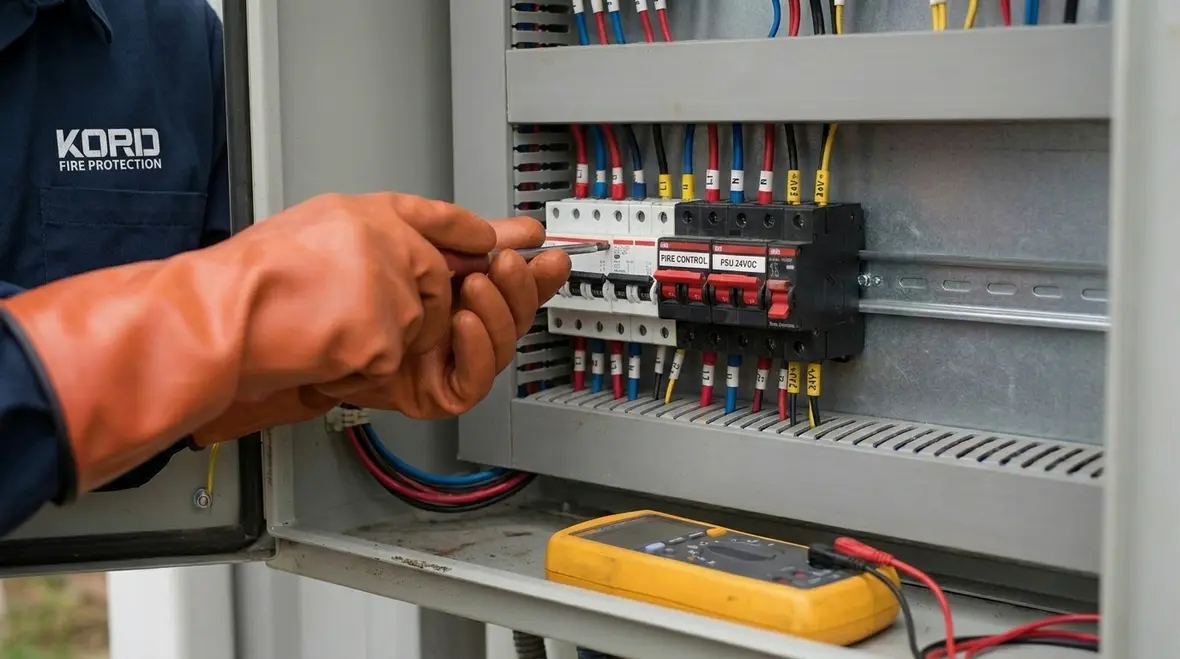
Power distribution is not only about supply. It is also about wiring. When suppression control systems use long runs or poorly planned homeruns, voltage drop can creep in like a cat into a closed room. It looks harmless at first, then it knocks something over later.
Clean control wiring helps keep signals accurate and power delivery consistent. Kord Fire Protection Technicians explain that installers should separate power and control where the standard calls for it, use proper conductor gauges, and follow grouping requirements to reduce interference.
In addition, terminals and splices must stay secure and accessible for testing. That way, maintenance teams can isolate issues without turning the system into a mystery novel. If a fire suppression control panel reports a trouble condition, the team should be able to trace it quickly to a specific circuit segment and power path.
Finally, consider how the system handles multiple loads at once. If several devices activate simultaneously, the wiring plan should prevent sag on the main supply and avoid shared return paths that can cause confusing readings.
Common wiring mistakes that cost time later
- Using conductor sizes that technically fit but leave no practical margin under load
- Combining returns in ways that complicate troubleshooting and produce messy readings
- Routing circuits without thinking about future service access
- Leaving labels vague enough that everyone suddenly becomes a detective during a trouble event
How backup power and battery sizing protects the plan
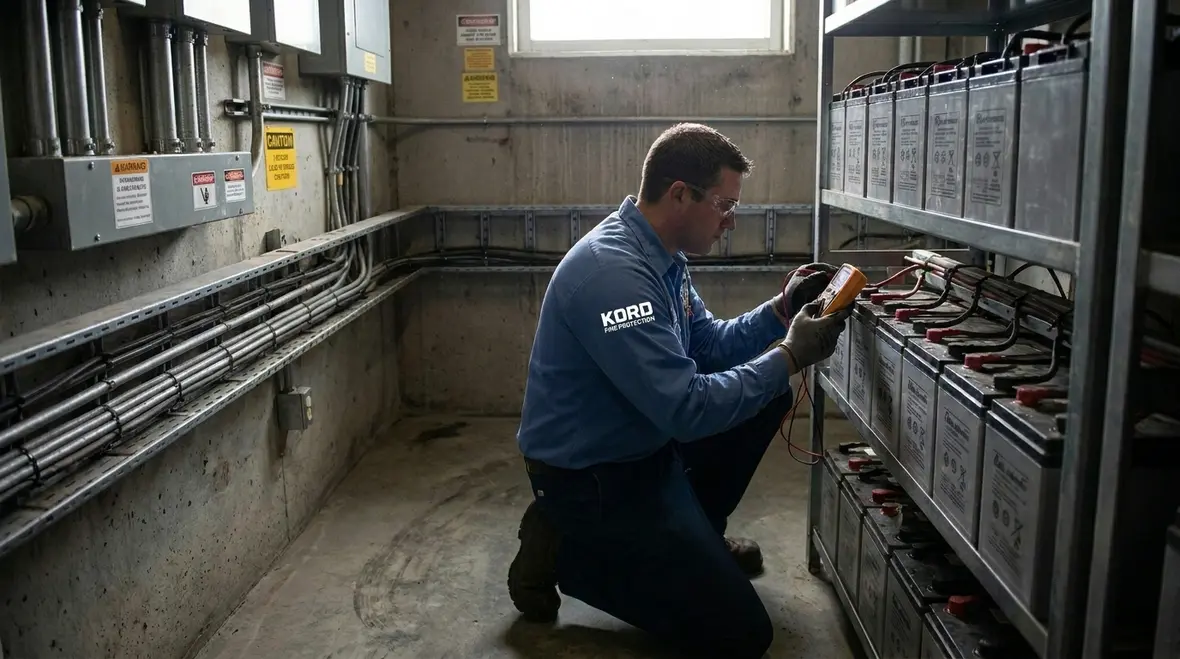
Backup power keeps suppression protection active during utility loss. So battery sizing needs more than a quick guess. It requires understanding system standby draw and expected alarm and release events. Kord Fire Protection Technicians emphasize this because batteries often fail due to mismatch, not because batteries are “bad.”
First, the panel’s monitoring load stays active all the time. Then the release sequence adds additional current when the system transitions. Therefore, the backup plan must cover the required standby time plus the time needed to operate the system in an emergency.
Second, batteries age. Capacity fades, internal resistance rises, and voltage under load drops. So good design includes realistic battery aging assumptions and ensures the system still meets required performance limits over the battery’s life.
Third, the charging system must work properly. If the charger undercharges, batteries drift low. If it overcharges, batteries wear out sooner. The goal is stable charge current so the fire suppression control panels and the entire power distribution remain dependable.
Overcurrent protection that prevents nuisance trouble while staying safe
Overcurrent devices protect conductors, terminals, and field wiring. Yet they also influence system behavior. If someone selects protective devices without understanding inrush and fault clearing times, the system can experience nuisance trips, especially during release sequences.
Kord Fire Protection Technicians explain that protection must balance two goals: safety and selectivity. Safety means the device clears when a true fault occurs. Selectivity means the correct device clears while other circuits stay powered, so the whole system does not go down during a localized problem.
To support selectivity, teams should coordinate breakers and fuses across circuit branches. They should also confirm that protective ratings match the conductor sizes and electrical loads. And yes, sometimes the right answer sounds boring. Boring is good. Boring means the right parts, in the right place, doing the right job.
Where relevant, distribution blocks and terminal blocks should also receive appropriate surge and fault considerations so downstream devices do not get hit with unstable conditions.
Power distribution layout: a practical approach for real projects
Some designs look tidy on paper and fall apart during installation. So a good layout plan must account for panel location, device reach, and future access. It also must support testing and inspection.
Design choice
Device grouping and circuit separation
Short, direct runs to release devices
Clear labeling and test points
Accessible wiring paths and panels
Why it matters
Reduces confusion during troubleshooting
Limits voltage drop and improves actuation confidence
Speeds verification and maintenance checks
Supports compliance without “creative bending”
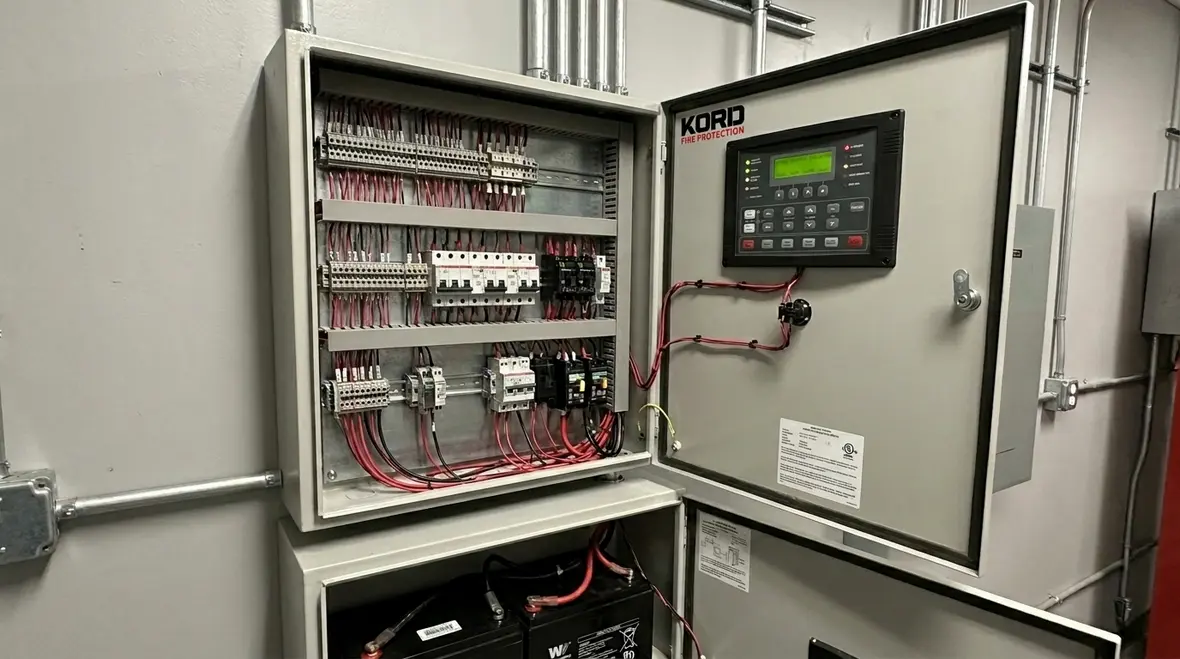
Even in well designed layouts, the team should plan for service. Therefore, power distribution should include space for conduit routing, follow codes for separation, and avoid cramped cable fills that make terminations unreliable. When fire suppression control panels get installed in a tight enclosure, technicians must still reach terminals and safely check measurements.
Additionally, Kord Fire Protection Technicians recommend a final system walkthrough that verifies each circuit’s power path. That includes checking voltage under load conditions and confirming that supervisory circuits behave as expected before commissioning.
Planning for future maintenance pays off
A layout that only works on install day is not a great layout. Teams should leave enough room for testing, future replacement, labeling updates, and clean access to terminals. If service staff cannot safely reach what they need, the design is technically complete but practically annoying, which is not the compliment some drawings seem to think it is.
Commissioning and testing that confirm power delivery
Designing power distribution is only half the job. Commissioning and testing prove the design works. Therefore, the test plan should include verification of power output, battery performance, and circuit behavior during simulated conditions.
Kord Fire Protection Technicians often guide teams to test for voltage at key points, not just at the panel. Because if the voltage looks fine at the panel but drops at the field load, the suppression action still fails at the worst moment. So testing must follow the real current path.
During functional tests, the team should verify supervision signals, release circuit operation, and any fail safe behavior. If the system supports multiple zones, test each relevant path so the distribution layout does not hide a weak segment.
Finally, document results clearly. Maintenance teams need to know what “normal” looks like after commissioning. That way, future troubles do not turn into guesswork sessions that nobody enjoys, not even the person who “really knows electricity.”
FAQ: power distribution for suppression control systems
Make the call with confidence
Power distribution choices shape the real performance of suppression control systems, and the best designs get proven through clear load planning, solid wiring, proper battery sizing, and careful testing. If you want a reliable setup with fewer surprises and faster troubleshooting, contact Kord Fire Protection Technicians for a thorough review of your fire suppression control panels power plan.
They will help you choose the right layout and protection so your system performs like it should, when it matters most. If you are looking for a strong next step, explore El Centro Fire Protection Services or connect your suppression planning with broader fire alarm services for a more complete protection strategy.

Join Our Newsletter!
Get the latest fire safety tips delivered straight to your inbox From our Newsletter.