NFPA 1900 Section 8.8 Aerial Fire Truck Equipment Rules
Quick Answer
NFPA 1900 Section 8.8 sets the basic equipment rules for aerial apparatus so fire teams can work safely, move fast, and keep the truck ready for real emergencies. For industrial, retail, and commercial sites, Kord Fire Protection can help supply, fit, and maintain the right aerial fire truck equipment, which keeps compliance and uptime in the same lane. Handy stuff, really.
If your property team is already reviewing broader full fire protection services, this topic fits naturally into that bigger readiness picture. Aerial apparatus support does not live in a vacuum. It works best when equipment planning, inspection routines, and maintenance support all pull in the same direction. That tends to reduce drama, and in fire protection, less drama is usually a terrific sign. ([kordfire.com](https://kordfire.com/full-fire-protection-services/?utm_source=openai))
In the world of aerial fire truck equipment NFPA 1901 and today’s updated standards under NFPA 1900, Section 8.8 matters because it helps define what an aerial apparatus must carry to do the job well. For industrial plants, shopping centres, warehouses, and large commercial facilities, that means more than a checklist. It means safer response, better reach, and less chaos when the alarm sounds. And yes, when a truck rolls out ready, nobody has to play the old game of “where did we leave the gear?”
That is where Kord Fire Protection can become a vital partner. They can support equipment selection, installation, inspection, and ongoing service so aerial platforms stay equipped for the work ahead. In a world where minutes matter, that kind of help is not a luxury. It is a very calm hand on a very hot situation. Kord presents itself as a compliance-focused fire protection company offering inspection, maintenance, repairs, upgrades, and system support across fire protection categories. ([kordfire.com](https://kordfire.com/full-fire-protection-services/?utm_source=openai))
What NFPA 1900 Section 8.8 Covers
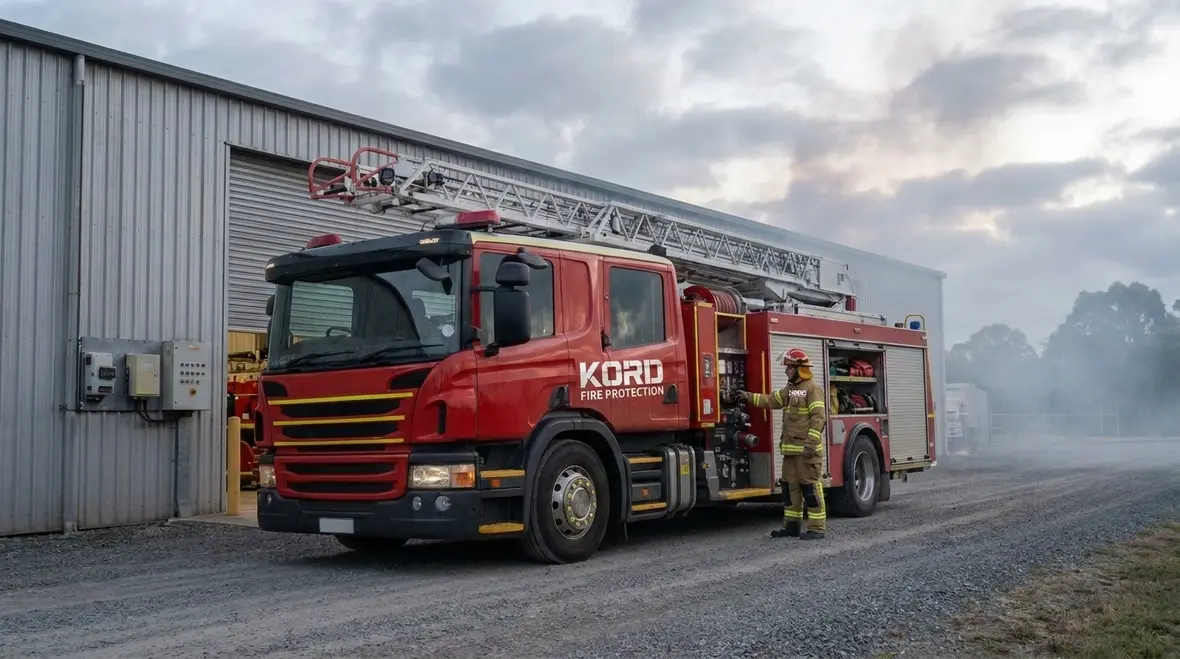
Section 8.8 focuses on the equipment an aerial apparatus needs to perform its core duties. It does not just ask whether a truck looks impressive at the station. Instead, it requires the right tools, controls, safety items, and support gear so crews can operate with confidence.
The standard aims to reduce risk, improve access, and make sure the apparatus can support elevated firefighting and rescue tasks. Therefore, the equipment package must suit the truck’s role and the hazards it may face. That matters for large sites with high roofs, fuel areas, storage yards, and hard to reach structures. In those places, an incomplete truck can turn a serious response into a very expensive lesson.
Why this section carries practical weight
Aerial apparatus is expected to do more than show up tall. It needs to help crews position safely, operate efficiently, and maintain control in environments where delays are costly. Equipment rules matter because every bracket, control point, lighting element, and storage location affects how fast a crew can transition from arrival to action.
That is the part people sometimes overlook. A truck can have impressive reach, but if the equipment layout is clumsy, poorly maintained, or missing key items, the real world result is slower setup and more friction on scene. Fire response already comes with enough friction. There is no need to sponsor more of it.
Why Aerial Apparatus Equipment Matters for Commercial Sites
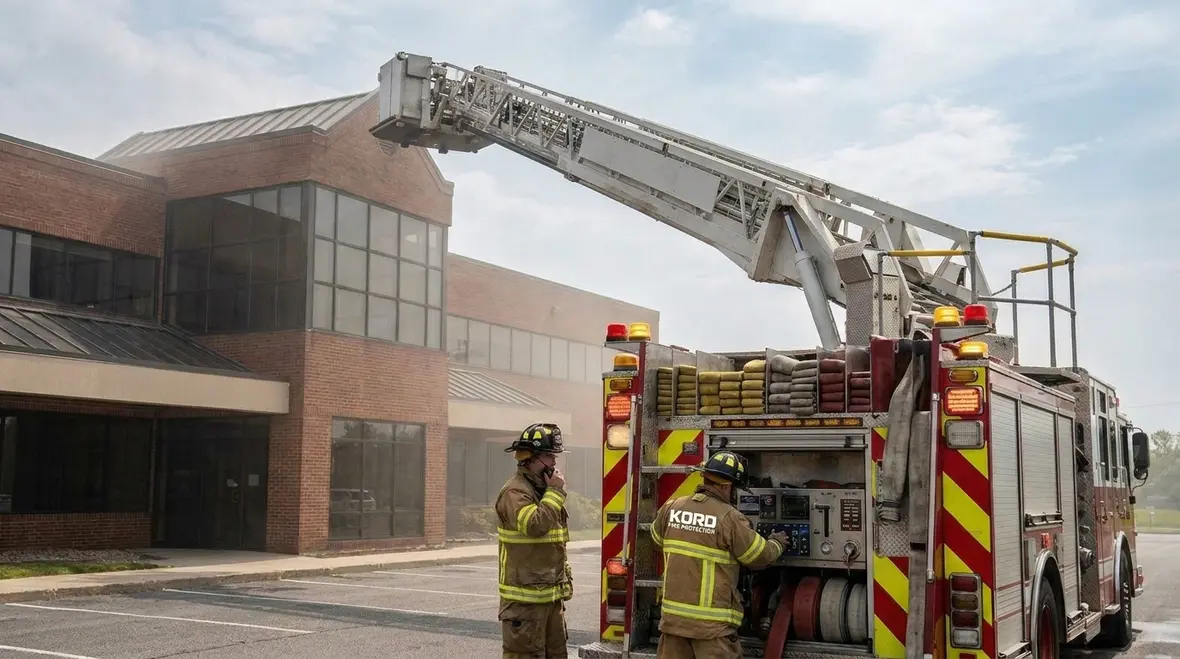
Commercial and industrial properties often have wide floor plans, tall structures, and complex access routes. As a result, aerial apparatus must arrive ready for fast setup and controlled movement. The right equipment supports hose handling, elevated rescue, scene lighting, communication, and safe operator control.
For facility managers, this has a direct effect on site risk. Better equipped aerial trucks help fire crews work around loading docks, racking systems, plant rooms, and tall facades. Also, they support emergency response plans that depend on quick access and clear fall protection. In short, the truck is not just a vehicle. It is a working tool, and tools need the right kit.
This is especially true when a site has unusual hazards or operating constraints. Warehouses may need dependable elevated access around stacked storage. Retail centres may need better lighting and coordination in crowded public areas. Industrial facilities may depend on organized equipment placement because the environment leaves little room for improvisation. Improvisation is fun in jazz. It is less charming on an emergency scene.
The planning view facility managers should take
Facility managers should think about aerial apparatus equipment as part of the overall response ecosystem. That means asking how equipment supports access, safety, communication, storage, mobility, and maintenance over time. A response asset that is hard to inspect or awkward to service tends to become a future problem wearing a presentable face.
Kord Fire Protection emphasizes preventive maintenance, inspections, testing, and code-compliant support across commercial fire protection systems, which makes that service mindset relevant here as well. The point is not just to buy gear. The point is to keep gear ready, documented, and usable when conditions are noisy, urgent, and slightly unfriendly. ([kordfire.com](https://kordfire.com/full-fire-protection-services/?utm_source=openai))
Key Equipment Expectations in Section 8.8
| Area | What it supports |
| Controls and operating devices | Safe movement, positioning, and aerial operation |
| Lighting and warning gear | Scene visibility and traffic safety |
| Communication tools | Clear coordination between crew members |
| Safety equipment | Protection during elevated work and rescue tasks |
| Mounting and storage systems | Secure transport of gear and fast access at the scene |
These items must work together. For example, strong lighting helps during night response, while good storage keeps gear from shifting during travel. That sounds simple, but simple often wins. Ask any crew member who has watched loose equipment bounce around like it had its own agenda.
What good equipment coordination looks like
The best equipment setups are easy to understand under pressure. Controls are clearly accessible. Warning gear supports visibility without getting in the way. Communication tools are dependable and intuitive. Safety items are not buried under unrelated hardware like they are hiding from responsibility. Mounting systems hold equipment securely, and storage design supports quick retrieval rather than a scavenger hunt with sirens.
When that coordination is missing, small delays pile up. A few seconds to find gear becomes a few more seconds to deploy. A few more seconds becomes confusion. Confusion becomes risk. That is why even basic equipment rules have a large effect in practice. Small details do not stay small for long in emergency operations.
How Kord Fire Protection Supports Compliance and Readiness
Kord Fire Protection can help facilities and emergency service partners select the right equipment for aerial apparatus needs. More importantly, they can help make sure the gear stays functional, accessible, and suited to the truck’s actual use. That support can include supply, fitting, inspections, servicing, and replacement planning.
For industrial and commercial clients, this creates real value. First, it reduces downtime. Next, it helps keep equipment aligned with safety expectations. Then, it makes planned maintenance easier because there is less guesswork and fewer missing parts. When Kord Fire Protection steps in, the truck does not just look ready. It acts ready.
Kord’s service pages highlight a broad capability set that includes system design, code-compliant installation, inspections, preventive maintenance, repairs, and specialty services. That broader support structure is useful for clients who want aerial apparatus planning to connect with site-wide fire protection readiness rather than sit in a lonely little operational corner. Also, if your team is comparing adjacent standards content, Kord appears to have a dedicated NFPA 1900 standard page that can fit naturally into continued research. ([kordfire.com](https://kordfire.com/full-fire-protection-services/?utm_source=openai))
Why Proper Setup Reduces Risk on the Job
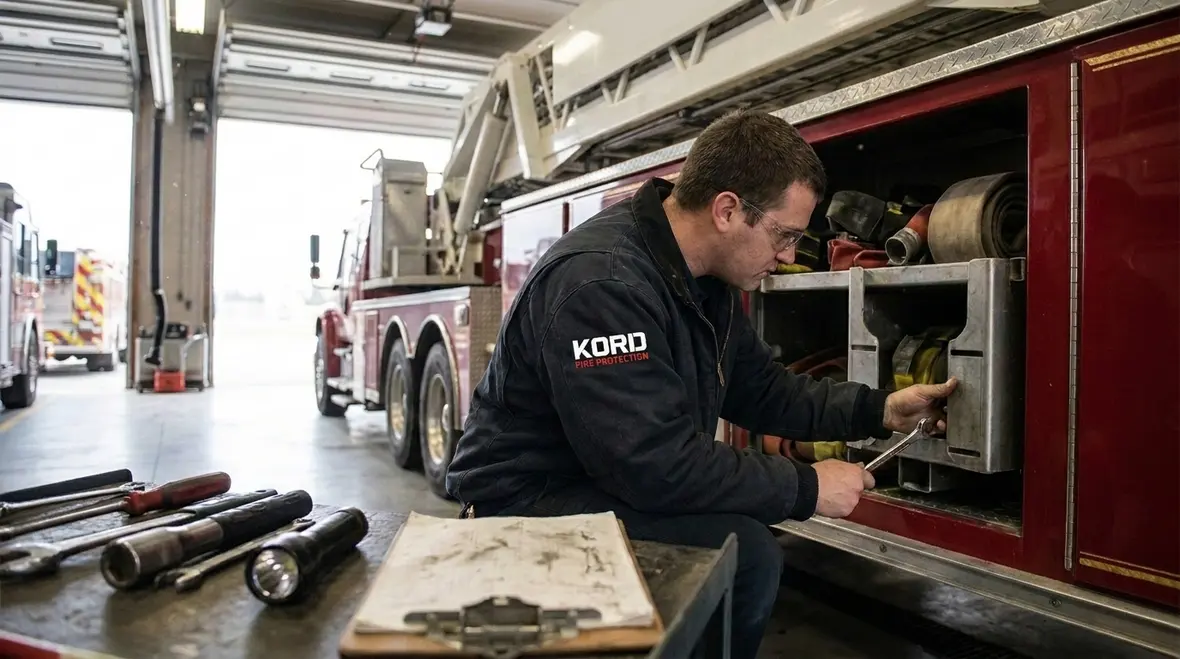
Aerial apparatus work involves height, movement, heat, and time pressure. Therefore, equipment must support both performance and safety. A poorly arranged truck can slow down deployment, limit access to tools, and raise the chance of injury.
Proper setup also supports better teamwork. Crews can find what they need faster, communicate more clearly, and stay focused on the scene. In addition, well maintained equipment helps extend service life, which protects the budget as well as the crew. Nobody enjoys replacing gear early because it was treated like a spare part in a mystery box.
Readiness is mostly repetition, not luck
Reliable setup comes from repeatable systems. Equipment should be stored where crews expect it, maintained on schedule, and checked often enough that faults do not get to throw a surprise party. The best readiness programs are a little boring in the best possible way. Everything is where it should be, works the way it should, and does not require dramatic speeches to accomplish basic tasks.
That is also why maintenance support matters so much. Kord repeatedly positions its services around inspection readiness and preventive support, which aligns with the idea that compliance is strongest when it is operational, not theoretical. A standard on paper is helpful. A truck that is actually ready is better. ([kordfire.com](https://kordfire.com/full-fire-protection-services/?utm_source=openai))
What Facility Managers Should Ask For
Facility managers should ask whether the aerial apparatus package matches the actual risk profile of the site. They should also ask if the equipment is easy to inspect, easy to store, and easy to use under pressure. If the answer feels vague, that is usually the answer.
Equipment that fits the truck’s operational purpose
Clear access to controls and storage
Strong service support for ongoing checks
Parts and accessories that match the response environment
Advice from a partner who understands both standards and field use
Those questions help move a buyer away from generic equipment thinking and toward operational fit. That is a better place to be. A truck can carry a lot of gear and still be badly prepared if the package does not match the mission, site complexity, or likely access challenges.
How to Build a Stronger Aerial Apparatus Program
A strong aerial apparatus program starts with the right standard, but it does not end there. It needs the right equipment, regular servicing, and a partner who understands the work. That is why Kord Fire Protection can play such a useful role. They can help bridge the gap between compliance and real world response.
In practice, that means the truck stays prepared for tall structures, large floor spaces, and high consequence incidents. Also, it means teams can trust their gear when the pressure rises. And that trust matters more than any shiny brochure ever could.
For teams that want to think more broadly than one standard section at a time, Kord’s content and service structure suggest a connected approach: assess the risk, match the equipment, maintain the systems, and keep documentation current. It is not glamorous, but neither is preventable downtime, and only one of those options is useful. ([kordfire.com](https://kordfire.com/full-fire-protection-services/?utm_source=openai))
FAQ
Conclusion
NFPA 1900 Section 8.8 gives aerial apparatus the equipment backbone it needs to perform under pressure. For industrial and commercial sites, that means safer response, better access, and stronger readiness across the board. The standard matters because it turns equipment from an afterthought into an operational requirement.
Kord Fire Protection can help keep that system sharp, serviced, and fit for purpose through broader compliance-focused support, inspections, and maintenance services. For teams that want fewer surprises and stronger outcomes, the next step is clear: partner with experts who keep the truck ready before the siren starts. ([kordfire.com](https://kordfire.com/full-fire-protection-services/?utm_source=openai))

Join Our Newsletter!
Get the latest fire safety tips delivered straight to your inbox From our Newsletter.