
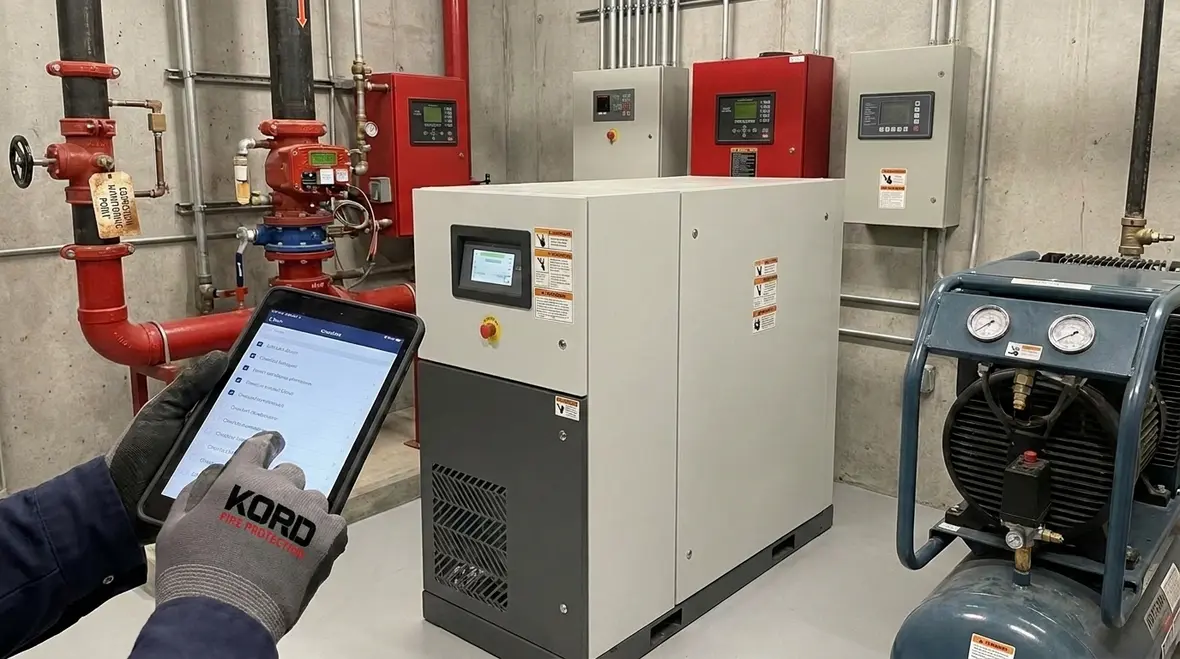
NFPA 25 Nitrogen Generator Air Compressor Inspection
Quick Answer In NFPA 25 sections 13.9 to 13.12, facilities must keep detection equipment, air compressors, nitrogen generators, corrosion control, and air vents in safe working order. A solid NFPA 25 nitrogen generator air compressor inspection program helps prevent system downtime, false readings, and costly repairs, while Kord Fire Protection brings the hands-on partner approach teams need.
If your facility needs broader support beyond inspections alone, Kord also offers full fire protection services that fit naturally into a long-term compliance and maintenance plan. That makes it easier to connect inspection work with repairs, preventive maintenance, and system readiness instead of juggling separate vendors and hoping everyone magically stays on the same page.
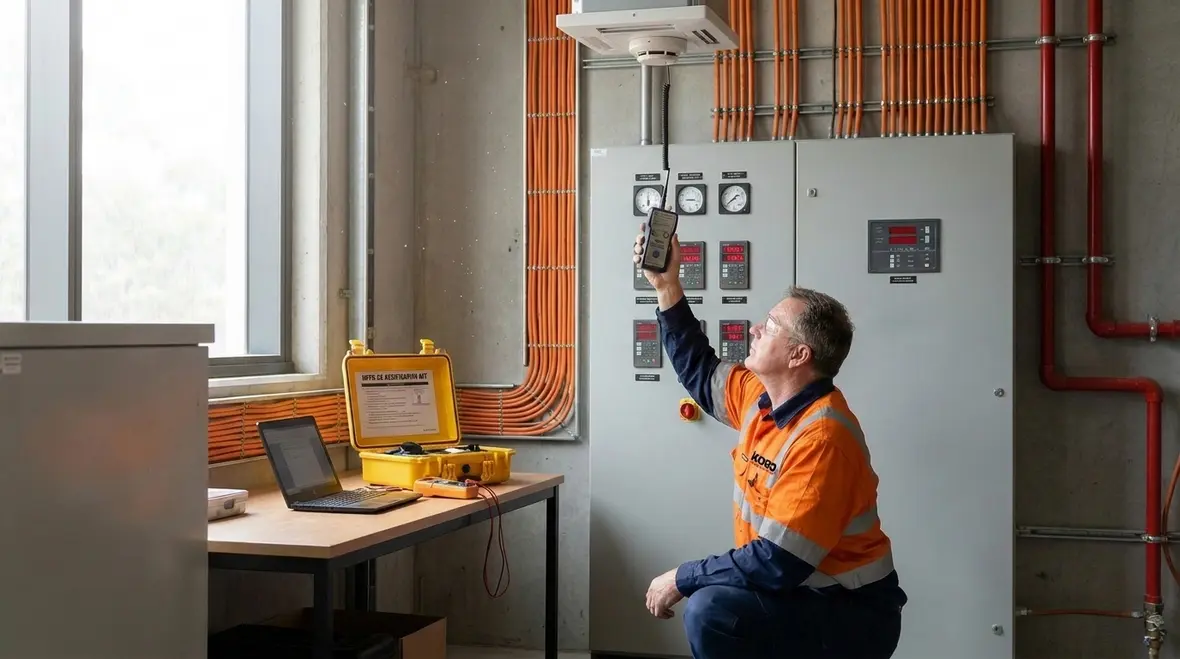
In Australia’s busy industrial, retail, and commercial environments, life rarely stops just because a fire protection system needs attention. That is exactly why a structured NFPA 25 nitrogen generator air compressor inspection matters early, not late, in the process. Over time, equipment that supports fire suppression systems can drift out of safe limits. As a result, detection equipment may misread, compressors may lose efficiency, and nitrogen generators may fall short of performance targets.
Now, nobody wants a surprise in the middle of a shift. And yes, it feels like planning ahead is the least fun team sport on the calendar. Still, NFPA 25’s requirements in sections 13.9 through 13.12 exist so the system stays ready when it counts. Kord Fire Protection steps in as a vital partner, helping facilities meet expectations with practical testing, clear reporting, and long-term service planning.
What NFPA 25 requires for detection equipment and verification
NFPA 25 sections 13.9 to 13.12 place a clear focus on readiness and verification. Detection equipment does not merely exist in the building. It must work the way the system design expects. Therefore, inspection activities typically include confirming correct operation, checking that components respond within acceptable parameters, and making sure the equipment stays free from conditions that lead to inaccurate signals.
Just like a smoke alarm that chirps forever because the battery is tired, detection problems rarely fix themselves. However, when facilities follow the NFPA 25 framework, they reduce the chances of nuisance events and missed alarms. Additionally, documented results help teams prove they maintained the system as required, which supports compliance and reduces friction with audits.
Why verification is more than a checkbox
Verification matters because a system can appear normal right up until it is asked to perform under pressure. A reading that seems close enough during a rushed review can become a big problem during an actual event or formal inspection. That is why strong programs do not stop at visual checks. They connect condition, function, and documentation so teams can trust what the system is telling them.
How air compressors are checked for reliable supply
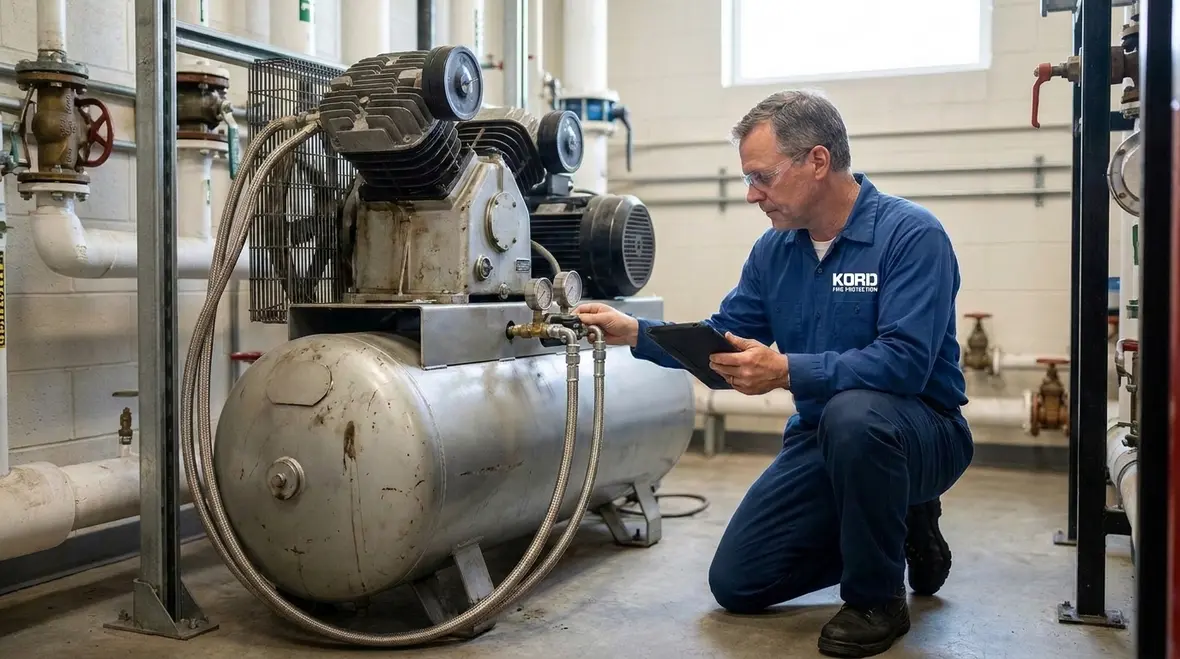
Air compressors support many life safety and fire protection arrangements. Consequently, NFPA 25 expects facilities to treat compressor performance as a safety-critical function, not a maintenance afterthought. During an inspection, technicians typically check operating conditions, verify that the compressor runs within specified limits, and look for signs of wear, contamination, or mechanical strain.
Even when compressors seem fine, problems can show up as sluggish response, pressure instability, or reduced efficiency. Therefore, a strong NFPA 25 nitrogen generator air compressor inspection program aligns compressor checks with the broader system needs, so the air supply remains stable and ready.
And here is where people sometimes get sarcastic with fate. They assume the system will keep breathing properly. Yet air systems often carry their own gremlins, like moisture, dirt, and wear, and those gremlins love to show up right after someone stops watching. Regular inspection breaks that habit.
Common compressor trouble signs teams should not ignore
- Pressure fluctuations that come and go for no obvious reason
- Slower recovery times after normal demand changes
- Visible moisture or contamination around connected components
- Noise, vibration, or heat that suggests mechanical strain
- Reduced efficiency that slowly becomes the new normal
Why nitrogen generators need disciplined monitoring
Nitrogen generators play a key role in creating and maintaining controlled nitrogen supply where required. Accordingly, NFPA 25 expectations encourage inspection practices that confirm the unit supports system performance. That includes checking operating status, verifying that it reaches and maintains required output, and ensuring that related controls function properly.
Because nitrogen generation depends on component health and operating stability, the best results come from periodic checks with clear acceptance criteria. Over time, filters, air handling components, and control responses can drift. Therefore, technicians focus on trends, not just pass or fail moments.
When facilities handle nitrogen generator verification alongside compressor inspection work, the system becomes more predictable. In other words, instead of testing pieces in isolation, teams confirm the chain of performance from air supply to gas output. Kord Fire Protection helps coordinate those steps so the job runs smoothly and the documentation stays audit-ready.
For readers who want the bigger picture, Kord’s NFPA 25 overview and complete water-based fire protection systems maintenance breakdown is a useful companion resource. It helps place these inspection tasks inside the wider maintenance framework instead of treating them like isolated chores that somehow wandered onto the calendar by accident.
Corrosion control to protect system life
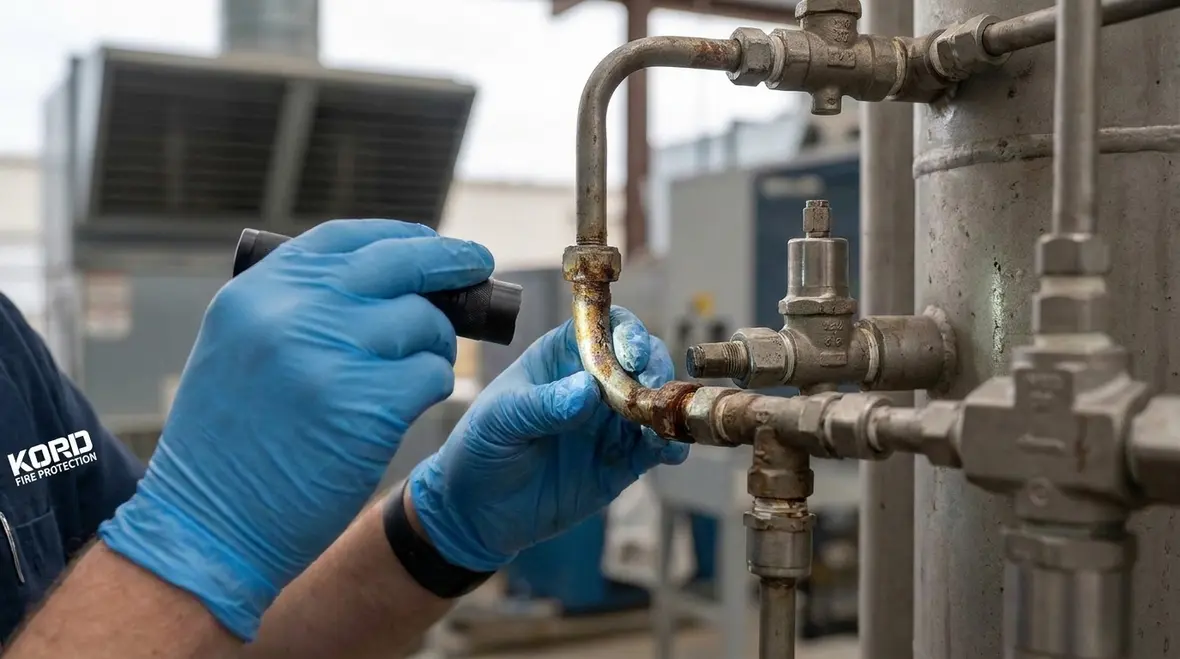
Corrosion is one of those slow problems that acts like a silent tax on maintenance budgets. NFPA 25 addresses corrosion control because it can undermine performance over time. Thus, inspection and maintenance activities commonly focus on how moisture and environmental factors affect metal components, tubing, valves, and connected hardware.
Technicians also look for early warning signs such as pitting, scaling, and residue that can trap contaminants. If corrosion spreads, it may restrict flow, degrade seals, or interfere with proper operation. Consequently, corrosion control becomes a proactive safeguard, helping facilities avoid the replace everything moment that no one schedules on purpose.
Furthermore, correlation matters. For example, a compressor that is not handling moisture well can indirectly contribute to corrosion downstream. That is why coordinated inspection and remedial steps matter across the entire air and nitrogen support chain.
Why corrosion control connects back to compressor health
It is easy to think of corrosion as a piping problem only. In reality, moisture management, air quality, operating stability, and inspection discipline all feed into it. If upstream equipment struggles, downstream components often pay the price. That is why facilities get better long-term results when they treat corrosion control as part of the same conversation, not a side quest delegated to later.
Air vents: small parts, big impact on operation
Air vents can look minor compared with larger mechanical components, yet they often play an important role in system stability. NFPA 25’s attention to air vents reflects the idea that safe operation depends on details remaining correct. Therefore, inspection work typically confirms that vents are in suitable condition, not blocked, and able to perform their intended function.
If a vent becomes restricted or fails to function as designed, it can affect pressure balance and overall system behavior. As a result, the system may respond slower, operate less consistently, or enter states that cause maintenance issues. Transitioning from reactive fixes to planned inspections helps prevent these disruptions.
And yes, if a vent gets blocked by something as simple as debris, it is the fire protection equivalent of wearing shoes with holes and then acting surprised when it rains. The fix usually costs less when caught early.
How Kord Fire Protection becomes a vital partner on the job
When facilities manage NFPA 25 requirements, success depends on more than turning wrenches. It requires correct inspection method, disciplined documentation, and the ability to coordinate multiple system elements without leaving gaps. Kord Fire Protection operates as a vital partner by connecting detection equipment, air compressors, nitrogen generators, corrosion control, and air vent checks into one structured service plan.
That means facilities receive practical reporting that explains what was checked, what was found, and what needs action next. Additionally, Kord supports planning that fits the realities of Australian operations, including site access windows, shift schedules, and the need to keep processes running.
In short, instead of treating each piece as a separate job, Kord aligns the work with how the system behaves as a whole. That approach reduces repeat visits, improves system readiness, and gives teams confidence during audits and inspections.
Service outcomes facilities commonly seek
- Stable compressor and nitrogen generator performance aligned with system needs
- Clear evidence of inspection and functional verification for compliance
- Early detection of corrosion risks before performance drops
- Air vent checks that prevent pressure and operational inconsistencies
What an NFPA 25 nitrogen generator air compressor inspection typically includes
During an NFPA 25 nitrogen generator air compressor inspection, teams usually focus on how equipment supports overall system readiness. First, technicians confirm equipment status and operating conditions. Then, they verify performance indicators tied to safe function, including stability and responsiveness where applicable.
Next, they evaluate supporting elements that influence performance, such as conditions that can accelerate corrosion or restrict airflow. Finally, they document the results in a way that helps facilities track trends over time.
Because each site differs, the best plans adapt to specific system design and operating conditions. Still, the core goal remains the same: reduce the chance of system failure at the exact wrong moment.
A practical inspection flow
- Confirm system status and current operating conditions
- Review compressor performance and response stability
- Verify nitrogen generator output and control behavior
- Check corrosion indicators, moisture issues, and connected hardware condition
- Inspect air vents for blockage, condition, and intended function
- Record findings clearly for maintenance planning and audit support
FAQ
Need a compliant plan for your site?
Facilities that stay ready do not rely on luck. They run scheduled inspections, track performance, and address corrosion and airflow issues early. Kord Fire Protection helps organisations across Australia manage NFPA 25 requirements with coordinated checks for detection equipment, air compressors, nitrogen generators, corrosion control, and air vents.
Contact Kord Fire Protection to build a plan that fits your site and keeps your protection system dependable. With the right inspection cadence, practical reporting, and follow-through on the details, your team is in a much better position to avoid downtime, reduce ugly surprises, and stay ready for the moments that actually matter.

Join Our Newsletter!
Get the latest fire safety tips delivered straight to your inbox From our Newsletter.



