How Backflow Preventers Protect Fire Protection Networks
How Backflow Preventers Protect the Integrity of Fire Protection Networks
The Integrity of Fire Protection Networks depends on more than pipes, pumps, and sprinklers. It relies on clean, controlled water flow that moves in one direction and one direction only. When that direction changes, even for a moment, the entire system becomes vulnerable. Contaminated water can slip into drinking lines. Pressure can drop. Sprinklers can fail at the exact moment they are needed most. That is where backflow preventers step in, quiet as a bodyguard in a tailored suit. And as Kord Fire Protection technicians often explain to clients, these devices may not look flashy, but they carry the responsibility of guarding both property and public health.
So while fire protection systems rarely make headlines until something goes wrong, their unseen defenders deserve the spotlight. Let us take a closer look at how backflow preventers preserve system reliability, protect water supplies, and maintain compliance without asking for applause.
The Quiet Role of Backflow Preventers in Fire Systems
Water inside a fire sprinkler system sits under pressure, waiting for heat to trigger action. However, changes in municipal supply pressure can create a reversal in flow. This reversal, known as backflow, allows stagnant or contaminated water from the fire system to enter the public water supply. That is not just inconvenient. It is dangerous.
Backflow preventers stop this reversal before it begins. They use internal check valves and pressure zones to ensure water flows forward only. Consequently, they protect drinking water from chemicals, rust particles, and other debris that may collect in fire lines over time.
Kord Fire Protection technicians often compare it to airport security. Most days, nothing dramatic happens. Yet when something tries to move in the wrong direction, the system responds instantly. Without that protection, contamination could spread quietly and quickly. And nobody wants their tap water tasting like it came from a rusty sprinkler head.
High‑hazard systems that share a public water supply
Fire sprinkler networks are typically tied into a municipal system that also feeds sinks, showers, and drinking fountains. Because these networks sit charged for long periods, they are treated as high hazard connections, not just another branch line. That is why backflow devices sit right at that connection point—guarding the doorway between clean municipal water and stagnant fire system piping, just as carefully as any hydrant or main valve is guarded upstream. For property owners across California who depend on reliable backflow service, Kord Fire’s backflow system services help keep that doorway secure and code compliant.
Why Fire Sprinkler Systems Need Backflow Protection
Fire sprinkler systems are classified as high hazard systems. That classification exists for a reason. The water inside them may sit idle for months or years. During that time, it can mix with pipe scale, biological growth, and trace metals.
Because of this risk, plumbing codes require backflow prevention assemblies at the connection point between the fire system and the municipal supply. These assemblies maintain the stability and safety of the network by creating a physical barrier between clean water and potential contaminants.
Moreover, they support the long term reliability of the system. By controlling pressure and flow direction, they help maintain the Integrity of Fire Protection Networks during both normal operation and emergency events. In other words, they ensure the system performs as designed when seconds matter most.
Protecting both sprinklers and hydrants
Backflow protection is just as important at hydrants as it is at sprinkler risers. When hydrants are used for filling fire engines or temporary connections, they can become a pathway for contaminants if not properly protected. That is why guidance such as NFPA 291 and local standards emphasize pressure, flow, and backflow control for hydrants as well as for sprinklers. As explained in Kord Fire’s discussion of fire hydrant colors and performance, keeping the water clean and the pressure stable supports both firefighting tactics and public health.
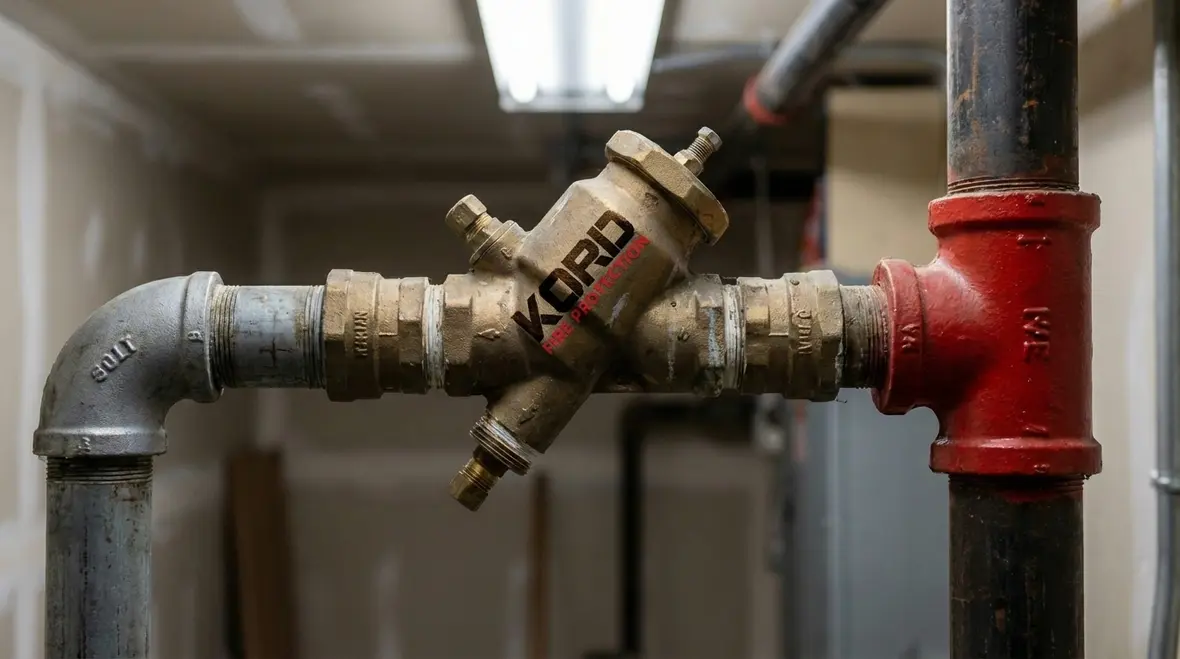
How Do Backflow Preventers Actually Work?
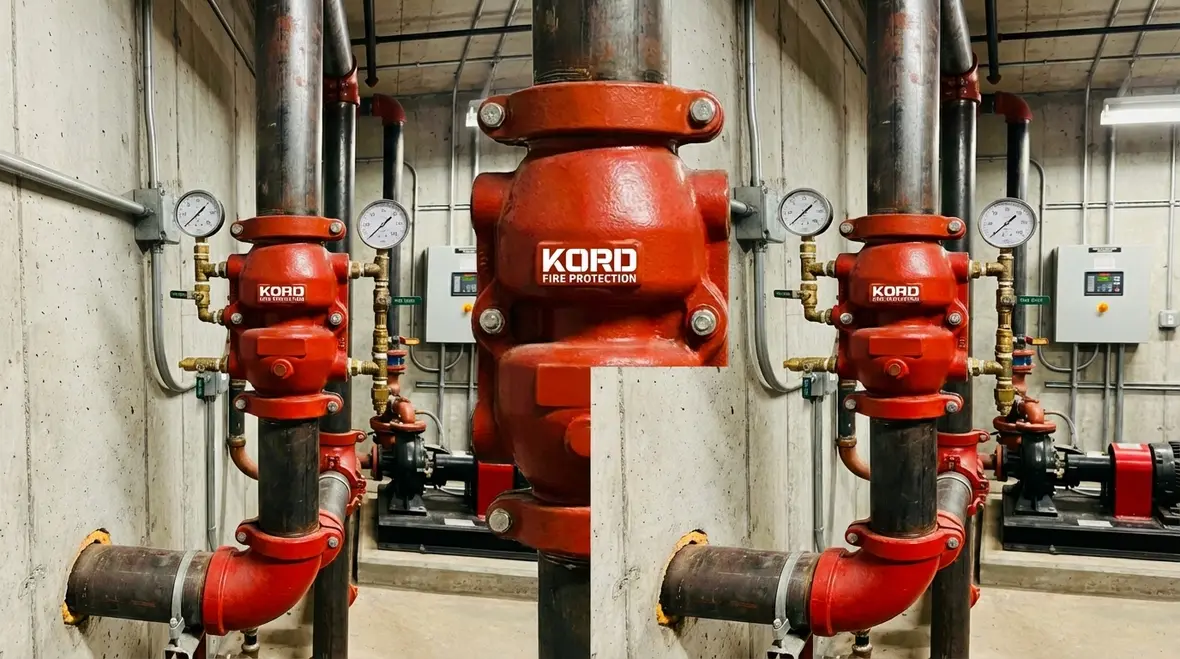
At first glance, a backflow preventer looks like a heavy metal valve assembly. It may not win any beauty contests. Still, inside that housing sits a carefully engineered mechanism designed for precision.
Most fire systems use one of the following assemblies:
1. Double Check Valve Assembly (DCVA)
This device uses two independent check valves. If one fails, the second stands guard. It works well in low to moderate hazard applications.
2. Reduced Pressure Zone Assembly (RPZ)
This design adds a relief valve between two check valves. If pressure changes occur, the relief valve discharges water rather than allowing backflow. It offers higher protection for greater hazards.
As Kord Fire Protection technicians explain during inspections, each component works together like members of a disciplined team. When pressure drops on the supply side, the valves close immediately. As a result, contaminated water cannot reverse course.
It is a simple concept powered by careful engineering. And much like a seatbelt, its value becomes clear the moment something goes wrong.
Balancing protection and pump performance
Backflow assemblies inevitably add resistance to the suction side of a fire pump, which means sizing, layout, and maintenance all matter. Poorly configured devices can create the kind of pressure loss and turbulence that shorten pump life or contribute to cavitation before water ever reaches the impeller. Kord Fire’s guidance on fire pump suction piping standards highlights how backflow assemblies, strainers, and valves should all be coordinated so the pump gets the flow it needs without compromising backflow protection.
What Happens Without Proper Backflow Protection?
Without a functioning backflow preventer, a building faces several risks.
Health Hazards
Contaminated water can enter the municipal supply. This may expose occupants and neighbors to harmful substances.
System Failure
Pressure imbalances can damage internal components. Over time, this weakens the overall fire protection infrastructure.
Regulatory Penalties
Local authorities require testing and certification. Noncompliance can result in fines or even shutdowns.
Additionally, insurance providers often require documented proof of backflow testing. Without it, claims related to water damage or fire events may face scrutiny. Nobody enjoys explaining to an insurer why routine maintenance was skipped. That conversation rarely ends with applause.
Inspection and Testing: The Front Line of Protection
Backflow preventers are not install and forget devices. They require annual testing and periodic maintenance to ensure proper operation.
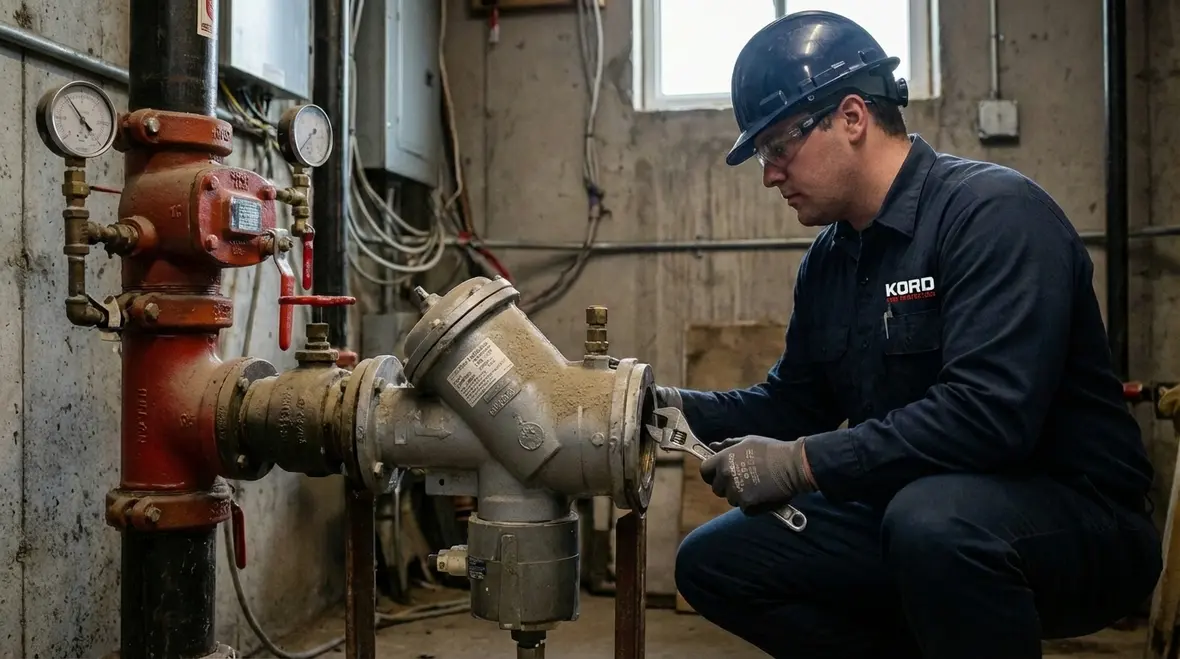
During testing, certified technicians measure pressure differences across check valves. They verify that relief valves open at the correct thresholds. If readings fall outside acceptable ranges, repairs follow immediately.
Kord Fire Protection technicians approach this process with calm precision. They understand that each test confirms the strength and reliability of the system. Furthermore, they document every result to support compliance records.
Regular testing does more than satisfy code officials. It preserves the stability of fire suppression systems and extends equipment lifespan. In many cases, small adjustments prevent major failures later. And in the world of fire protection, prevention always costs less than recovery.
For owners who prefer a single partner to manage installation, inspection, and documentation, Kord Fire’s dedicated backflow system services bring all of that work under one coordinated program, so annual testing never slips through the cracks.

How Backflow Prevention Supports the Integrity of Fire Protection Networks
To understand the broader impact, consider how fire systems interact with public utilities. A building does not operate in isolation. It connects to a shared infrastructure that serves entire communities.
Backflow preventers protect that connection. They ensure that emergency water supplies remain reliable while also shielding public lines from contamination. Therefore, they serve both private property owners and the wider public.
Below is a simplified comparison of system impact:
| With Backflow Prevention | Without Backflow Prevention |
|---|---|
| Controlled water direction | Risk of reverse flow |
| Protected drinking supply | Possible contamination |
| Stable pressure levels | Pressure fluctuations |
| Code compliance maintained | Regulatory violations |
| Long term equipment reliability | Accelerated wear and damage |
Clearly, the presence of a properly maintained assembly strengthens the entire framework. It reinforces safety standards and preserves the soundness of fire protection infrastructure across residential, commercial, and industrial properties.
Connecting inspections across the whole system
When inspectors walk a property, they do not look at backflow devices in isolation. They pair those checks with a broader review of valves, gauges, alarms, hydrants, and sprinklers. Kord Fire’s ventura fire sprinkler inspection guide notes that backflow testing sits alongside control valve inspections, waterflow alarm checks, and fire department connection reviews—because one weak link in that chain can compromise the integrity of the entire fire protection network.
Common Misconceptions About Backflow Devices
Some property owners assume that because their building has never experienced a fire, the backflow device does not matter much. That logic is like saying a parachute is unnecessary because the plane has not had issues so far.
Others believe municipal pressure alone prevents reverse flow. However, water main breaks, hydrant use, and heavy demand can all cause sudden pressure drops. When that happens, water naturally seeks the path of least resistance.
Kord Fire Protection technicians often clarify these myths during service visits. They emphasize that backflow events do not announce themselves. They occur silently and quickly. Therefore, preparation remains the only reliable defense.
“If the hydrants work, my backflow device must be fine.”
A strong hydrant stream does not automatically prove that a backflow assembly is functioning correctly. Hydrants are typically tested every few years to confirm flow and pressure, but a backflow device can fail internally in ways that do not immediately show up at the hydrant. That is why Kord’s fire hydrant testing services are paired with dedicated backflow inspections—together, they verify that both firefighting performance and contamination control are where they need to be.
Integrating Backflow Prevention Into a Comprehensive Fire Strategy
Backflow prevention should not stand alone. Instead, it functions as one component within a broader protection plan. That plan includes routine sprinkler inspections, alarm testing, pump maintenance, and documentation.
When integrated correctly, each part reinforces the other. For example, stable pressure supports accurate sprinkler activation. Clean water reduces corrosion. Proper documentation supports audits and insurance reviews.
As a result, the entire system operates with confidence. The resilience of fire suppression networks increases because every safeguard works together. It is less about a single device and more about harmony within the system.
And while harmony may sound poetic for plumbing hardware, those who manage large facilities know that reliability is no small matter. After all, when alarms sound and sprinklers activate, there is no time for guesswork.
Frequently Asked Questions
Conclusion: Protect What Flows Beneath the Surface
Water may seem simple, yet within a fire protection system, it carries immense responsibility. Backflow preventers guard that responsibility with quiet strength. They preserve safety, protect public health, and uphold compliance standards without seeking attention.
Property owners who invest in proper installation and testing strengthen the very foundation of their protection strategy. By coordinating backflow assemblies with hydrants, pumps, sprinklers, and alarms, they build a network that is ready to respond the instant a fire tests it.
To ensure lasting reliability, schedule professional inspections with experienced Kord Fire Protection technicians and keep your system ready for whatever tomorrow brings. Whether you need a new assembly, annual certification, or troubleshooting for low pressure and valve issues, Kord’s dedicated Backflow System Services team can help you stay compliant and confident in your fire protection network.
If you are also looking to coordinate sprinklers, alarms, and broader code compliance across your property, explore Kord Fire’s regional offerings—such as Simi Valley fire protection services and other local programs—for a full-service partner that understands both the visible and invisible parts of your life safety systems.
Know Your Weapon Before You Fight the Flame
Kord Fire Protection is your go-to when it comes to all things fire protection. For over 20 years, we’ve been serving Southern California with the quality service and equipment to keep your home or business safe at all times. Our competitive prices reflect our unwavering commitment to protecting what matters most in the event of a fire emergency. Give us a call, send an email, or use that form!

Join Our Newsletter!
Get the latest fire safety tips delivered straight to your inbox From our Newsletter.