
Hospital Fire Code Compliance Requirements
Hospital Fire Code Compliance Requirements
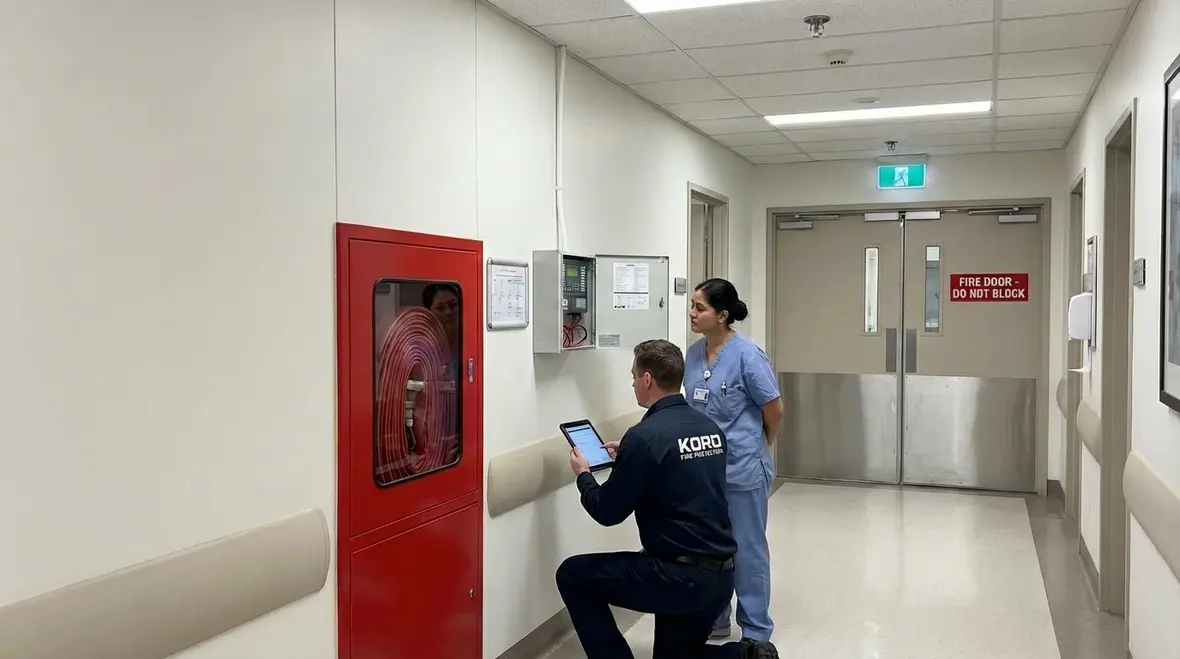
Hospital Fire Code Compliance is not a line item on a checklist. It is a living, breathing responsibility that protects patients who cannot simply jump up and run for the exit. Within the first moments of an emergency, systems either work or they do not. Therefore, healthcare facilities must align with strict fire safety regulations that cover everything from alarms to evacuation plans. As Kord Fire Protection technicians often explain to administrators, compliance is not about passing an inspection. It is about protecting lives when seconds feel like hours.
Because hospitals operate around the clock, fire protection standards demand a higher level of care. Moreover, regulators expect documentation, testing, and ongoing maintenance to prove that every safeguard works exactly as designed. The following guide walks through what that truly involves and why it matters.
Why Hospital Fire Code Compliance Carries Higher Stakes
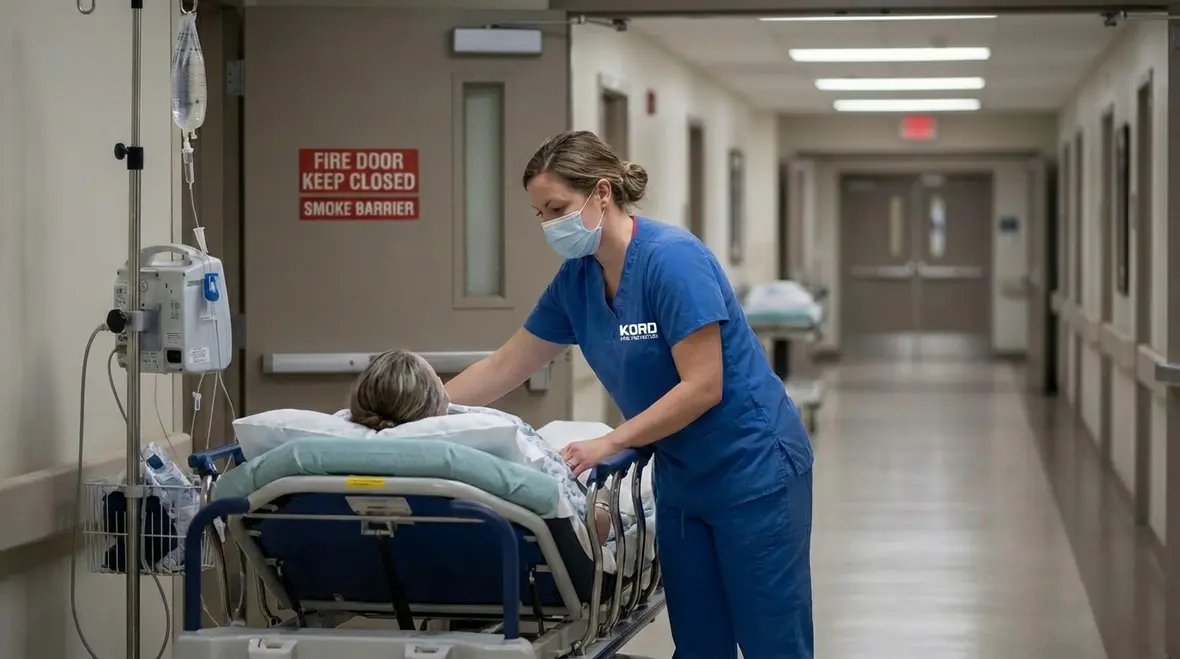
Unlike office buildings or retail stores, hospitals house patients who may be unconscious, immobile, or connected to life sustaining equipment. Consequently, evacuation becomes complex and often impossible in the traditional sense. Fire safety codes for healthcare facilities focus on defend in place strategies, compartmentalization, and layered protection systems.
Additionally, hospitals contain oxygen lines, flammable cleaning agents, laboratories, commercial kitchens, and electrical equipment that operate nonstop. Each adds risk. Therefore, compliance standards require more frequent inspections, redundant systems, and detailed emergency planning.
Kord fire protection technicians often compare hospital fire safety to a well rehearsed orchestra. If one instrument misses a note, the entire performance suffers. However, when every system works in harmony, patients remain safe even in crisis.

Core Systems Required for Hospital Fire Code Compliance
When administrators ask what systems are required for Hospital Fire Code Compliance, the answer is both simple and extensive. Codes generally follow standards such as those from the National Fire Protection Association and local authorities. However, interpretation and application require expert oversight.
Below is a structured overview of the primary components and their purpose.
System Requirement
- Automatic sprinkler systems
- Fire alarm and detection systems
- Smoke barriers and fire rated walls
- Emergency power generators
- Fire doors with self closing devices
- Fire extinguishers in designated areas
- Medical gas shutoff valves
Purpose in a Hospital Setting
- Suppress fire before it spreads
- Provide early warning for staff response
- Contain smoke and flames to one compartment
- Maintain power to life support equipment
- Prevent smoke migration between zones
- Allow trained staff to control small fires
- Stop oxygen flow in affected areas
Each element must function together. For example, sprinklers control heat, while smoke barriers protect adjacent patient wings. Meanwhile, backup generators keep surgical suites operational during a crisis. Because hospitals cannot simply power down, redundancy becomes essential.

Inspection, Testing, and Documentation Protocols
If systems exist but are not tested, regulators consider them unreliable. Therefore, Hospital Fire Code Compliance requires strict inspection schedules. Monthly visual checks, quarterly tests, annual flow testing, and multi year internal pipe inspections often apply.
Kord fire protection technicians emphasize documentation as much as performance. Inspectors do not accept verbal assurances. Instead, they expect detailed logs that include:
- Date of inspection
- Name and certification of technician
- Deficiencies discovered
- Corrective actions taken
- Verification of repair completion
Moreover, facilities must retain records for several years, depending on local rules. When surveyors arrive unannounced, documentation tells the story of compliance. In many cases, incomplete paperwork triggers citations faster than a faulty sprinkler head.
Although paperwork may not inspire applause, it prevents fines, shutdowns, and legal exposure. As one technician joked during a training session, ink on paper may not put out fires, but it can certainly stop a regulatory one.
How Do Hospitals Handle Evacuation and Defend in Place Strategies?
This is the one question administrators ask most often. Traditional evacuation sends occupants outdoors. However, in hospitals, moving critical patients down stairwells can create greater danger than the fire itself. Therefore, healthcare fire safety regulations rely heavily on defend in place methods.
First, facilities divide floors into smoke compartments using fire rated walls and doors. When smoke appears, staff relocate patients horizontally into an adjacent safe compartment rather than vertically down stairs. This approach buys time while suppression systems control the threat.
Second, hospitals train staff continuously. Drills occur regularly and simulate real scenarios. Because hesitation wastes precious seconds, repetition builds confidence. Kord fire protection technicians often participate in these drills, explaining alarm signals and demonstrating how equipment responds.
Finally, clear communication protocols ensure that every department knows its role. Nursing teams focus on patients. Maintenance teams verify system performance. Security controls access points. When roles stay clear, chaos stays minimal.
Special Considerations for Operating Rooms and Critical Care Areas
Operating rooms present unique fire hazards. Surgical tools generate heat. Oxygen enriched environments increase combustion risk. Additionally, sterile conditions limit the use of certain suppression methods.
Therefore, codes require specialized safeguards. These include:
- Flame resistant surgical drapes
- Strict control of ignition sources
- Grounded electrical equipment
- Immediate access to fire extinguishing tools
Furthermore, critical care units rely heavily on uninterrupted power. Emergency generators must activate within seconds of an outage. Routine load testing ensures they can handle full demand. Without reliable backup power, compliance falls apart quickly.
Kord fire protection technicians often remind facility managers that high tech medicine still depends on basic fire science. Oxygen feeds flames. Heat rises. Smoke spreads fast. Respecting those facts keeps innovation from becoming a liability.
Renovations, Expansions, and Maintaining Compliance
Hospitals rarely remain static. New wings open. Departments expand. Equipment upgrades. However, every renovation can affect Hospital Fire Code Compliance if not managed carefully.
Before construction begins, facilities must review life safety drawings and update fire protection plans. Temporary barriers may be required to maintain compartment integrity. Additionally, hot work permits become essential when welding or cutting occurs.
During renovations, technicians often conduct interim inspections to confirm that active systems remain functional. For example, if a sprinkler zone is temporarily shut down, facilities must implement fire watch procedures. This involves trained staff monitoring the area continuously until protection returns.
After construction, updated acceptance testing verifies that new systems integrate properly with existing infrastructure. Because piecemeal upgrades can create blind spots, coordination remains critical. As many technicians note with a smile, adding a new wing without updating fire plans is like installing a state of the art security system and forgetting the front door.
Common Compliance Pitfalls and How to Avoid Them
Even well managed hospitals can stumble. However, awareness prevents repeat violations.
- Blocked fire doors or propped open smoke barriers
- Improper storage in exit corridors
- Missed inspection deadlines
- Untrained staff unfamiliar with alarm signals
- Failure to update documentation after repairs
Although these issues may seem minor, regulators treat them seriously. Corridors must remain clear because they serve as relocation pathways. Fire doors must close fully because they stop smoke spread. Small oversights often signal larger systemic gaps.
Therefore, facilities benefit from partnering with experienced professionals. Kord fire protection technicians frequently conduct compliance audits that identify vulnerabilities before inspectors do. Preventive action always costs less than reactive penalties.
Integrating Technology into Modern Fire Safety Programs
Technology now supports Hospital Fire Code Compliance in ways that were unimaginable decades ago. Digital monitoring systems track sprinkler pressure in real time. Cloud based platforms store inspection records securely. Smart alarms pinpoint exact activation points within seconds.
As a result, response times improve and human error decreases. However, technology does not replace training. Instead, it enhances it. Staff must understand how to interpret data and respond appropriately.
Moreover, cybersecurity becomes relevant. Fire alarm networks connected to hospital systems require protection from digital threats. A compromised panel can create confusion during emergencies. Consequently, integrated safety planning now includes both physical and digital safeguards.
Kord fire protection technicians often explain these advancements in simple terms. They translate technical code language into practical steps, ensuring administrators understand both the why and the how. After all, even the most advanced system fails if no one knows how to use it.
FAQ About Hospital Fire Code Compliance
Conclusion: Turn Compliance into Confidence
Hospital Fire Code Compliance demands vigilance, expertise, and steady commitment. Lives depend on systems that must work without hesitation. Therefore, partnering with experienced professionals makes all the difference. Kord fire protection technicians stand ready to guide healthcare facilities through inspections, upgrades, and long term planning. When safety cannot wait, proactive action becomes the wisest investment.
From automatic sprinklers and fire alarms to emergency generators and fire doors, your hospital’s protection relies on the same fundamentals that power Kord’s full fire protection services. Keeping every safeguard inspection ready is the surest way to protect patients, staff, and critical infrastructure.
Connect with experts today and ensure every corridor, system, and safeguard performs exactly as intended. Whether you need fire alarm upgrades, hospital specific testing, or help aligning with code changes, Kord Fire Protection can help you move from “hoping we pass” to “confidently compliant.”
Schedule a hospital fire protection consultation or explore Kord’s dedicated fire protection services to put a comprehensive, code driven safety plan in place before the next inspection or emergency.
Know Your Weapon Before You Fight the Flame
Kord Fire Protection is your go-to when it comes to all things fire protection. For over 20 years, we’ve been serving Southern California with the quality service and equipment to keep your home or business safe at all times. Our competitive prices reflect our unwavering commitment to protecting what matters most in the event of a fire emergency. Give us a call, send an email, or use that form!

Join Our Newsletter!
Get the latest fire safety tips delivered straight to your inbox From our Newsletter.


