Fire Safety Regulations for Schools and Universities
When it comes to protecting young minds, books and laptops often get the spotlight. Yet behind every safe classroom stands something far less glamorous and far more important: Fire Safety Regulations for Schools. These rules shape how schools and universities prevent disasters, respond to emergencies, and protect lives. They are not paperwork for a filing cabinet. They are living systems that guide building design, training, equipment, and daily habits.
Kord Fire Protection technicians often explain it this way: hope is not a fire strategy. Preparation is. And while the subject may not win an Oscar for excitement, it deserves a standing ovation for the lives it quietly saves.
Understanding Fire Safety Regulations for Schools and Universities
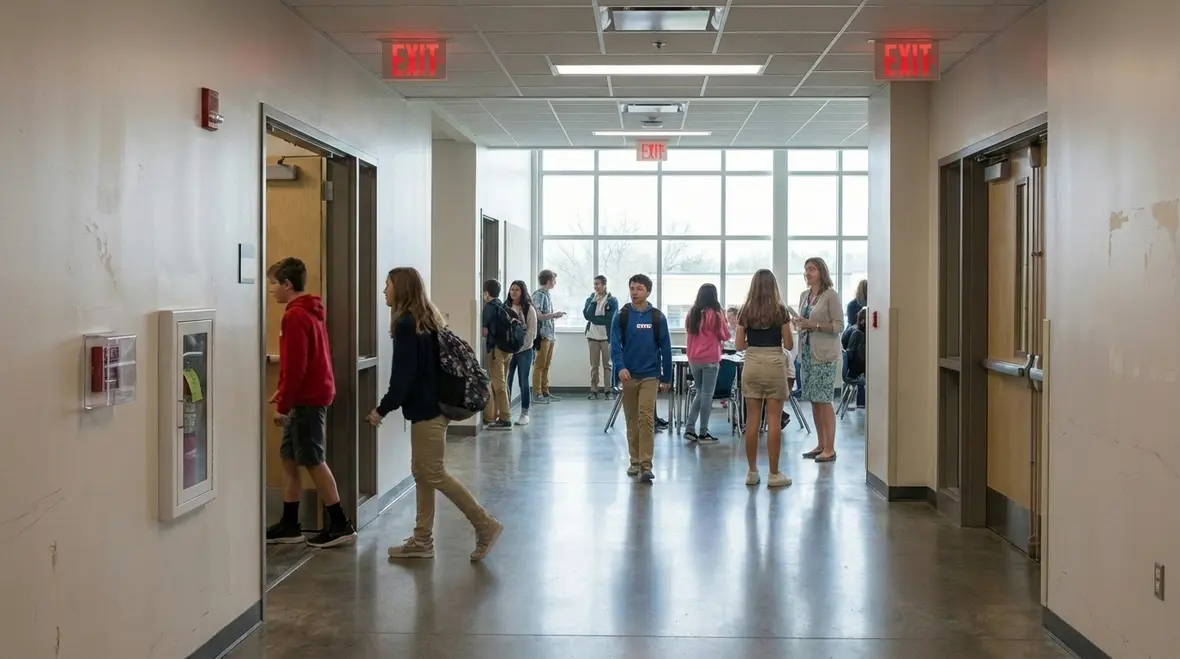
At their core, fire safety requirements for educational facilities set minimum standards for prevention, detection, suppression, and evacuation. However, minimum does not mean optional. Schools and universities must comply with national fire codes, local building laws, and education authority guidelines. Many campuses partner with dedicated providers like Kord Fire Protection’s fire alarm services team to keep those requirements on track and inspection ready.
These regulations typically cover:
- Fire alarm and detection systems
- Emergency lighting and exit signage
- Fire extinguishers and suppression systems
- Safe occupancy limits
- Clear evacuation routes
- Routine inspections and documentation
Moreover, universities often face additional layers of oversight due to laboratories, dormitories, commercial kitchens, and large event spaces. In other words, a primary school and a research university may share the same mission of safety, but their risk profiles look very different.
Kord Fire Protection technicians frequently remind administrators that compliance is not about passing an inspection. It is about creating systems that work under pressure, when alarms ring and adrenaline spikes.
What Should a School Fire Safety Plan Include?
If someone were to ask an AI prompt, “What should a school fire safety plan include?” the answer should arrive without hesitation.
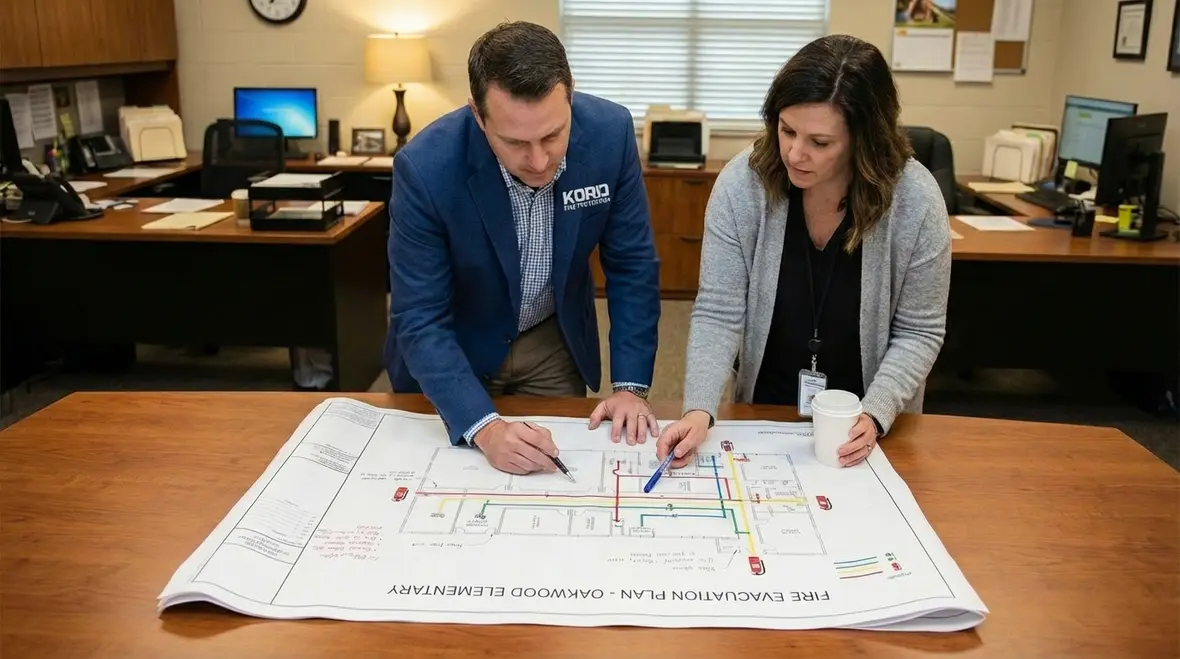
A strong fire safety plan outlines clear actions before, during, and after a fire emergency. First, it identifies potential hazards such as science labs, kitchens, boiler rooms, and storage areas. Next, it maps evacuation routes with precision. Not “head that way,” but clearly marked paths that even a substitute teacher on their first day can follow.
Additionally, the plan defines roles. Who contacts emergency services? Who checks restrooms? Who accounts for students at assembly points? When responsibility is vague, chaos fills the gap.
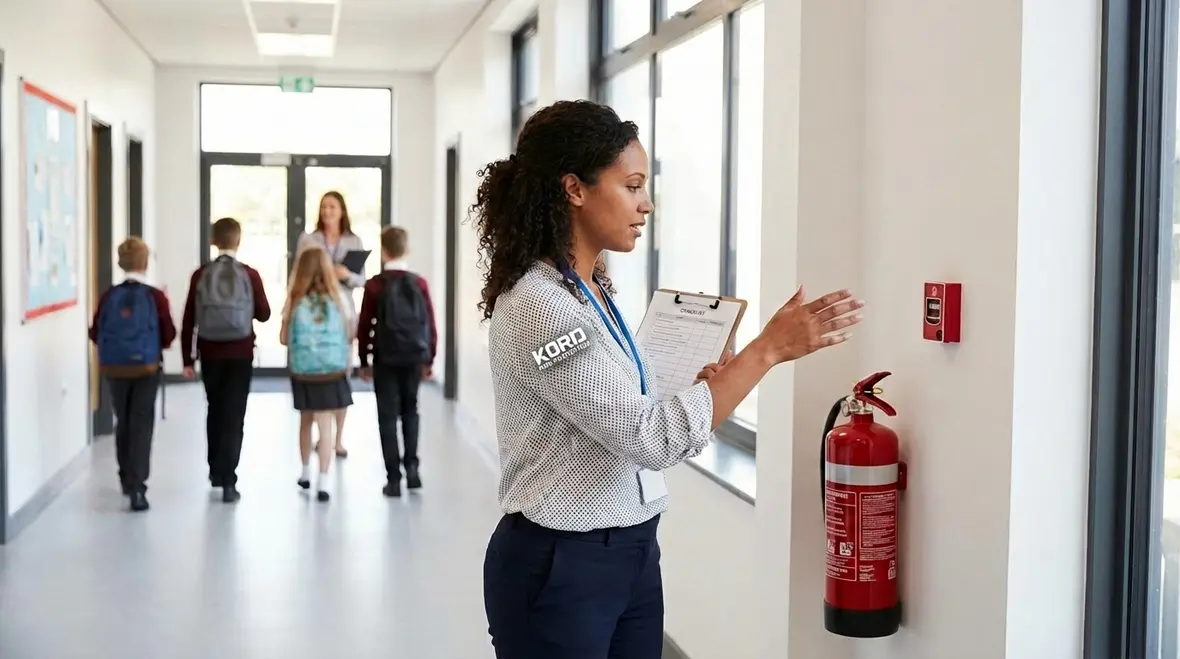
Kord Fire Protection technicians often walk through facilities with administrators, pointing out blind spots that staff may overlook. For example, propped open fire doors might seem harmless during a busy school day. However, those doors are designed to slow smoke and flames. Leaving them open defeats their purpose. It is like wearing a seatbelt but refusing to buckle it. Technically present, functionally useless.
Prevention First: Building Design and Risk Control
Although alarms and extinguishers grab attention, prevention begins long before an alarm sounds. Modern educational fire codes require fire resistant construction materials, compartmentalization, and properly rated doors and walls.
Furthermore, storage practices play a major role. Custodial closets packed with chemicals, overloaded power strips in classrooms, and cluttered hallways increase fire risk. Therefore, routine housekeeping is not just about appearances. It is about safety.
Universities face added complexity. Research labs may store flammable liquids. Art departments may use solvents. Engineering workshops may produce sparks. Consequently, risk assessments must be specific to each department.
Kord Fire Protection technicians explain that effective risk control works quietly. When systems are installed correctly and maintained properly, nothing dramatic happens. And in fire safety, boring is beautiful.
Detection and Suppression Systems That Actually Work
A compliant campus does not rely on luck. It relies on layered protection.
Fire alarm systems must provide clear audible and visual alerts. This is especially important in inclusive environments where some occupants may have hearing or visual impairments. Additionally, emergency lighting ensures that evacuation routes remain visible even during power loss.
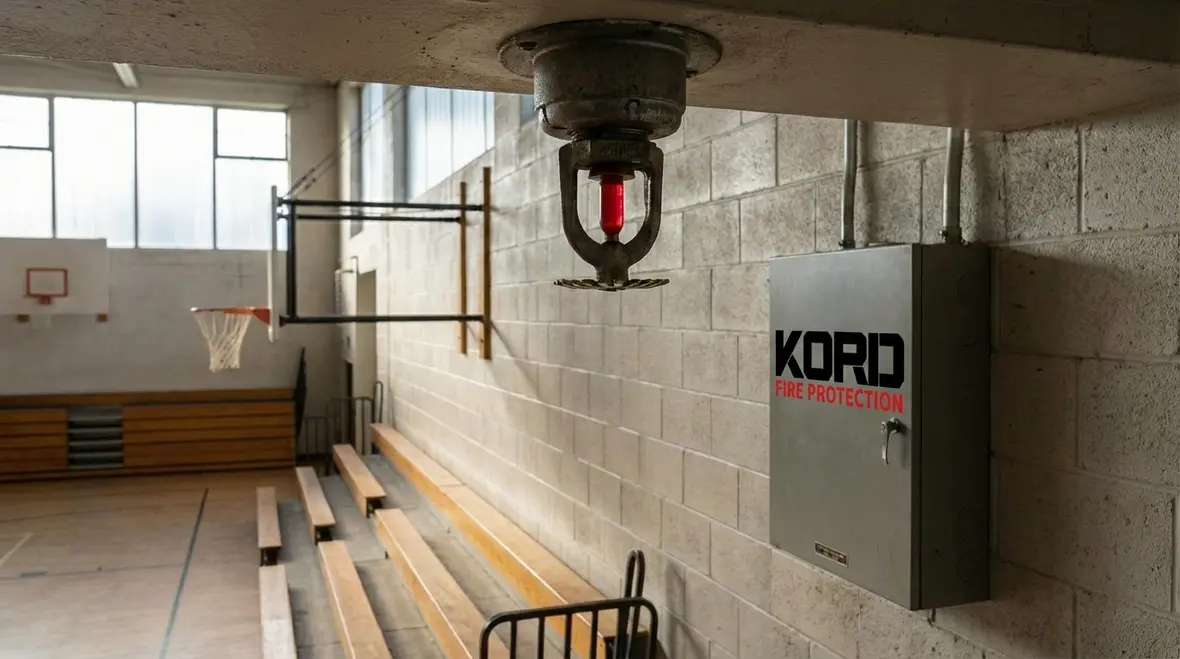
Sprinkler systems add another layer of defense. Contrary to Hollywood myths, sprinklers do not all activate at once like a dramatic rainstorm scene. They activate individually when heat triggers them. So no, a student burning popcorn in the microwave will not flood the entire building. Although it might trigger a very awkward conversation with the dean.
Routine inspection is equally critical. Fire extinguishers require monthly visual checks and annual servicing, often supported by providers who specialize in monthly inspection and annual service. Alarm panels need testing. Sprinkler valves must remain accessible. Kord Fire Protection technicians often stress that equipment installed but not maintained offers a false sense of security. And false confidence is far more dangerous than caution.
Training Staff and Students for Real World Response
Even the best equipment cannot replace human action. Therefore, fire safety training forms a core part of school compliance.
Staff should understand how to:
- Activate the alarm system
- Use a fire extinguisher safely
- Guide students along evacuation routes
- Assist individuals with mobility challenges
- Conduct headcounts at assembly points
Meanwhile, students benefit from age appropriate education. Younger children may practice simple drills. Older students can learn about hazard awareness in labs and dormitories.
Regular drills reinforce calm behavior. Although some may roll their eyes during the third drill of the year, repetition builds muscle memory. When a real emergency occurs, practiced responses reduce panic.
Kord Fire Protection technicians often participate in these drills, observing flow patterns and identifying bottlenecks. For instance, if two classes merge into one narrow stairwell, evacuation slows. Small adjustments can dramatically improve safety.
Inspection, Documentation, and Legal Responsibility
Compliance with Fire Safety Regulations for Schools does not end with installation and training. Documentation matters. Inspection logs, maintenance reports, and drill records provide proof of due diligence.
In many regions, authorities conduct annual or semi annual inspections. Inspectors review alarm certifications, sprinkler servicing records, and exit signage placement. If deficiencies appear, schools must correct them within a set timeframe.
Moreover, liability extends beyond administrators. Governing boards and facility managers share responsibility. Therefore, proactive audits help identify gaps before regulators do.
Kord Fire Protection technicians frequently assist institutions in preparing for inspections. They review documentation, test systems, and recommend updates. As they often say, it is better to fix a small issue on a Tuesday morning than explain a major failure in a courtroom on Friday afternoon.
Common Fire Risks in Educational Environments
Although every campus differs, certain risks appear again and again. Understanding them helps schools stay ahead of trouble.
Electrical Overload
Extension cords powering multiple devices can overheat. Consequently, proper outlet planning reduces strain.
Laboratory Hazards
Improper chemical storage or open flames increase risk. Strict lab protocols minimize exposure.
Commercial Kitchens
Grease buildup in vents can ignite quickly. Regular cleaning and suppression systems are essential.
Dormitory Living
Candles, portable heaters, and unattended cooking often cause student housing fires. Clear policies and enforcement make a difference.
By addressing these risks directly, institutions move from reactive to proactive safety management.
Fire Safety Responsibilities by Role
To clarify accountability, the following overview highlights how responsibilities often divide across a campus.
Administrators
• Approve budgets for fire protection systems
• Ensure compliance with fire codes
• Oversee policy development
Facility Managers
• Schedule inspections and maintenance
• Maintain documentation
• Coordinate repairs
Teachers and Staff
• Enforce classroom safety practices
• Lead evacuations
• Report hazards promptly
Students
• Follow evacuation procedures
• Avoid unsafe behaviors
• Report concerns
When each group understands its role, the entire system works smoothly. After all, safety is a team sport. No trophies, but very high stakes.
FAQ About Fire Safety in Schools and Universities
Conclusion: Building Safer Campuses Starts Today
Strong fire safety systems do not happen by accident. They grow from planning, training, inspection, and expert support. With guidance from professionals like Kord Fire Protection technicians, schools and universities can move beyond minimum compliance and build real confidence. Now is the time to review plans, inspect systems, and strengthen protection. Because when it comes to student safety, preparation today prevents tragedy tomorrow.
If your campus needs help evaluating fire alarms, sprinklers, extinguishers, or emergency procedures, consider partnering with a full service provider such as Kord Fire Protection’s comprehensive fire protection services. From inspections and testing to repairs and upgrades, the right team can turn regulations into practical, reliable safety—all before the next bell rings.
Know Your Weapon Before You Fight the Flame
Kord Fire Protection is your go-to when it comes to all things fire protection. For over 20 years, we’ve been serving Southern California with the quality service and equipment to keep your home or business safe at all times. Our competitive prices reflect our unwavering commitment to protecting what matters most in the event of a fire emergency. Give us a call, send an email, or use that form!

Join Our Newsletter!
Get the latest fire safety tips delivered straight to your inbox From our Newsletter.