Fire Sprinklers vs Fire Alarms in California Law
Fire Sprinklers vs Fire Alarms: What’s Required in California?
Fire sprinklers or fire alarms in california? It is a question property owners ask with a mix of concern and confusion. After all, no one wants to discover they installed the wrong system after an inspector walks in with a clipboard and a raised eyebrow. In California, fire protection is not a casual suggestion. It is law, shaped by strict building and fire codes designed to protect lives and property. Yet the requirements depend on occupancy type, building size, and use. Fortunately, Kord Fire Protection technicians often step in to explain the difference in plain language, turning code sections into common sense guidance.
This article walks through what is required, what is recommended, and how both systems work together. Because when it comes to safety, this is less about Hollywood drama and more about preparation.

Understanding the Difference Between Fire Sprinklers and Fire Alarms
To start, it helps to understand the roles each system plays. Fire alarms detect danger. Fire sprinklers fight it.
A fire alarm system uses smoke detectors, heat detectors, pull stations, and audible alerts. When triggered, it sounds the alarm, notifies occupants, and often alerts emergency responders. It acts as the building’s voice, shouting that trouble has arrived.
On the other hand, a fire sprinkler system responds physically. When heat from a fire reaches a certain temperature, individual sprinkler heads activate and release water directly over the flames. Contrary to what movies suggest, every sprinkler head does not go off at once. Only the ones exposed to high heat activate. So no, a burnt piece of toast will not flood the entire office.
Both systems serve distinct purposes. However, California law often requires them to work together.

What Does California Law Require for Commercial Buildings?
California follows the California Building Code and California Fire Code, which are updated regularly. These codes outline when fire alarms and sprinklers are mandatory.
In general, most commercial buildings require a fire alarm system. Additionally, many new commercial constructions must include automatic sprinkler systems, especially if they exceed certain square footage thresholds or house large numbers of occupants.
Kord Fire Protection technicians often explain that occupancy classification plays a major role. For example, assembly spaces like theaters, schools, and restaurants have stricter rules because they gather many people in one place. Similarly, high rise buildings almost always require both alarms and sprinklers.
Moreover, if a building undergoes major renovations or a change in occupancy use, it may trigger new compliance requirements. Therefore, even older buildings sometimes need upgrades to meet current standards.
Property managers looking for a deeper dive into how system design and spacing affect compliance can review resources like Kord Fire’s guide on fire sprinkler clearance requirements in Los Angeles, which turns dense code language into practical planning steps.
Fire Sprinklers or Fire Alarms in California? Requirements for Residential Properties
Residential codes differ slightly, yet they remain just as serious. Since 2011, California has required automatic fire sprinkler systems in most newly constructed one and two family homes. This law significantly changed how builders approach residential safety.
Meanwhile, smoke alarms are required in all residential dwellings, including older homes. In fact, property owners must install smoke alarms in each sleeping area, outside sleeping areas, and on every level of the home.
For multi family housing such as apartments, the rules grow stricter. Larger apartment complexes typically require both monitored fire alarm systems and automatic sprinklers. As Kord Fire Protection technicians point out during consultations, landlords carry the responsibility to maintain these systems and ensure they remain operational.
So while a single family homeowner may focus mainly on smoke alarms and sprinklers, apartment owners must think at a larger scale.
How Fire Sprinklers and Fire Alarms Work Together for Compliance
Some property owners assume they can choose one system over the other. However, in many California buildings, the answer to Fire sprinklers or fire alarms in california? is both.
These systems complement each other in layered protection. First, the alarm alerts occupants to evacuate. Then, the sprinkler system works to control or suppress the fire until firefighters arrive. This combined response reduces injury risk and property damage.
Additionally, monitored fire alarm systems can notify the fire department automatically. That early notification can save critical minutes. In fire response, minutes matter more than most people realize.
Kord Fire Protection technicians often describe it as a relay team. The alarm hands off to the sprinkler. The sprinkler holds the line until first responders arrive. Each component plays a role. Remove one, and the chain weakens.
Side by Side Comparison for Property Owners
Below is a simplified comparison that property managers often request when evaluating compliance obligations:
Fire Alarm Systems
- Detect smoke or heat
- Alert occupants with sound and visual signals
- Can notify monitoring centers
- Required in most commercial buildings
- Mandatory in all residential dwellings
Fire Sprinkler Systems
- Activate when exposed to high heat
- Suppress or control fire at its source
- Required in new residential construction
- Required in many commercial and high occupancy buildings
- Reduce property damage and fire spread
Although the functions differ, both systems align under California’s life safety strategy. Therefore, choosing one without considering the other can leave a building exposed to code violations.
Common Scenarios That Trigger Upgrades
Many compliance surprises occur during renovations. For instance, when a warehouse converts into office space, occupancy classification changes. As a result, updated fire alarm or sprinkler requirements may apply.
Similarly, adding square footage to a retail store can push the building past a threshold that requires automatic sprinklers. Even tenant improvements in commercial spaces can activate review by local fire authorities.
Kord Fire Protection technicians frequently assist during these transitions. They review building plans, assess current systems, and coordinate with inspectors. More importantly, they explain the reasoning behind each requirement. Because while code books are thorough, they are not exactly bedtime reading.
How to Determine What Your Building Needs
Property owners should begin with three factors:
- Occupancy type
- Building size and height
- Date of construction or renovation
Next, they should consult local fire department guidelines. Although California sets statewide codes, local jurisdictions may adopt additional amendments. Therefore, what applies in Los Angeles may differ slightly from Sacramento.
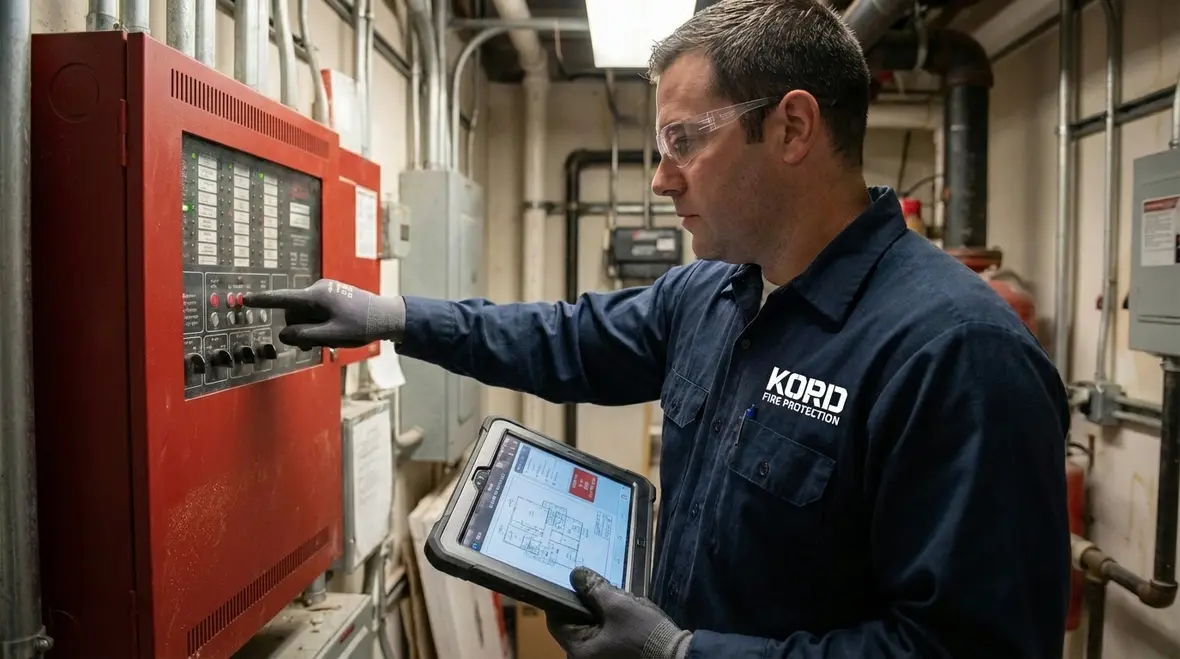
Professional evaluation remains the safest route. Kord Fire Protection technicians conduct site assessments that identify gaps, outdated components, or missing documentation. They also help schedule inspections and testing, which California requires annually for many systems.
Because compliance is not a one time event. It is an ongoing responsibility.
Why Compliance Is More Than Avoiding Fines
It is tempting to view fire protection rules as just another regulatory hurdle. However, history tells a different story. California has experienced devastating fires that reshaped building codes. Each update reflects lessons learned the hard way.
Properly installed fire alarms reduce fatalities by providing early warning. Meanwhile, sprinkler systems dramatically lower fire damage and can even prevent flashover events. Insurance companies often recognize this by offering reduced premiums for protected properties.
So yes, compliance helps avoid penalties. Yet it also protects employees, tenants, families, and investments. That peace of mind carries value far beyond paperwork.
Besides, no business owner wants to explain to a news crew why basic safety systems were missing. That is a headline nobody needs.
Conclusion: Take Action Before an Inspector Does
Fire sprinklers or fire alarms in california? In many cases, the answer is both, guided by occupancy, size, and code requirements. Rather than guessing, property owners should consult experienced professionals. Kord Fire Protection technicians provide clear assessments, practical solutions, and reliable maintenance to keep buildings compliant and safe.
If you are planning a new project or upgrading an existing system, consider scheduling a full fire protection review that includes alarms, sprinklers, and suppression equipment. Kord Fire’s team delivers a custom, code-compliant fire protection strategy tailored to your building, from design to inspections and ongoing testing. Schedule an evaluation today and ensure the right systems stand ready long before an emergency ever begins.
For properties that need a full service partner, Kord Fire also offers regional coverage through dedicated service hubs, such as their Orange County fire protection services, providing end to end support for fire sprinkler systems, fire alarm services, and more across Southern California.
Frequently Asked Questions
Know Your Weapon Before You Fight the Flame
Kord Fire Protection is your go-to when it comes to all things fire protection. For over 20 years, we’ve been serving Southern California with the quality service and equipment to keep your home or business safe at all times. Our competitive prices reflect our unwavering commitment to protecting what matters most in the event of a fire emergency. Give us a call, send an email, or use that form!

Join Our Newsletter!
Get the latest fire safety tips delivered straight to your inbox From our Newsletter.