High Rise Standpipe Hydraulic Testing for Efficiency
High rise standpipes do more than sit there and look important. They must deliver water when systems get stressed, whether that stress comes from a fire, a power outage, or the kind of chaotic day buildings sometimes have. That is why high rise standpipe hydraulic testing belongs early in the conversation, not buried in paperwork. In practice, it helps confirm that water pressure and flow match the design, so the standpipe performs under real world conditions. And yes, the numbers matter. Kord Fire Protection Technicians often explain this in plain terms during surveys, because nobody wants to learn too late that the system was “probably fine.”
How high rise standpipes stay efficient
When water travels up a tall building, efficiency drops fast if the system is not tuned. Friction inside piping steals pressure. Elevators, stairwells, and long hose valve runs add complexity to flow paths. Then there are the sneaky culprits like partially closed valves, scaling inside older pipe, or undersized fittings. Therefore, managing hydraulic efficiency means controlling losses at every step, from the water supply connection to the highest outlet.
What Kord Fire Protection Technicians emphasize is that the system cannot be “close enough.” A tiny change, like replacing one pressure reducing component with the wrong model, can shift pressures throughout the building. Consequently, the standpipe may still deliver water, yet not at the level your response team needs. In other words, efficiency is not a vibe. It is math, flow, and careful verification.
Where small inefficiencies become big problems
In a low rise building, a minor pressure drop may be annoying. In a high rise, that same drop can become a serious operational gap by the time water reaches upper levels. That is why technicians look beyond whether water merely appears at an outlet. They want to know if it arrives with enough pressure, enough consistency, and enough reliability to support real response conditions.
Hydraulic testing sets the baseline for performance
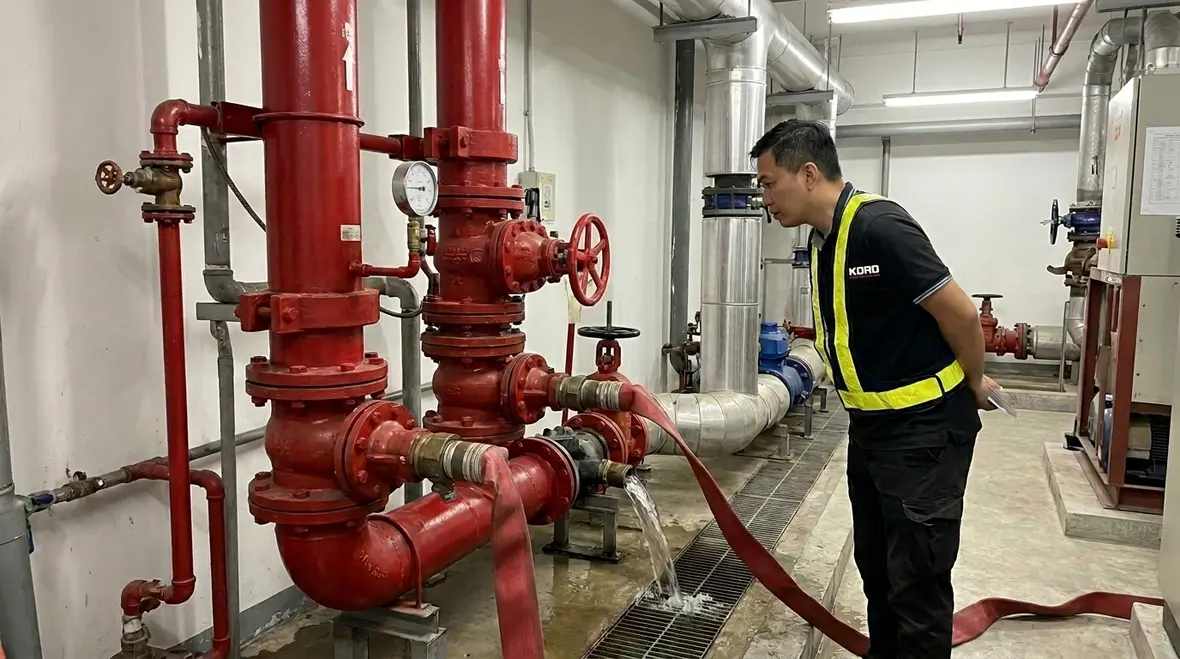
To keep performance predictable, teams use high rise standpipe hydraulic testing to build a baseline. During these tests, technicians evaluate flow rates, static and residual pressure, and the point where losses increase rapidly. They then compare results against the design intent and the acceptable operating range for valves, hose connections, and outlets at multiple elevations.
In addition, testing helps identify weak links before operations demand them. For example, if the highest floor outlets fail to reach required pressure, the cause might not be the top floor at all. It could be a supply issue at the base, a valve setup that creates excess friction, or a network that behaves differently at the design flow than expected. Kord Fire Protection Technicians often stress that the system should be judged under the conditions it must survive, not under calm, low demand scenarios. Because during an incident, calm is usually in short supply.
A useful way to think about baseline testing is this: it gives the building a reference point before age, renovations, and well-intended adjustments start moving things around. Without that reference, every future test becomes a guessing game. With it, trends become visible, and visible trends are a lot easier to fix than mysterious disappointment on the twentieth floor.
For building teams that want a broader overview of system function and code driven expectations, Kord Fire Protection also covers related guidance in its Standpipe System Requirements and How It Works article. That kind of context helps operators connect design language with what technicians are measuring in the field.
Pressure loss controls: pipe, fittings, and valves
Hydraulic efficiency lives and dies with pressure losses. Each component adds resistance, so the goal is to keep resistance low and predictable. That includes straight pipe length, pipe roughness, elbows, tees, reducers, and any specialty fittings. Even well installed piping can underperform if the friction allowance does not match the actual materials and configuration.
Valves require extra attention. Standpipe systems often include check valves, control valves, inspector test connections, and pressure reducing devices depending on the design. If any valve seats are worn, if strainers clog, or if a valve is left in a partially closed position after maintenance, the pressure profile can shift. Thus, the standpipe might “move water,” but it might do so poorly at the elevations that matter most.
One more thing that technicians mention with a little dry humor is that people sometimes treat valves like they are furniture. They are not. Valves are active equipment. Therefore, maintenance and verification must treat them like they matter, because during an event they absolutely do.
Why field verification matters after any change
A replaced fitting, a modified riser section, or a swapped valve assembly can affect system behavior in ways that are not obvious from a work order alone. That is why measured results matter more than assumptions. If the pressure profile changed, the building deserves to know, and preferably before the next emergency writes the report in much less friendly language.
Zoning and elevation strategies for tall buildings
High rise buildings behave like a stack of separate hydraulic stories. As elevation increases, pressure must rise to overcome static head and friction. If the design does not manage that rise, the top floors either underperform or the lower floors experience excessive pressure. To avoid that, designs often incorporate pressure zoning, staged control, or pressure regulation by elevation.
In simple terms, zoning divides the building into sections that control pressure and flow in a more balanced way. Kord Fire Protection Technicians commonly explain zoning choices as a tradeoff between complexity and reliability. More controls can mean more things to test and maintain, yet good control reduces the risk of dead zones where outlets deliver weak flow.
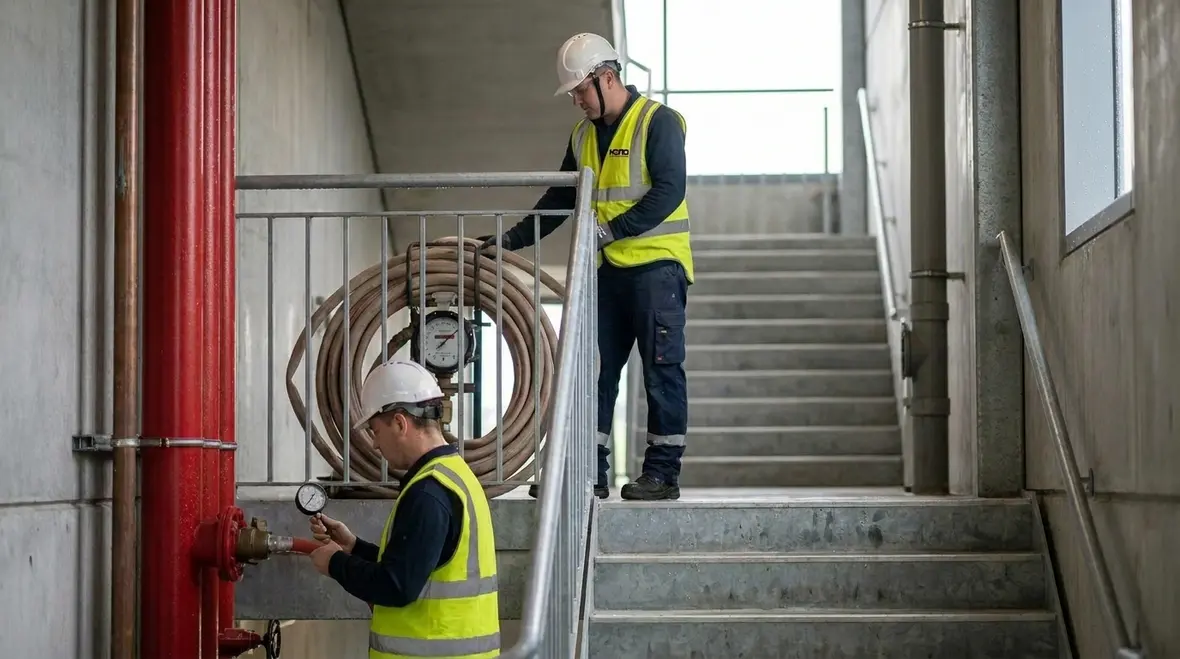
Also, stairwell layouts influence how hose teams reach connections. Even if hydraulic performance checks out on paper, practical access affects how efficiently water gets deployed. Consequently, teams should coordinate engineering analysis with field verification, so the system supports real operations rather than only idealized conditions.
Water supply reliability and network effects
A standpipe is only as strong as its water source. City mains can vary. Fire pumps can cycle. Storage tanks can lose performance if controls drift. Therefore, hydraulic efficiency includes supply reliability, not just piping inside the standpipe system.
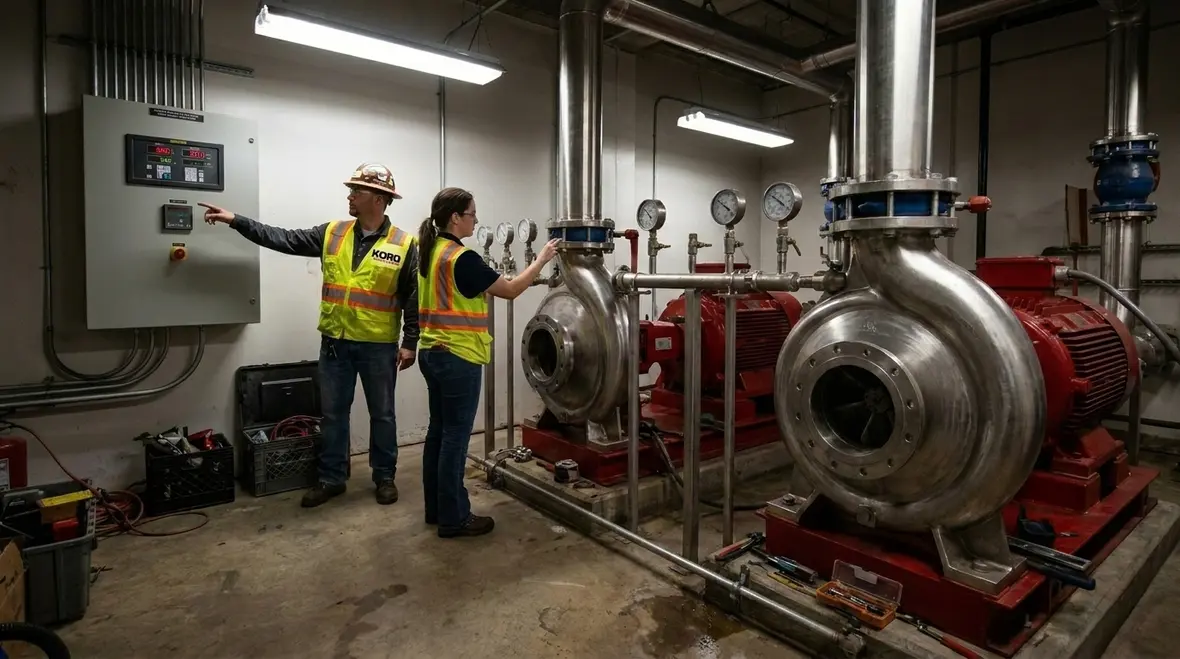
During evaluation, technicians look at pump curves, jockey pump behavior, and how the system performs under the design demand. They also check cross connections and shared water lines that might introduce competition for flow. If other systems draw water at the same time, pressure can sag just when the standpipe needs stability.
To keep everything consistent, organizations often schedule periodic hydraulic performance verification after major changes like sprinkler modifications, pump control updates, or valve replacement. Kord Fire Protection Technicians frequently recommend treating these updates as system events. When you change one part, you must confirm what happens to the rest.
If pump support is part of the conversation, Kord Fire Protection’s Fire Pump Testing Requirements – Things To Know article can help teams understand how pump condition and test practices tie back into standpipe performance. It is one thing to have pressure available in theory and quite another to prove it when demand ramps up.
Maintenance practices that protect efficiency over time
Standpipe efficiency can fade as buildings age. Sediment can accumulate. Gaskets can harden. Strainers can clog. Even routine repainting or minor construction work can alter access paths or leave valves in unintended positions after inspections.
That is why maintenance should focus on both mechanical condition and hydraulic readiness. Practical steps include exercising valves, confirming set points on pressure regulating equipment, draining and cleaning as required by the system design, and verifying clear signage for valves and outlets. Teams should also review test results and note trends. If residual pressure keeps sliding over time, the system is telling a story. You just need to listen.
Interestingly, a common pattern is that organizations handle maintenance tasks but skip the follow up that connects tasks to performance. Yet the standpipe does not care that the valve was “looked at.” It cares what pressure it delivers. So technicians should align preventive work with verified outcomes using measured testing results.
Documentation that actually helps later
The best records are not just boxes checked on a form. They show locations tested, elevations reviewed, pressures observed, adjustments made, and what happened afterward. Good documentation helps future technicians spot recurring issues faster, and it saves owners from paying twice for the same mystery.
Dual column summary: common losses and how to address them
FAQ on hydraulic efficiency for high rise standpipes
Conclusion: act before the system gets tested by reality
High rise standpipes work best when owners treat hydraulic efficiency as an ongoing responsibility, not a one time report. Kord Fire Protection Technicians help teams confirm baseline performance, manage pressure losses, and protect reliability across elevations. If a building has frequent renovations, changing water supplies, or aging components, it deserves a fresh performance look.
Reach out to schedule a review and testing plan that aligns engineering with field reality, because hope is not a control strategy. For direct service support, explore Kord Fire Protection’s Standpipe Systems service page and, if your broader life safety strategy also includes alarm integration, the Fire Alarm Services page.

Join Our Newsletter!
Get the latest fire safety tips delivered straight to your inbox From our Newsletter.