Automatic Fire Suppression Zoning Guide by Kord Fire Protection
At Kord Fire Protection technicians often remind clients that planning a zoned fire suppression layout is not guesswork. It is a methodical design task, done before the first pipe is cut. To keep teams aligned, our automatic fire suppression zoning guide can be used early in the process to define boundaries, expected hazards, and trigger points. From there, the rest of the design focuses on practical choices: where to place detection, how to confirm agent coverage, and how to prevent cross zone confusion. And yes, it is a little like setting up dominoes, except the stakes are higher and the donuts are not part of the installation.
This article walks through the key design considerations for zoned fire suppression layouts, in plain business language. It also explains how Kord Fire Protection technicians evaluate real spaces, real hazards, and real constraints, like ceiling height, ceiling type, and the way people actually move through the building.

Automatic fire suppression zoning guide: start with clear boundaries
Design starts with zones that make sense on paper and in the field. The automatic fire suppression zoning guide supports that work by pushing teams to separate areas that behave differently during a fire event. For example, a warehouse zone may need a different approach than an electrical room or a loading dock corridor.
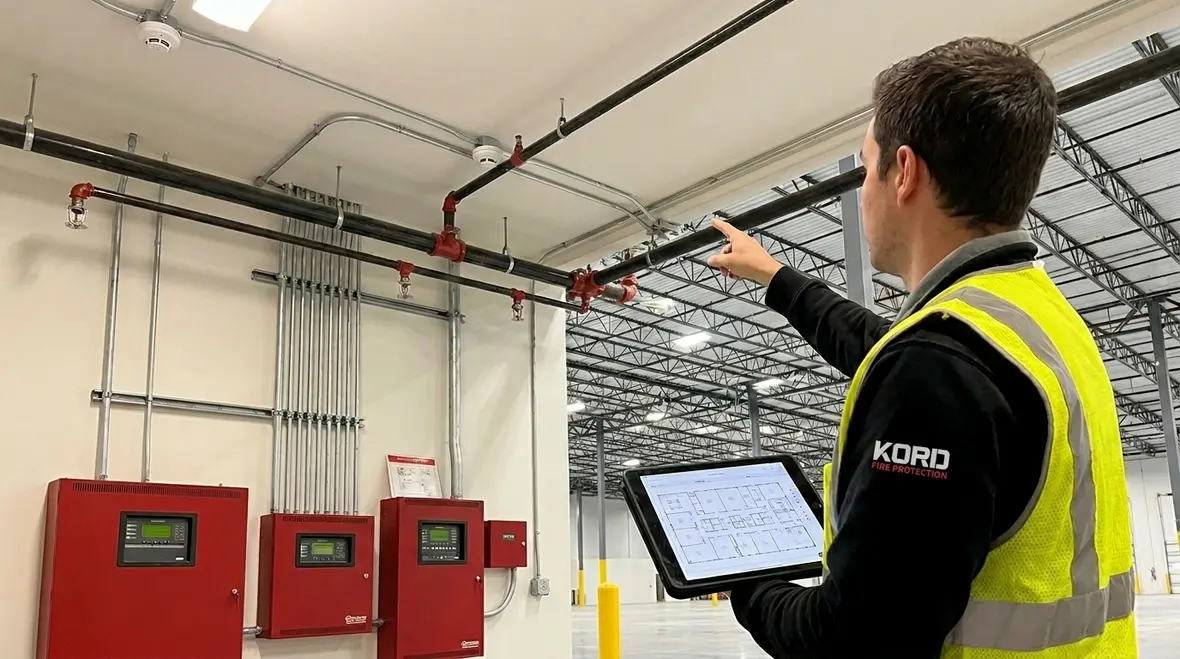
To build solid boundaries, Kord Fire Protection technicians typically confirm a few things first. They review hazard data, expected fire growth, and airflow paths. Then they define zone limits using physical cues where possible, like walls, ceilings, doors, and partitions. Next, they validate that each zone has a clear detection path and a clear agent delivery path.
Because walls do not always stop smoke, the design also accounts for smoke spread. Furthermore, they consider how doors open, how HVAC cycles run, and where smoke tends to pool. Transitioning between zones should not feel like guessing the ending to a mystery novel. It should feel like reading a checklist.
Why physical cues matter more than rough sketches
A line on a plan sheet is useful, but it is not a wall, a beam pocket, a duct chase, or a door that never quite closes all the way. That is why technicians compare drawings to field conditions early. If a zone boundary exists only because it looked tidy during drafting, it can fail the moment smoke finds a better route. A good boundary is visible, explainable, and practical enough that installers, inspectors, and facility staff all recognize it the same way.

How should engineers size detection and coverage for each zone?
Sizing detection and agent coverage together prevents the classic problem of “we triggered, but nothing meaningful happened.” Kord Fire Protection technicians look at detection first because a zoned system still needs accurate intent. If a detector triggers in the wrong zone, the system responds the wrong way. Therefore, the layout must connect device placement to actual hazards.
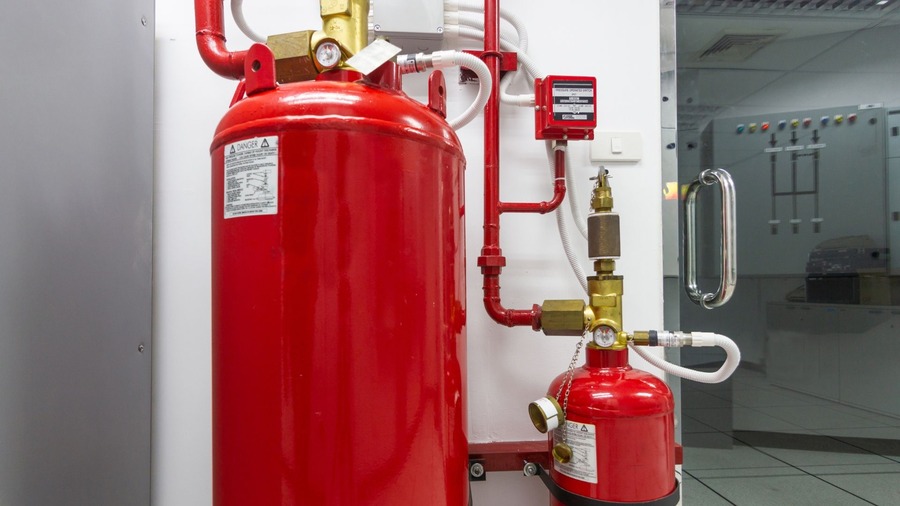
For coverage, engineers plan where sprinklers or nozzles will deliver agent effectively. They also account for obstructions like beams, ducts, racks, and staged equipment. If racks block airflow or create hidden pockets, detectors can trigger late, and coverage can thin out. In that case, additional heads or relocation may be needed.
Next, they verify flow calculations and distribution patterns. They also confirm that the system design supports the required discharge time. Most importantly, they test the intent of the zone. That means checking that the system can control a fire growth scenario within the assumed boundary, not just survive it.
Common coverage questions before installation starts
- Are detectors positioned to see the earliest meaningful smoke movement, not just the easiest mounting point?
- Do obstructions create hidden areas where agent discharge will underperform?
- Will the assumed discharge pattern still work when doors, racks, or movable equipment change positions?
- Does each zone have enough clarity that the response is deliberate rather than accidental?
Zone isolation matters: prevent cross zone activation
Once boundaries are set, the design must keep zones from stepping on each other. Kord Fire Protection technicians pay close attention to control logic, wiring layout, and panel programming. If two zones share a common influence, such as a shared detection channel or a shared control path, cross zone activation can become a risk.
To reduce that risk, design teams separate circuits where possible and assign clear addressing for devices. They also implement programming rules so that alarm confirmation, supervisory conditions, and discharge conditions stay within the intended zone. In practice, this means each zone should have its own identity in the control scheme.
Additionally, technicians consider what happens during fault conditions. If one zone has a sensor trouble state, it should not automatically cause another zone to act. Instead, it should inform operators and allow the system to remain reliable. After all, nobody wants a system that panics like a pop quiz from a teacher with a flair for drama.
Design for airflow, smoke movement, and HVAC behavior
Fire rarely follows the clean lines on a drawing. Smoke moves, hot gases rise, and HVAC fans can shift conditions fast. So, zoned fire suppression layouts must respect airflow patterns and building operations.
Kord Fire Protection technicians often review HVAC zoning maps and typical operating modes. Then they plan how the fire control strategy interacts with fans and dampers. If the system closes dampers too late, smoke can travel beyond the intended zone. Conversely, if it closes too aggressively, it can create pressure changes that affect distribution.
They also think about ceiling voids, return air paths, and open stairwells. For example, a stairwell can act like a chimney. That behavior can undermine zone boundaries unless controls and detection placement account for it. Transitioning from one floor to another adds complexity, so the design often calls for tighter coordination between suppression and building management systems.
And yes, HVAC controls can be tricky. But so is trying to find your keys while the smoke alarm is chirping. The difference is that engineering can prevent the chirp from turning into chaos.
When building operations work against the drawing
Real facilities do not stay frozen in their ideal design condition. Shipping doors stay open longer than expected. Fans run in override. Tenants add shelving. Maintenance teams reroute equipment. Zoned suppression design has to survive all of that. The best layouts assume the building will behave like a busy building, not like a perfect diagram taped to a conference room wall.
Code and documentation: keep the layout auditable
Zoned systems must remain traceable from concept to install to inspection. Kord Fire Protection technicians emphasize documentation because it protects owners during permits, changes, and service visits. Engineers should produce clear zone diagrams, device lists, and control logic descriptions.
They also verify that the design supports the applicable code requirements for the hazard type and the agent used. If the project uses engineered systems like clean agent or specialized suppression, the design must show the basis for coverage and timing. Sprinkler based zoned designs similarly need device spacing, hydraulic calculations, and layout drawings that match the field.
For audits, technicians recommend including labeling that operators can follow. They also stress that zone naming should match how staff thinks. If the drawing calls it Zone 3 but the maintenance team calls it the North Electrical Corridor, trouble starts early. Therefore, consistent naming reduces delays and improves response time.
This is also the point where strong internal references help. If your team is reviewing broader system readiness, it may help to compare zone documentation practices with the inspection mindset described in Wet Sprinkler System Inspection by Kord Fire Protection. The documents are different, but the principle is the same: clarity now prevents confusion later.
Commissioning and testing: confirm every zone does its job
Even a well designed layout can fail if it never gets verified. Commissioning and testing give zoned fire suppression systems the final layer of confidence.
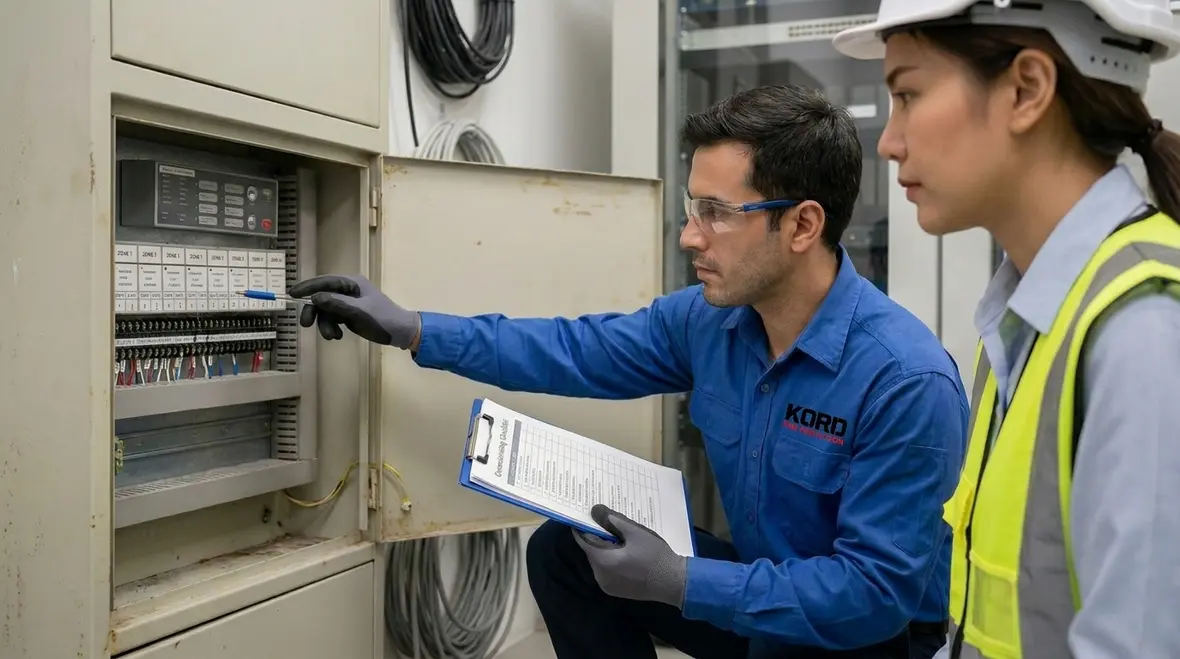
Kord Fire Protection technicians usually plan tests that prove both detection and suppression behavior. That includes verifying that signals land in the correct zone, that the control logic behaves as intended, and that actuation steps happen in the correct order. They also confirm that supervisors, alarms, and discharge outputs match the programmed sequence.
Furthermore, technicians test under real conditions when possible, such as airflow modes or door positions that match normal operations. They check that the system maintains stable states during trouble conditions. Most importantly, they document results so future service work does not turn into a guessing game.
To keep operations calm, testing often gets scheduled with minimal disruption. And if staff members ask for a demonstration, Kord Fire Protection technicians can explain the “why” behind each step, so people do not feel like they are watching a magic trick. They are watching safety engineering.
What good commissioning actually proves
- Each initiating device reports to the intended zone.
- Each programmed response stays inside the correct sequence.
- Each suppression path delivers coverage where the design assumed it would.
- Each trouble state remains informative instead of contagious.
Common mistakes that ruin zoned layouts
Several errors show up again and again in the field. Kord Fire Protection technicians point to these issues because they affect reliability and can drive costly retrofits.
- Zones that do not match actual hazards, like separating areas by wall but ignoring airflow links.
- Detection placed for access, not behavior, where a detector cannot see smoke pathways that matter.
- Control logic that allows overlap, where two zones can trigger each other during alarms or faults.
- Obstruction blind spots, such as ignoring rack heights, duct work, or ceiling obstructions that block coverage.
- Poor labeling and mismatched zone names, which slows response during an emergency.
Design teams can avoid these problems by using the automatic fire suppression zoning guide early, then refining the layout with real measurements and real operating conditions. After that, commissioning and thorough documentation close the gap between drawings and performance.
FAQ
Ready to design or refine zoned suppression?
If the building has multiple hazard areas, shared air paths, or complex ceilings, a zoned approach can protect the right spaces at the right time. Kord Fire Protection technicians can help teams map zone boundaries, verify detection and coverage intent, and plan commissioning tests that hold up in real emergencies.
For broader support, explore Fire Alarm Services and Kord Fire Protection’s Full Fire Protection Services. Reach out for a consult, share your site plans, and ask for a review using the automatic fire suppression zoning guide as a starting point. Because when safety matters, it is better to be over prepared than overconfident.

Join Our Newsletter!
Get the latest fire safety tips delivered straight to your inbox From our Newsletter.