FM-200 Fire Suppression Guide for Building Owners
FM-200 fire suppression is a clean agent system designed to protect people and property without flooding areas with messy water. In other words, it aims to stop a fire while keeping the space usable, which building owners tend to appreciate a lot more than the fire department having to do everything twice. And yes, it uses a gas that quickly knocks down fire activity. Now, because every building has its own risks, FM-200 fire suppression in practice requires planning, proper design, and dependable service. So this guide walks building owners through what they should know, what to expect during installation and inspection, and how Kord Fire Protection can act as a vital partner for successful ongoing protection.
Before we get lost in the details, the goal stays simple: protect lives, reduce downtime, and keep compliance moving in the right direction. Also, a well-managed system helps owners avoid that fun surprise known as “the system failed inspection.” Nobody enjoys that, not even villains in action movies.
FM-200 fire suppression basics for building owners
FM-200 is a halocarbon clean agent that suppresses fire by interfering with the chemical process of combustion. As a result, it can extinguish certain classes of fires while leaving minimal residue compared with some alternatives. Additionally, because the agent is clean, it often suits environments where water damage would create new problems, such as data centers, telecom rooms, museums, and specialized storage areas.
However, the word “clean” does not mean “set it and forget it.” A system still depends on correct hazard analysis, proper enclosure integrity, and correct discharge design. If a building has gaps, poorly maintained doors, or unplanned changes to airflow, performance can drop. Therefore, owners should treat the system like an asset that needs care, not a decorative feature.
That point matters even more in real buildings where rooms change over time. A server room gains a new cable tray. A storage room gets a vent modification. Someone props a door open because it is Tuesday and nobody wants to walk the extra ten feet. Small operational changes can quietly chip away at the conditions the system was designed around. The problem is not always dramatic. Sometimes it is just enough to reduce performance when the room actually needs protection most.
Why owners should care about enclosure integrity
An FM-200 system is not only about cylinders and nozzles. It is also about the room itself. If the enclosure cannot hold the agent concentration long enough, the suppression strategy can lose effectiveness. That is one reason room integrity testing remains such an important piece of long-term reliability. Building owners do not need to become fire protection engineers overnight, but they do need to understand that a protected space is a whole package, not a pile of parts.
How FM-200 systems work from detection to discharge
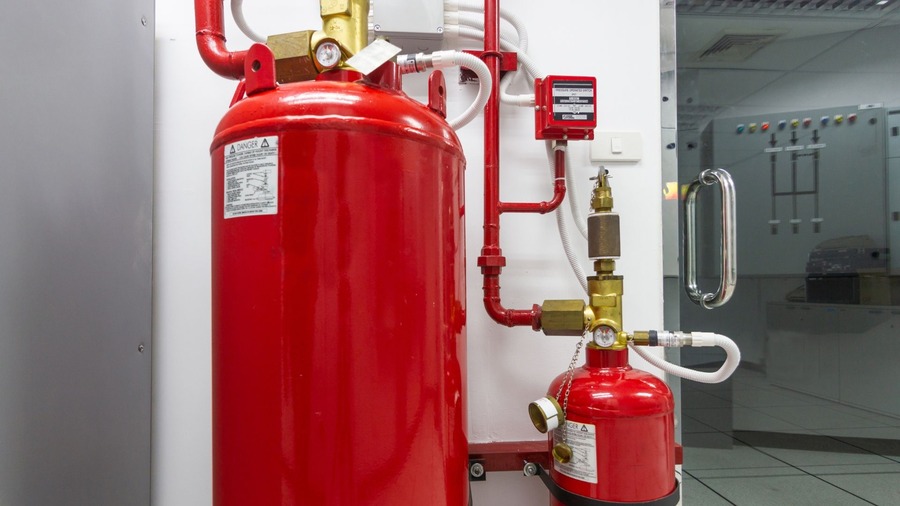
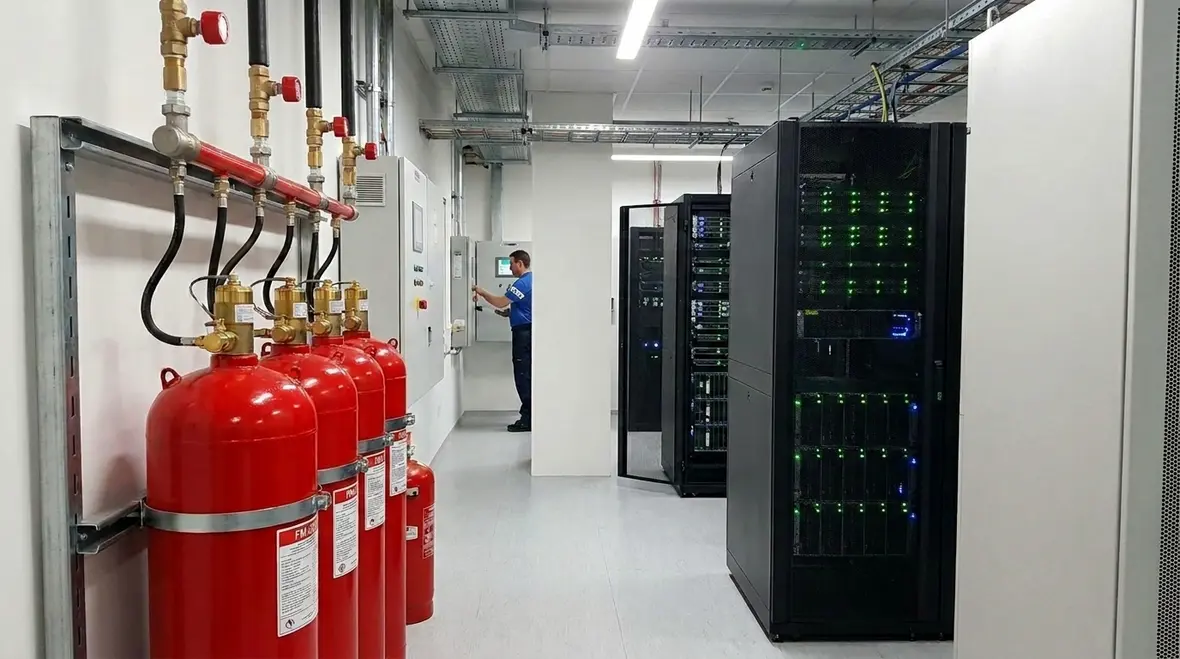
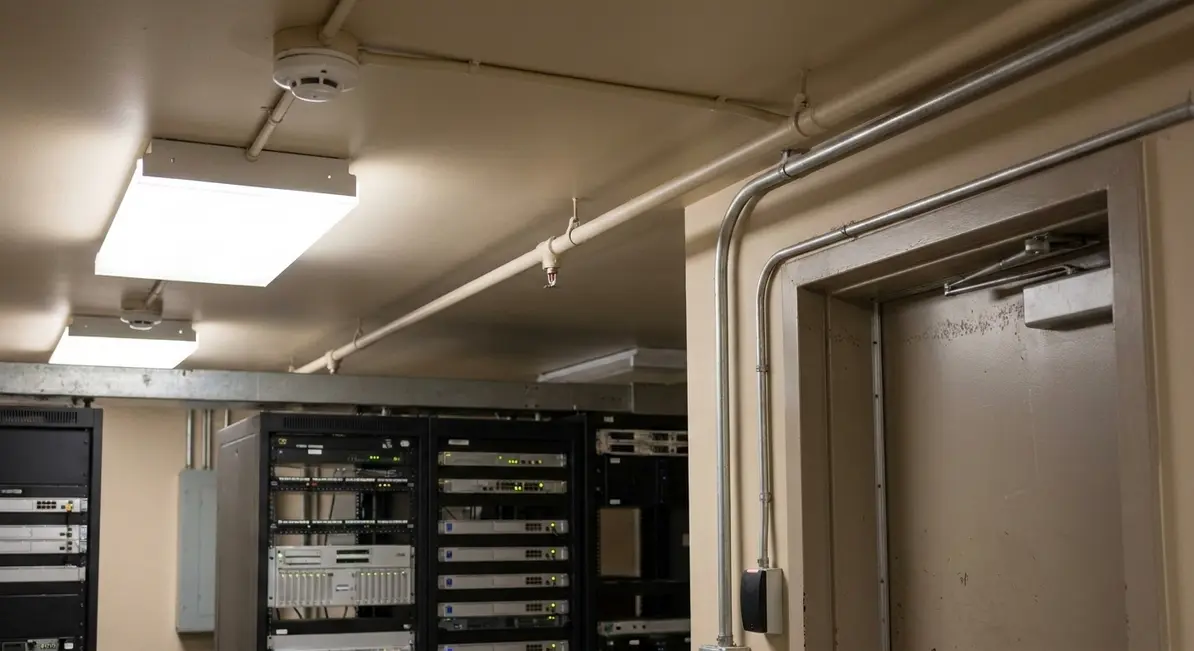
A properly designed system follows a sequence that the building can trust. First, heat, smoke, or flame detectors monitor the protected area. Next, the control panel verifies the alarm condition and may delay discharge based on the design and occupancy needs. Then, when the system confirms fire conditions, it releases the agent through piping and nozzles.
During discharge, the agent mixes into the protected space and reduces the ability of flames to keep burning. Meanwhile, the system should trigger alarms, manage door release where required, and coordinate with other life safety functions. Because fire behavior changes fast, timing matters. If the system components do not function together, the suppression strategy loses effectiveness.
Finally, after discharge, the building often needs a clear plan for inspection and reset. That includes verifying pressure and checking for any trouble conditions. Kord Fire Protection helps owners keep that cycle under control so the system stays reliable when it matters most.
What the discharge sequence means for operations
For building owners, the sequence is not just technical trivia. It affects staffing, alarm response, access control, and post-event recovery. People need to know what pre-discharge warnings mean and who is responsible for contacting service support after an event. If nobody understands the chain of action, even a well-designed system can create confusion. Fire protection works best when the building team knows its role before the alarms ever start shouting at everyone.
Where FM-200 fits best and where it does not
FM-200 fire suppression often fits well when owners want to avoid water damage and when the hazard matches the agent’s design basis. For example, it can support protection for areas with sensitive electronics, document storage, or environments where accidental water release would ruin critical assets. Kord Fire Protection’s clean agent fire suppression services page is a useful reference point for owners comparing where these systems make sense.
Yet not every scenario works the same way. Some spaces require different agent types, different design approaches, or additional detection and ventilation controls. Also, certain fire hazards may demand specialized layouts, nozzle placement, or enclosure standards. If someone installs the system for the wrong hazard category, it may still “work,” but it may not deliver the results the owner expects.
Therefore, building owners should ask for a documented hazard assessment and confirm the design assumptions. That way, the system aligns with the space, not with guesswork. And if the project includes renovations, Kord Fire Protection can review changes early so owners do not accidentally turn a protected room into an unprotected one.
A practical way to think about suitability
The simplest question is this: what hurts more, fire damage or water damage? In many technology-heavy spaces, the honest answer is both, which is why clean agents earn so much attention. But suitability still comes down to the exact hazard, room conditions, and performance goals. It is a protection strategy, not a magic trick. The room, the risk, and the response plan all need to agree with one another.
Design, installation, and commissioning that reduce future headaches
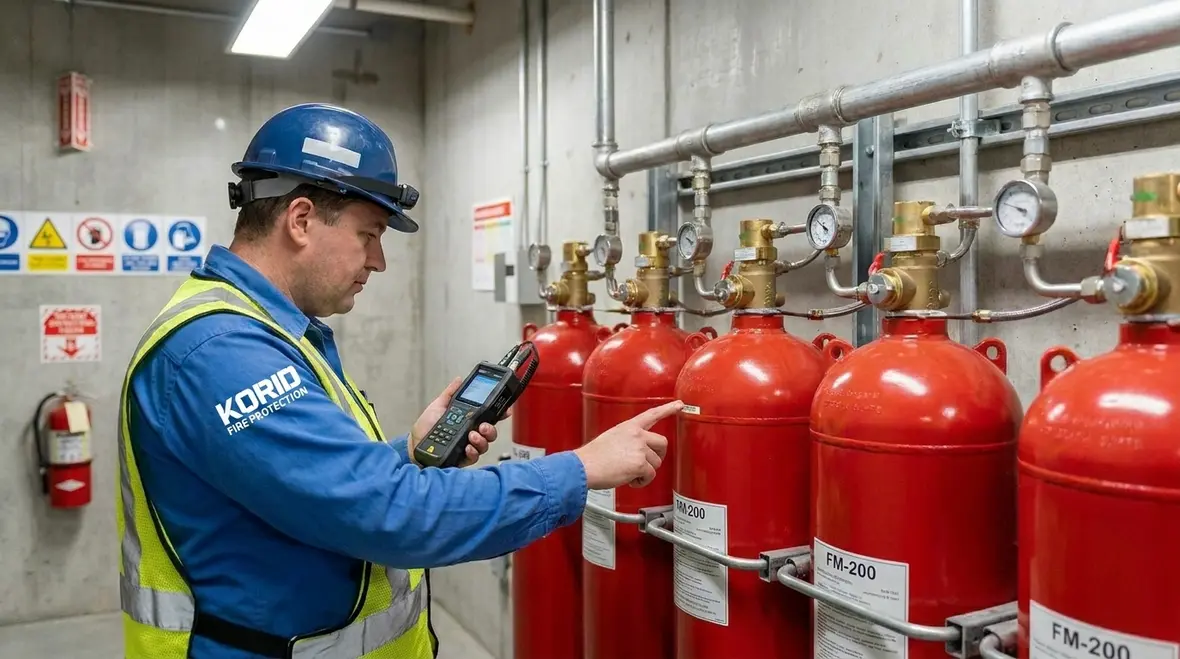
Good design starts with accurate information. So the installer must measure volumes, identify openings, and account for airflow. Then, the design determines nozzle locations, piping runs, and discharge timing. Installation quality matters because small mistakes create big risks later. For instance, leaks in piping, improper support, or incorrect labeling can cause delays or failures.
After installation, commissioning verifies the system’s readiness. This step includes testing detectors, alarms, control panel behavior, and release circuits. It also confirms that the system meets local codes and engineering requirements. Additionally, enclosure integrity checks help ensure the room can maintain the expected concentration long enough to suppress the fire.
To keep momentum, owners should request as-built documentation and a clear record of test results. Kord Fire Protection supports this process by treating commissioning like a business deliverable, not a checkbox. That mindset helps owners reduce uncertainty and move forward with confidence.
This is also the phase where future headaches can be prevented cheaply instead of fixed expensively. Clear labeling, organized records, and a properly trained site contact may not sound glamorous, but they save time later when inspections come due or when a trouble condition appears. Buildings rarely become easier to manage by accident. They become easier to manage because someone planned ahead and documented the boring parts extremely well.
FM-200 maintenance schedules and inspection expectations
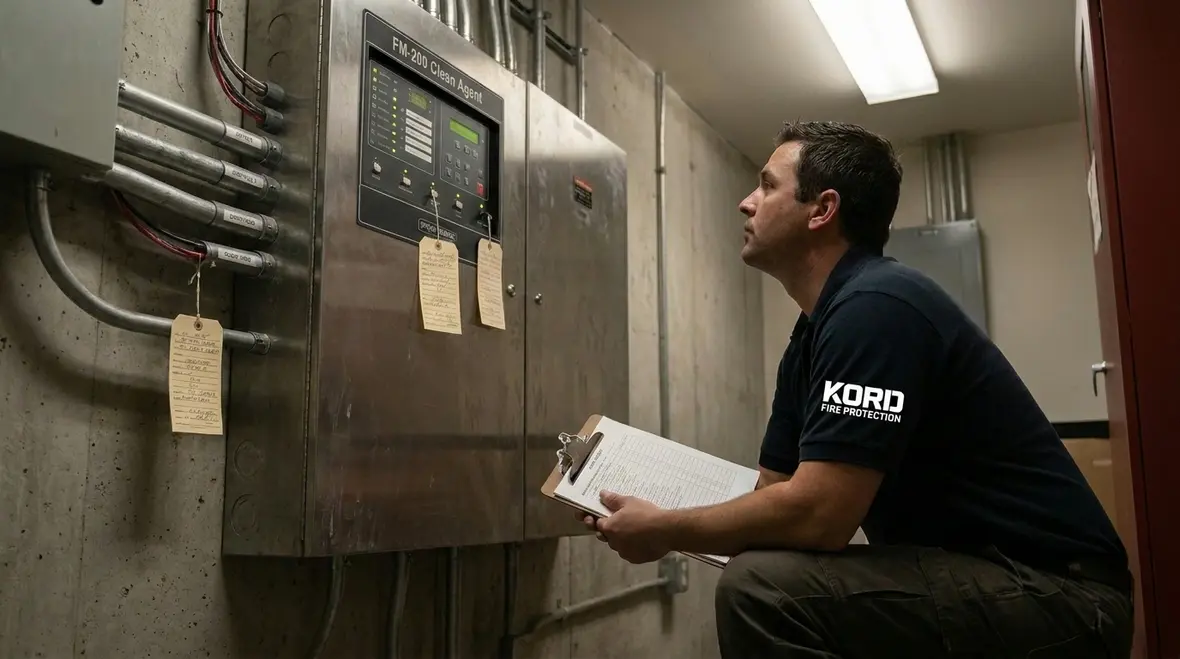
Inspections and maintenance keep the system ready for action. Typically, owners should expect scheduled testing of detection and control components, verification of alarm signaling, and periodic system checks as required by the standard and local authority having jurisdiction. Also, owners should plan for operator training so staff understand what happens during an alarm event.
In addition, clean agent systems require careful attention to cylinder condition, pressures, and release mechanisms. A system that looks fine can still fail if components degrade over time or if stored conditions fall outside expected ranges. Therefore, owners should avoid informal maintenance promises and instead follow a written plan.
To make this easy to manage, Kord Fire Protection can act as the ongoing partner that tracks compliance, schedules service, documents findings, and helps owners respond quickly to trouble signals. In the end, it is not just maintenance. It is risk management with paperwork.
Documentation is part of protection too
Some owners think of paperwork as the annoying side quest attached to the real work. Unfortunately, inspectors, insurers, and service teams do not share that opinion. Reports, tags, logs, and service records help prove the system has been maintained and help identify recurring issues before they become major failures. If the paperwork is a mess, the protection program usually is too. That is not always fair, but it is often true.
Budgeting and downtime planning that keep operations moving
Many owners worry about cost, but they often miss the bigger cost: downtime. If a system goes out of service, the building might need alternate fire watch measures, extra monitoring, or operational changes until the system returns to readiness. Therefore, owners should budget for maintenance in a way that supports continuity.
During inspections, the service team may need to coordinate timing, access, and temporary adjustments. Also, the system may require specific steps after testing, including verification of readiness after any partial releases or component checks. By planning ahead, owners reduce disruption and keep teams calm, which is great because a calm building beats a panicked building every time.
Common service focus areas
Detector and control panel verification
Alarm and release circuit checks
Agent storage and release mechanism readiness
Documentation updates and compliance records
Owner actions that protect performance
Maintain room enclosures and closure practices
Report renovations or layout changes fast
Train staff on alarm response
Keep keys and access paths available
What building owners should ask Kord Fire Protection before signing
Choosing a partner decides whether the system stays truly dependable. Kord Fire Protection helps owners move through the process with clear communication and accountability. Before any agreement, owners should ask about documentation, response expectations, and how the team handles system changes.
Owners should also ask how the provider manages test schedules, what reports they deliver, and how they track trends over time. Additionally, owners should confirm whether the provider can support both preventive service and corrective work when issues appear. Because fire systems do not wait for convenient weekends, the ability to respond matters.
Finally, owners should ask how the provider coordinates with local code requirements and keeps the system aligned with the building’s actual hazard. Kord Fire Protection can help ensure that the protection strategy stays relevant as the building evolves.
For owners who want more context before making a service decision, Kord Fire Protection also offers related educational resources, including its FM 200 fire suppression systems explained article and its clean agent suppression system and room integrity testing guide. Those pieces help connect the day-to-day ownership questions with system design and long-term performance.
FAQ: FM-200 fire suppression
Conclusion: make protection a partnership, not a gamble
FM-200 fire suppression can protect people and critical assets when the system fits the hazard, receives strong installation work, and gets consistent maintenance. Building owners should plan for inspections, document results, and treat renovations as events that require review. Most importantly, they should choose a partner who communicates clearly and manages compliance with real follow through.
Kord Fire Protection can help owners keep the system ready, reduce downtime risk, and handle service with calm confidence. Reach out through Kord Fire Protection’s clean agent fire suppression service page to keep your protection plan fully in step.

Join Our Newsletter!
Get the latest fire safety tips delivered straight to your inbox From our Newsletter.