HFC-227ea Fire Suppression: Kord Fire Protection Guide
The phrase HFC-227ea fire suppression shows up when facility owners need a clean, reliable way to protect people, equipment, and records. In the next sections, this article explains how the system works, where it fits best, what technicians check during service, and why Kord Fire Protection can become a vital partner once the job starts. After all, fires do not care about schedules, and neither should a well planned fire protection strategy. Think of this guide like a calm, practical playbook, not a thriller where everyone panics at the last second.
Where This System Fits and Why It Matters
HFC-227ea fire suppression protects spaces that house high value assets. It works well where water damage creates its own kind of disaster. For example, mission critical rooms, electrical enclosures, server areas, communication closets, and control spaces often benefit because the agent can extinguish a fire without flooding the room. At the same time, the system needs careful design. Therefore, the best results come from pairing the right hazard assessment with proper discharge calculations and safe release planning.
Kord Fire Protection helps clients treat the job like an engineered solution, not a box to check. In many facilities, the first step is understanding the room geometry, door openings, and airflow behavior. Then, the team maps the likely fire source and evaluates how quickly it can grow. As a result, the design supports consistent performance when it counts. For readers comparing options, Kord Fire’s clean agent fire suppression service page gives helpful context on how clean agent systems are applied in spaces where electronics, records, and expensive downtime all raise the stakes.
Why owners choose clean agent protection
The appeal is straightforward. Owners want fire protection that responds fast, protects sensitive assets, and does not leave behind the kind of cleanup that turns one emergency into three more. That is why HFC-227ea keeps showing up in conversations about critical equipment. The system is designed for enclosed hazards where preserving operations matters almost as much as extinguishing the fire itself.
How HFC-227ea Fire Suppression Works in Plain Terms
This agent is a clean extinguishing medium. Instead of soaking a space, it works by interrupting the chemical process that sustains combustion, and it also helps reduce the heat conditions around the flame. When the system detects a fire, it releases the agent into the protected area. Consequently, the fire loses the conditions it needs to continue.
Technically, the system relies on a sequence that must operate correctly every time. Detection triggers the control panel, the panel commands the release hardware, and valves open to discharge the agent into the room. Meanwhile, the system timing matters because occupants need warning and evacuation time before the discharge. Therefore, the design and inspection process focuses on reliability, speed, and repeatable outcomes.
Also, it helps to know what the system is not. It does not “mist” the room like a fancy air freshener, and it does not replace smoke management for every scenario. Instead, it delivers a targeted response for the hazard it was designed to cover. If you want another useful comparison point, Kord Fire’s article on clean agent fire suppression for critical equipment highlights why residue free suppression is such a strong fit for technology heavy environments.

What to Expect During Design and Installation
A strong HFC-227ea fire suppression installation starts with a proper plan. First, the project team performs an evaluation of the enclosure. That includes ceiling height, room volume, leakage assumptions, and venting characteristics. Then, designers place nozzles or discharge outlets in a way that supports even distribution. Afterward, the system integrates detection devices, alarm notification appliances, manual pull stations, and any interlocks such as HVAC shutdown where required.
Kord Fire Protection typically approaches the work as a coordinated system. For example, if the facility has variable airflow, the design needs to account for how air movement changes agent concentration. Likewise, if the room is shared with maintenance traffic, the team considers door hold open practices and possible leakage. In short, installation success depends on details.
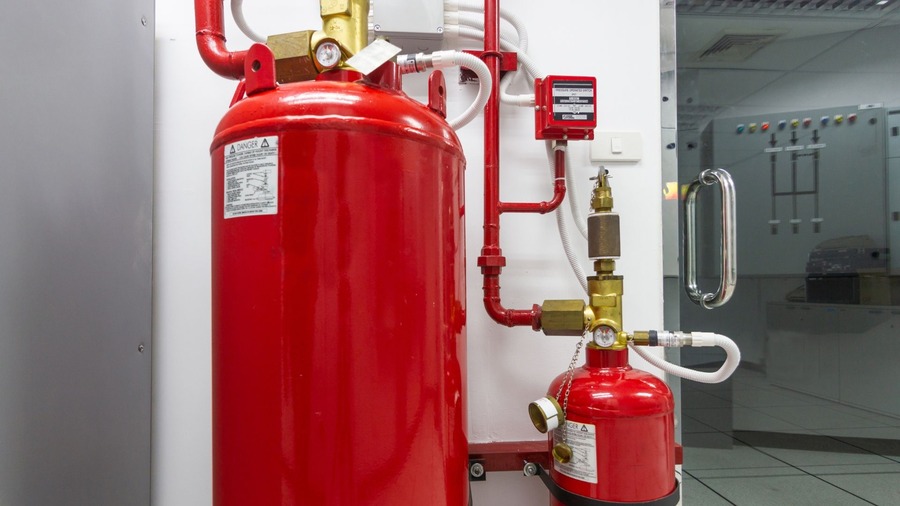
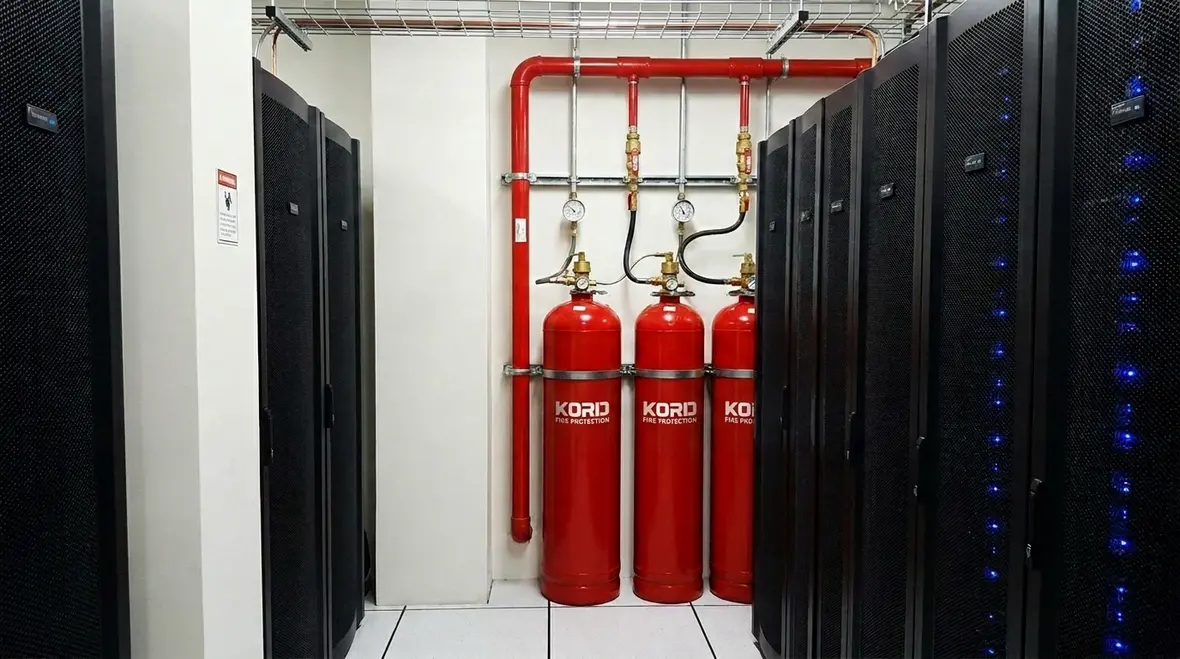
Here is the part that feels boring, but it saves budgets later. The technician must verify the piping, confirm cylinder or storage pressure readings, check the release path, and validate all device interconnections. If the system cannot pass its verification tests, it does not matter how good the drawings look. Teams dealing with enclosure leakage issues may also want to review Kord Fire’s piece on clean agent suppression system and room integrity testing, because keeping the agent where it belongs is not exactly optional.
Installation details that make a big difference
- Accurate enclosure measurements and hazard review
- Correct nozzle layout for proper agent distribution
- Reliable detector, panel, and releasing hardware coordination
- Functional interlocks for HVAC and related building systems
- Verification testing before the system is considered ready
Maintenance That Keeps Performance Steady
Even well designed HFC-227ea fire suppression systems need ongoing service. Over time, components experience normal wear, dust, and minor shifts in connections. Therefore, routine inspections and testing support continued readiness.
Service often includes visual checks of cylinders, valves, pressure gauges, actuator mechanisms, and discharge nozzles. Technicians also verify detection and alarm circuits. In addition, they confirm tamper switches and confirm that the control panel logs and trouble reporting work as expected. Then, after testing, the team ensures the system restores to a ready state.
It also helps to track maintenance history. That way, facility owners understand what changed, when it changed, and which parts may need earlier attention due to environment. Kord Fire Protection brings that discipline by treating maintenance as a repeatable process, not a last minute emergency visit. Because nothing says “fun” like a surprise trouble signal at 2 a.m.

Safety Considerations for Occupants and Equipment
Clean agent systems still require safety planning. The facility must provide warning signals and manage evacuation routes. That includes ensuring the alarm system triggers as designed, signage remains visible, and accessibility standards stay met.
Technicians also verify that the agent release does not conflict with occupant exposure limits and that the system design includes the correct discharge time and concentration targets. Moreover, the system must include correct interlocks where needed, such as stopping certain ventilation modes so the agent stays where it should.
Kord Fire Protection can become a vital partner by guiding clients through the safety and operational steps that often get overlooked. For example, staff training matters. When employees know what the alarms mean and what to do next, response improves. And when contractors and facilities teams understand the sequence, they prevent accidental disruption of the protected space. It is not about scaring anyone. It is about reducing confusion during the worst day of the week.
Common safety planning priorities
- Clear pre-discharge alarms and occupant notification
- Marked evacuation routes and visible signage
- HVAC and equipment interlocks that support agent retention
- Training for staff, contractors, and facility personnel
- Periodic review so the protected room still matches the original design intent
Compliance, Documentation, and Service Records
Fire suppression systems sit inside a world of inspections, codes, and documentation requirements. That is why recordkeeping matters. When a facility tracks test results, service dates, and device changes, it supports compliance goals and speeds up future audits.
Kord Fire Protection helps clients keep documents organized. Technicians can document device verification, identify any found issues, and confirm corrections. Then, owners can review a clear service history that shows the system stays within expected parameters. Readers who want broader code context may also find Kord Fire’s article on the clean agent standard for fire suppression systems useful for understanding why all that paperwork earns its keep.
| Service item | Why it matters |
|---|---|
| Detection circuit verification | Confirms the system triggers the release sequence on time. |
| Valve and actuator inspection | Supports proper discharge behavior when the control panel commands it. |
| Nozzle and distribution review | Helps maintain designed agent coverage for the protected volume. |
| Alarm notification test | Ensures occupants receive clear warning and instructions. |
Choosing the Right Partner for HFC-227ea Fire Suppression
Facility owners usually have two choices: treat service as a reactive task or build a long term safety relationship. With HFC-227ea fire suppression, the best path is the one that supports the system from design through service. Because if the installation and maintenance quality do not match, performance can drift over time.
Kord Fire Protection stands out when clients want both technical care and practical guidance. The team can help align the system with the actual way the space operates, not just how it looked on day one. Then, they help establish an inspection rhythm that reduces surprises and improves readiness.
And yes, it can feel like fire protection paperwork is as exciting as watching paint dry. However, when the stakes involve people and high value assets, boring becomes brilliant. If your facility needs a next step, Kord Fire’s clean agent fire suppression services page is the right place to start the conversation near the end of the planning process and before a trouble signal decides to introduce itself first.
FAQ
Conclusion
Choosing HFC-227ea fire suppression is a serious decision, and it pays off when the system stays engineered, maintained, and documented. Kord Fire Protection can help facilities move from design to reliable service with clear communication, careful testing, and practical safety support.
If the protected space matters, do not wait for a trouble signal or an audit deadline. Reach out through Kord Fire’s clean agent fire suppression service page now to schedule an assessment and build a steady maintenance plan that protects what you cannot replace.

Join Our Newsletter!
Get the latest fire safety tips delivered straight to your inbox From our Newsletter.