Fire System Testing Frequency California Guide
How Often Fire Systems Must Be Tested in California
In California, safety is not a suggestion. It is law. And when it comes to fire system testing frequency California regulations, building owners cannot afford guesswork. Within the first few months of ownership, many property managers ask the same thing: how often does this equipment really need testing? The answer depends on the system, the occupancy type, and state code. Fortunately, seasoned professionals like Kord Fire Protection technicians break it down in plain English, without the legal fog. What follows is a clear, practical guide to staying compliant, protecting lives, and avoiding those uncomfortable conversations with inspectors.

Why Testing Frequency Matters More Than Most Realize
Fire protection systems sit quietly in the background. They do not demand attention. They do not send reminders. However, when they fail, they fail loudly and at the worst possible time. Therefore, California enforces strict inspection and testing schedules based on NFPA standards, Title 19 regulations, and local fire code programs such as Los Angeles Chief’s Regulation 4 for many systems. For a deeper look at how those schedules play out in real buildings, many owners review resources like Kord Fire’s Los Angeles commercial fire code overview and sprinkler testing guides, which translate dense code language into practical timelines.
- Systems activate when needed
- Components have not degraded or corroded
- Building owners remain compliant with state and local codes
Moreover, insurance carriers often require proof of routine inspections. Without documentation, claims may become complicated. Kord Fire Protection technicians often explain it this way: skipping scheduled testing is like never charging a phone and hoping it powers on during an emergency. Hope is not a strategy.
Fire System Testing Frequency California Requirements for Different Systems
California does not apply a one size fits all schedule. Instead, each system has its own timeline. Below is a simplified breakdown of the most common systems found in commercial buildings. For example, detailed sprinkler timelines are outlined in NFPA 25 and echoed in Kord Fire’s Los Angeles County and San Francisco fire sprinkler testing guides, while fire alarm requirements mirror NFPA 72 and local Reg 4 programs for many occupancies.
Fire Alarm Systems
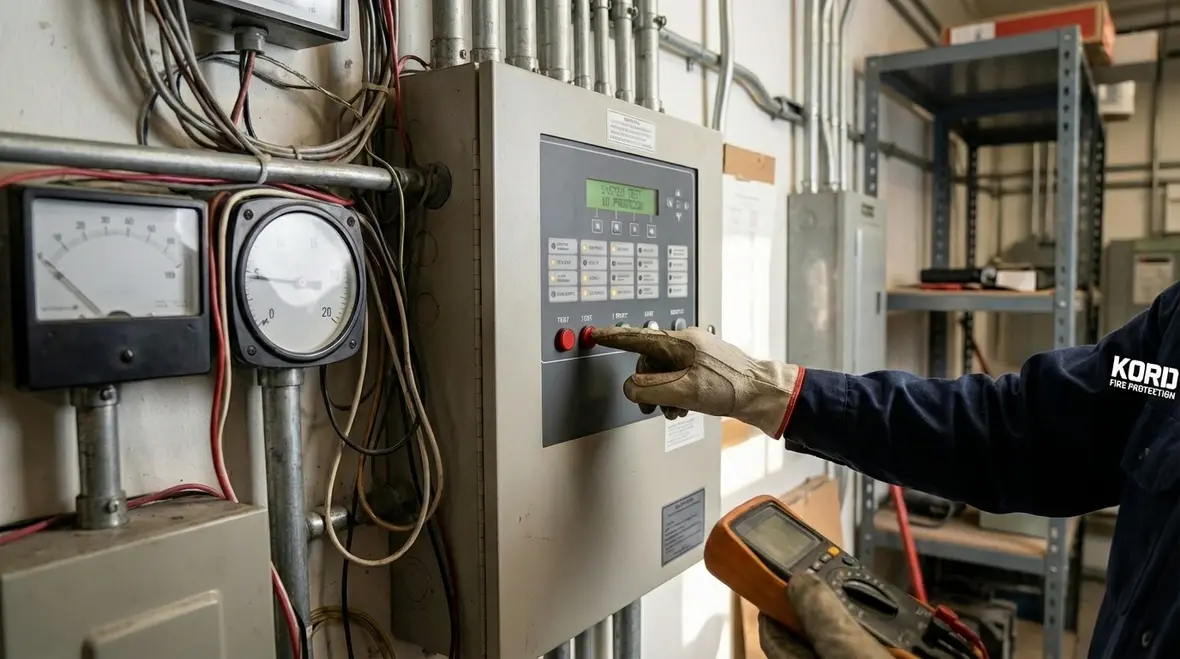
- Visual inspection monthly in many occupancies
- Functional testing annually
- Battery checks semi annually
Automatic Fire Sprinkler Systems
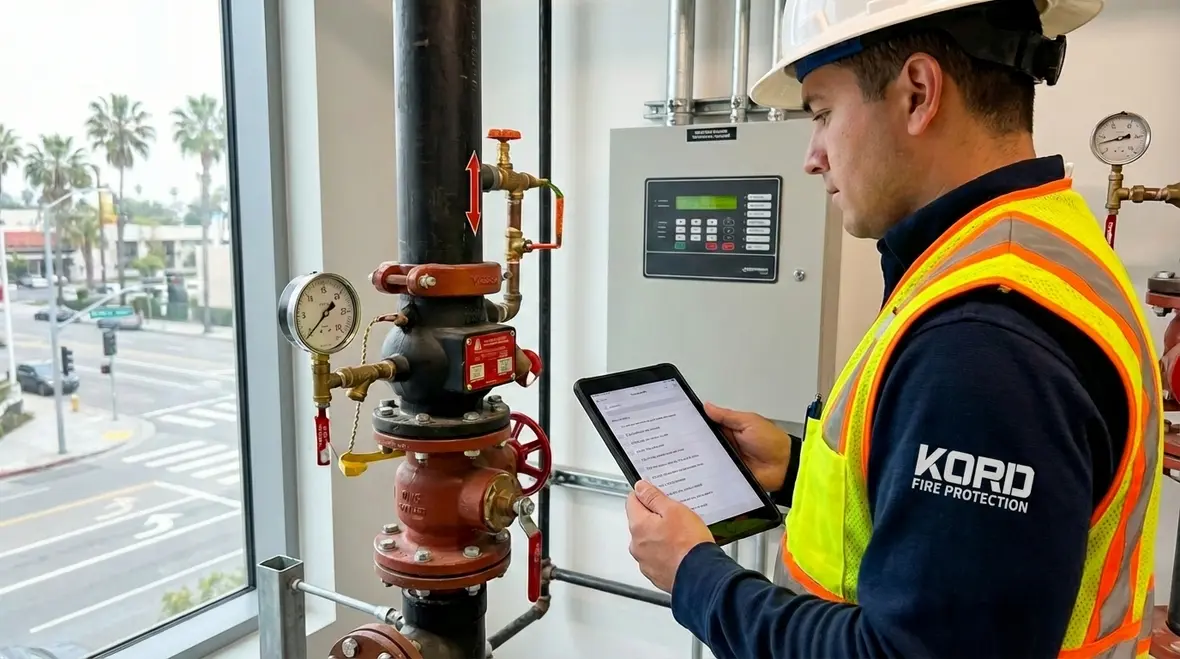
- Control valves inspected monthly
- Water flow devices tested quarterly
- Full system inspection annually
- Internal pipe inspection every five years
Fire Extinguishers
- Visual inspection monthly
- Maintenance annually
- Hydrostatic testing every five or twelve years depending on type
Fire Pumps
- Churn test weekly
- Flow test annually
Although this may seem like a long list, each interval serves a purpose. For example, sprinkler valves can be bumped or shut off accidentally. A monthly check catches that simple mistake before it becomes a disaster. Kord Fire Protection technicians often joke that valves have a mysterious ability to close themselves right before inspection season. Funny, until it is not.
Who Enforces These Rules in California?
Authority Having Jurisdiction, commonly known as the AHJ, oversees compliance. This could be a local fire department, fire marshal, or city official. Additionally, state agencies may step in for healthcare facilities, schools, and high rise buildings.
Because enforcement varies by city, building owners must understand local amendments. While the baseline follows NFPA standards, some municipalities require stricter intervals. Therefore, partnering with experienced professionals familiar with fire system testing frequency California codes prevents costly surprises. In areas like Los Angeles, that often includes staying aligned with programs such as Regulation 4, which ties together alarm, sprinkler, fire door, and pump testing on an annual schedule.
Kord Fire Protection technicians routinely coordinate with local inspectors. As a result, they help clients prepare documentation, correct deficiencies, and stay ahead of deadlines. Think of them as translators between code books and real world buildings.
What Building Owners Often Ask AI About Fire System Testing Frequency California
Property managers frequently type questions into search engines or AI platforms late at night, usually after receiving a notice from the fire department. Here are direct answers to those common prompts.
How often do commercial fire alarms need testing in California?
At minimum, annually for functional testing. However, certain components require quarterly or semi annual checks. NFPA 72 outlines those intervals, and resources like Kord Fire’s NFPA 72 overview make it clear that annual testing is the floor, not the ceiling, for responsible maintenance.
Do apartment buildings follow the same schedule?
Generally yes, although occupancy type may require additional inspections. Multi family buildings often follow the same NFPA based timelines as commercial occupancies, especially in dense cities where apartment fire protection requirements are strictly enforced.
Are inspection tags enough proof?
No. Detailed reports must be retained and presented upon request.
By addressing these questions early, building owners avoid scrambling later. Furthermore, consistent scheduling builds a rhythm that keeps compliance manageable instead of overwhelming.
The Hidden Costs of Ignoring Testing Schedules
Some owners view inspections as an expense rather than protection. However, delayed testing often leads to larger costs. For instance, corroded sprinkler piping discovered during a required five year internal inspection can reveal years of neglect. Catching corrosion early saves substantial repair costs.
Additionally, missed inspections can trigger:
- Fines from local authorities
- Failed occupancy permits
- Insurance premium increases
- Liability exposure after an incident
In serious cases, businesses may face temporary closure. That means lost revenue, frustrated tenants, and reputation damage. As Kord Fire Protection technicians calmly explain, compliance is far less expensive than crisis management. It is the difference between a scheduled oil change and replacing an engine.

Understanding Inspection Intervals at a Glance
Below is a simplified side by side reference to clarify how often key systems require attention.
Left Column: System
- Fire Alarm Panel
- Sprinkler Control Valves
- Water Flow Switches
- Portable Fire Extinguishers
- Fire Pump
Right Column: Testing Interval
- Annual functional test
- Monthly visual inspection
- Quarterly testing
- Monthly visual and annual maintenance
- Weekly churn and annual flow test
While this overview helps, it does not replace a site specific evaluation. Buildings differ in size, hazard level, and occupancy load. Therefore, professionals tailor schedules to meet both NFPA standards and local California amendments.
Documentation and Recordkeeping Requirements
Testing alone is not enough. California requires proper documentation for each inspection and service. Reports must include:
- Date of service
- Name and certification of technician
- Deficiencies identified
- Corrective actions taken
These records should remain accessible for review. In many cases, authorities request documentation covering multiple years. Consequently, organized digital storage simplifies compliance. Kord Fire’s annual fire system testing guides emphasize that clean digital reporting often makes the difference between a smooth inspector visit and a stressful paper chase.
Kord Fire Protection technicians emphasize that clear reporting protects both the building owner and the occupants. Should an incident occur, documented compliance demonstrates due diligence. In legal terms, that matters a great deal.
How Professionals Simplify Compliance
Managing fire system testing frequency California schedules across multiple properties can feel like spinning plates. However, experienced providers streamline the process. They create automated reminders, bundle inspections where possible, and coordinate with tenants to minimize disruption.
Moreover, trained technicians identify small issues before they grow. A weak alarm battery, a partially obstructed sprinkler head, or a slow pump response may seem minor. Yet early correction prevents system failure.
In conversations with clients, Kord Fire Protection technicians often compare routine testing to rehearsals before a live performance. When opening night arrives, everyone expects perfection. Fire systems deserve the same preparation. No one wants improvisation during an emergency.
FAQ: Fire System Testing in California
Conclusion: Stay Ready So You Never Have to Get Ready
Fire safety is not dramatic when handled correctly. It is steady, scheduled, and precise. By understanding fire system testing frequency California requirements and working with experienced professionals like Kord Fire Protection technicians, building owners protect lives and investments. Do not wait for an inspection notice or an emergency siren. Schedule a comprehensive evaluation today and ensure every alarm, valve, and pump stands ready when it matters most.
If you manage property in California and want a deeper dive into schedules for specific systems, review Kord Fire’s regional guides, such as their Los Angeles commercial fire code requirements or San Francisco fire sprinkler testing resources. When you are ready for hands on help, connect with their fire protection services team to align alarms, sprinklers, pumps, extinguishers, and CO detection under one clear, code driven testing calendar.
Know Your Weapon Before You Fight the Flame
Kord Fire Protection is your go-to when it comes to all things fire protection. For over 20 years, we’ve been serving Southern California with the quality service and equipment to keep your home or business safe at all times. Our competitive prices reflect our unwavering commitment to protecting what matters most in the event of a fire emergency. Give us a call, send an email, or use that form!

Join Our Newsletter!
Get the latest fire safety tips delivered straight to your inbox From our Newsletter.