Fire Alarm System Integration for Smarter Building Response
Smart buildings run on coordination, not chaos. That is why a modern fire alarm system integration matters. When fire and life safety devices communicate with today’s building platforms, managers gain faster situational awareness and crews get cleaner instructions. From the start, Kord Fire Protection technicians explain the process in plain terms, so the system fits the building, not the other way around. And yes, while this sounds like it belongs in a sci fi movie, it really comes down to wiring, protocols, testing, and disciplined planning. Because nothing ruins a day faster than a false alarm and a confused building controller. So they build it right, and they build it safely.
Why fire alarm system integration improves building response
Fire alarms do more than sound. First, the alarm panels detect heat, smoke, or pull stations. Next, the right signals travel to other building systems that can support evacuation and limit damage. For example, the building can trigger stairwell door controls, unlock the right exit routes, and manage smoke control fans based on the event type. Meanwhile, monitoring platforms can display the floor, zone, and device state in a way that humans can actually read during stress.
In practice, integration also reduces delays. Instead of multiple teams asking “What zone is it?” one screen can answer. Additionally, it improves maintenance workflows. Kord Fire Protection technicians often point out that good integration makes testing and troubleshooting faster, which means less downtime for the building.
And if you are thinking, “That sounds expensive,” the joke is on the smoke damage bill. Planning costs less than repairs after a real event, especially when every minute counts.
Better visibility means faster decisions
A well integrated system helps the building team move from guessing to acting. Instead of bouncing between disconnected dashboards, they can confirm where the event started, what devices are active, and which related systems have already responded. That clarity matters when a facility manager, security officer, and responding crew all need the same facts at the same time. In other words, smart response starts with clean information, not heroic improvisation.
What systems connect to alarms and why that matters
Integration works best when the building uses a clear set of connections. Common targets include the building management system, access control, elevator control, and alarm notification devices. Depending on the design, systems also connect to fire command centers, tenant notification interfaces, and sometimes generator control for emergency loads.
However, the key is purpose. Each connection must support safety goals, not convenience goals. For instance, elevator recall features should react only to confirmed alarm states and follow the code driven logic required by the project. Similarly, access control should lock doors that block egress while still supporting emergency plans for staff and occupants.
Kord Fire Protection technicians explain that the integration map is not just a diagram. It is a set of rules that define what happens, when it happens, and what the system refuses to do. That refusal is important. A false path into a life safety decision is like trusting a calculator that sometimes “forgets” numbers.
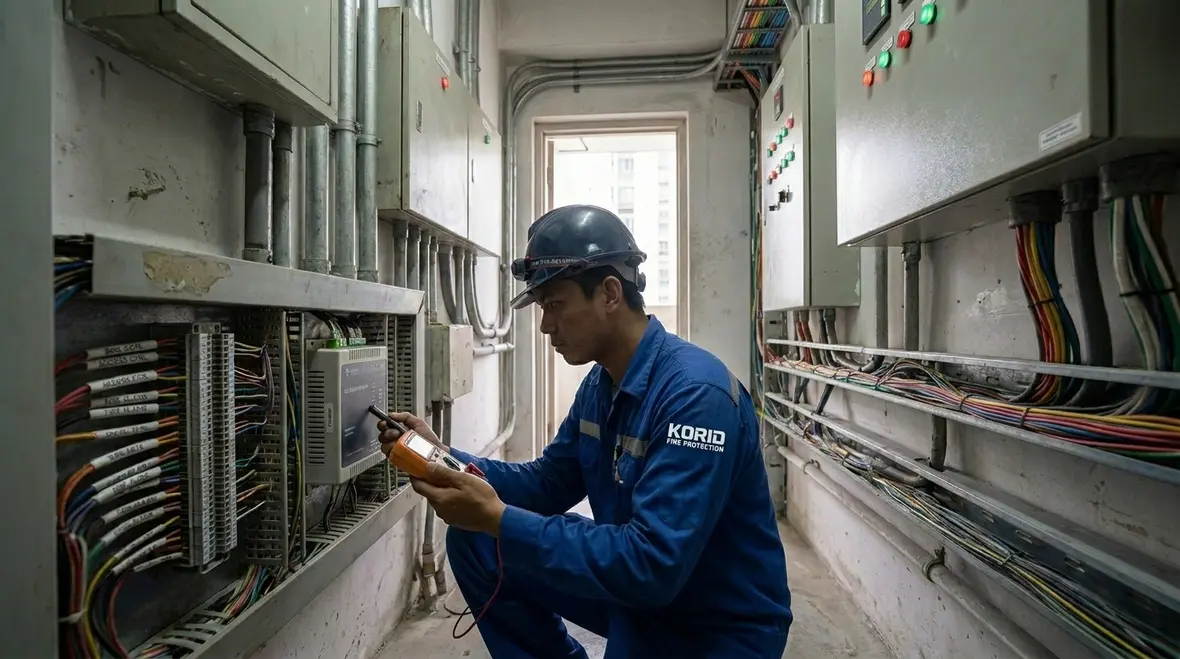
Common building systems in the integration chain
- Building management dashboards for status display and event visibility
- Access control systems for approved door behavior during alarm conditions
- Elevator control interfaces for recall and emergency operation logic
- HVAC and smoke control equipment for air movement response
- Tenant notification tools for targeted communication
- Emergency power coordination where project design requires it
When these systems are connected with intent, the building reacts as one coordinated environment instead of a pile of excellent equipment having separate opinions.
How modern building protocols carry signals safely
Building systems do not all speak the same language. Therefore, integration uses standard communication methods and proven interfaces. Fire alarm panels can communicate through supervised data paths, interfaces, or gateway devices that translate alarm events into formats the building systems understand.
In a strong design, the fire alarm stays the life safety authority. Even if other systems display the event, the alarm panel still controls alarm initiation and event confirmation. Then the building side uses those events to drive status screens, notification routing, and monitored outputs. As a result, the building benefits from visibility without weakening fire alarm authority.
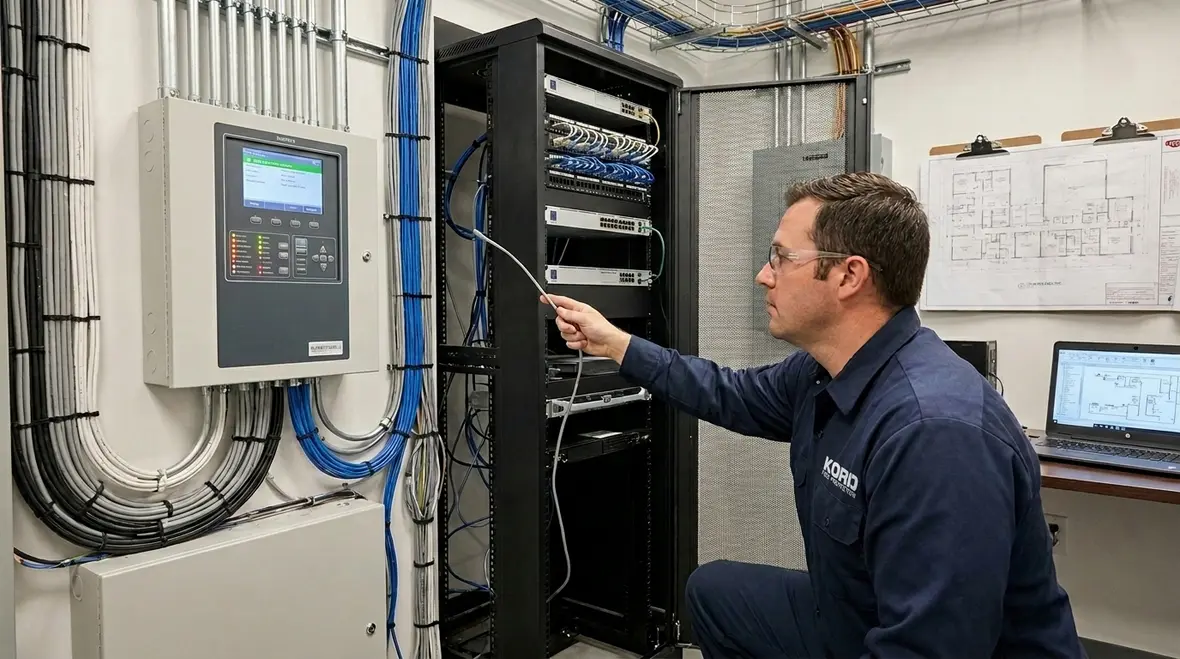
Kord Fire Protection technicians also emphasize signal integrity. They test wiring, confirm supervision states, and verify that every event type triggers the intended behavior. In short, they validate that the communication path works under realistic conditions, not just during a quick demo.
Why signal supervision is not a luxury
If a pathway fails silently, a building can look connected while acting blind. That is why supervised circuits, monitored interfaces, and deliberate fault reporting matter so much. A healthy design does not merely announce when fire conditions exist. It also announces when the communication pathway itself has a problem. That kind of honesty is useful in life safety. Also in friendships, but especially in life safety.
Planning the integration map before the first wire
Before any device gets connected, the team builds an integration map that lists inputs, outputs, event types, and expected timing. This map typically includes device types and zones, panel states, and how those states should translate into building actions. It also covers how the system behaves on trouble signals, maintenance modes, and partial failures.
Next, the team aligns the design with the building’s operational needs. A hospital differs from a warehouse. A high rise differs from a single tenant office. Even within the same building type, the evacuation strategy and smoke control plan can change the integration logic.
Additionally, Kord Fire Protection technicians encourage stakeholders to review the map in workshops. That helps avoid vague decisions like “Make it do the thing.” Because “the thing” usually means different things to different people, and then nobody is happy.
Once the map is approved, the project team sets test points and commissioning steps. Then they wire with confidence, and they test with purpose.
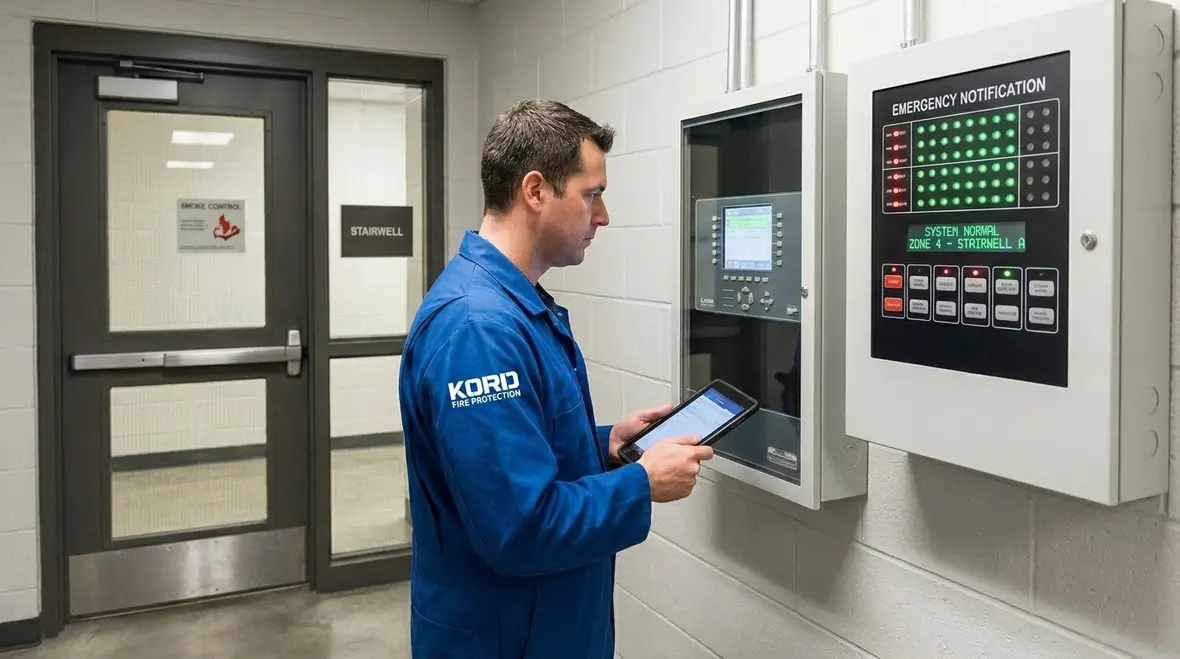
What a useful integration map should answer
- Which devices create events and how those events are categorized
- What outputs should activate for alarm, supervisory, and trouble conditions
- How doors, elevators, fans, and dashboards should respond
- What timing delays, confirmations, or dependencies apply
- How partial failure conditions are displayed and managed
- Which test scripts will verify each sequence during commissioning
That planning stage is where expensive confusion gets replaced with cheap clarity. It is not glamorous, but neither is reworking a control sequence after the walls are closed.
Commissioning, testing, and ongoing verification
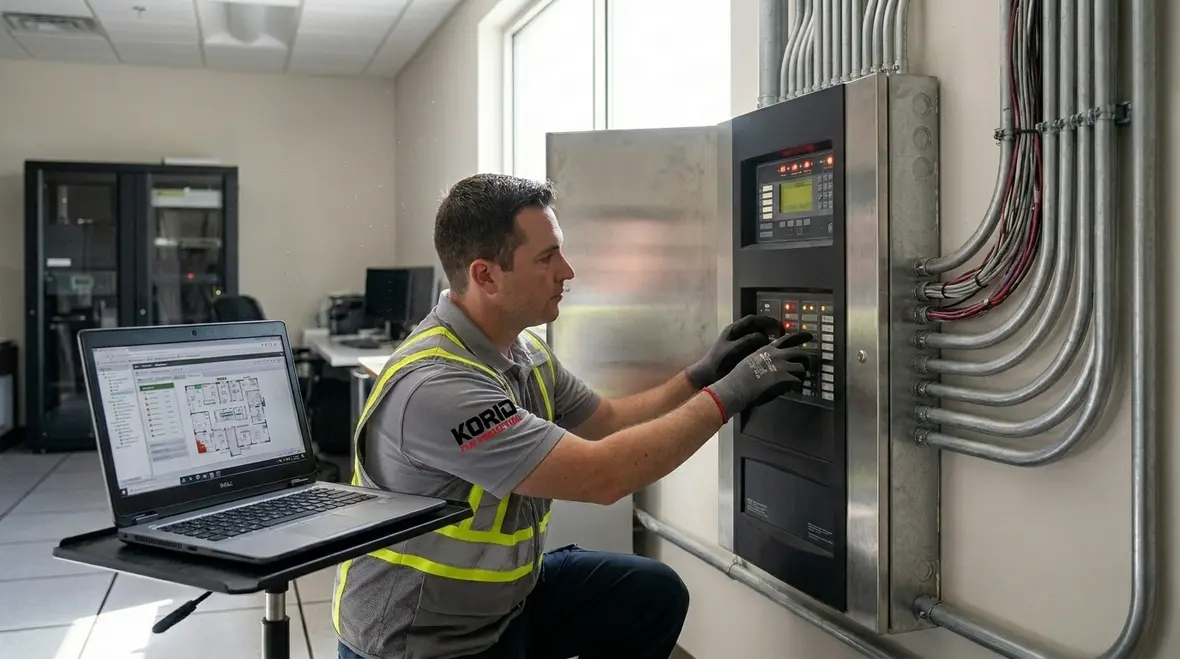
Integration does not end at installation. It lives or dies during commissioning and continued verification. First, technicians test alarm events one by one, confirming that the building systems receive the right status and act within the intended timeframe. Then they test trouble signals, device faults, and communication supervision.
Furthermore, they validate that display logic matches the alarm reality. If the fire alarm panel reports a zone trouble, the building interface must show trouble, not fire. If the system triggers a general alarm, the building notifications must reflect the correct areas and patterns. Kord Fire Protection technicians handle this carefully because one mismatch can create confusion during an emergency.
Finally, they set a maintenance rhythm. Some systems need periodic log review, firmware checks, or output verification. The goal is simple: keep the integration reliable even as the building grows, tenants change, and tech upgrades happen over time.
Long term reliability depends on routine checks
Buildings change more often than most owners expect. Tenants remodel, access control policies shift, equipment gets replaced, and someone eventually asks for “just one small change” that turns into five linked consequences. Ongoing verification keeps those small changes from quietly undermining the life safety intent. For related system planning and broader coordination insight, see Fire Protection Systems Components and Coordination. Teams that want a broader look at connected safety design can also review Fire Alarm Integration for Smarter Building Safety.
Dual column overview of common integration use cases
| Use case | What the integration enables |
|---|---|
| Evacuation support and door control | Coordinates exit access and manages door states based on alarm events |
| Smoke control coordination | Helps trigger fans and dampers in a planned sequence while preserving alarm authority |
| Elevator recall and emergency mode | Moves elevators to safe states when approved alarm conditions occur |
| Central monitoring and building dashboards | Shows zone, device status, and event type for faster decision making |
| Tenant alert routing and notification | Improves targeted messaging so occupants receive the right information |
FAQ for fire alarm system integration
Conclusion: start with a safe integration plan
A strong fire alarm system integration turns alarm signals into clear, coordinated action. Kord Fire Protection technicians help teams plan the event logic, connect systems safely, and verify performance through commissioning and follow up testing. If a building already exists, they can still evaluate current panels, communication paths, and interfaces to close gaps without guesswork.
Reach out for a site assessment and integration roadmap, and let the fire system do what it was built to do: protect people with speed, clarity, and confidence. For full alarm support options, visit Fire Alarm Services. If your project also involves water supply coordination, explore Fire Pump near the end of planning so connected systems perform together when it counts.

Join Our Newsletter!
Get the latest fire safety tips delivered straight to your inbox From our Newsletter.