Fire Suppression Impairment: Owner Guide and Readiness
Fire suppression impairment is one of those business risks that hides in plain sight. It does not always announce itself with alarms, flashing lights, or dramatic movie explosions. Instead, it often shows up as a nagging trend: a system that fails inspection, a device that drifts out of spec, or a component that works today but may not work when it matters. For owners, the issue is simple and serious. When a life safety system develops impairments, the building loses protection, insurance can get complicated, and tenant confidence takes a hit.
In this guide, third person will lay out what owners need to know, how impairments happen, what records should exist, and how Kord Fire Protection can support owners as a steady, dependable partner. Because, let’s be honest, fire safety paperwork should not feel like decoding a sci fi manual.
What counts as a fire suppression impairment
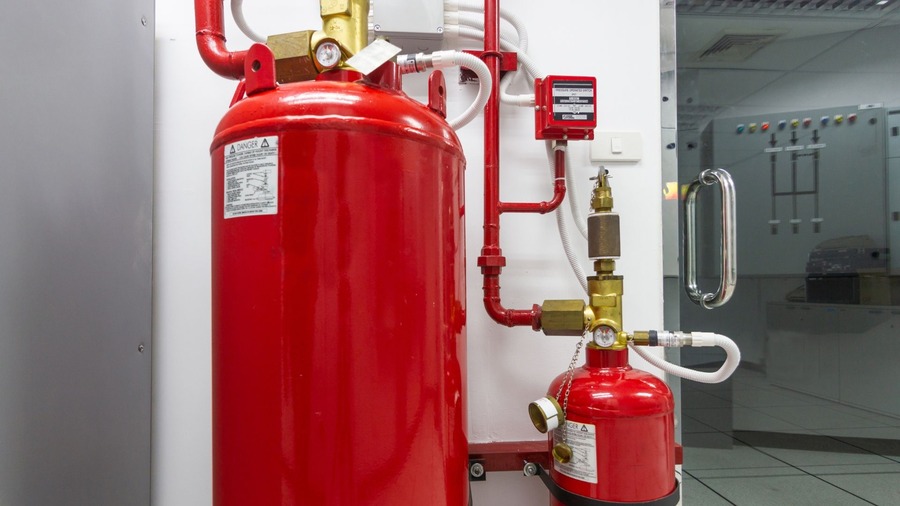
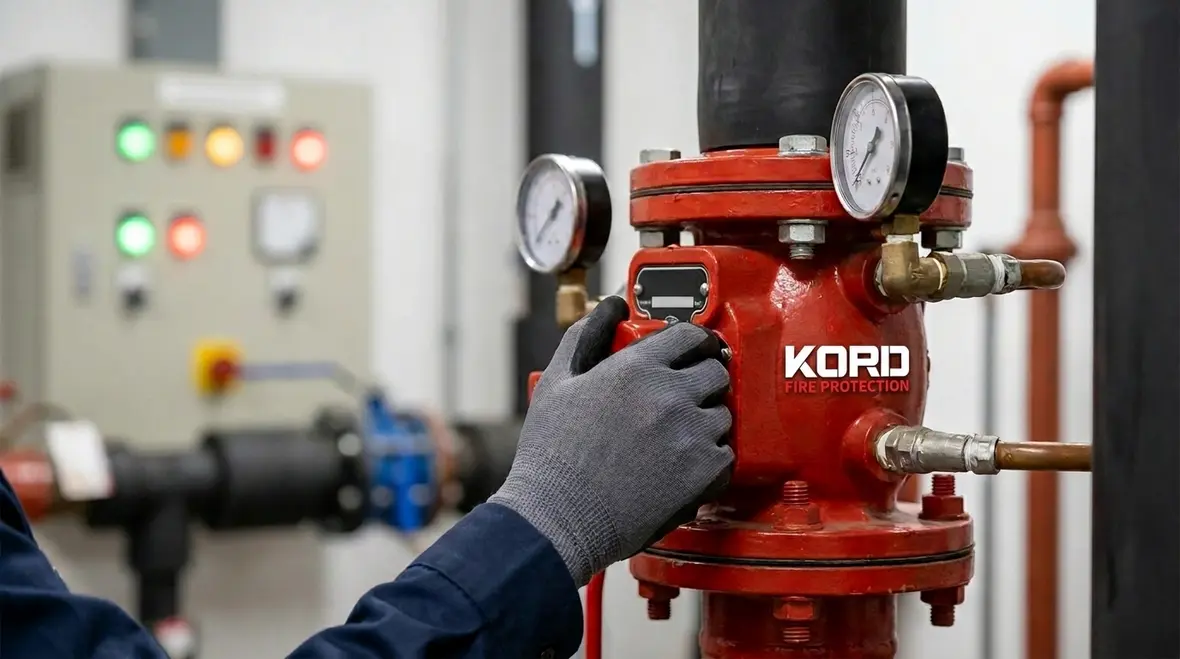
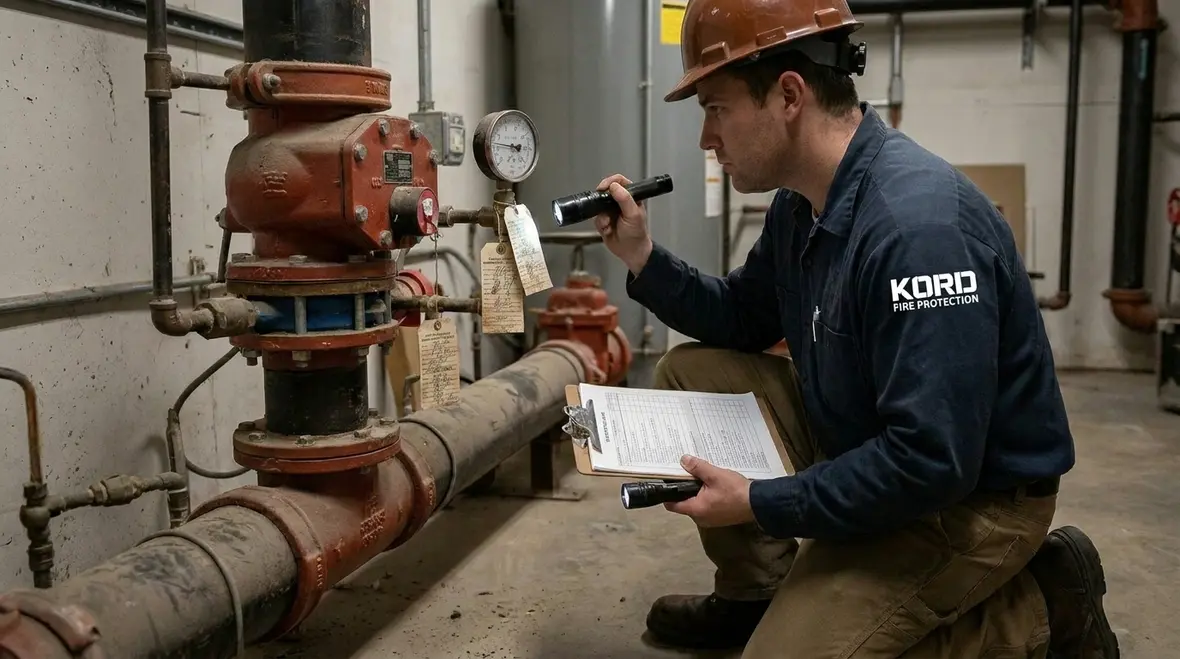
Owners should first understand that fire suppression impairment does not mean “the system is totally dead.” It means the system, or part of it, cannot perform at the level required by code, manufacturer steps, and inspection rules. Depending on the type of system, impairment may include a device out of service, a valve locked in the wrong position, a contractor bypass left in place, pressure outside a safe band, or a sensor that will not report correctly.
Furthermore, impairments can be partial or full. For example, one sprinkler zone may be isolated for repairs while other zones operate normally. Even so, that partial loss still affects risk. If a hazard exists in the impaired area, the system cannot meet its intended protection plan.
Owners also need to think beyond the equipment. A system can “look fine” but still be impaired due to missing documentation, expired maintenance, or unaddressed trouble signals that building staff ignore like a low battery beep from a smoke detector.
Why definitions matter on real properties
That distinction matters because owners do not manage risk in theory. They manage occupied spaces, operating schedules, vendors, tenants, and all the little building realities that never seem to make it into a neat checklist. If part of a system is compromised, the response should still be immediate and organized. Waiting for a complete failure before taking action is like waiting for a roof to fully collapse before calling it a leak.
Common sources of sprinkler and agent system problems
Most impairments come from repeatable causes, not mystery. Technicians and inspectors often see the same patterns across different properties. To keep pace, owners should watch for these risk drivers:
- Valves and tamper switches that get moved during renovations, housekeeping, or tenant buildouts
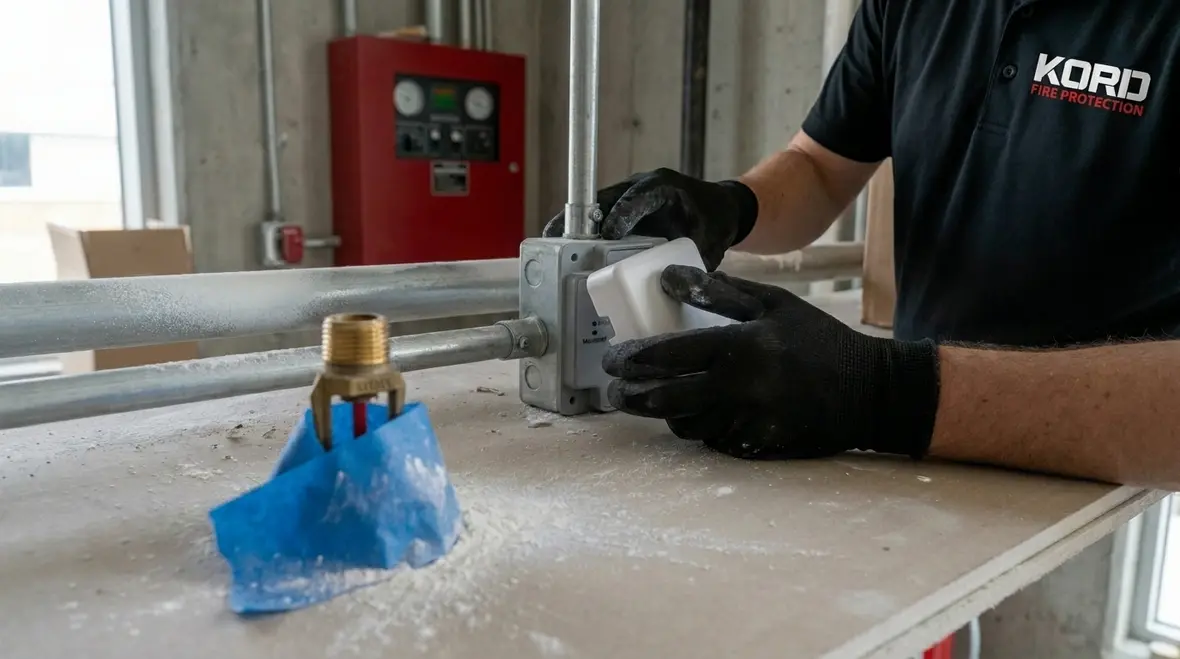
- Blocked or damaged nozzles from storage, paint overspray, drywall work, or careless maintenance
- Pressure and flow issues caused by water supply changes, trapped air, leaks, or undersized connections
- Control panel faults such as trouble conditions, failed communications, or degraded power supplies
- Agent system concerns tied to cylinder issues, manual discharge obstructions, or invalid hold times
- Service gaps when inspections become “later,” then “next quarter,” then “we forgot”
And then there are the human factors. When contractors do not coordinate with life safety teams, the system pays the price. As a result, impairments can appear right after construction activities, even if the work seems small. A tiny change to a ceiling, a forgotten cover on a control device, or a temporary cap on piping can turn into a real problem.
Owners looking to strengthen routines can also review Kord Fire Protection’s related article on fire protection impairment management, which connects day to day issues to a bigger readiness strategy.
How impairments get discovered during inspections
Many owners only learn about impairments when an inspector arrives. However, most impairment conditions develop over time. Therefore, a smart building owner treats inspection day as the end of a process, not the start. Before third parties ever show up, internal checks can catch early warning signs.
For sprinkler and water based systems, inspection findings often include documentation mismatches, missing test records, or evidence that recent work affected valves, drains, and monitored devices. For agent systems, inspectors commonly focus on verifying that wiring, detection, release, and alarm pathways function as designed, and that maintenance records match the system’s actual status.
Additionally, inspectors may require impairment reporting steps if the system cannot meet code requirements during downtime. Owners should plan for this because a system out of service for even a short window can trigger procedural needs, such as fire watch or temporary safeguards, depending on the scenario and local authority rules.
If that sounds like extra effort, consider it a lighter version of a superhero origin story. The building does not get powers by chance. It earns them through readiness.
Records owners should have ready
At a minimum, ownership teams should be able to pull current inspection reports, recent service summaries, documentation of past deficiencies, and notes showing how those deficiencies were corrected. When a vendor, insurer, or authority asks questions, fast access to organized records signals control rather than chaos. And in building operations, control is a very attractive quality.
Why owners should treat impairments as a business issue
Owners sometimes see fire suppression impairment as a line item, not a risk. Yet it directly impacts operations, compliance, and cost. First, it affects insurance discussions. Carriers may require proof of maintenance, and unresolved impairment history can increase premiums or cause coverage questions.
Next, tenant relationships get strained when safety concerns rise. A tenant may ask tough questions after hearing about impairments, especially in multi tenant buildings. Even when everything gets corrected quickly, trust still takes time to rebuild.
Finally, there is legal and operational risk. If an incident occurs and the system lacked required performance, owners can face serious consequences. The best time to fix problems is before the worst day, not during it.
So, rather than reacting to a problem, owners benefit from building a clear impairment response plan. That plan should say who calls the right people, how records get updated, and how temporary protective measures get implemented. Otherwise, everyone ends up doing what people do when they panic. They improvise. And improvisation rarely meets code.
Another helpful companion read is Kord Fire Protection’s post on questions fire marshals ask during inspections, which helps owners think ahead instead of getting cornered by preventable surprises.

How Kord Fire Protection supports impairment readiness
Kord Fire Protection can become a vital partner when owners want to reduce disruption and improve reliability. Instead of treating each impairment as a one off emergency, a stronger plan focuses on prevention, fast correction, and clean documentation.
Here is how this partnership can help in real terms:
- Root cause focus so technicians do not just restore function but also remove repeat failure causes
- Maintenance planning built around building schedules, tenant activity, and predictable windows for work
- Documentation support that helps owners stay organized with inspection reports, test results, and service records
- Coordination during renovations so contractors know how to protect sprinkler heads, valves, and control devices
- Clear communication during impairment events, including guidance on what the building team should do next
In other words, Kord Fire Protection helps owners act like the calm adult in the room. The one who does not wait until the alarm blares, then start searching for a phone number like it is hidden in a crossword puzzle.
Readiness works best when support is continuous
That steady support matters because readiness is rarely built in one dramatic visit. It comes from repeat service, clear communication, and corrections that stick. Kord’s broader fire protection services can also help owners tie suppression concerns to alarms, sprinklers, extinguishers, and other connected systems that shape inspection outcomes.
Steps owners can take right now to reduce impairment risk
Owners can lower risk with practical steps that do not require an engineering degree. These actions work best when they become routine.
- Track system status with a single source of truth for inspections, tests, and service dates
- Require coordination for work so maintenance and contractors notify the life safety team before any ceiling, piping, or storage changes
- Confirm key valves and controls stay in the correct positions after tenant changes or repairs
- Train building staff to recognize trouble signals and to report them quickly instead of waiting
- Plan downtime carefully and ask for guidance on how to handle partial impairments and temporary safeguards
- Review impairment history during upcoming maintenance planning to stop repeat failures
Meanwhile, when owners treat fire suppression impairment management as a system, not a scramble, the building becomes more resilient. It also becomes easier to budget, schedule, and explain safety choices to stakeholders.
For teams dealing with special hazard spaces, Kord Fire Protection’s article on clean agent fire suppression inspection requirements offers more context on how documentation and testing support dependable performance.
FAQ
Conclusion and next steps
If a building owner wants fewer surprises, they should treat fire suppression impairment like an ongoing risk to manage, not a rare event to react to. By tracking system status, coordinating work, and fixing issues quickly, the property stays safer and easier to insure.
For owners who want a reliable partner, Kord Fire Protection’s full fire protection services can help plan maintenance, document results, and address impairments with speed and clarity. Reach out now to review the building’s current protection readiness and build a calmer safety plan.

Join Our Newsletter!
Get the latest fire safety tips delivered straight to your inbox From our Newsletter.