
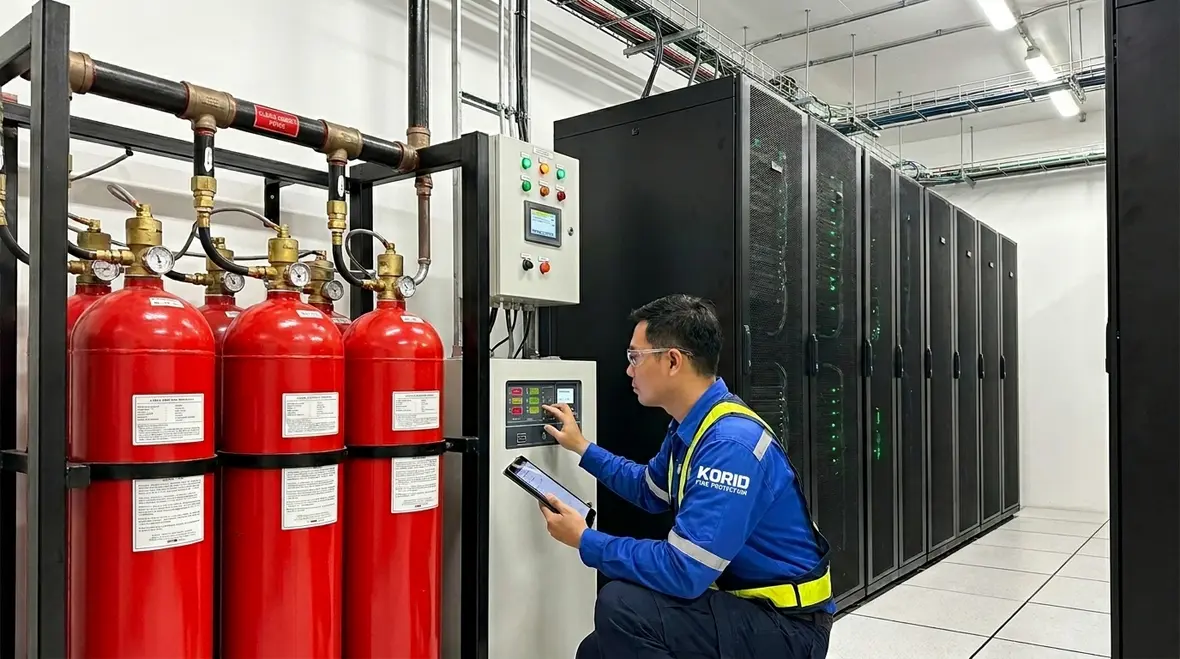
Clean Agent Fire Suppression Inspection Requirements
When a facility relies on clean agent systems, it cannot treat inspections like a box to check. The clean agent fire suppression inspection sets the standard for whether the system will work when seconds matter. Because these systems protect higher value spaces such as server rooms, labs, and special equipment areas, inspections must follow the right rules, with clear documentation and measured verification.
And yes, nobody wakes up excited to read inspection forms. Still, the goal is simple: confirm the agent and the hardware stay ready, the system stays compliant, and the fire protection plan stays credible. With that in mind, this guide explains the main inspection requirements, what inspectors typically verify, and how Kord Fire Protection can function as a vital partner for ongoing service.
What the clean agent system inspection must cover
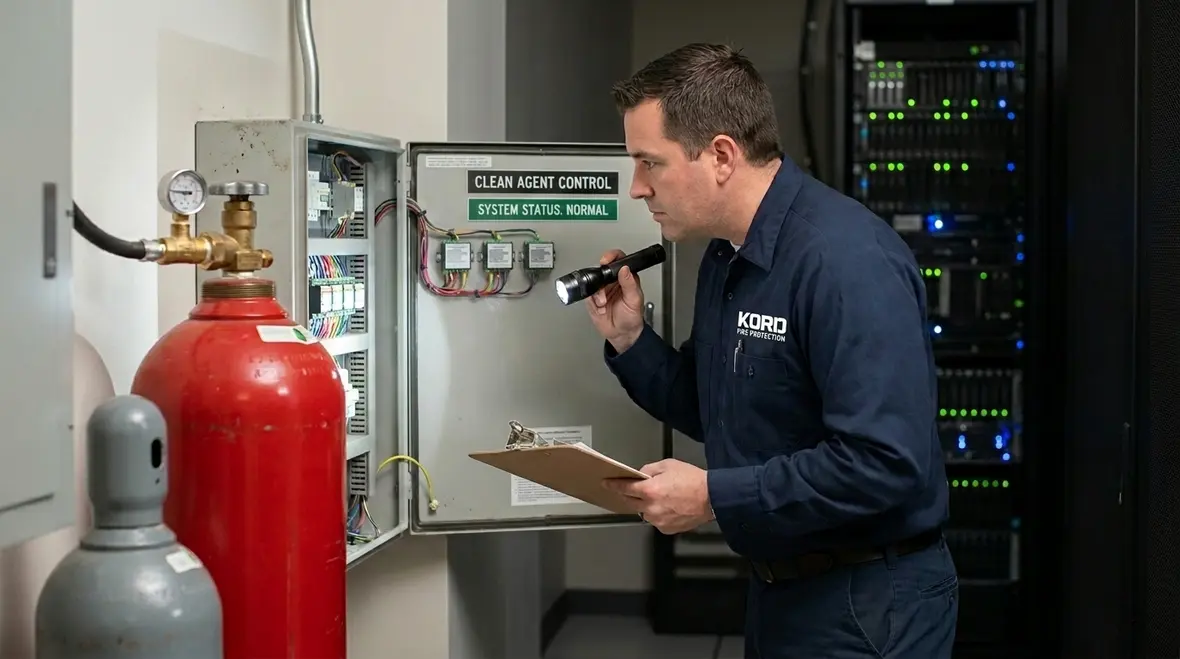
A complete clean agent inspection focuses on both readiness and reliability. First, the technician confirms the system is set up to discharge the correct agent for the correct hazard. Then the inspector checks how the detection and control components work together, because clean agents do not help if the alarm chain fails.
Most requirements also push for verification of alarms, release circuits, and any manual stations. Additionally, the inspection should check the physical condition of cylinders, valves, piping, actuators, and nozzles. Even if the equipment looks “fine,” inspections must prove it, not guess it.
In the real world, systems often suffer from drift: labels fade, wiring gets pinched during tenant work, or access doors get blocked. Therefore, inspections should pay attention to the details that get ignored when everyone is busy pretending the building can run on good vibes alone.
Why the inspection scope matters
That scope matters because clean agent systems are usually installed where downtime is expensive and water damage would be a terrible plot twist. Think data rooms, control spaces, archives, and specialty environments where the room itself is part of the protection strategy. If one piece of the release sequence is compromised, the whole system can look impressive on paper while being far less impressive in an actual emergency.
Facilities that already use clean agent fire suppression services often benefit from reviewing the full system type and hazard match during inspection planning, especially when occupancy, equipment load, or room use has changed.
Which standards and authority expectations guide the work
Inspections typically follow widely adopted fire protection standards and local requirements. These usually include performance based rules that connect inspection frequency to the system type and use. For example, the inspection process often includes maintenance schedule expectations and documentation practices that help building owners demonstrate due diligence.
However, the exact scope can vary by jurisdiction and by system design. So the best approach is to confirm the applicable standard for the system installed, review the manufacturer instructions, and follow the adopted authority having jurisdiction requirements.
When facilities align those items, they avoid the most common problem: passing “a quick look” instead of passing the real inspection requirements. And nobody wants an audit day that feels like a surprise pop quiz from someone who hates fun.
A practical way to stay aligned
A practical way to stay aligned is to compare three things before the appointment ever starts: the system design intent, the governing local expectation, and the current condition of the protected room. That sounds obvious until a space gets renovated, a wall gets opened, or a contractor moves equipment without telling anyone. Suddenly the protected enclosure is not the same enclosure shown in the records, and the inspection has to catch up to reality.
Teams that want a broader overview of system expectations can also review Kord Fire Protection’s article on the clean agent standard for fire suppression systems, which gives useful context for why these requirements exist in the first place.
What inspectors check during a full clean agent fire suppression inspection
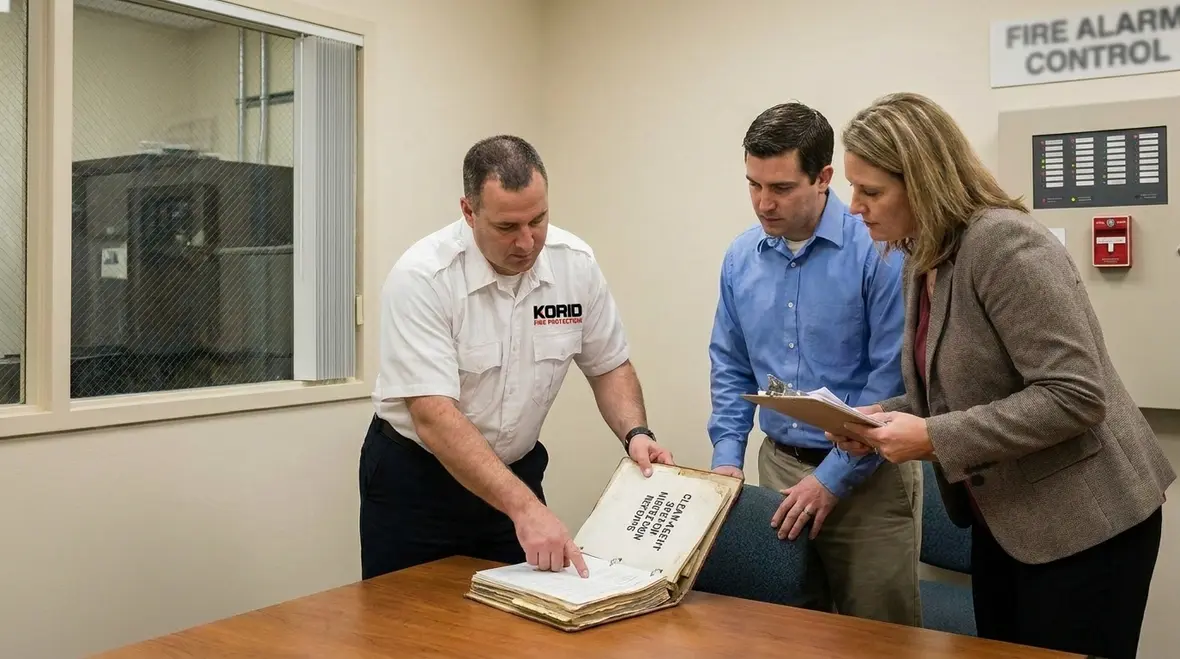
During a clean agent fire suppression inspection, the inspector usually performs a structured walkthrough that includes visual checks, functional checks, and record review. First, they review prior reports and maintenance records to ensure nothing changed unnoticed.
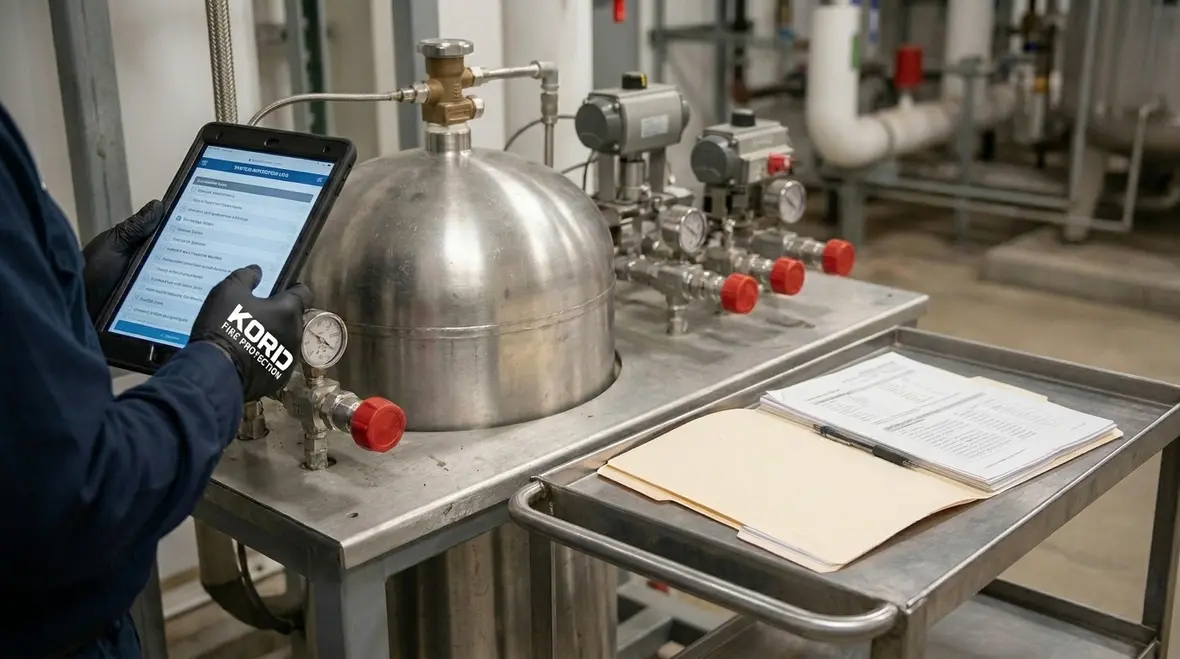
Next, they inspect system components such as cylinders, pressure readings when applicable, releasing devices, detection devices, and control panels. Then they verify that inhibition features, if present, operate as designed. They also check that agent distribution paths remain unobstructed, because the best agent cannot reach a hazard if airflow and piping paths get compromised.
Finally, the inspector confirms the system documentation is complete. That includes tag numbers, design information, and test results. This last step matters because future technicians need a clear history, not a mystery novel written in abbreviations.
Common items that deserve extra attention
- Room condition, penetrations, and changes that could affect containment.
- Cylinder condition, mounting, pressure indication, and label legibility.
- Manual release stations, abort functions, horns, strobes, and panel signals.
- Nozzles, piping, and discharge paths that should remain unobstructed.
- Record continuity so each visit builds on actual system history instead of guesswork.
This is also why specialized environments such as technology spaces often benefit from service teams familiar with equipment first hazards. Kord’s recent piece on data center clean agent fire suppression shows how these checks support uptime and not just compliance paperwork.
Inspection intervals and how facilities keep schedules realistic
Many facilities get tripped up by thinking inspection intervals run on vibes. Instead, intervals must match the system’s maintenance plan and the governing standard schedule. Usually, facilities plan recurring inspections and periodic tests, then adjust based on changes to the space.
For example, if a server rack layout changes, if new ventilation gets installed, or if a lab gets reconfigured, then the hazard profile can shift. In those cases, inspections should trigger additional checks, especially around detection placement, agent coverage, and alarm signaling.
It helps to set up a calendar with lead time and assign ownership for access. After all, an inspector can only do the work if the room is reachable, safe, and ready. Kord Fire Protection often coordinates with facilities so schedules do not collide with downtime windows.
How to keep the schedule from turning into chaos
The simplest way to keep the schedule realistic is to treat inspection readiness as an operations task, not just a vendor appointment. Confirm escorts, access credentials, rack clearances, after hours windows, and stakeholder notifications ahead of time. Otherwise the technician arrives ready to work and the facility responds with the classic commercial building move: “We forgot that room needs three keys and Steve is on vacation.”
Documentation, labeling, and what compliance looks like in practice
Compliance is not just what happened. It is what gets recorded and communicated. A strong inspection package includes detailed notes, component verification, and test outcomes. It also includes deficiencies, follow up actions, and a clear statement of system condition.
Good documentation usually covers the who, what, when, and where. It should also show that the technician followed the applicable scope and left the system in the proper operational state after tests.
In practice, labeling and signage matter too. For example, cylinders should remain legible, system identification should match the drawings, and accessible components should not be hidden behind improvised storage. Because when an emergency arrives, confusion is not a substitute for readiness.
That is where a partner becomes valuable. Kord Fire Protection can help facilities keep inspection files organized, reduce repeat visits from missing access or missing paperwork, and maintain a consistent service trail that insurers and auditors can understand.
How Kord Fire Protection supports ongoing inspection and service
Fire protection should feel like a steady rhythm, not a yearly scramble. Kord Fire Protection works as a vital partner by aligning inspection needs with real facility workflows. First, it helps confirm the system’s configuration and the hazards it protects, so the inspection stays targeted and not generic.
Then, it supports planning for access and downtime so tests do not disrupt critical operations. Next, it helps facilities address deficiencies quickly, which matters because small issues can turn into bigger problems when they sit for too long.
Also, Kord Fire Protection can help communicate findings in plain language. When stakeholders understand the “why,” they make better decisions. And if the building manager does not want to read the whole report, that is fine. Kord helps translate the results into next steps that keep the system reliable.
In short, inspections work best when they are not treated as a one off event. When Kord stays engaged, it helps facilities maintain readiness with less friction, fewer surprises, and more confidence.
If your team wants to connect inspection planning to a broader protection strategy, Kord also offers a wider range of fire suppression services that can support special hazard environments near the end of a project, during expansion, or when a system upgrade is finally overdue.
FAQ about clean agent suppression inspections
Call Kord Fire Protection for inspection readiness
A clean agent system deserves inspection work that is thorough, documented, and tied to the real hazards in the space. When facilities want fewer surprises and stronger compliance support, they should schedule service with Kord Fire Protection. Kord helps coordinate access, verifies system readiness, and keeps inspection records clear for stakeholders.
Reach out today to plan the next inspection and keep critical equipment protected when it matters most. Because in emergencies, preparation is the difference between “it should work” and “it did work.” For facilities looking to pair inspection support with broader system planning, Kord’s clean agent fire suppression service page is the right next stop.

Join Our Newsletter!
Get the latest fire safety tips delivered straight to your inbox From our Newsletter.



