
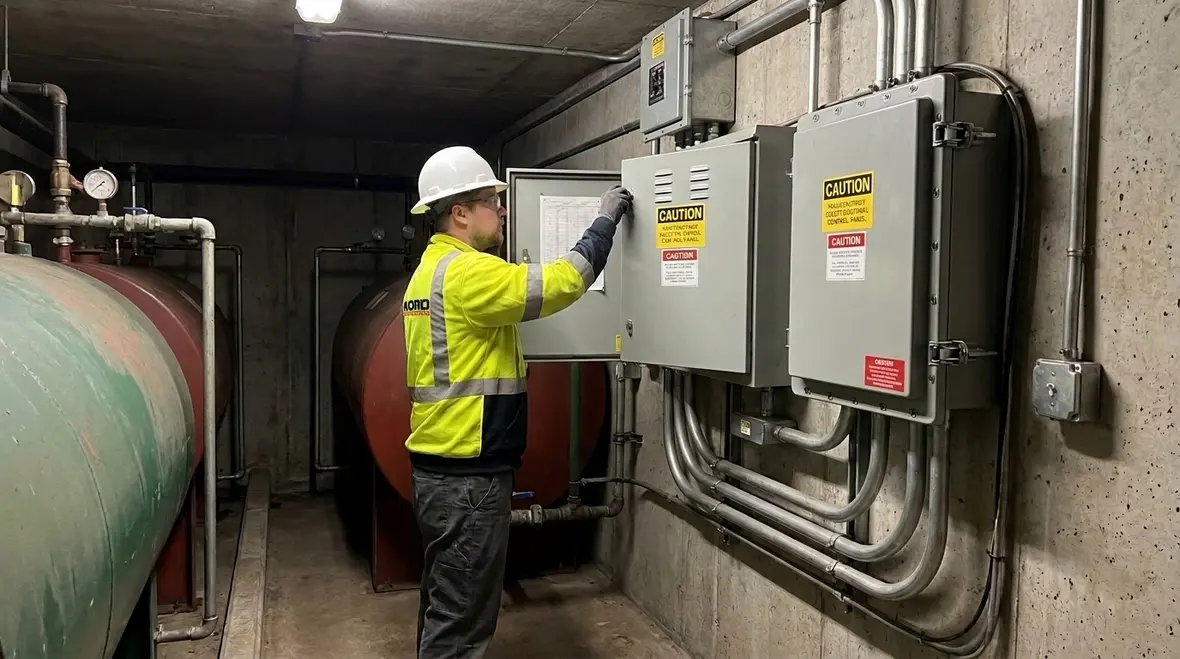
NFPA 30 Section 25.8: Electrical Systems in Tank Vaults
Quick Answer: NFPA 30 Section 25.8 tank vault electrical requirements aim to prevent ignition sources within or near flammable liquid tank vault areas. The section drives safe design, proper wiring methods, protective equipment selection, and ongoing inspection and maintenance.
Why NFPA 30 tank vault electrical requirements matter in real operations
Tank vaults concentrate flammable liquid hazards, and electrical systems become a primary ignition risk during normal operation, abnormal events, and maintenance activities. NFPA 30 Section 25.8 tank vault electrical focuses on limiting ignition sources inside classified areas, controlling exposure to hazardous atmospheres, and ensuring equipment continues to perform safely over time.
In commercial, industrial, and retail facilities, compliance breaks down most often during equipment changes, seal failures, cable damage, and “temporary” work that becomes permanent. Practical adherence means aligning electrical design decisions with operating procedures, inspection routes, and documented maintenance.
Facilities reviewing vault hazards often benefit from broader fire suppression system services that support design, inspection, testing, and ongoing compliance across special hazard environments. For broader context on how NFPA 30 regulates flammable liquids, refer to how NFPA 30 regulates flammable liquids.
What Section 25.8 typically controls: location, wiring, and ignition control
Although implementations vary by vault geometry, ventilation, and tank arrangement, NFPA 30 Section 25.8 tank vault electrical requirements generally address three control layers: where electrical equipment is permitted, how wiring and fittings are installed, and what protective measures are required to prevent ignition.
1) Equipment placement and hazardous area control
Electrical devices must be selected and located based on the likelihood of flammable vapor accumulation in the vault. The core compliance challenge is that vapor behavior changes with filling, draining, temperature swings, leaks, and maintenance conditions. Facilities that rely on outdated assumptions often fail inspections when operational practices differ from the original design basis.
2) Wiring methods and penetration discipline
Tank vault electrical compliance depends heavily on cable and raceway installation. Common high risk conditions include unsealed penetrations, damaged conduit or cable jackets, and improper fittings at junction points. Electrical penetrations through vault walls or containment structures often become failure points because they are exposed to vibration, thermal cycling, corrosion, and condensate.
3) Protective provisions for electrical equipment
Section 25.8 tank vault electrical requirements direct selection of protective measures that reduce ignition potential. In practice, this means ensuring installed systems meet the intended protection approach and remain protected from mechanical damage, moisture intrusion, and impact during normal operations and housekeeping.
Operational procedures that decide whether compliance holds up
Even when the initial design meets NFPA 30, the daily operating model determines whether the system remains safe. Facilities should standardize procedures that protect the electrical system from both vapor exposure and physical damage.
Permit to work and maintenance controls
Maintenance work changes ignition risk. Hot work, temporary lighting, unauthorized power drops, and bypassed interlocks can create ignition sources. Compliance typically improves when a facility requires work permits that explicitly address hazardous location controls, removal and reinstatement of protective covers, and verification that installations match the approved method before returning to service.
Tank operations and abnormal event response
Electrical systems in vault areas can be affected by overpressure, pump issues, leak conditions, and drainage behavior. A strong compliance program includes response steps for suspected vapor release that cover isolation actions, inspection triggers, and a documented return to service process that confirms vault integrity and equipment condition.
Housekeeping and corrosion management
Housekeeping protects both the electrical hardware and the surrounding containment surfaces. Corrosion and debris accumulation can lead to connector failure, poor grounding continuity, and unintended arcing pathways. Inspection should not stop at panels and junction boxes; it should also verify conduit routing, labels, and condition of seals after seasonal cycles.
Inspection, testing, and common failure points during compliance audits
NFPA 30 Section 25.8 tank vault electrical compliance is not a one time event. Inspection and testing validate that equipment continues to operate safely and remains properly installed, protected, and sealed.
What inspectors typically verify
Condition of raceways, cables, and fittings including signs of damage, corrosion, or improper termination.
Integrity of seals at penetrations and junction points.
Availability and condition of protective covers, gaskets, and guards.
Evidence that equipment selection and installation align with the hazardous area intent.
Documentation that matches the as built configuration and reflects changes over time.
Common failure points that drive corrective action
Unsealed conduit entries or deteriorated sealing compounds that lose integrity under thermal cycling.
Damaged cable jackets from abrasion at edges, maintenance traffic, or improper support spacing.
Loose or degraded bonding and grounding connections leading to unexpected protective device behavior.
Unauthorized field modifications where new devices are installed without verifying hazardous location suitability.
Moisture intrusion and condensation pooling in enclosures that were not maintained and inspected at intervals.
Kord Fire Protection supports commercial compliance programs with targeted field verification, practical maintenance guidance, and documentation that helps facilities manage risk across design, construction, and ongoing operations. This is especially valuable when facilities undergo tenant changes, equipment upgrades, or rework to remedy leak history.
Design and retrofit considerations: avoiding the most expensive mistakes
Retrofits frequently trigger compliance drift. To maintain NFPA 30 Section 25.8 tank vault electrical alignment during upgrades, facilities should manage three key variables: the as built electrical layout, changes in operating conditions, and the hazardous area assumptions behind equipment selection.
Control the scope of change
When a facility adds lighting, instrumentation, or a new pump control device near the vault, it must confirm the device type and installation method remain appropriate for the environment. Even small changes can affect vapor movement patterns and enclosure performance.
Ensure documentation matches the field condition
Many compliance problems emerge because drawings and inspection tags do not reflect the current installation. A practical approach includes maintaining a single source of truth for as built documentation, inspection findings, and corrective work orders.
Plan for access without damaging protection
Electrical enclosures and vault penetrations must remain serviceable while preserving seals and protective barriers. Facilities should plan access routes that do not cause abrasion to cables or repeated removal and replacement of seals without replacement criteria.
FAQ
Next step: verify and document your tank vault electrical setup
Facilities should validate that installed electrical equipment, wiring methods, and vault penetrations match NFPA 30 Section 25.8 tank vault electrical requirements and remain protected under real operating conditions. Kord Fire Protection can help strengthen inspection readiness with practical field verification, maintenance recommendations, and compliance documentation support. Contact Kord Fire Protection today to assess your tank vault electrical system and build a defensible ongoing inspection and maintenance plan.

Join Our Newsletter!
Get the latest fire safety tips delivered straight to your inbox From our Newsletter.



