Fire Suppression Impairment: Keep Systems Ready and Safe
Fire suppression impairment can quietly turn a life safety system from “ready” to “not ready.” In this article, owners will learn what fire suppression system impairments look like, how they happen, why they matter, and what they can do to protect people, property, and their budget. Because when a system is out of service, that is not a minor paper issue, it is a real gap in protection. And yes, like a smoke detector with dead batteries, the problem is not always obvious until it is too late. Still, with the right checks, clear ownership, and strong service, owners can prevent small failures from becoming big emergencies.
What fire suppression impairment means in everyday terms
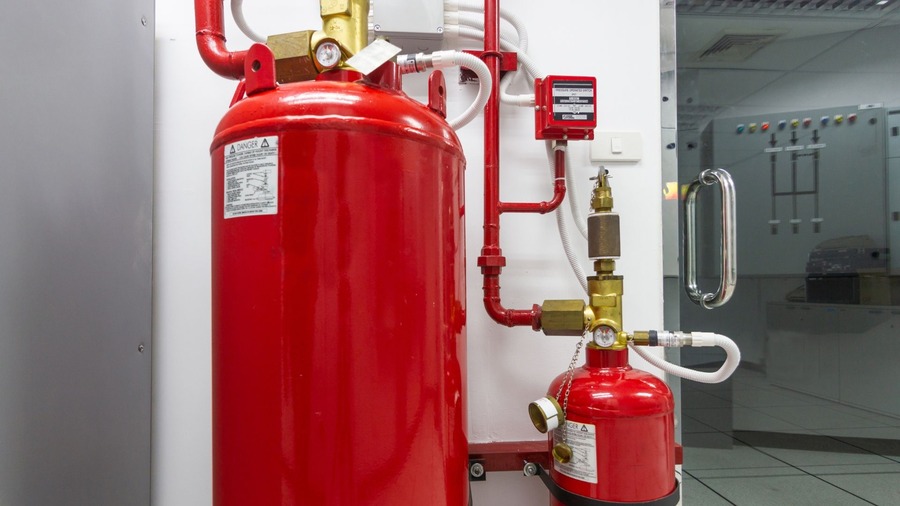
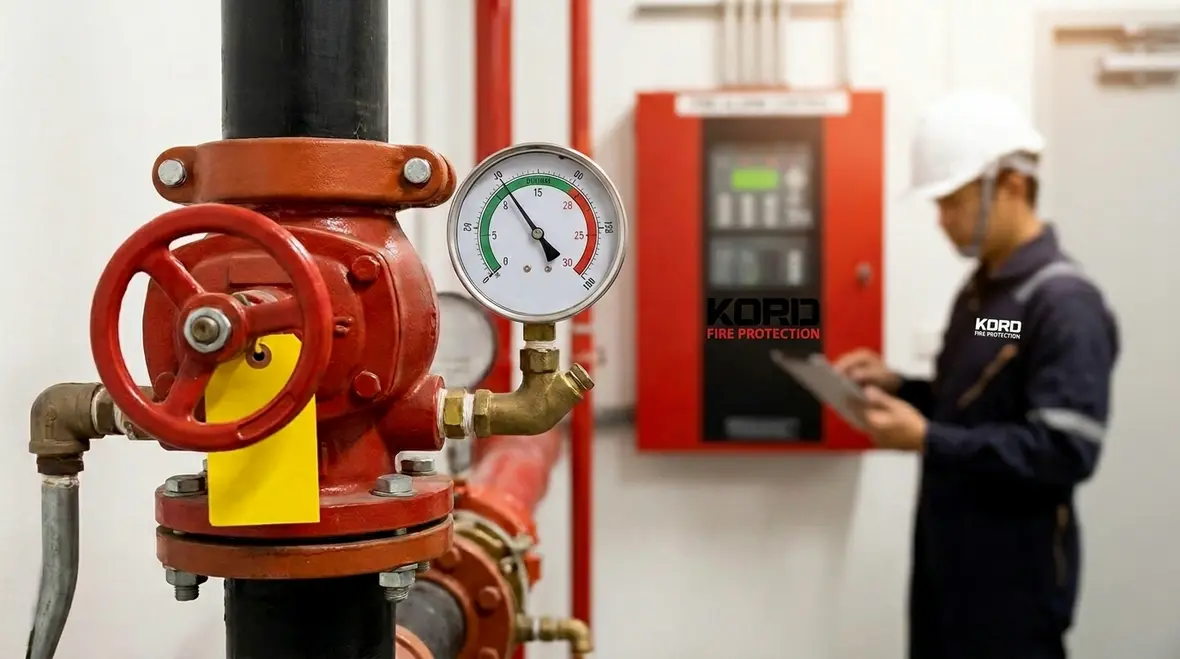
Fire suppression systems, such as sprinkler, pre action, dry chemical, or special hazard systems, depend on both mechanical parts and system readiness. When the system becomes impaired, it means it cannot perform as required under fire conditions. This can happen because of a control valve in the wrong position, a disconnected device, a low pressure issue, maintenance that left the system in a disabled state, or a bypass that never got removed. Fire suppression impairment does not always look dramatic, and that is the trick. Often, it shows up as abnormal readings, missing tags, or a history of frequent repairs. Transition-wise, owners should not wait for a new incident report to act, because early signs usually show up before anything burns.
To make it simple, think of it like a seatbelt that still clicks but no longer locks properly. It is there, but it will not do its job when it counts. And if this sounds like a Marvel movie plot, remember that in real life, the villain is usually routine maintenance done without tight controls. For a broader look at how Kord explains these issues on site, owners can explore Fire Suppression System Impairments: What Owners Must Do for added context and another practical perspective.
Why “impaired” is a bigger deal than it sounds
The word impaired can sound oddly polite, almost like the system just needs a cup of coffee and a minute to gather itself. In reality, impaired means the protective chain has a weakness somewhere between detection, control, and discharge. If one of those links slips, owners may have a system that looks official on paper while offering less real-world protection than expected. That gap between appearance and performance is exactly why impairment management deserves attention before an actual fire ever puts the system to the test.
Common causes that trigger impaired status
Owners often want one “silver bullet” answer, but impairments usually come from normal life mixed with human error. Over time, the system faces wear, construction activity, changes in occupancy, and service interruptions. Therefore, the goal becomes spotting the patterns. In many facilities, the issue is not one dramatic failure. It is a stack of smaller oversights that line up at exactly the wrong time.
- Valves left closed or partially closed after repairs, inspections, or tenant work
- Alarm or control trouble on panels that changes system behavior
- Low air, water, or pressure in systems that rely on stored energy
- Disconnected or removed detection components during renovation
- Improper temporary shutdowns that extend longer than the work scope
- Foreign obstruction such as debris in piping or strainers
Even when a team acts in good faith, transition points create risk. For example, when contractors finish a remodel, they may return equipment but not fully restore the fire system. Next, the site may schedule testing for later, and the impairment sits in the gap. Owners should treat every work order and access event as a possible turning point for system readiness. That mindset is less about suspicion and more about control. If a building has many vendors, many tenants, or many moving schedules, those handoffs matter even more.
The handoff problem nobody likes to talk about
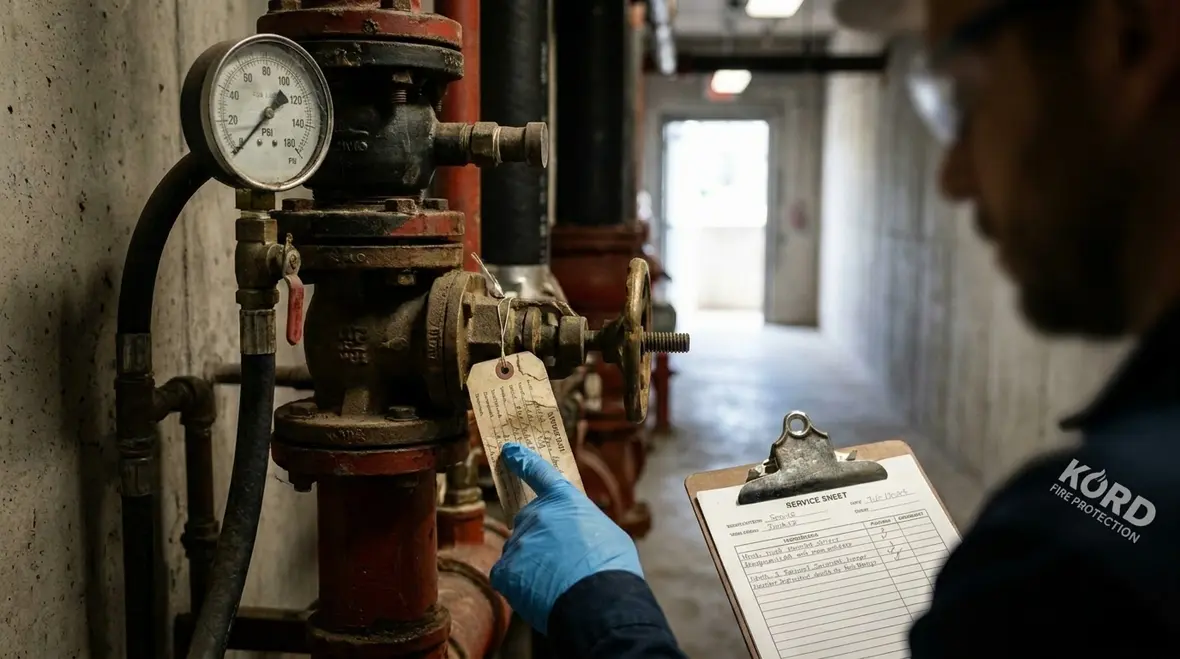
A surprising number of impairments show up not during active repairs, but right after them. One crew leaves. Another assumes the system is back online. Someone files a note. Someone else plans to verify later. Meanwhile, the building keeps operating as if everything is normal. That is why owners need a close-the-loop habit, especially after service, renovation, or testing. If the last step is not “confirm return to service,” the job is not really done. Kord’s Fire Protection Impairment Management Guide pairs well with this point because it frames impairment response as a process, not a scramble.
How impairments show up during inspections and monitoring
Fire protection inspections usually catch problems, but not all impairments are equal. Some are obvious, like a supervisory signal that stays active. Others hide in plain sight, like a valve that moves but does not meet the required position feedback.
To understand what to look for, owners should focus on system status indicators, record trails, and physical condition. For instance, a paper record may show a test happened, but the field status could still differ if a bypass was not removed. Additionally, many impairments create trendable signals, such as recurring valve issues, repeated air compressor cycling, or chronic trouble alerts on the same device. Owners can ask for detail, not just a yes or no pass. That is especially true when a facility has had repeat trouble in the same zone, riser, or control assembly. Patterns are clues, and clues are cheaper than emergencies.
What you notice
Supervisory alarm stays active
Frequent trouble events on one device
Pressure readings outside normal range
Temporary tags remain after work ends
What it can indicate
Valve position not restored or control wiring issue
Aging component, poor contact, or intermittent signal
Leaks, air supply issues, or system configuration changes
Bypass not removed, shutdown not lifted
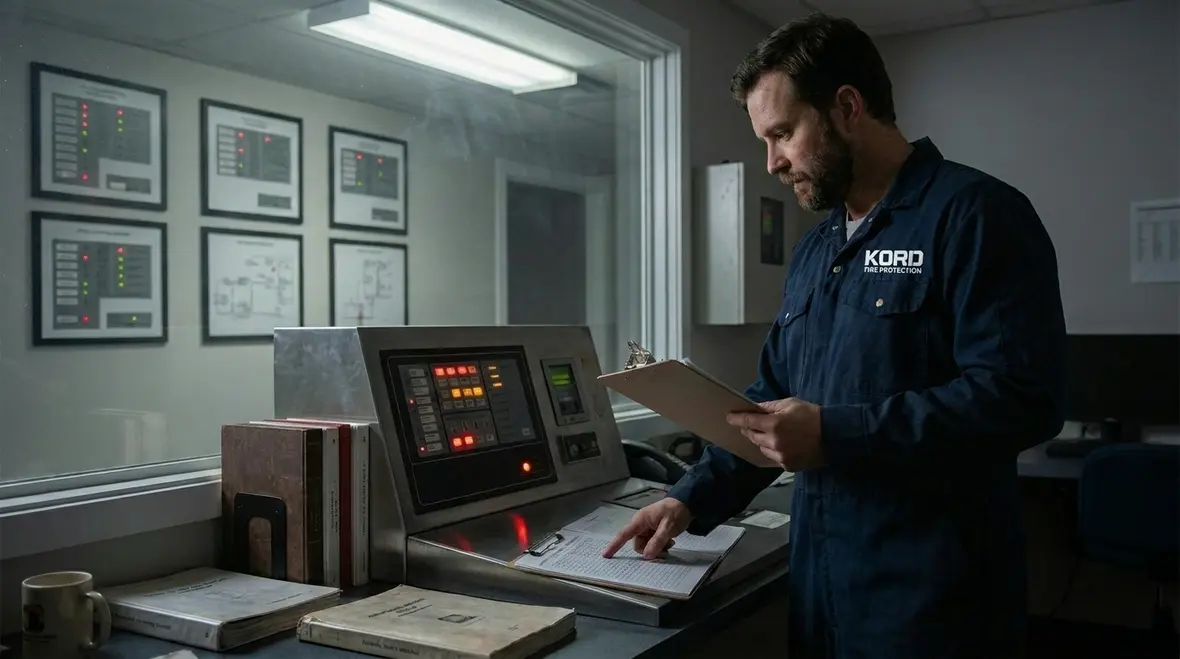
With that picture in mind, owners should establish a simple process: confirm status, verify the cause, and close the loop with a documented restore-to-service step. Transition-wise, this removes guesswork and reduces the chance that the system stays impaired while everyone assumes it is fine. A solid inspection culture also helps teams ask better questions during routine service. Kord’s Wet Sprinkler System Inspection by Kord Fire Protection is a useful related read because it shows how careful inspection habits support readiness instead of just paperwork.
Why system readiness matters for safety, insurance, and risk
Fire suppression impairment matters because it shifts the system from protection to expectation. When a system cannot discharge correctly, the building relies on delays, manual actions, and fire service response time. That puts people at risk and increases the chance of property damage, business interruption, and legal exposure.
Also, many insurance programs and underwriting reviews require proof that systems remain in service and compliant. If impairment reports show patterns, carriers can ask tougher questions. Meanwhile, owners may face additional costs from emergency work, weekend callouts, and rushed repairs. In other words, the “cheap and quick” fix can become the most expensive ticket in the theater, and nobody wants that pop quiz after hours.
Owners should also remember code and best practice requirements. Even if a local authority grants time, an impairment still signals the system failed to meet the readiness intent. Therefore, readiness protects the building and supports calmer operations when schedules get busy. It also gives decision makers cleaner documentation when questions come from leadership, auditors, or insurers who suddenly want a timeline yesterday.
Readiness is operational, not theoretical
This is where owners sometimes get stuck. They know the system exists. They know it was installed correctly. They know inspections occur. But readiness is not a trophy earned once and set on a shelf forever. It is an operational condition that must be verified again and again. That is why recurring testing, recordkeeping, and restoration steps are not administrative fluff. They are the boring heroes of the whole story, and yes, boring heroes still save the day.
Steps owners can take to reduce impairment events
Owners control more than they think. They do not need to become engineers, but they do need a clear, repeatable approach that keeps the system protected through normal business operations.
- Create an impairment response checklist that includes who reports, who verifies, and how the site restores service
- Require a restore-to-service step after maintenance, not just the maintenance completion stamp
- Track system changes during construction with a written handoff from project teams to the fire protection team
- Demand detailed testing reports that show results, not just compliance language
- Confirm valve and control positions after any work that touches piping or detection devices
- Set alert escalation timelines so trouble signals get addressed quickly
Next, owners should ask service providers for more than a visit. They should ask for practical prevention plans, like how to reduce recurring valve faults, how to manage temporary shutdowns, and how to improve documentation so the building stays audit-ready. When teams coordinate well, impairments drop, downtime shortens, and maintenance becomes predictable instead of stressful. For a larger view of how inspection, service, and documentation fit together, Kord’s Full Lifecycle of Fire Protection Explained helps connect those moving parts into one clear picture.
Why Kord Fire Protection becomes a vital partner
Even well-run sites can struggle with fire suppression impairments because the work touches many moving parts. Kord Fire Protection can become a vital partner by bringing structure, documentation discipline, and field-ready expertise to keep systems truly operational. Instead of treating impairments like a one-off event, Kord Fire Protection focuses on the chain of events that leads to impairment status in the first place.
For example, Kord can help owners connect inspection findings to clear corrective actions. In addition, Kord helps align maintenance workflows so valve positions, control devices, and system readings match the system intent. Transition-wise, this reduces the “we thought it was restored” scenario that often shows up during audits. Owners also benefit from service communication that supports decision makers, so they understand severity, timing, and next steps without guesswork.
In short, Kord Fire Protection helps owners protect people while staying ready for compliance reviews, insurance questions, and real-world emergencies. And if fire protection ever felt like a puzzle without the box picture, consider Kord the instructions you wish you had from day one. Near the end of the process, owners who want one place to start can review Kord’s full fire protection services page to see how inspections, repairs, and ongoing support fit together as a practical service plan.
FAQ: Fire suppression impairment and ownership questions
Final take: protect readiness today
Fire suppression impairment is not a nuisance, it is a readiness gap that can impact safety, compliance, and costs. Owners should treat every supervisory signal, valve change, and maintenance event as a potential turning point and act with a clear restore-to-service process. That simple discipline keeps buildings safer, teams calmer, and documentation cleaner when questions start flying.
If the site needs a steady partner who can help prevent impairments and keep documentation tight, Kord Fire Protection can step in. Reach out through Kord’s service page to review current system status, identify risk points, and build a calm, reliable protection plan that stays ready when it matters.

Join Our Newsletter!
Get the latest fire safety tips delivered straight to your inbox From our Newsletter.