Fire Sprinkler Pipe Corrosion Signs Causes and Prevention
When a building relies on automatic sprinklers, people expect the system to stay ready, quiet, and reliable. Yet, fire sprinkler pipe corrosion signs can show up long before anyone smells smoke or hears an alarm. Technicians may spot pitting, rough scale, clogged fittings, thinning metal, or weeping at joints. Then the question turns from “Is it working?” to “How long until it fails when it matters?” In this article, kord fire protection technicians explain the most common causes of internal pipe corrosion in fire sprinkler systems, how each cause actually attacks the metal from the inside, and what caretakers can do to reduce the risk.
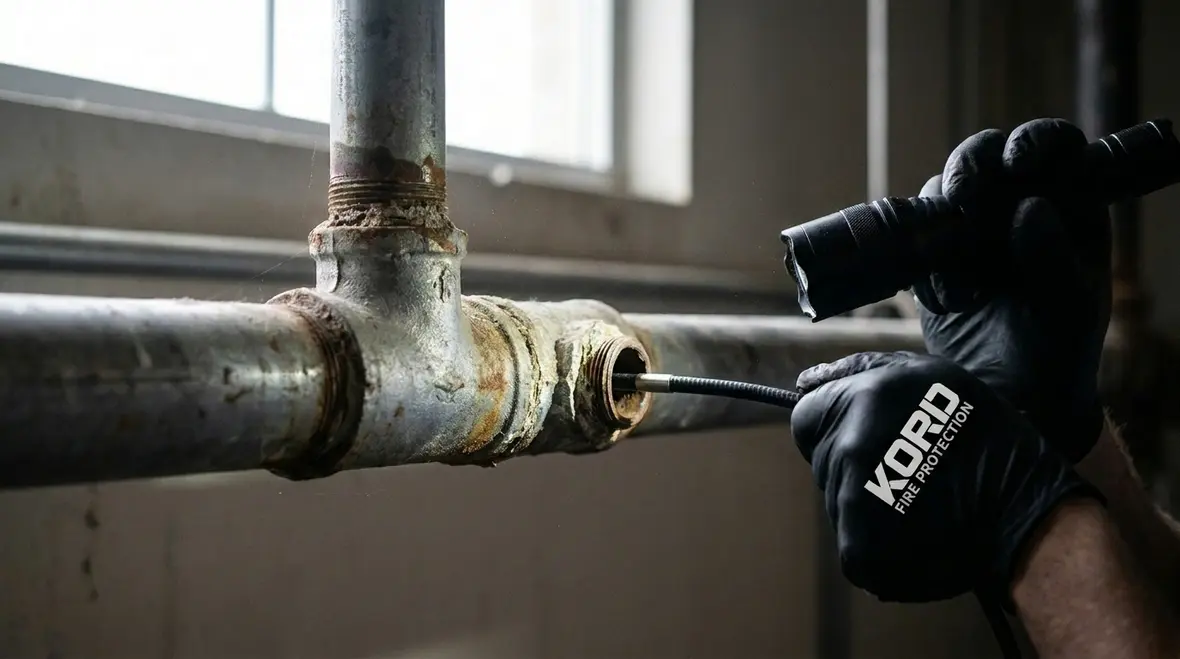
1. What internal corrosion looks like before it becomes a failure
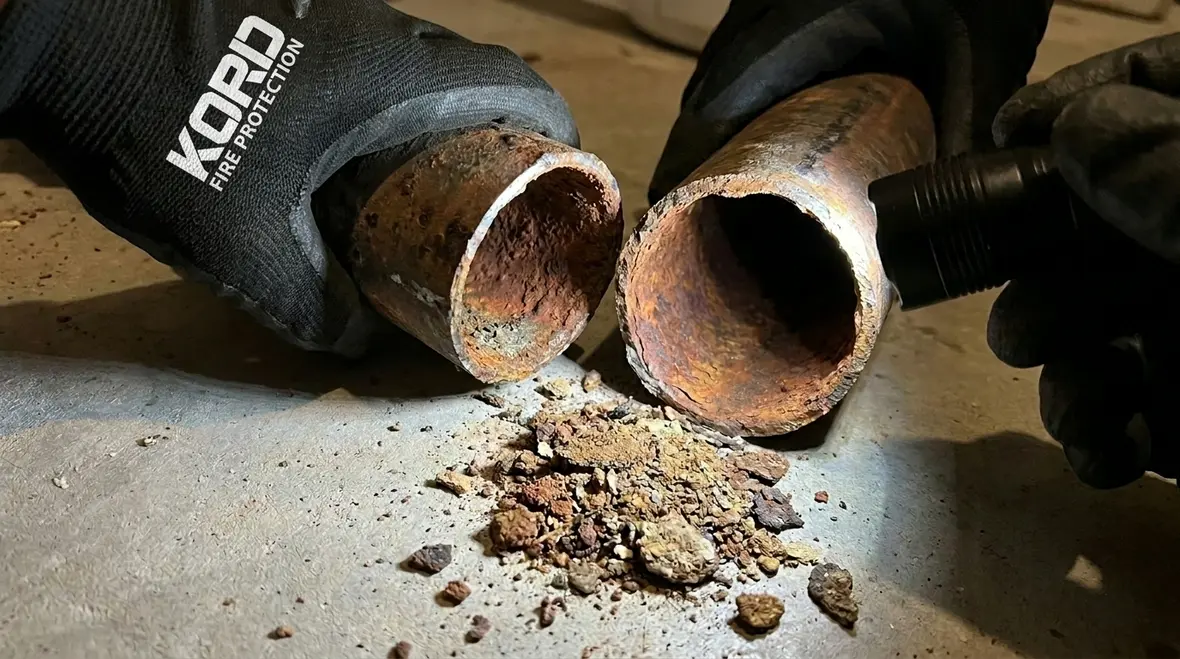
Internal corrosion rarely announces itself with dramatic fireworks. Instead, it builds slowly and then shows symptoms during inspections, flow tests, or when components get pulled for maintenance. First, people notice water discoloration, cloudy flow, or sediment. Next, sprinklers may respond slower than expected because debris and scale restrict flow. Finally, when corrosion has advanced, the pipe wall can thin enough to create leaks at threaded joints or at areas with uneven buildup.
Therefore, kord fire protection technicians often encourage teams to treat early fire sprinkler pipe corrosion signs as a predictive maintenance clue, not a cosmetic issue. Because once corrosion consumes the inner surface, it also creates fresh spots where more corrosion can start. Yes, the system can feel like it is self-sabotaging. If you want a related look at bigger property strategies, Kord Fire also covers fire sprinkler corrosion prevention in large facilities, which pairs nicely with the warning signs discussed here.
2. Corrosion starts with water quality, not with bad luck
Water quality plays a huge role in whether internal surfaces stay stable. Even when the system remains closed, water can still carry dissolved oxygen, chlorides, sulfates, and minerals. Over time, these substances interact with steel and create cell reactions that corrode the interior wall.
If the water has high oxygen content, the metal loses protective behavior and begins to rust from the inside. Likewise, high chloride levels can accelerate attack, especially in regions where water sits longer. Moreover, if the system serves a building where water chemistry changes seasonally, the corrosion pattern changes too, which makes it harder for property managers to set and forget maintenance.
As a result, kord fire protection technicians frequently recommend reviewing local water reports and inspecting for patterns of scale and pitting. That approach helps teams connect the dots between what the system carries and what it shows on the inside. It is not glamorous, but neither is replacing a failed line because chemistry quietly decided to get involved.
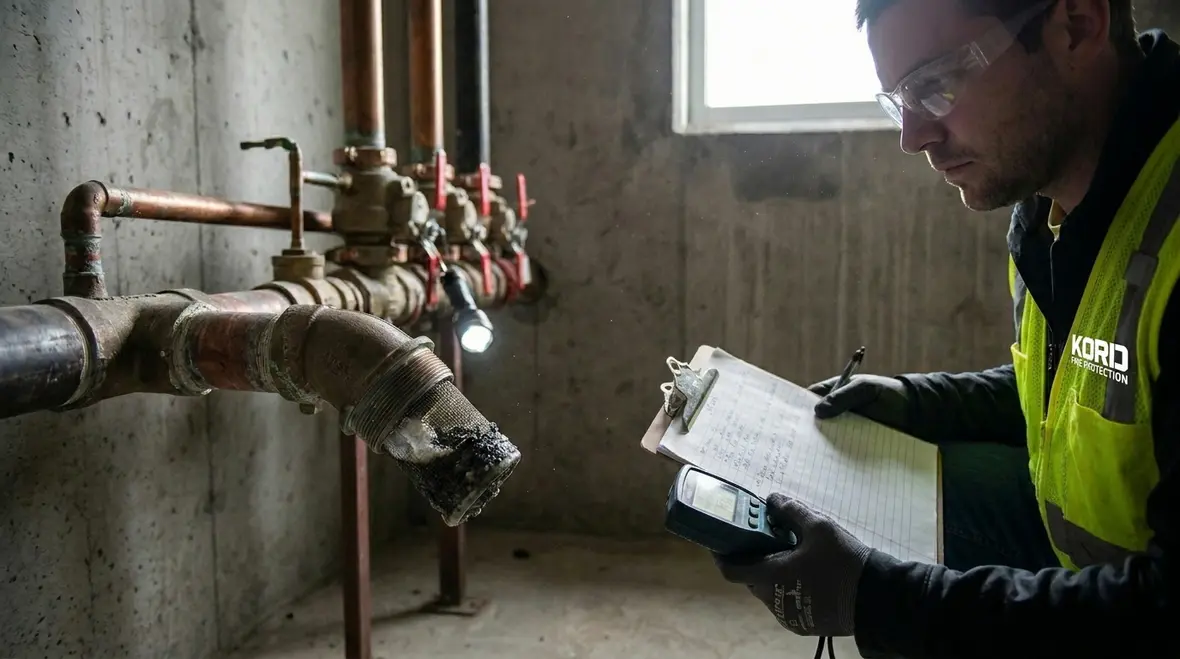
3. Why stagnant sections and air pockets speed up damage
Many systems hold water between alarm checks, sectional control valves, and branch lines. When circulation stops, oxygen can deplete in one area and concentrate corrosion activity in another. Then, the affected zones can become hotspots.
Additionally, trapped air pockets can disrupt stable wetting and drying cycles. With air present, moisture and oxygen create a corrosive environment that stays in place long enough to attack metal. Meanwhile, sediment settles in low spots and keeps the interior surface wet against the pipe wall, acting like an all day cufflink of moisture.
So, when kord fire protection technicians map the piping layout, they look at how water travels, where it stops, and where it tends to collect. That practical step often reveals why corrosion targets certain branches more than others. Layout tells stories. Pipes, unfortunately, tell them in rust.
Key clues technicians watch for
- Discoloration or debris after routine testing
- Localized pitting near trapped air zones
- Recurring scale at low points and branch lines
- Uneven corrosion patterns that do not match exterior appearance
4. Galvanic issues and mixed materials inside sprinkler networks
Internal corrosion can also come from material interactions. When dissimilar metals sit in the same wet environment, galvanic corrosion can occur. In simple terms, one metal becomes the anode and sacrifices itself to protect the other. The pipe wall may corrode faster than expected, even when water chemistry looks fine on paper.
Common problem sources include transitions to different metal types, incorrect unions, or fittings that do not match system material specifications. Furthermore, coatings, sleeves, and adapters can trap moisture and create tiny crevices, which then become the ideal stage for pitting corrosion.
In the field, kord fire protection technicians treat this as a quality control topic. They verify that replacement parts match the listed system design. Because if the system gets improved with the wrong hardware, corrosion often gets the upgrade for free.
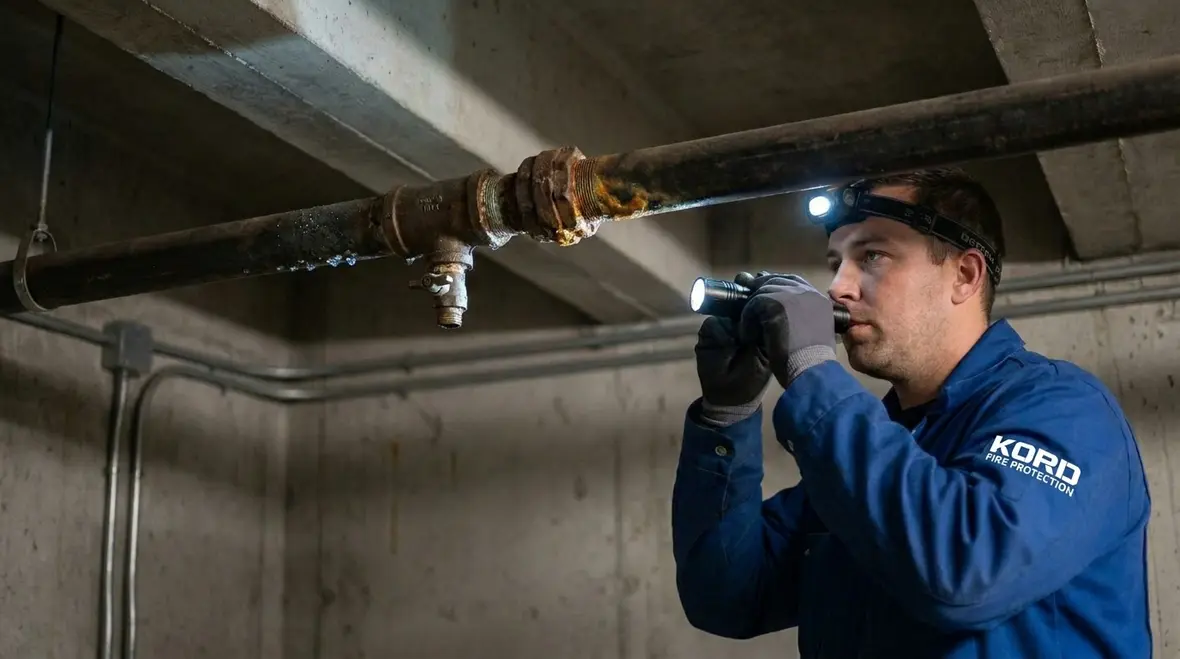
5. Sediment and scale create a protective trap that turns harmful
Over time, iron oxides, minerals, and corrosion byproducts can collect as sediment. At first, this debris may look harmless. However, it reduces flow area and holds water and contaminants against the pipe wall.
Then the process turns vicious. As sediment builds, it creates differential aeration. Areas under deposits receive less oxygen, while exposed edges receive more. This imbalance accelerates corrosion under the scale layer, and the pipe interior can deteriorate while the outside still looks unchanged.
In addition, hydrants, test connections, and recent valve work can stir up deposits that then travel through branch lines. So even if a system sat stable for years, a maintenance event can wake up old scale and spread it where it does the most damage.
Accordingly, kord fire protection technicians often advise looking at strainer screens, checking for debris during valve inspections, and planning controlled maintenance to limit disturbance. Slow and methodical beats exciting and expensive every time.
6. Temperature swings and condensation help corrosion do more work
Even in a wet system, internal conditions change with building use. Temperature swings can cause condensation on pipe interiors when cold water meets warm air in sections that experience intermittent wetting. In dry or preaction systems, the time delay between events can also create cycles of moisture exposure.
Also, temperature affects dissolved gas levels and water chemistry reactions. When conditions shift, corrosion rates can rise, especially in areas with slower drainage or where water remains after testing. In those spots, the pipe interior stays wet and oxygenated long enough to restart the corrosion cycle.
Therefore, a smart inspection plan looks at seasonal patterns. If corrosion shows up more after winter or after humid summer months, kord fire protection technicians treat it as a clue about condensation and water cycling. The weather may be outside, but it still finds ways to meddle indoors.
Why seasonal review matters
A corrosion pattern that looks random in one inspection can make perfect sense across a full year of maintenance records. Comparing post-winter findings, humid-season observations, and post-test conditions gives technicians a better shot at identifying whether moisture cycling is helping corrosion stay busy when nobody is looking.
7. Poor water control during testing and system maintenance
Maintenance actions matter. If test water introduces contaminants, you can create the conditions for corrosion. If systems get partially drained and refilled without proper controls, the water chemistry changes. Then you can see new scale or discoloration during later inspections.
Also, improper flushing practices can leave debris in place. Meanwhile, repeated quick fills can prevent the system from stabilizing at the intended operating condition. Over time, these issues accumulate into a corrosion pattern that looks random until someone studies the timeline.
That is where kord fire protection technicians bring a helpful, methodical approach. They review work orders, document system conditions before and after maintenance, and connect changes in the piping to changes in water handling. Good records are not boring. They are how you stop future surprises from acting brand new.
8. Common corrosion causes and how technicians confirm them
To keep it practical, kord fire protection technicians confirm corrosion causes using a mix of inspection cues and careful verification. First, they assess visual indicators like pitting, scale, and discoloration. Next, they evaluate buildup at specific fittings and low points. Then, they correlate location with flow patterns and water handling history.
They also interpret test results and component condition. For example, if repeated flow restrictions appear in certain branches, sediment and scale become prime suspects. If corrosion concentrates at metal transitions, mixed materials and galvanic behavior move up the list.
Most importantly, they avoid guesswork. Because if a team guesses, corrosion usually wins. If a team verifies, they can reduce risk without turning maintenance into theater. And yes, nobody wants theater from a sprinkler line.
Prevention steps worth taking early
- Document water discoloration, debris, and leak history
- Inspect low points, branch lines, fittings, and material transitions
- Review maintenance records for fill, drain, and flushing patterns
- Schedule targeted internal inspection before wall loss turns into failure
FAQ
Conclusion: protect the system before corrosion becomes expensive drama
Internal corrosion does not wait for a crisis. It builds quietly through water chemistry, stagnant sections, mixed materials, sediment traps, and maintenance effects. When kord fire protection technicians see early fire sprinkler pipe corrosion signs, they treat them as a warning, not an afterthought. Now the smart move is simple: schedule a detailed internal inspection and document findings so you can plan targeted fixes, reduce risk, and keep the system ready.
If you need a broader solution, explore Kord Fire’s fire sprinkler system service for inspection, maintenance, repairs, and support, or review commercial & residential fire alarm installation for complete life safety coverage. Call a qualified team today to assess your piping condition and take action early.

Join Our Newsletter!
Get the latest fire safety tips delivered straight to your inbox From our Newsletter.