Advanced Data Center Fire Protection for High Density Racks
Modern server rooms cannot treat fire protection like an afterthought. They need data center fire protection that matches how today’s facilities actually run: high rack densities, fast-moving power loads, tight airflow paths, and systems that fail gracefully rather than theatrically. That is where advanced fire protection solutions come in. They protect equipment, keep uptime targets intact, and reduce downtime costs that can feel like someone hit the “panic” button on a spreadsheet.
In this article, Kord Fire Protection Technicians explain what they see in the field and why “good enough” rarely survives real-world conditions. And yes, they will calmly point out that smoke is not just smoke when you have electronics, cable trays, and a lot of people praying their backups finish in time.
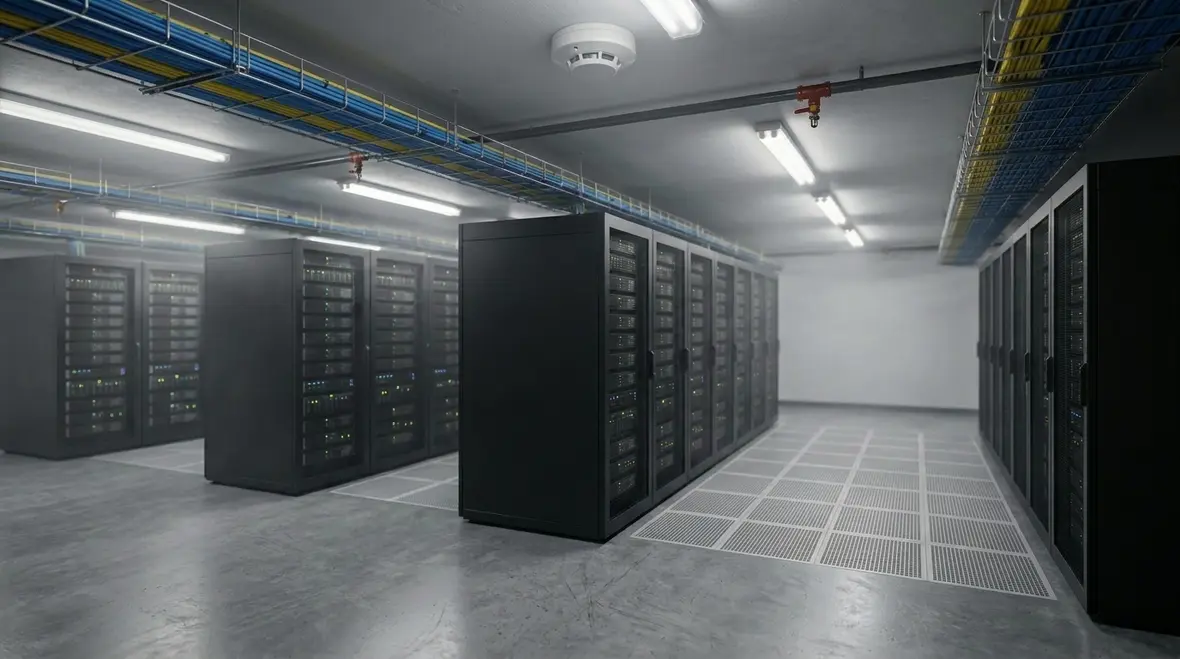
Advanced data center fire protection for today’s high density racks
High density racks change how a fire behaves. Heat builds faster, and combustible load can hide in places many people forget, like cable pathways, ceiling voids, and plastic cable ties. Therefore, modern systems focus on fast detection and targeted suppression. Instead of waiting for visible flames, these designs watch for early fire signals such as heat rise rates, smoke particle patterns, and abnormal airflow changes.
Still, no single sensor does all the work. Kord Fire Protection Technicians often describe it like a good team: one person catches the ball, another reads the play, and another calls the score. Likewise, detection integrates with suppression, monitoring, and building controls so the system responds in the right sequence.
Why density changes the risk profile
The old approach assumed fire would announce itself with obvious smoke and enough time for everyone to gather around the panel looking concerned. High density environments are less polite. Tighter rack spacing, higher cable volume, and stronger airflow create conditions where heat and smoke can move fast or stay hidden just long enough to become expensive. That is why facilities increasingly connect their planning with broader fire alarm services that support early warning, clear sequencing, and dependable system communication.
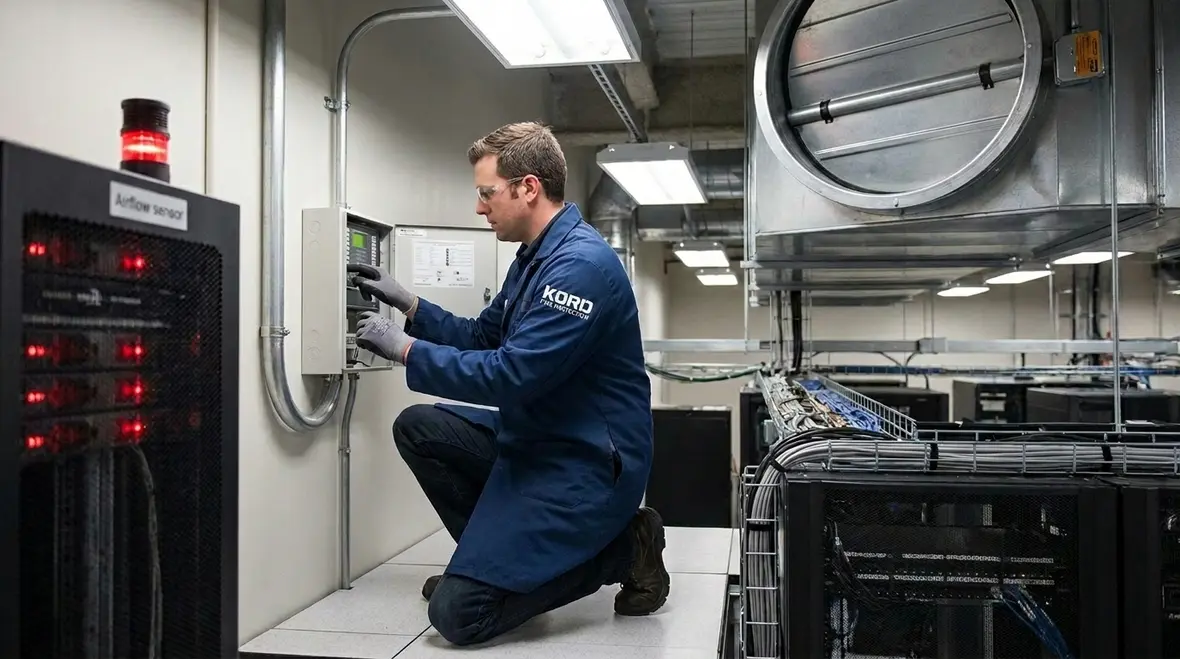
How detection and suppression work together in real facilities
Effective data center fire protection pairs detection with suppression so it does not waste time or flood areas that do not need it. First, designers map risk zones based on rack layout, air handling design, and airflow direction. Then they select detection strategies that align with those zones. For example, aspirating smoke detection can reveal smoke at very low levels in large enclosures, while thermal sensors help confirm heat trends.
Next, suppression plans account for what the facility can tolerate. Water mist systems, clean agents, and inert gas designs each have tradeoffs. Clean agents aim to protect electronics without leaving conductive residue. Inert gas systems displace oxygen, but they require careful ventilation and room sealing assumptions. Water mist can work well with reduced water damage, but designers must confirm the water supply and piping performance.
Kord Fire Protection Technicians emphasize a key point: suppression is not just a “turn on” event. It must align with door status, airflow dampers, power shutdown workflows, and alarm timing so staff can act without chaos.
Sequence matters more than people think
In practice, the best systems behave less like a dramatic movie explosion and more like a disciplined checklist. Detection identifies the problem, controls verify conditions, alerts notify staff, and suppression deploys only when the space and timing make sense. This is also why many building owners review system logic alongside resources such as Avalon Fire Alarm Systems for Commercial Buildings, since real protection depends on how components coordinate under pressure, not just on what products were installed.
Designing fire zones that match airflow, not just floor plans
Many facilities draw fire zones based on floor geometry alone. However, airflow often determines how smoke spreads more than walls do. That is why advanced solutions use airflow-aware zone planning. Teams review hot aisle and cold aisle behavior, intake and exhaust paths, and pressure differences created by HVAC equipment. Then they adjust detector placement and suppression boundaries so smoke and heat do not travel into protected space unnoticed.
As part of this approach, the design team considers ceiling height, cable tray density, and obstructions that block airflow. Consequently, they place detection where smoke will likely pass first. Meanwhile, suppression is planned so it reaches the affected area without wasting agent in areas that remain safe.
One common joke from Kord Fire Protection Technicians: “Fire loves shortcuts.” Modern designs assume that, and they remove those shortcuts by controlling air movement and detection pathways.
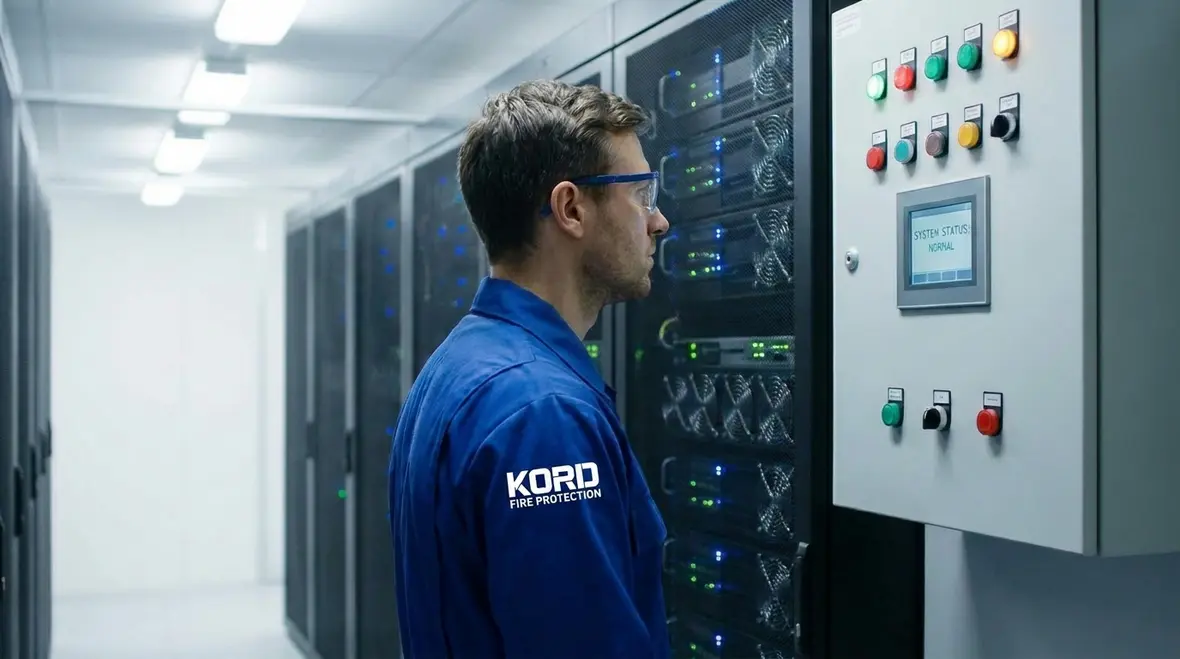
Clean agent and water mist options for sensitive electronics
Electronics and data media do not forgive sloppy suppression. Therefore, advanced data center fire protection solutions often use clean agent or water mist systems depending on the room function, occupancy, and facility rules.
Clean agent systems can protect high value assets while limiting cleanup. Designers check cylinder sizing, discharge timing, enclosure integrity, and maintenance schedules. They also verify that agent concentration levels stay within acceptable limits for people and equipment.
Water mist systems use fine droplets to cool and suppress while reducing bulk water. However, they require careful pipe routing, pump sizing, and confirmation that droplets reach the fuel source. If the system relies on water supply that struggles under peak demand, then it becomes a “motivational poster” instead of a fire solution.
Kord Fire Protection Technicians often stress that these options work best when the facility team documents assumptions and keeps them current. If the racks change, the airflow changes. And if the airflow changes, so does the fire behavior. They tend to say it with a calm smile: “You cannot install a system once and then forget it like a forgotten password reset email.”
Choosing based on the room, not the brochure
A room with sensitive electronics, specific occupancy patterns, and strict uptime goals needs a method selected for that environment, not for marketing language. That is why technicians compare enclosure conditions, ventilation assumptions, maintenance capability, and downstream recovery needs before they recommend a path. A great suppression choice on paper can still become a headache in the field if the facility has outgrown the original design basis.
Reliability, testing, and inspections that do not disrupt uptime
Fire systems must be ready at all times. Yet data centers run on strict schedules, and downtime costs real money. So advanced programs plan reliability around uptime needs. That means routine tests that follow established procedures, staged system checks, and maintenance windows that minimize disruption.
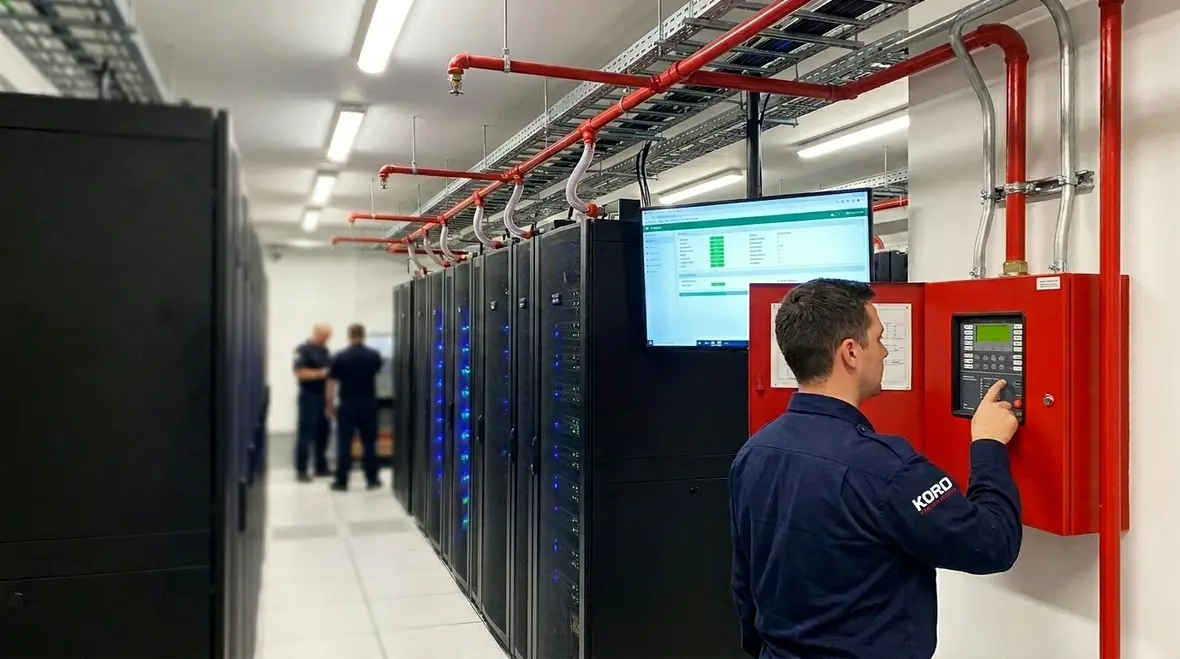
Technicians also use monitoring to reduce surprises. System health alerts can indicate clogged pipes, sensor drift, low pressure, or communication faults before they become emergencies. Moreover, documentation matters. It helps teams prove compliance, track parts, and confirm that technicians followed correct steps.
Kord Fire Protection Technicians describe a practical process: they review design intent, verify field conditions, then test for performance, not just functionality. In other words, the system does not merely “turn on.” It responds correctly in the right time window.
And yes, they remind teams that false alarms happen, but they should not happen constantly. If alarms fire like a sitcom laugh track, staff will eventually stop trusting them. Modern controls and tuned detection reduce that fatigue.
Integration with building controls, alarms, and staff response
Even the best suppression system fails if staff cannot act with clarity. That is why modern data center fire protection integrates with fire alarm panels, building management systems, and operational runbooks. It can trigger equipment shutdown sequences, manage door and damper states, and provide clear alerts by zone.
Integration also helps reduce the time between detection and decision. When the system communicates with building controls, it can support faster isolation of hazards, safer evacuation, and controlled power actions that prevent additional damage.
Kord Fire Protection Technicians often point out that the human side matters. Training should include how the system behaves during real alarms, what personnel should check, and how to avoid common mistakes like sending the wrong crew into the wrong area. Because, like pop culture, fires do not follow scripts. Staff must.
A practical next step for growing facilities
If your facility is adding racks, changing airflow strategies, or revising electrical loads, it is smart to review protection before those changes become tomorrow’s incident report. Kord also offers broader support through its commercial and residential fire alarm installation services, which makes a useful call to action near the end of the planning process when teams are ready to move from discussion to implementation.
FAQ
Conclusion
Advanced data center fire protection helps modern facilities detect early, suppress correctly, and protect uptime. Kord Fire Protection Technicians guide teams through zone planning, equipment selection, integration, and maintenance so the system performs when it matters most.
If the facility is growing, changing rack layouts, or updating HVAC, now is the time to review the protection design and test plan. Contact a qualified team to assess risk and confirm your system supports today’s operating reality. Because fire does not care how busy the calendar is.

Join Our Newsletter!
Get the latest fire safety tips delivered straight to your inbox From our Newsletter.