
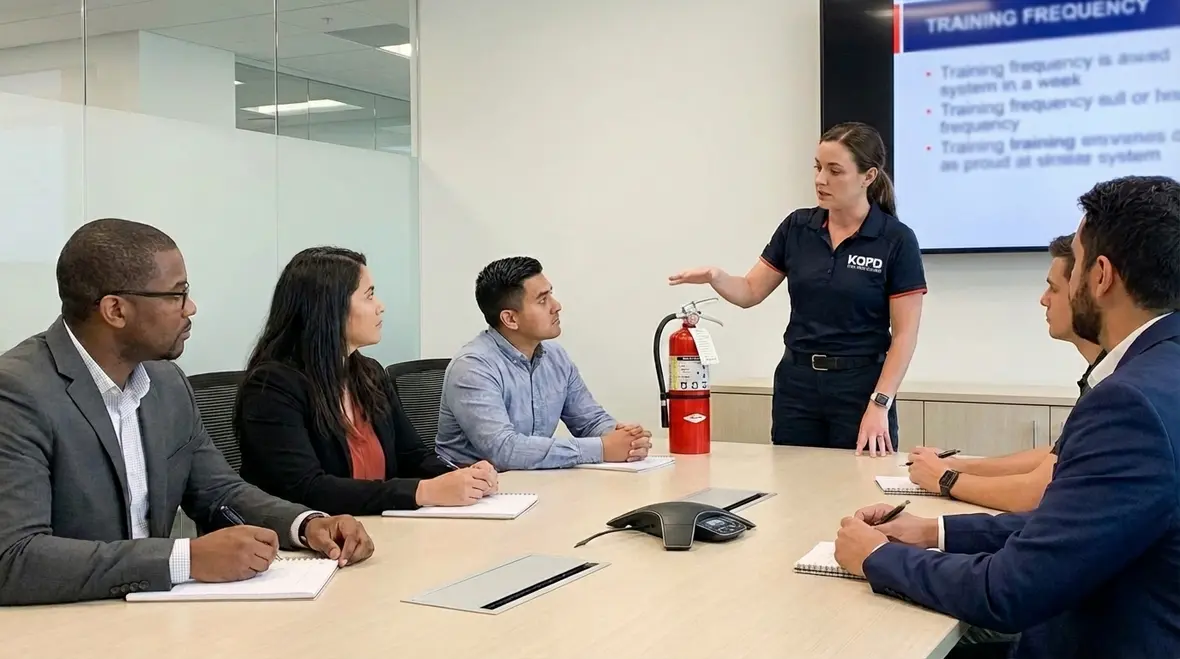
Fire Safety Training Frequency and Documentation
Fire Safety Training Requirements: How Codes Influence Frequency and Documentation
Fire does not negotiate. It does not wait for a convenient time, nor does it check the employee handbook before making an entrance. That is precisely why fire safety training frequency requirements exist. In most jurisdictions, codes require initial training upon hire, annual refreshers for all staff, and more frequent sessions for high risk roles. Furthermore, documentation must prove that training occurred, who attended, what was covered, and who conducted it. These rules are not polite suggestions. They are enforceable standards shaped by national and local codes. Throughout this article, the influence of regulations on training intervals and record keeping will unfold, with insights often explained by Kord Fire Protection technicians who translate code language into plain English.
Now, let us take a steady walk through the framework that governs how often teams train, why it matters, and how organizations can stay compliant without turning their workplace into a never ending fire drill.
The Code Foundations Behind Fire Safety Training Frequency Requirements
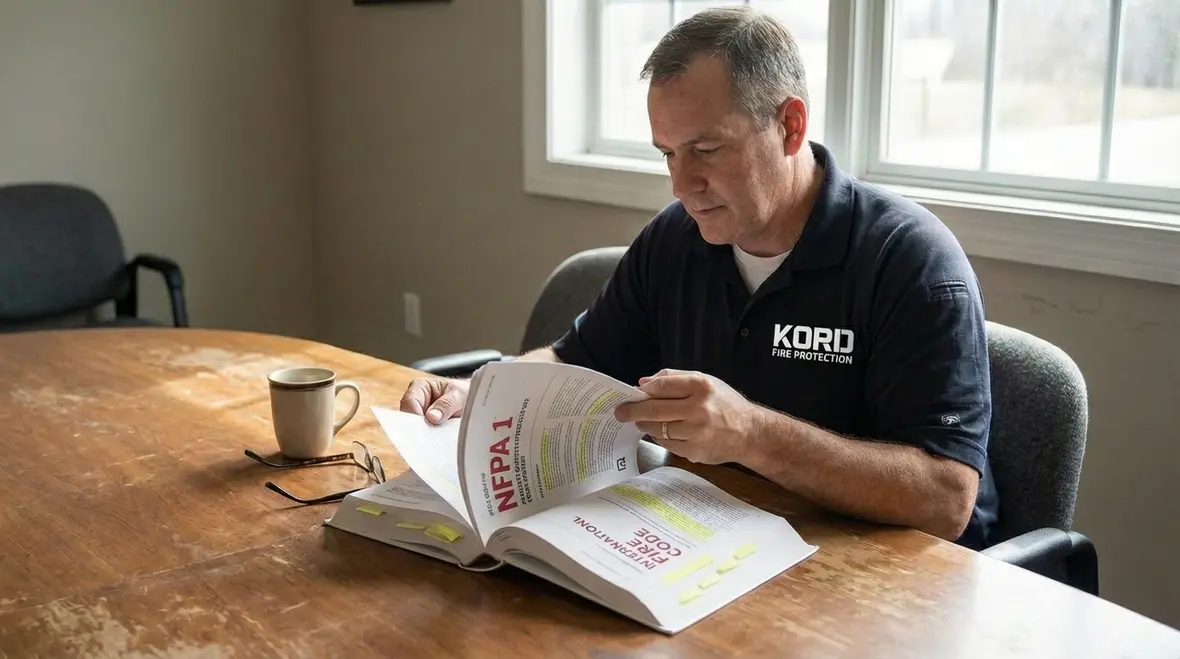
To understand training schedules, one must first understand the codes that shape them. National standards such as NFPA guidelines, International Fire Code provisions, and occupational safety regulations set the tone. Local authorities then adopt, amend, and enforce these rules. As a result, businesses cannot rely on guesswork. They must follow the specific code adopted in their jurisdiction.
Fire safety training frequency requirements often stem from three core drivers. First, occupancy type determines risk level. A hospital, for example, demands more rigorous and frequent instruction than a small administrative office. Second, the presence of hazardous materials increases required training intervals. Third, employee turnover and role changes influence how often instruction must occur.
Kord Fire Protection technicians often explain that codes function like a recipe. If one ingredient changes, the outcome changes. Therefore, when a facility expands operations or adds new equipment, the training cycle may need adjustment. This is not bureaucracy for the sake of paperwork. It is a structured way to ensure people respond correctly under stress.
Additionally, codes specify who qualifies as a competent trainer. In many cases, a certified fire protection professional must conduct or oversee instruction. Consequently, businesses benefit from working with experienced technicians who understand both the letter and the spirit of the regulations.
This code-centered view of training mirrors broader prevention efforts Kord technicians support across Southern California, from fire prevention programs in Long Beach that tie training directly to inspections, to NFPA-based safety protocols that keep workers confident around electrical systems.
How Often Is Fire Safety Training Required?
This question echoes through boardrooms and safety meetings alike. The short answer is that frequency depends on occupancy, risk, and local code adoption. However, several patterns appear consistently across jurisdictions.
Most workplaces must provide:
- Initial training for new hires before or shortly after they begin work
- Annual refresher training for all employees
- Additional instruction when job duties change
- Specialized training for fire wardens and emergency coordinators
- More frequent drills in high hazard environments
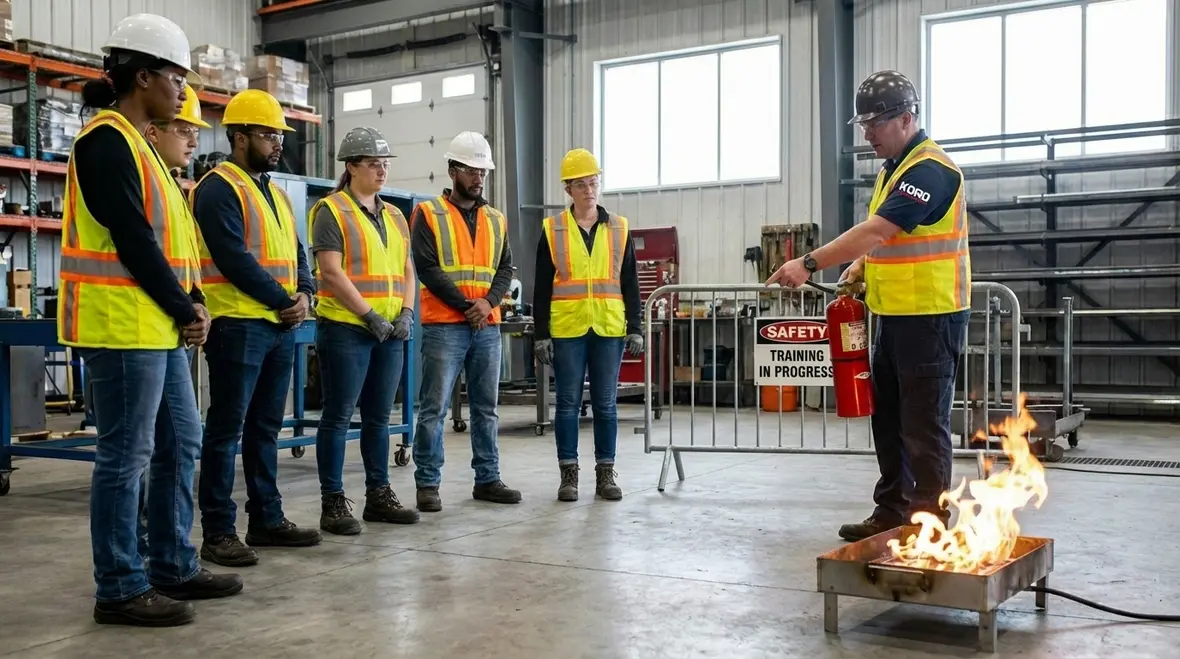
For example, healthcare facilities often conduct fire drills quarterly on each shift. Manufacturing plants handling flammable liquids may require more frequent hands on extinguisher practice. Meanwhile, standard office environments usually conduct annual refreshers combined with at least one drill per year.
Because fire safety training frequency requirements tie directly to risk exposure, organizations must evaluate their operations honestly. It is tempting to assume that once a year is always enough. However, as Kord Fire Protection technicians regularly remind clients, risk does not follow a calendar. If a facility introduces new hazards, training must adapt accordingly.
Furthermore, some insurers impose additional expectations beyond code minimums. Although these are not laws, they influence liability and premiums. Therefore, many companies exceed the baseline requirements to protect both people and assets.
In many of Kord’s service areas, those elevated expectations are paired with field services such as extinguisher training, Regulation 4 testing, and routine equipment inspections, helping teams keep training aligned with the hardware they rely on every day.
Documentation: If It Is Not Written Down, It Did Not Happen
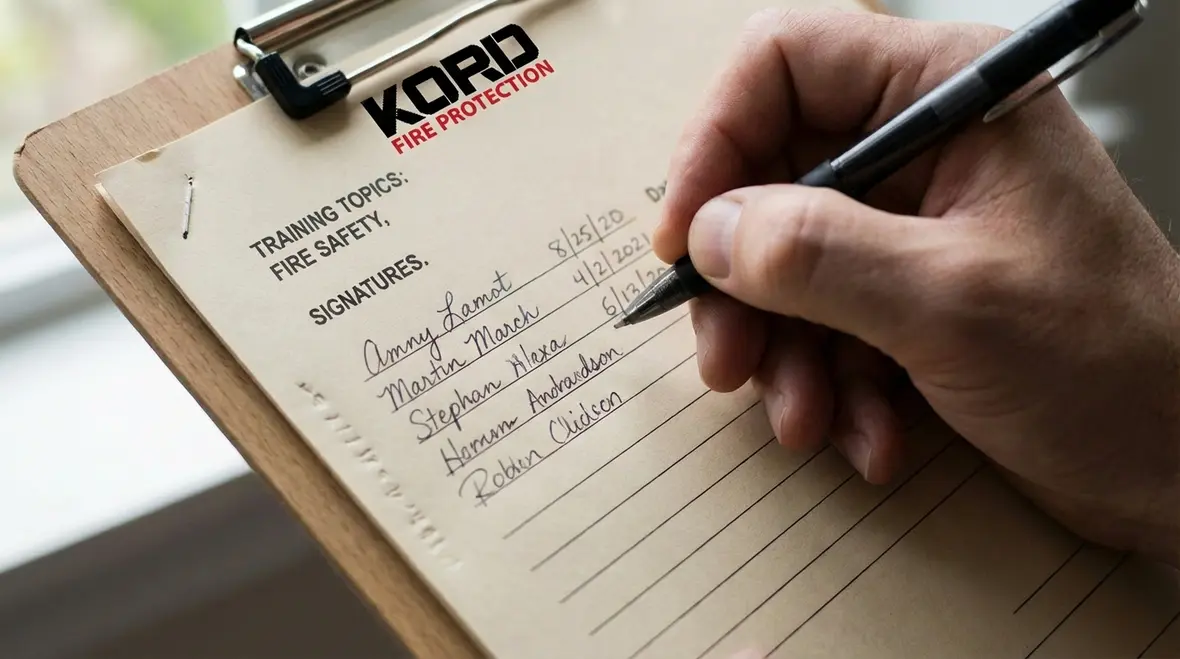
Training without documentation is like a blockbuster movie without a camera. Everyone may swear it was epic, yet no proof exists. Codes recognize this reality. Therefore, they demand detailed records.
Documentation typically includes:
- Date and duration of training
- Topics covered
- Name and credentials of the instructor
- List of attendees with signatures
- Results of any quizzes or practical demonstrations
In addition, drill reports must describe the scenario, response time, observed challenges, and corrective actions. Inspectors often request these records during audits. If documentation is incomplete, citations may follow even if training occurred.
Kord Fire Protection technicians frequently advise organizations to treat documentation as a living system rather than a filing cabinet chore. Digital record management platforms simplify tracking and allow quick retrieval during inspections. Moreover, consistent documentation reveals trends. For instance, if evacuation times improve over several drills, leadership gains measurable evidence of progress.
On the other hand, if recurring issues appear in drill critiques, management can address them before an actual emergency exposes the weakness. In this way, documentation transforms from paperwork into a strategic safety tool.
Balancing Compliance With Real World Practicality
Although codes set minimum standards, practical application requires thoughtful planning. Businesses must schedule sessions without crippling productivity. Consequently, many organizations stagger training by department or shift.
Fire safety training frequency requirements can feel demanding, especially for large facilities operating around the clock. However, creative scheduling often solves the problem. Shorter sessions delivered more frequently may maintain engagement better than one long annual seminar. After all, attention spans rarely survive marathon presentations about alarm pull stations.
Furthermore, adult learners retain information when it feels relevant. Kord Fire Protection technicians often incorporate real life case studies into their sessions. By discussing incidents that occurred in similar facilities, they anchor code requirements in reality. This approach not only meets regulatory standards but also builds genuine preparedness.
Another key factor involves leadership participation. When managers attend and actively engage in drills, employees take training seriously. Conversely, if leadership treats sessions as optional, compliance weakens. Therefore, a culture of accountability strengthens both safety and morale.
Those cultural shifts often show up alongside system-focused improvements such as better extinguisher placement and more frequent maintenance visits, so that what people learn in training matches what they actually see mounted on walls and connected to panels in the field.
AI Prompt Style Guidance: What Impacts Training Frequency in My Facility?
A facility manager might ask, what impacts training frequency in my facility? The answer lies in several interconnected elements.
First, occupancy classification defines baseline obligations. Second, specific hazards such as commercial kitchens, chemical storage, or high occupant loads raise expectations. Third, prior inspection findings may require corrective training at shorter intervals. Finally, internal policy may exceed code to reduce liability.
Because fire safety training frequency requirements vary, organizations should conduct periodic risk assessments. During these evaluations, safety professionals review operations, interview staff, and examine incident history. As a result, they determine whether current intervals remain adequate.
Kord Fire Protection technicians often walk facilities with management teams, pointing out overlooked hazards. They explain how a simple layout change or new piece of machinery can shift training needs. This collaborative approach ensures that compliance aligns with real conditions rather than outdated assumptions.
Moreover, technology influences modern training cycles. E learning modules allow interim refreshers between formal sessions. While online tools cannot replace hands on extinguisher practice, they reinforce knowledge. Therefore, many organizations blend digital and in person instruction to maintain consistent readiness.
In some California jurisdictions, those assessments naturally connect to broader risk-reduction programs, from hospitality kitchen fire safety initiatives to countywide fire protection plans that emphasize both hands-on education and ongoing documentation.
Dual Column Overview: Minimum Code Expectations Versus Best Practice
Column One: Minimum Code Expectations
- Initial training upon hire
- Annual refresher for general staff
- Required drills based on occupancy type
- Basic documentation retained for inspection period
- Training aligned strictly with adopted code language
Column Two: Best Practice Approach
- Orientation training before independent work begins
- Semiannual refreshers in moderate risk settings
- Quarterly scenario based drills even if not mandated
- Digital documentation stored long term for trend analysis
- Periodic review of fire safety training frequency requirements after operational changes
While minimum standards satisfy inspectors, best practice builds resilience. Organizations that adopt the second column often experience smoother inspections and stronger emergency performance. Additionally, employees feel more confident when they practice regularly.
Best practice also tends to pair training with service relationships. When the same team that maintains fire pumps, alarms, and suppression systems is also helping shape training calendars, gaps between equipment capabilities and human response start to close.
The Role of Professional Guidance in Sustaining Compliance
Codes evolve. Amendments occur. Interpretations shift. Therefore, relying on outdated assumptions invites trouble. Professional guidance helps organizations stay aligned with current expectations.
Kord Fire Protection technicians routinely monitor regulatory updates. When changes affect fire safety training frequency requirements, they inform clients and recommend adjustments. This proactive stance prevents last minute scrambling before inspections.
Furthermore, technicians provide clarity where code language appears vague. For example, a requirement may state that training must occur at regular intervals. What does regular mean? In practice, it often translates to at least annually unless higher risk justifies shorter cycles. By explaining these nuances, technicians bridge the gap between regulation and action.
Another benefit involves third party credibility. During inspections or insurance reviews, documented training conducted or reviewed by recognized professionals carries weight. Inspectors recognize that certified technicians understand compliance standards. Consequently, organizations gain confidence that their programs meet expectations.
Finally, professional trainers inject realism into drills. They simulate blocked exits, communication breakdowns, and unexpected variables. While no one enjoys surprises, practicing under imperfect conditions prepares teams for actual emergencies. And yes, sometimes someone forgets their assigned role. That is why it is called practice rather than a live premiere.
For multi-site organizations across California, partnering with a single fire protection provider for both systems and training also simplifies life. One point of contact can coordinate extinguisher training in Temecula, alarm inspections in Riverside, and broader fire safety education in San Francisco without losing track of documentation or code requirements.
FAQ: Fire Safety Training and Documentation
Conclusion: Turning Requirements Into Readiness
Fire safety training frequency requirements are more than regulatory checkboxes. They shape how people respond when seconds matter. By aligning training intervals with code, maintaining precise documentation, and seeking guidance from experienced professionals like Kord Fire Protection technicians, organizations transform compliance into confidence.
Now is the time to review current practices, close any gaps, and build a program that protects lives and livelihoods. Because when preparation meets opportunity, safety stands ready.
If your facility is due for a fresh look at its fire safety training program, consider pairing that review with a comprehensive fire protection service visit. From Regulation 4 testing services to regional fire protection programs that include extinguisher training and system maintenance, Kord Fire Protection can help your team align real-world practice with the codes that keep people safe.
Bringing training, inspections, and documentation under one coordinated plan turns scattered safety efforts into a durable, repeatable system—one that holds up under inspection and, more importantly, under pressure.
Know Your Weapon Before You Fight the Flame
Kord Fire Protection is your go-to when it comes to all things fire protection. For over 20 years, we’ve been serving Southern California with the quality service and equipment to keep your home or business safe at all times. Our competitive prices reflect our unwavering commitment to protecting what matters most in the event of a fire emergency. Give us a call, send an email, or use that form!

Join Our Newsletter!
Get the latest fire safety tips delivered straight to your inbox From our Newsletter.


