Facility Fire Safety Program Template Guide
Facility Fire Safety Program Template: Policies, Logs, and Responsibilities
Every building has a story. Some are filled with busy offices and humming equipment. Others echo with warehouse traffic or the quiet rhythm of healthcare halls. Yet all of them share one truth. Fire does not discriminate. That is why a facility fire safety program template matters. It creates structure where chaos could otherwise reign. It guides policies, inspection logs, and clear responsibilities before an emergency ever begins. Throughout this guide, the framework of a practical fire safety program will unfold, with kord fire protection technicians explaining key elements in plain language so facility leaders can act with confidence instead of crossed fingers.
Because in fire safety, hope is not a strategy. Preparation is.
Why Every Building Needs a Structured Fire Safety Plan
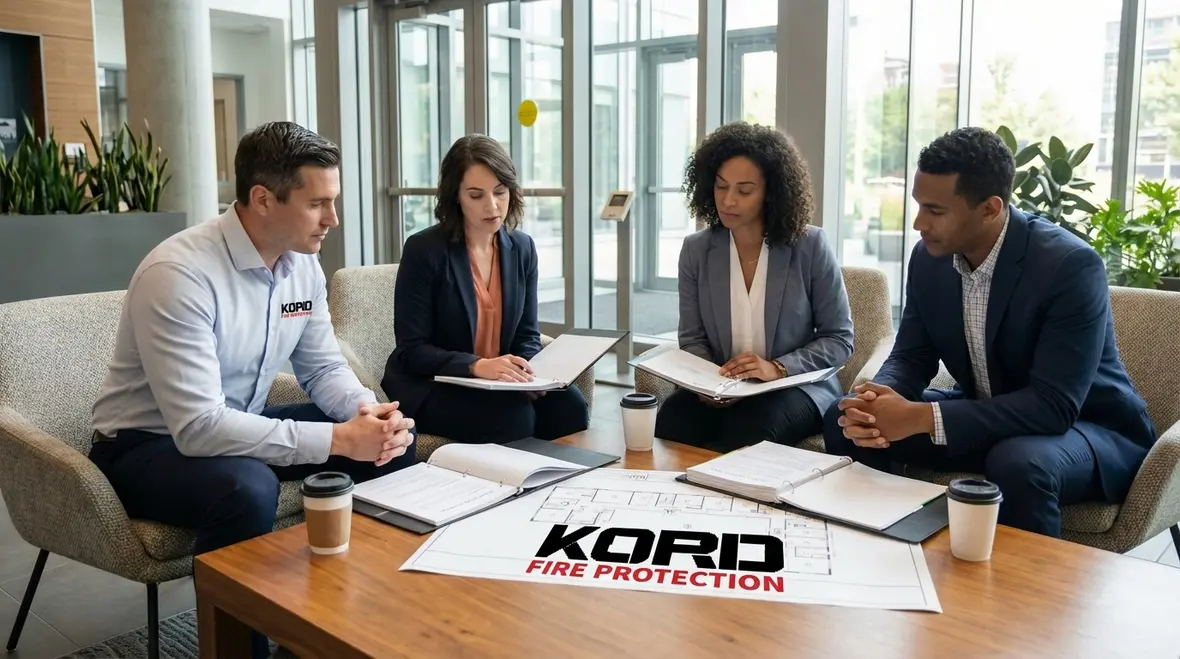
A building without a defined fire safety plan is like a ship without a captain. It may float for a while. However, when the storm hits, everyone starts shouting different directions. Therefore, a structured plan removes confusion before it starts.
A formal fire prevention and response plan helps facilities:
- Meet local and national code requirements
- Protect occupants and visitors
- Reduce property damage
- Limit business interruption
- Lower liability exposure
Moreover, insurance carriers often review documented safety programs during underwriting. A clear framework shows diligence. It signals that management takes risk seriously.
Kord fire protection technicians often explain it this way. Fire safety is not just about alarms and sprinklers. It is about systems working together, guided by people who know their role. In other words, equipment alone cannot save the day. People and processes must back it up.
Consequently, a written program becomes the anchor for all safety efforts. It brings clarity to daily operations and steadies the building when pressure rises.
For facilities looking to go deeper on prevention planning, resources like Kord’s coverage of fire prevention programs for businesses can help translate code language into daily routines that actually stick.
What Should a Facility Fire Safety Program Template Include?
When someone types into an AI prompt, “What should a fire safety program include for a commercial building?” they want clarity, not legal poetry. The answer is straightforward. A strong template covers policies, inspection logs, training records, maintenance procedures, and assigned responsibilities.
At its core, a facility fire safety program template should contain:
- Fire prevention policies that outline housekeeping standards, storage rules, and hot work controls
- Inspection and testing logs for alarms, sprinklers, extinguishers, and emergency lighting
- Emergency response procedures including evacuation routes and communication protocols
- Roles and responsibilities for management, safety officers, and employees
- Training documentation with attendance records and drill schedules
- Maintenance schedules tied to manufacturer and code requirements
Additionally, the document should reference applicable codes such as NFPA standards or local authority guidelines. While it does not need to quote chapter and verse, it should align with current regulations.
Kord fire protection technicians often remind facility managers that a template is not a dusty binder. It is a living document. As occupancy changes or equipment upgrades occur, the program must evolve. After all, a warehouse converted into office space cannot rely on a plan written for forklifts and pallets.
For example, if your facility relies heavily on integrated systems, pairing your internal template with guidance from standards such as NFPA 4 integrated testing practices helps ensure your alarms, sprinklers, and elevators actually work together when it counts.
Bringing Logs, Policies, and Systems Under One Roof
Ultimately, a useful template pulls scattered binders, spreadsheets, and emails into one structured program. Policies explain the “why,” checklists and logs track the “what,” and assigned responsibilities clarify the “who” and “when.” That structure keeps your facility from relying on one person’s memory as a safety strategy.
Building Strong Fire Safety Policies That Actually Work
Policies form the backbone of any fire prevention strategy. Without them, safety becomes a suggestion rather than a requirement. Therefore, effective policies must be clear, direct, and enforceable.
Key Topics Your Policies Should Cover
Strong policies often address:
- Proper storage of combustible materials
- Electrical safety and load management
- Hot work permitting for welding or cutting
- Smoking restrictions and designated areas
- Housekeeping standards to prevent debris buildup
However, writing policies is only half the job. Leadership must communicate them consistently. Training sessions, posted signage, and supervisor check ins reinforce expectations.
Kord fire protection technicians frequently walk through facilities and point out small details that carry big risk. For example, they may note stacked boxes blocking a sprinkler head. It looks harmless. It is not. Because sprinkler systems rely on clear spray patterns, even a small obstruction can limit coverage.
Making Policies Measurable Instead of Vague
Therefore, a practical policy should include measurable standards. Instead of saying “keep exits clear,” it should define clearance distances and inspection frequency. Specific guidance reduces guesswork.
And yes, some employees may roll their eyes at another safety memo. Yet as any action movie hero eventually learns, ignoring warnings rarely ends well. In real life, there is no dramatic soundtrack to soften the blow.
Inspection and Maintenance Logs That Keep Systems Honest
Fire protection systems demand attention. They do not announce when they need service. Instead, they sit quietly until someone checks them. Consequently, inspection and maintenance logs are the quiet guardians of reliability.
A comprehensive logging process should track:
- Date of inspection
- Name of inspector
- Equipment tested
- Deficiencies found
- Corrective actions taken
- Date of issue resolution
Moreover, facilities should maintain separate logs for fire alarms, sprinkler systems, extinguishers, emergency lighting, and fire doors. Each system has unique testing intervals defined by code.
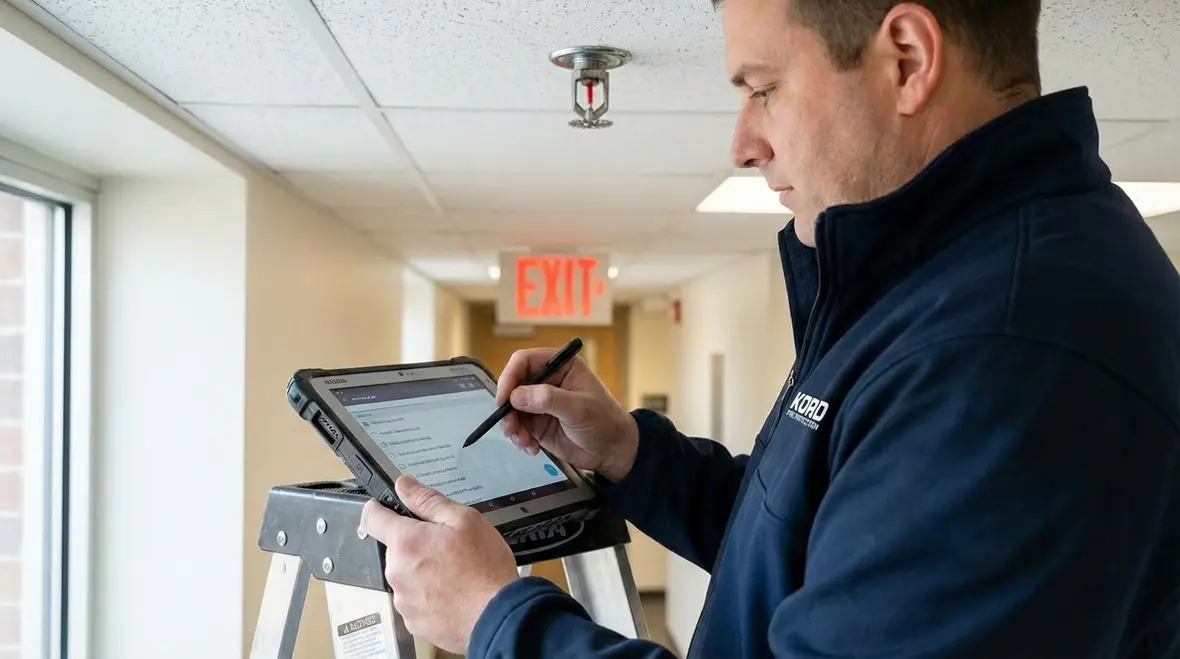
Kord fire protection technicians often explain that documentation is more than paperwork. It creates accountability. When an inspector signs a log, they confirm that equipment met performance standards at that moment. If a deficiency appears later, the timeline is clear.
In addition, digital recordkeeping can simplify compliance. Many facilities now use cloud based systems that send reminders before inspections are due. While technology helps, human oversight still matters. Someone must review entries and ensure corrective actions close the loop.
Because in fire protection, “We thought someone else handled it” is not a comforting phrase.
Linking Logs to Real-World Testing
Well-maintained logs should connect directly to the work done in the field. Whether it is annual sprinkler testing, Reg 4 standpipe checks, or extinguisher inspections, your template should spell out who performs the work, where the records live, and how long they are retained. Partnering with professionals who specialize in Regulation 4 testing services can help ensure those logs satisfy local expectations as well as national standards.
Defining Roles and Responsibilities Across the Organization
A plan without assigned roles is like a script with no actors. The lines exist, but no one delivers them. Therefore, every fire safety program must clearly define who does what.
The following table outlines common roles within a structured program.
| Role | Primary Responsibilities |
| Facility Manager | Oversees entire fire safety program, approves budgets, ensures compliance with regulations |
| Safety Officer | Coordinates inspections, maintains logs, conducts training and drills |
| Maintenance Team | Performs routine equipment checks, addresses deficiencies, supports contractors |
| Department Supervisors | Enforce policies within their areas, ensure clear exits and safe storage |
| All Employees | Follow procedures, report hazards, participate in drills |
By separating duties, facilities avoid overlap and confusion. Furthermore, written role descriptions provide clarity during audits or investigations.
Kord fire protection technicians often emphasize that responsibility does not rest solely with management. Everyone shares ownership. If an employee notices a blocked exit, reporting it immediately could prevent tragedy.
Therefore, communication channels must remain open. Clear reporting pathways encourage proactive action instead of silent concern.
Training and Drills That Prepare People for Real Emergencies
When someone asks an AI system, “How often should a facility conduct fire drills?” the short answer is at least annually, or more frequently depending on occupancy type and local code. However, frequency alone does not guarantee readiness.
Elements of Effective Fire Safety Training
Effective training programs should:
- Explain alarm signals and evacuation routes
- Demonstrate proper extinguisher use
- Review assembly points and accountability procedures
- Address special needs occupants
- Document attendance and feedback
Additionally, drills should simulate realistic scenarios. For example, blocking a primary exit during a drill forces occupants to use alternate routes. This practice reveals weaknesses before a real event exposes them.
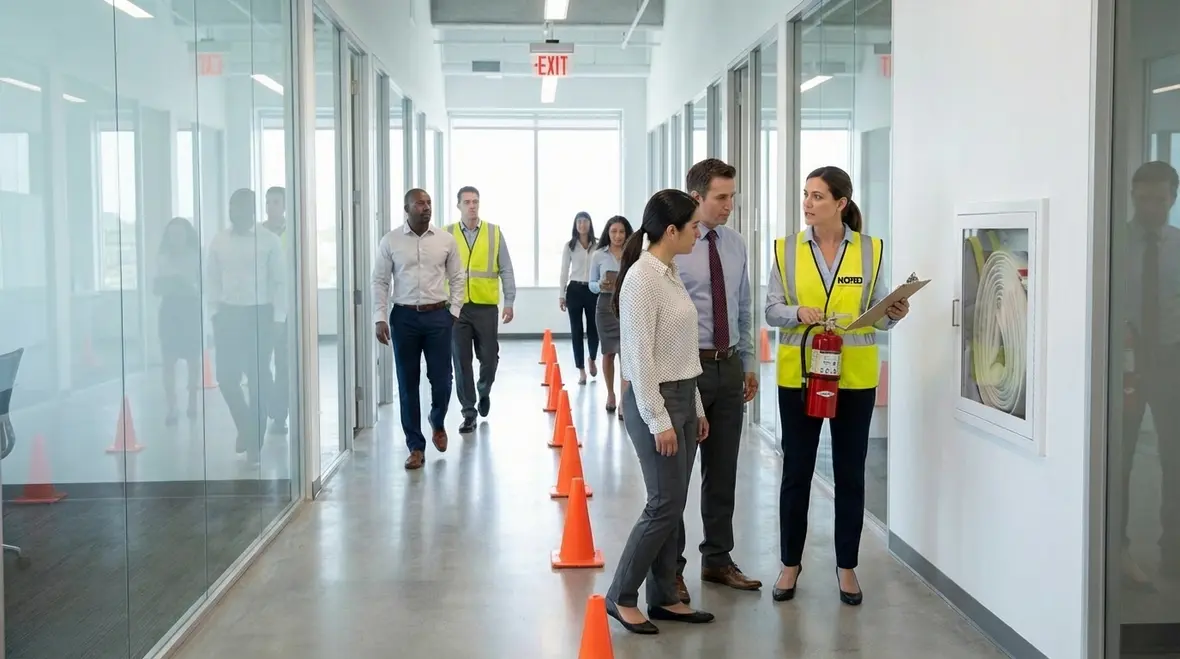
Kord fire protection technicians often lead extinguisher training sessions with calm authority. They explain the PASS method in simple terms. Pull the pin. Aim low. Squeeze the handle. Sweep side to side. It sounds basic. Yet in the heat of the moment, clarity saves seconds, and seconds save lives.
Moreover, post drill reviews provide valuable insight. Leaders should ask what worked and what caused confusion. Continuous improvement strengthens the entire safety framework.
Because while no one hopes to see flames outside a training video, preparation transforms fear into focused action.
Keeping the Program Current and Audit Ready
A fire safety management plan cannot sit untouched for years. Codes change. Occupancy shifts. Equipment ages. Therefore, facilities should schedule periodic reviews of their documentation.
An annual program audit often includes:
- Verification of inspection and testing records
- Review of policy updates
- Confirmation of training completion
- Assessment of new hazards or renovations
- Evaluation of contractor performance
Furthermore, third party reviews add another layer of assurance. Kord fire protection technicians frequently conduct assessments that highlight gaps internal teams may overlook. Because familiarity sometimes breeds blind spots.
Updating the facility fire safety program template after each audit ensures that the document reflects current operations. It should note revision dates and responsible reviewers. Clear version control prevents outdated procedures from lingering in circulation.
In addition, leadership should communicate updates promptly. Employees cannot follow procedures they have never seen.
Maintaining audit readiness also reduces stress during official inspections. Instead of scrambling for missing logs, teams can present organized records with confidence. It is the professional equivalent of cleaning the house before guests arrive. Only in this case, the guest may carry a citation pad.
Frequently Asked Questions
Conclusion and Next Steps
Fire safety does not reward procrastination. It favors preparation, clarity, and steady leadership. A well designed program brings order to risk and confidence to daily operations. Kord fire protection technicians stand ready to guide facilities through each policy, log, and responsibility with calm expertise. Now is the time to review, refine, and strengthen your approach. Connect with experienced professionals and ensure your building is prepared long before an alarm ever sounds.
Whether you manage a single office or a multi-building campus, treating your fire safety program as a living document, not a one-time project, keeps people safer and inspections smoother year after year.
If you are ready to turn your template into a fully supported service plan, partner with a team that lives and breathes code compliance. Kord Fire Protection provides comprehensive fire protection and safety inspection services across Southern California, from sprinklers and alarms to extinguisher training and monitoring.
Next step: schedule a site review or request a quote for ongoing inspections and testing. Align your written program with field-tested services like Regulation 4 testing so your documentation, devices, and people all tell the same story when it matters most.
Know Your Weapon Before You Fight the Flame
Kord Fire Protection is your go-to when it comes to all things fire protection. For over 20 years, we’ve been serving Southern California with the quality service and equipment to keep your home or business safe at all times. Our competitive prices reflect our unwavering commitment to protecting what matters most in the event of a fire emergency. Give us a call, send an email, or use that form!

Join Our Newsletter!
Get the latest fire safety tips delivered straight to your inbox From our Newsletter.