Fire Safety Infrastructure Design with kord Fire Protection
In every plant, warehouse, or processing facility, the Fire safety infrastructure design has to work like a quiet seatbelt. It does not get noticed until it matters, and then it performs flawlessly. That is why industrial teams increasingly focus on integrating life safety systems into electrical infrastructure designs, so alarms, detection, and control signals travel the right paths, at the right time, with the right power.
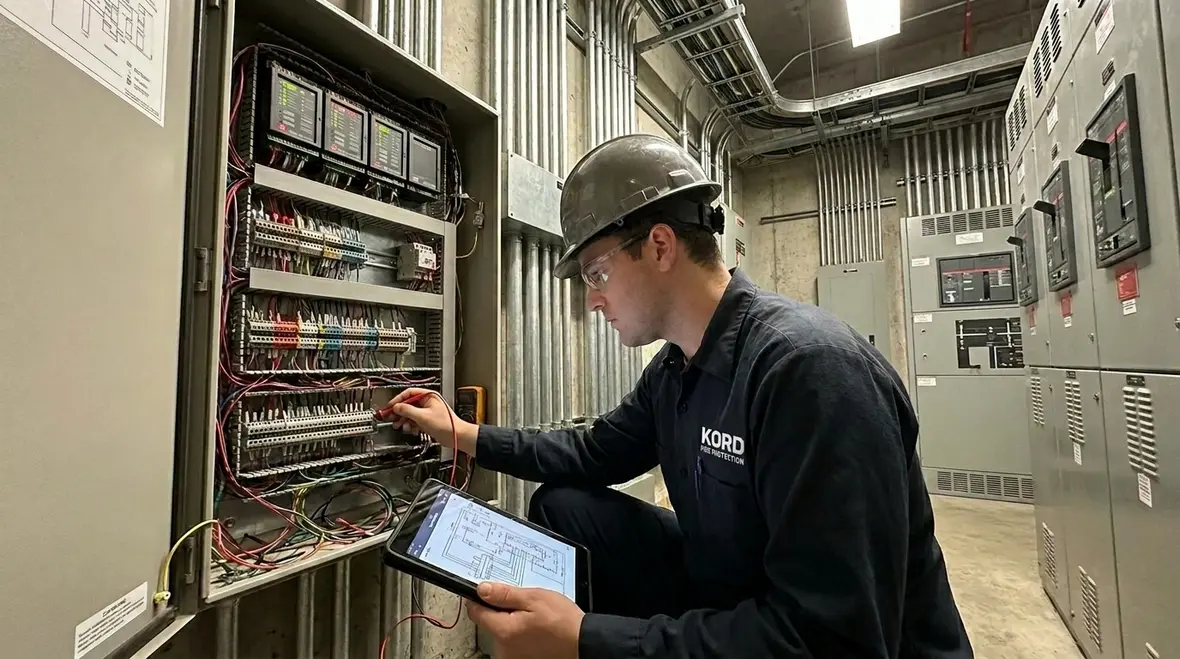
Enter the kord fire protection technicians, who explain the details in plain language and with real field experience. While contractors may talk like they are reading a rulebook, these techs break it down like a good maintenance manual and less like a pop quiz from hell. And yes, they still smile when the panel room turns into a maze. People build mazes; systems must survive them.
How life safety systems fit inside industrial electrical designs
Industrial electrical design does not just feed motors and lighting. It also supports life safety equipment, including fire alarm control panels, smoke detection, notification devices, and emergency interfaces. Therefore, life safety circuits must stay reliable during normal operation and during fault conditions.
To integrate these systems, designers align electrical one line diagrams, wiring pathways, grounding, and power sources with the life safety sequence of operation. Next, they confirm that every device type has a planned power and signal strategy. For example, notification appliances need audibility and power margin, while initiating devices need supervised wiring that can detect breaks or shorts.
Meanwhile, kord fire protection technicians often guide teams to think in terms of behavior, not just wiring. As they explain it, the system must not “act clever” during a problem. It must act predictably. If water finds a conduit, if a breaker trips, or if dust and vibration try to ruin the day, the life safety design should still communicate clearly. For broader context on how integrated equipment behaves as one coordinated package, see Fire Protection Systems Components and Coordination.
Power, supervision, and the stuff that fails first
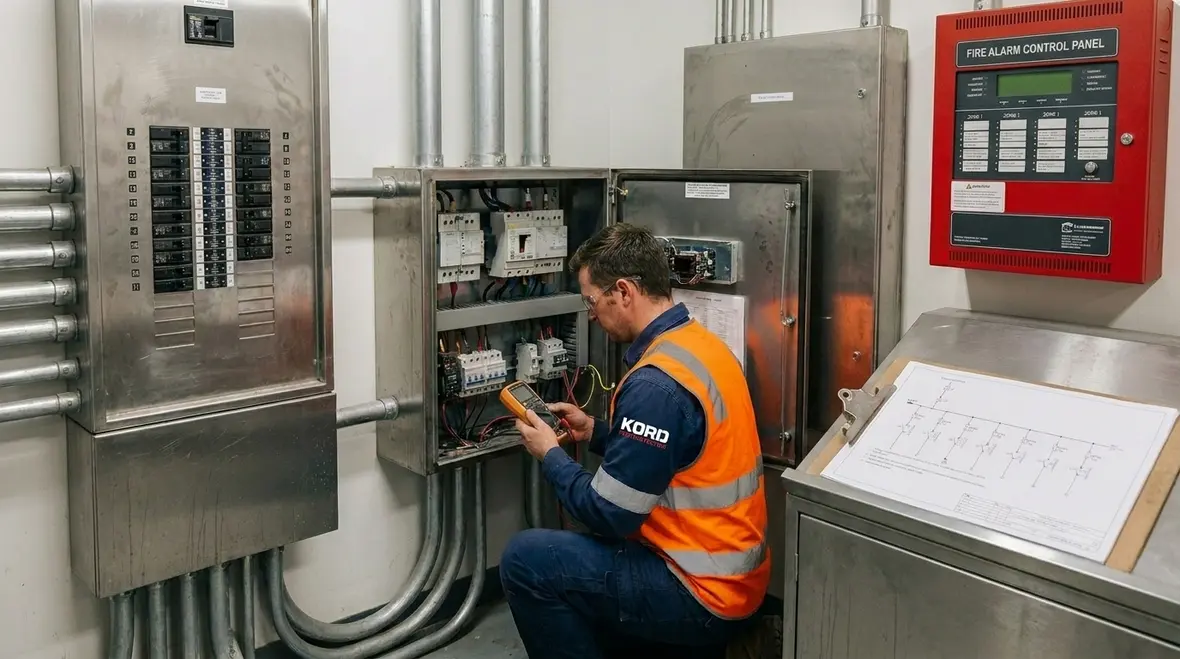
Most life safety integration efforts rise or fall on power reliability and supervision. In other words, the system needs stable standby power and it needs to prove that circuits remain intact.
Design priorities teams usually address first
- Standby power such as batteries and listed emergency power supplies sized for required time
- Voltage drop on notification circuits so devices sound at the intended level
- Supervision of initiating circuits to detect open and short conditions
- Coordination of protection devices so the life safety circuits do not lose function during normal faults
Then comes the practical part: routing, terminals, and separation. Even a great Fire safety infrastructure design can struggle if cables share raceways with noisy power circuits without proper segregation. That is why teams plan separation, firestopping where required, and secure connections in boxes that do not rattle like a bag of loose bolts.
Kord also covers this issue from the power side in Fire Alarm Power Requirements: Reliable Backup and AC, which pairs nicely with field lessons about what tends to fail first when margins get ignored.
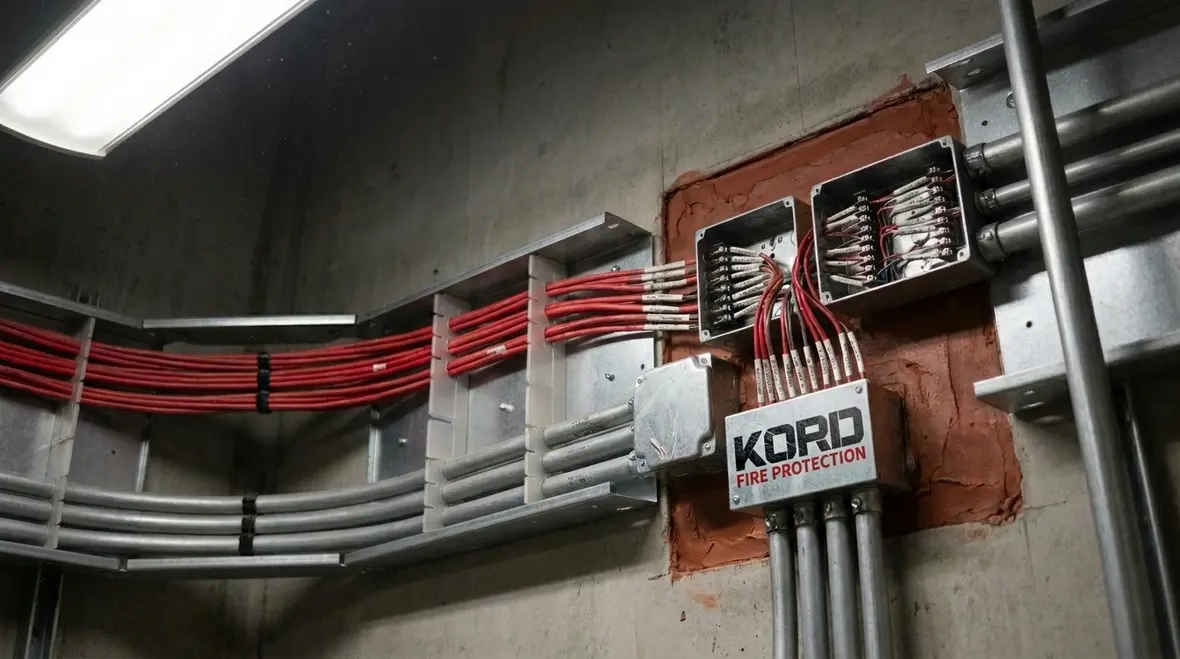
Wiring pathways, device placement, and real-world layout
Electrical integration works best when the physical plan matches the wiring plan. Therefore, designers and technicians coordinate early on tray routes, conduit sizes, pull boxes, and cable labeling.
Device placement also matters. Smoke detectors, heat detectors, and manual pull stations need locations that fit the airflow patterns and room use. Likewise, notification appliances must consider reverberation and background noise. If someone installs a horn where a machine muffles it, the system will still “work,” but it will not protect people effectively.
Because industrial buildings change during construction, teams should expect last-minute moves. So they document approved pathways and create a clear method for change control. When kord fire protection technicians review a revised layout, they look for the “quiet failures,” such as a cable run that grows too long, a new obstruction that blocks airflow, or a device that gets moved off its listed coverage pattern. For more on route planning and dependable terminations, review Fire Alarm System Cabling Best Practices for Reliable Safety.
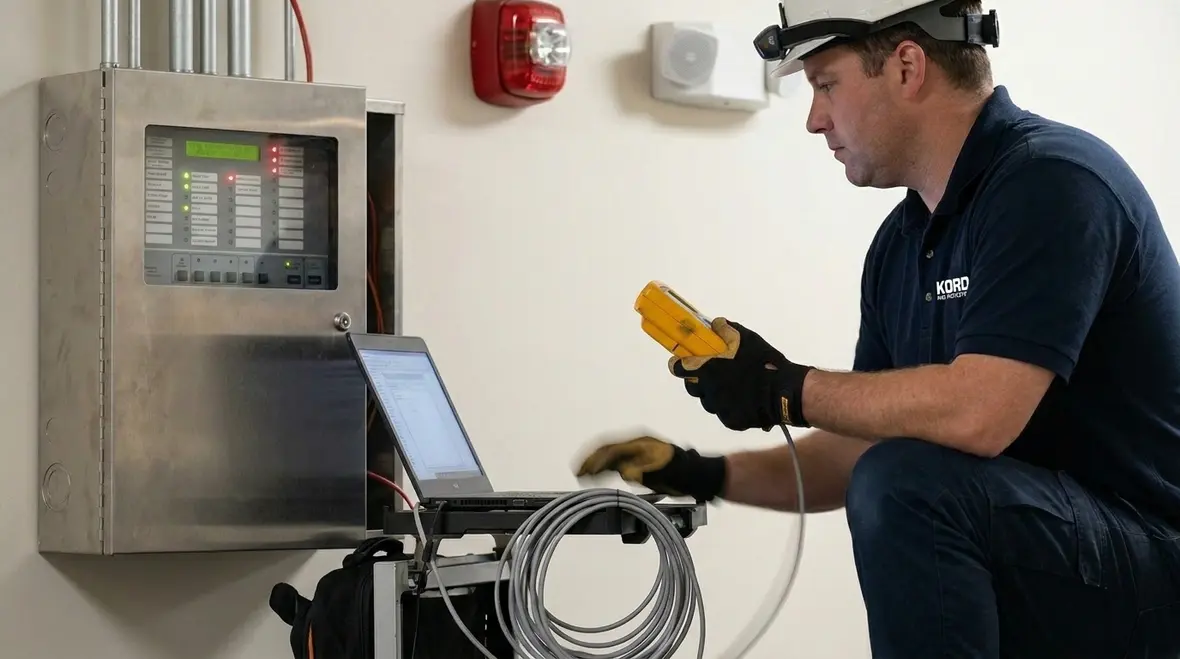
Fire alarm control, emergency control, and interface points
Life safety is not a single device. It is a system of system behaviors. That includes emergency control functions that connect the fire alarm system to electrical infrastructure.
Common interface points in industrial integration
- Shut down of equipment when heat or smoke indicates danger
- Startup of fans or smoke control equipment when the code requires staged operation
- Door release and elevator recall where applicable and listed
- Emergency lighting signaling coordination with the fire alarm sequence
To integrate these actions, designers must preserve timing and signal integrity. They also need to define fail safe logic, because in emergencies the worst outcome is ambiguity. In business casual terms, the emergency interface should never leave anyone guessing like an actor who forgot the script.
In addition, teams should confirm that control wiring uses the correct supervision method and that relay contact ratings match the connected loads. kord fire protection technicians often stress testing, because an interface that looks correct on paper can still fail in the field if terminations, polarity, or panel programming does not match the intent. That same coordination mindset appears in Integrating Fire Systems With Building Controls for Safety, another useful Kord resource for teams mapping out interface logic.
Testing, commissioning, and why “it powers on” is not enough
After installation, teams must verify performance, not just electrical continuity. Commissioning bridges the gap between design intent and actual operation.
What effective commissioning should include
- Insulation and continuity checks for circuits and terminations
- Functional testing of detection and notification in the sequence
- Verification of supervision responses for open and short conditions
- Coordination testing for emergency control interfaces
- Audibility and visibility checks for notification devices
Next, they document test results and update as built drawings. That last step matters because facilities staff will rely on it years later, when the only thing that is “as built” is the dust.
During commissioning, kord fire protection technicians typically focus on timing, response paths, and coverage. They also watch for mismatched zones, incorrect device types, or programming settings that do not match the engineered fire scenarios. In other words, they treat commissioning like a dress rehearsal for the one performance nobody wants to attend. If fire alarm installation or upgrades are part of the plan, Kord’s Commercial & Residential Fire Alarm Installation page outlines how their team approaches installation, testing, and ongoing support.
Compliance, documentation, and ongoing maintenance
Industrial sites must maintain life safety systems over the long run. A strong electrical design sets the foundation, but compliance and documentation keep the foundation standing.
Records that should stay current and easy to find
- Panel configuration and device lists
- Wiring schedules and as built routing
- Battery and power supply maintenance records
- Inspection and test history with dates and outcomes
They also train operators and maintenance staff so they understand what alarms mean and what actions they should take. When people respond correctly, the system does not become a false alarm siren like a sitcom character who pulls the wrong lever.
Finally, the team should plan for change. New equipment, renovations, and cable additions can affect signal levels, power budgets, and device coverage. kord fire protection technicians often recommend review cycles whenever a facility changes its layout or electrical loads, because life safety is not a “set it and forget it” job. Facilities that need help beyond design can also explore Kord’s broader Fire Alarm Services for support with inspections, maintenance, monitoring, and system performance over time.
FAQ
Conclusion
Integrating life safety systems into industrial electrical infrastructure designs works best when teams plan early, design for behavior, and verify performance through real commissioning. When designers coordinate power, supervision, wiring pathways, and emergency interfaces, people get protection that stays dependable during the messy parts of real life. kord fire protection technicians help teams translate the rules into workable, testable layouts.
If your facility is planning an upgrade or new build, contact a qualified fire protection partner now to lock in a safer Fire safety infrastructure design before construction hardens into “oops.” For installation and long-term support, visit Commercial & Residential Fire Alarm Installation or explore Fire Alarm Services to plan the next step with Kord Fire Protection.

Join Our Newsletter!
Get the latest fire safety tips delivered straight to your inbox From our Newsletter.