Fire Alarm System Cabling Best Practices for Reliable Safety
When people talk about life safety, they often skip the unglamorous hero of the story. That hero is fire alarm system cabling. In the real world, the best-designed system fails only when the wiring route, protection, and termination details get ignored. So Kord Fire Protection technicians treat cabling like a critical pathway, not an afterthought, and they build protection into every step. After all, smoke does not wait for paperwork to finish, and neither do code requirements. And if that sounds dramatic, well, fire protection is drama with receipts. This guide lays out best practices for cabling runs, installation quality, and protection methods that keep detection and notification working when it matters.
Plan cabling routes before a single wire is pulled
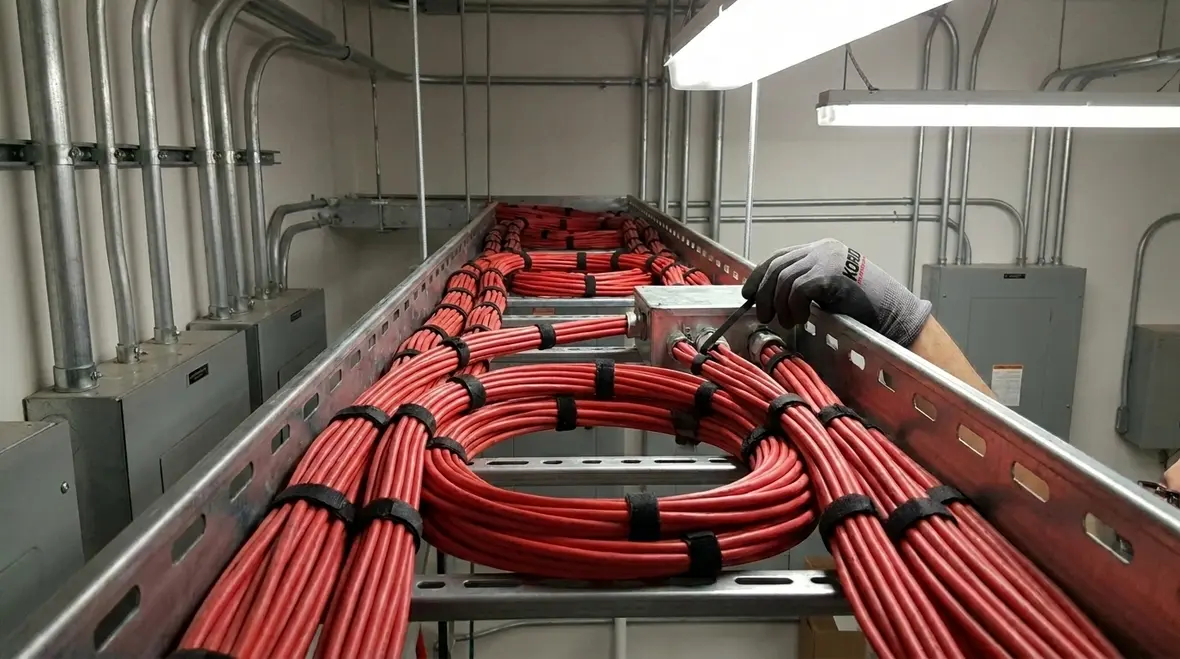
Good installation starts with a route plan that respects the building layout, future access needs, and the hazards around the cabling path. Kord Fire Protection technicians begin by reviewing drawings and walking the site so they can spot tight chases, shared conduits, and areas where maintenance teams will work later. Then they choose cable paths that reduce bends, avoid sharp edges, and limit exposure to heat, water, and mechanical damage.
They also map zones and device locations so the system stays balanced. This matters because longer or poorly routed circuits can cause voltage drop issues, signal loss, and nuisance troubles. As a result, technicians often adjust routes to keep runs within the limits shown by the manufacturer and local requirements. In short, planning first saves time later, and it prevents the classic mistake of “we thought we had room.”
That early planning stage also makes future service easier. A clean route layout gives technicians a fighting chance when a device needs replacement, a renovation shifts ceiling access, or someone adds new electrical work nearby. If the original cable path was chosen with zero foresight, every later change turns into a scavenger hunt with a flashlight and a bad attitude. If the route was chosen well, maintenance stays efficient and the system stays readable to the next crew.

Why route planning pays off later
Route planning is not glamorous, but it quietly decides whether the rest of the installation feels disciplined or chaotic. It supports cleaner testing, clearer device mapping, and less rework when other trades enter the picture. It also helps preserve the reliability of related fire alarm components, especially power and backup performance. For a deeper look at that side of system dependability, see Fire Alarm System Reliability and Battery Health.
Use correct cable types and separation rules
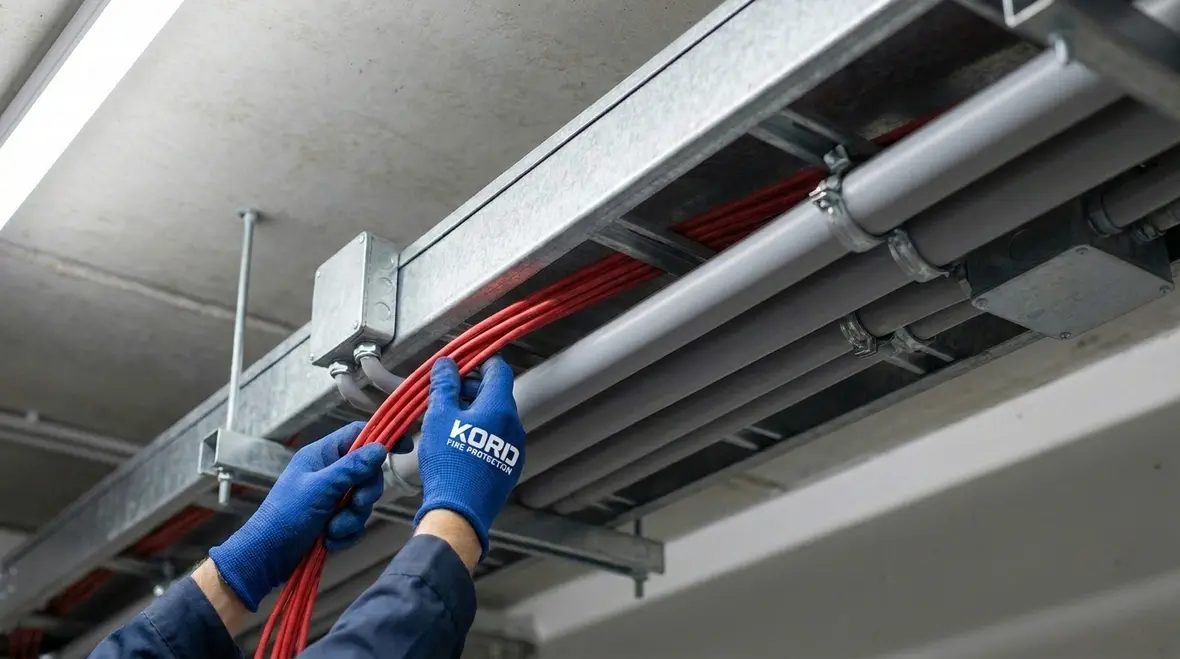
Different circuits do different jobs, and fire alarm systems do not appreciate mixed signals. Kord Fire Protection technicians verify cable type, rating, and construction before installation. They also confirm whether the system uses supervised notification appliances, initiating devices, or other circuit classes. Next, they apply separation rules to prevent interference from power conductors.
For example, routing communication and control cables away from high voltage runs reduces the chance of noise spikes and false signals. Moreover, when cables must cross, technicians handle the crossing point carefully and avoid tight bundling that traps heat or makes future troubleshooting harder. Think of it like seating at a movie theater: put the action next to the snacks and things get messy quickly.
Choosing the right cable also affects survivability, service life, and inspection outcomes. A system might look organized on day one yet still invite trouble if the conductors are not appropriate for the environment or installation method. Matching the cable to the circuit and the space is one of those boring decisions that becomes very exciting the moment a panel reports a fault and nobody knows why.
Coordination matters more than most people think
Cabling does not operate in isolation. It supports a larger network of devices, pathways, power supplies, and system responses that all depend on clean coordination. If you want a broader systems view beyond the cable itself, Kord Fire Protection’s article on fire protection systems components and coordination helps connect the dots.
Protect wiring in the real world, not the ideal one
Even the best fire alarm system cabling layout needs physical protection. Kord Fire Protection technicians focus on mechanical damage points such as roof penetrations, wall corners, near door swings, and areas where ladders and forklifts move. They also protect against moisture, dust, and corrosive vapors, especially in utility rooms and basements.
Common protection steps include using the right raceway type, adding sleeves where cables pass through partitions, and sealing penetrations where required. Additionally, technicians avoid shortcuts like running cable where it can be crushed behind panels or where vibration can fatigue terminations. When protection gets treated as a checklist item instead of a safety step, systems become fragile. And a fragile system is not a system you want to bet your day on.
This is where field experience earns its keep. Buildings rarely behave like a clean drawing set. They come with odd corners, forgotten access doors, humid rooms, rooftop exposure, and the occasional area that seems designed specifically to make cable unhappy. Real protection means planning for impact, vibration, corrosion, and future human interference, because people inevitably open things, move things, lean things, and install other things nearby.
Follow proper installation and termination practices
A cabling run can look perfect and still fail if terminations are sloppy. Kord Fire Protection technicians use clean strip lengths, correct conductor preparation, and torque settings that match the device and terminal design. They also ensure wires land fully under lugs, with no loose strands that can arc or loosen over time.
Then they confirm labeling at both ends. This step prevents long troubleshooting sessions later, when someone says, “It was working yesterday,” which is a phrase fire technicians hear right before a long night. Technicians also keep cable identification consistent so they can trace loops without guessing. Furthermore, they test continuity and insulation resistance when the project scope requires it, and they follow the system manufacturer’s guidelines for verification.
Little mistakes at the terminals tend to grow into big headaches. A nicked conductor, a half-seated wire, or inconsistent labeling can turn a simple panel issue into a multi-hour hunt through the building. Clean workmanship gives the system a better chance to perform as designed and gives future technicians a fair shot at diagnosing problems without turning the job into detective fiction.
How do they test and verify the system after cabling?
After the wiring is in place, Kord Fire Protection technicians do not stop at a visual inspection. They verify the system in a methodical way that matches how the equipment supervises circuits. That includes checking loop resistance where relevant, confirming device address mapping, and running system tests for initiation and notification.
They also look for signs that the cabling path created problems, such as open circuits, shorts, or ground faults. Moreover, they test notification appliances by zones so the building can be evacuated in the correct pattern. This is where quality shows. If the circuits respond wrong, they locate the issue through traceable labeling and test results, not guesswork. In other words, they treat verification like a finishing pass, not a formality.
This verification mindset also helps explain why trouble conditions should never be brushed aside. If a newly wired or modified circuit shows a fault, that is the system telling you to slow down and pay attention. Kord’s article on fire alarm trouble signal meanings is a helpful companion for understanding what those warnings point to and why they matter.
Documentation and ongoing maintenance keep cabling dependable
Once the system passes acceptance testing, the next risk is what happens after renovations, tenant changes, and equipment swaps. Kord Fire Protection technicians push for strong documentation so future work does not break the system while trying to “improve” something. They update as-builts, circuit schedules, and device maps, including any changes made during installation.
Additionally, they recommend periodic inspections that focus on cabling impacts. Technicians check for visible cable damage, loose supports, water intrusion near penetrations, and signs of thermal stress at terminations. They also confirm that any new conduits added later do not interfere with existing pathways. Maintenance ensures that the original decisions around fire alarm system cabling stay valid long after the first punch list is closed.
Good documentation is the difference between confident service and educated guessing. As-built records, zone notes, cable IDs, and device maps create continuity between the installing crew and the next person who opens the panel years later. Without them, even small changes can create outsized confusion. With them, the system remains understandable, maintainable, and far less likely to be “accidentally improved” into a problem.
FAQ: Fire alarm cabling best practices
Conclusion and call to action
Fire safety works when the entire system does, and cabling is where reliability is either built or lost. Kord Fire Protection technicians recommend careful route planning, correct cable selection, solid physical protection, and strict termination quality, then they verify performance with real testing. If your building is due for upgrades or you need a cabling review, do not wait for a trouble signal to start the conversation.
For direct support, explore Kord Fire Protection’s Fire Alarm Services or review their broader Full Fire Protection Services to schedule the right next step. Detection and notification should be ready every day, not only on the day everyone suddenly remembers the panel exists.

Join Our Newsletter!
Get the latest fire safety tips delivered straight to your inbox From our Newsletter.