
Top 10 Fire Inspection Checklist Items
When it comes to protecting lives and property, few tools are as dependable as a well built Fire Inspection Checklist. It serves as the quiet guardian of every commercial building, warehouse, school, and high rise. At Kord Fire Protection, technicians rely on a proven inspection checklist to guide each visit, ensuring nothing slips through the cracks. And trust this, cracks are where trouble likes to hide. In this article, the top ten inspection points take center stage, with Kord Fire Protection technicians explaining what matters, why it matters, and how businesses can stay compliant without losing sleep or their sense of humor.
Why Every Building Needs a Fire Inspection Checklist
First and foremost, a structured inspection process keeps people safe. However, safety is only part of the story. Local fire codes demand regular checks, insurance providers expect documentation, and building owners want peace of mind. Therefore, a detailed checklist becomes both shield and compass.
Kord fire protection technicians often explain it this way. “You would not fly in a plane without a preflight check. So why run a building without one?” It is a fair point. After all, fire does not send a calendar invite before showing up.
Moreover, a consistent fire safety inspection plan prevents small issues from turning into five alarm headlines. A loose wire today can become tomorrow’s dramatic slow motion movie scene. And while that may look impressive in Hollywood, it is not ideal for a Tuesday afternoon at the office.
Turning requirements into a repeatable routine
From NFPA standards to local enforcement and insurance expectations, a checklist translates pages of code into simple yes or no questions. That way, nothing critical relies on memory alone, and every visit builds a documented history of care your fire marshal and insurance carrier will appreciate.
1. Fire Alarm Control Panels and Detection Devices
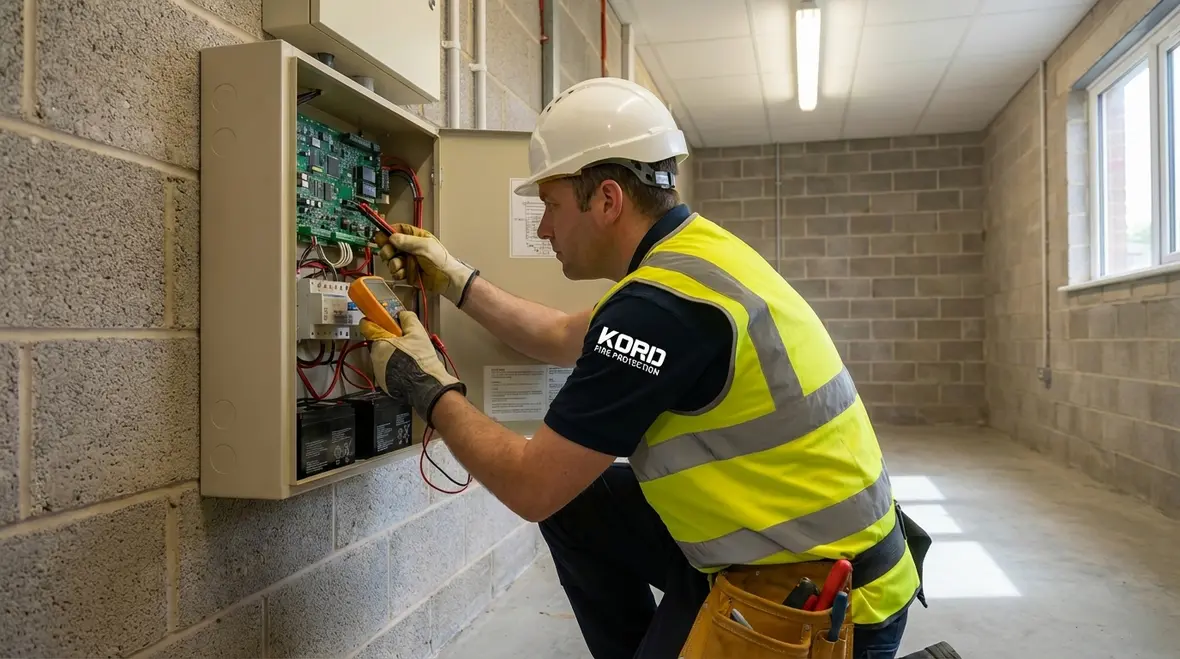
The fire alarm system stands as the brain of any protection setup. Consequently, technicians begin here. They check the control panel for trouble signals, verify battery backup, and test communication with monitoring services.
Additionally, they inspect smoke detectors, heat detectors, and pull stations. Dust buildup, outdated units, or disconnected wiring can all weaken response times. Kord fire protection technicians often demonstrate how even a slightly delayed alert can cost precious minutes. And in a fire, minutes feel like seconds running a marathon.
Because detection starts the chain reaction of safety, this step anchors the entire inspection checklist.
Connect alarms with broader fire protection service
Many building owners pair their alarm checks with scheduled fire alarm services to keep devices, monitoring, and notification appliances aligned on the same maintenance calendar.
2. Sprinkler Systems and Water Supply Integrity
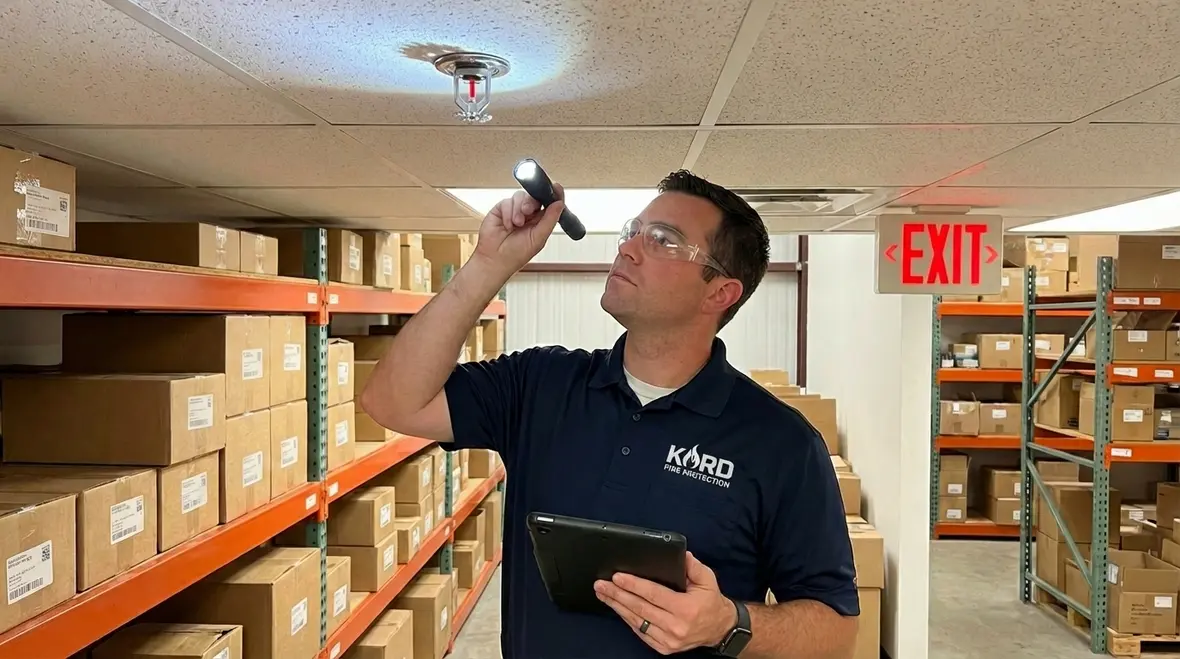
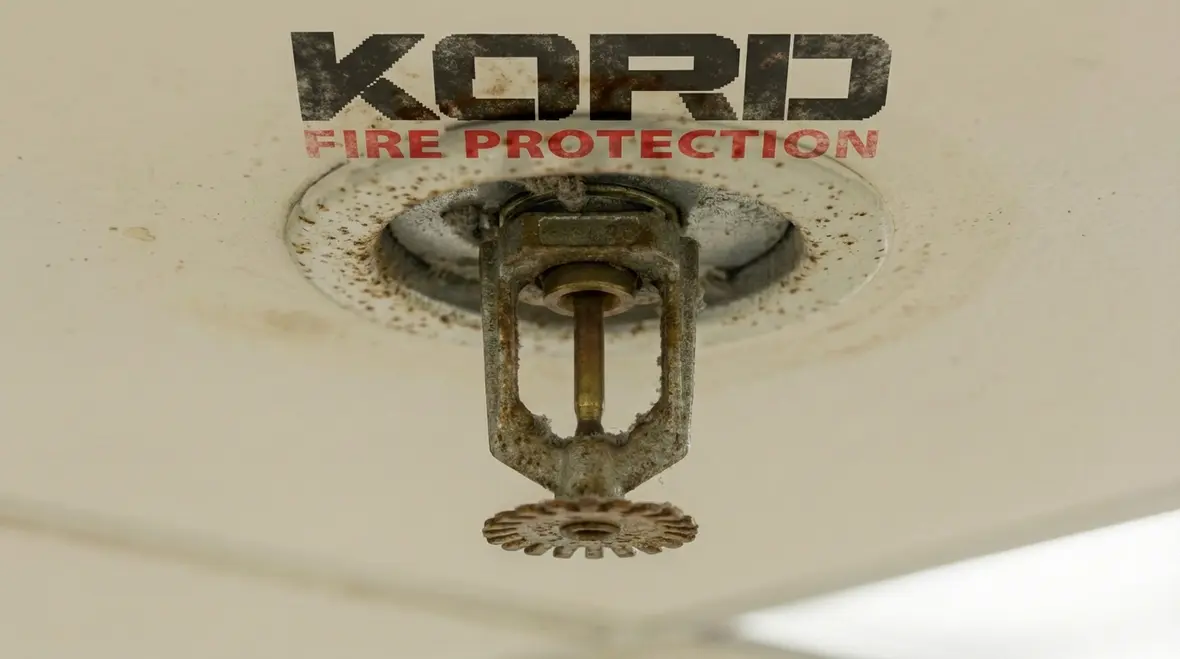
Next comes the sprinkler system, the quiet hero waiting in the ceiling tiles. Technicians inspect sprinkler heads for corrosion, paint, or obstruction. Surprisingly, something as simple as stacked boxes can block proper water distribution.
Furthermore, they verify water pressure, inspect control valves, and test flow switches. Kord specialists explain that a closed valve can render the entire system useless. It is a bit like owning a sports car with no fuel. It looks impressive, but it is not going anywhere.
Because water supply is critical, they also check backflow preventers and fire pumps where applicable. Each component must work together like a well rehearsed orchestra. One missed note, and the performance falters.
Checklist support for sprinkler tests
Kord Fire offers detailed wet sprinkler system inspections and sprinkler testing that align perfectly with a building’s master inspection checklist, helping owners avoid surprise deficiencies when the fire marshal arrives.
3. Fire Extinguishers Ready for Action
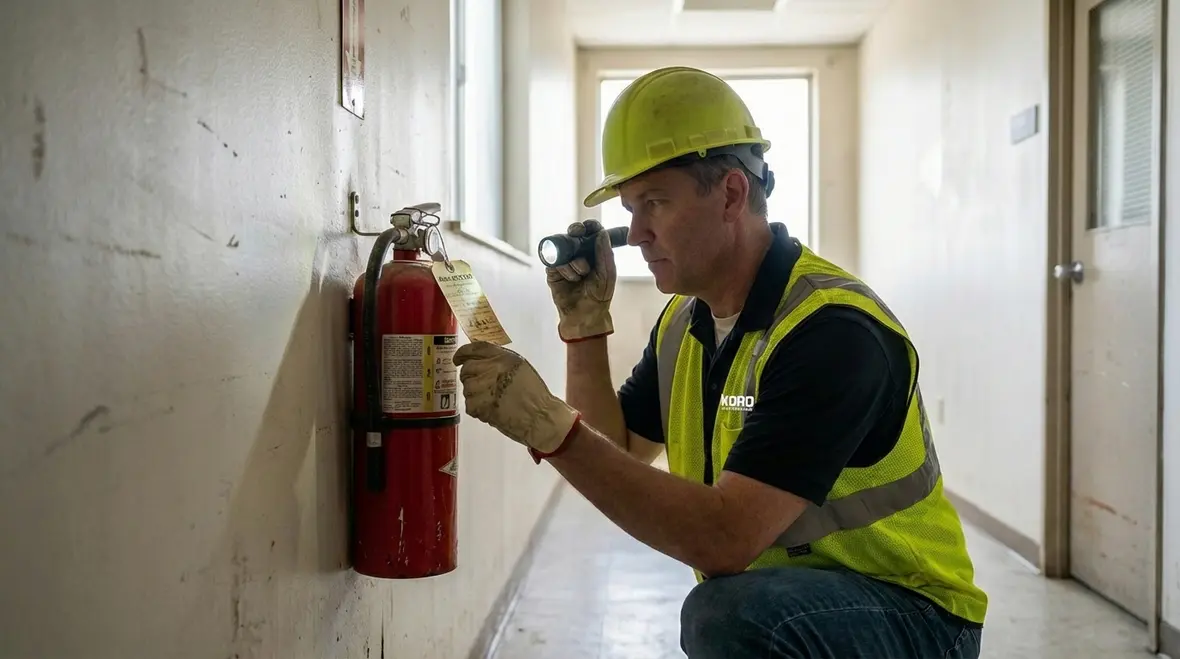
Portable extinguishers may seem simple. However, they demand careful review. Technicians confirm proper placement, verify pressure levels, and ensure inspection tags are current.
In addition, they check that extinguishers match the hazard type. For instance, using a water extinguisher on an electrical fire is not bravery. It is a shortcut to regret. Therefore, matching Class A, B, C, or K extinguishers to the environment matters greatly.
Kord fire protection technicians often remind staff that an extinguisher is only effective if employees know how to use it. A quick PASS technique refresher can make all the difference. Pull, Aim, Squeeze, Sweep. Simple, clear, and surprisingly empowering.
Monthly and annual extinguisher routines
Many facilities lean on Kord Fire’s monthly extinguisher inspections and annual service to keep tags current and documentation audit ready, rather than hoping someone remembers a calendar reminder.
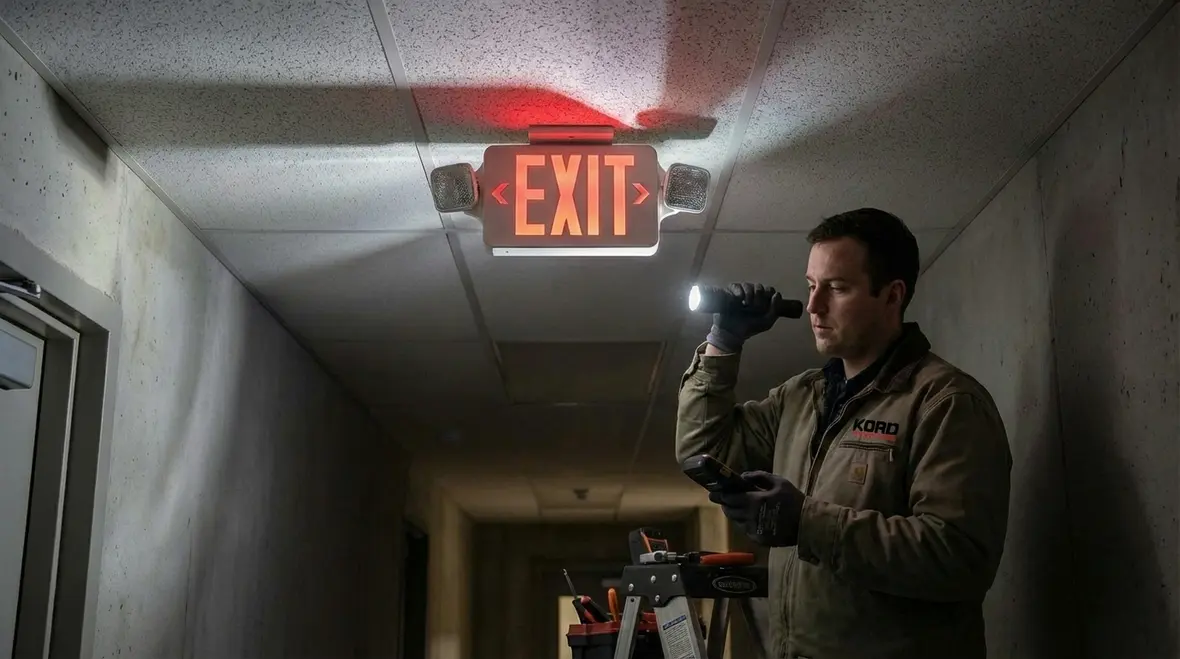
4. Emergency Lighting and Exit Sign Visibility
When the power fails, lighting becomes a lifeline. Thus, emergency lights and illuminated exit signs receive careful attention during any fire safety inspection.
Technicians test battery backups and confirm that fixtures remain unobstructed. Moreover, they verify that exit pathways stay clearly marked and visible from multiple angles.
Kord technicians sometimes joke that in an emergency, no one wants to play a real life escape room. Clear exits remove confusion and reduce panic. Therefore, this section of the checklist ensures people can leave swiftly and safely.
Simple tests with high impact
A quick push button test and periodic 90 minute discharge test, documented on your checklist, can reveal weak batteries long before a real outage exposes them.
5. Electrical Panels and Wiring Conditions
Electrical hazards often spark fires before anyone notices. Consequently, inspections include checking panel accessibility, verifying proper labeling, and identifying overloaded circuits.
Additionally, technicians look for signs of wear, loose connections, or unauthorized modifications. Even something as ordinary as storing cleaning supplies in front of an electrical panel can violate code.
Kord fire protection technicians explain that prevention here reduces risk significantly. While electricity powers productivity, it must stay controlled. Otherwise, it can become the villain in a story no business wants to tell.
Housekeeping meets electrical safety
A good checklist pairs visual panel checks with simple rules: clear 36 inch working space, no storage in front of panels, no daisy chained power strips, and no mystery cords disappearing into drop ceilings.
6. Kitchen Suppression Systems and Special Hazards
Commercial kitchens deserve special focus. Grease fires move fast and burn hot. Therefore, suppression systems above cooking equipment require thorough checks.
Technicians inspect nozzles, verify tank pressure, and confirm system activation mechanisms. In addition, they examine hood and duct cleanliness. Grease buildup creates a welcome mat for flames.
Beyond kitchens, special hazard systems such as clean agent suppression for server rooms receive review. After all, data centers hold digital lifelines. Kord specialists ensure these systems discharge properly without damaging sensitive equipment.
Matching suppression to the hazard
Whether it is a restaurant hood, clean agent room system, or foam system, your checklist should confirm the right nozzle coverage, correct agent, clear manual pull stations, and trained staff ready to respond.
7. Fire Doors, Barriers, and Compartmentation
Fire doors do not get the spotlight often. However, they play a starring role in containing flames. During inspections, technicians check door alignment, latch functionality, and self closing mechanisms.
Furthermore, they examine fire rated walls and ceilings for penetrations. Even a small unsealed opening around a pipe can compromise compartmentation.
Kord fire protection technicians often compare fire barriers to bulkheads on a ship. When sealed correctly, they prevent disaster from spreading. It is a quiet form of heroism, but heroism all the same.
Common fire door failures to watch for
Your checklist should flag door wedges, missing latches, propped open stair doors, storage in rated corridors, and unsealed cable penetrations as automatic “fix now” items, not someday projects.
8. Storage Practices and Housekeeping Standards
Good housekeeping does more than impress visitors. It reduces fire load and keeps exits clear. Therefore, inspections assess storage height, clearance from sprinkler heads, and safe placement of flammable materials.
Technicians also verify that combustible waste is disposed of properly. Oily rags and cardboard piles may seem harmless. However, they can ignite under the right conditions.
Kord teams emphasize that prevention often lives in daily habits. While a formal checklist guides compliance, consistent housekeeping reinforces it every single day.
Simple rules that make a big difference
Common line items include: no storage within 18 inches of sprinklers, no combustibles in electrical or mechanical rooms unless approved, and no blocking of fire department connections or risers.
9. Documentation, Training, and Compliance Records
Paperwork may not sound thrilling. Nevertheless, it proves compliance and supports accountability. Inspectors review maintenance logs, prior inspection reports, and employee training records.
Additionally, they confirm that evacuation plans remain posted and updated. Drills should occur regularly, not just when someone remembers after watching a disaster movie.
Kord fire protection technicians explain that documentation tells a story. When records show consistent care, authorities and insurers take notice. More importantly, it reflects a culture that values safety.
Turning binders into proof of protection
A strong checklist confirms that inspection reports, service tags, drill logs, training sign in sheets, and impairment permits are current, organized, and easy to produce when the fire marshal or auditor asks.
10. Top 10 Fire Inspection Checklist Items at a Glance
For those who prefer a clear side by side summary, the essentials appear below.
Inspection Item
Alarm panels and detectors
Sprinkler heads and valves
Portable extinguishers
Emergency lighting
Electrical panels
What Technicians Verify
Function, signals, battery backup
Pressure, obstruction, valve position
Charge level, correct type, placement
Battery test, visibility, duration
Clearance, labeling, load safety
Inspection Item
Kitchen suppression
Fire doors and barriers
Storage practices
Documentation and training
What Technicians Verify
Nozzles, tanks, activation systems
Self closing, seals, wall integrity
Clear exits, safe stacking
Logs, drill records, posted plans
How Often Should a Fire Inspection Checklist Be Completed?
In most jurisdictions, certified professionals perform annual inspections for major systems. However, monthly visual checks often fall to facility managers. Therefore, consistency matters.
Kord fire protection technicians recommend following local codes while also adopting a proactive mindset. If something looks off, address it immediately. Fire risk does not wait for the calendar to flip.
Ultimately, frequency depends on occupancy type, building size, and installed systems. Yet one principle remains steady. Regular inspection protects lives, assets, and reputations.
Building a realistic inspection schedule
Many commercial properties coordinate their building wide checklist with Kord Fire’s full fire protection services, bundling sprinklers, alarms, extinguishers, and pumps into a single, easy to track compliance calendar.
FAQ
Protect What Matters Most
Fire safety does not happen by accident. It happens by design, discipline, and detailed inspection. Kord fire protection technicians stand ready to guide businesses through every step of their fire inspection checklist, ensuring compliance and confidence. Now is the time to act, before small issues grow bold. Schedule a professional inspection, strengthen your safeguards, and let safety become the quiet hero of your building’s story.
From wet sprinklers and alarm systems to extinguishers and fire pumps, Kord Fire Protection delivers coordinated service that keeps every line on your checklist connected to a qualified expert.
Ready to put your checklist to work?
If you manage a commercial building, warehouse, school, or campus, partner with Kord Fire for a single, integrated plan that covers sprinklers, alarms, extinguishers, and more. Explore our full fire protection services or request a quote for fire sprinkler inspection and service to keep your next inspection predictable, documented, and decidedly uneventful—in the best possible way.
Know Your Weapon Before You Fight the Flame
Kord Fire Protection is your go-to when it comes to all things fire protection. For over 20 years, we’ve been serving Southern California with the quality service and equipment to keep your home or business safe at all times. Our competitive prices reflect our unwavering commitment to protecting what matters most in the event of a fire emergency. Give us a call, send an email, or use that form!

Join Our Newsletter!
Get the latest fire safety tips delivered straight to your inbox From our Newsletter.


