Fire Pump Electrical Control Panel Troubleshooting Guide
Quick Answer: When a fire pump electrical control panel acts up, the usual culprits are power loss, control wiring faults, failed sensors, faulty starters, or bad setpoints. A structured diagnosis saves time and keeps systems compliant. With Kord Fire Protection as a partner, facilities across Australia can restore reliability fast and document the work for audits.
In industrial buildings, fire reliability cannot be a “wait and see” situation. That is why fire pump electrical control panels sit at the center of many site protection strategies. They control starting sequences, monitor pressure or flow inputs, and coordinate alarms and status signals. When something goes wrong, the system may fail to start, start at the wrong time, or cycle in ways that raise alarms and burn hours.
Fortunately, troubleshooting does not have to feel like staring at a blinking cursor. With a calm method, correct tools, and practical checks, teams can isolate faults quickly. And when the job involves downtime, compliance requirements, and documentation, a strong partner matters. Kord Fire Protection can help turn isolated repairs into a reliable program that keeps industrial, retail, and commercial facilities across Australia protected. For facilities that need broader support beyond a single fault call, Kord’s full fire protection services can fit naturally into a longer-term maintenance plan. ([kordfire.com](https://kordfire.com/full-fire-protection-services/?utm_source=openai))
Common fault symptoms in fire pump systems
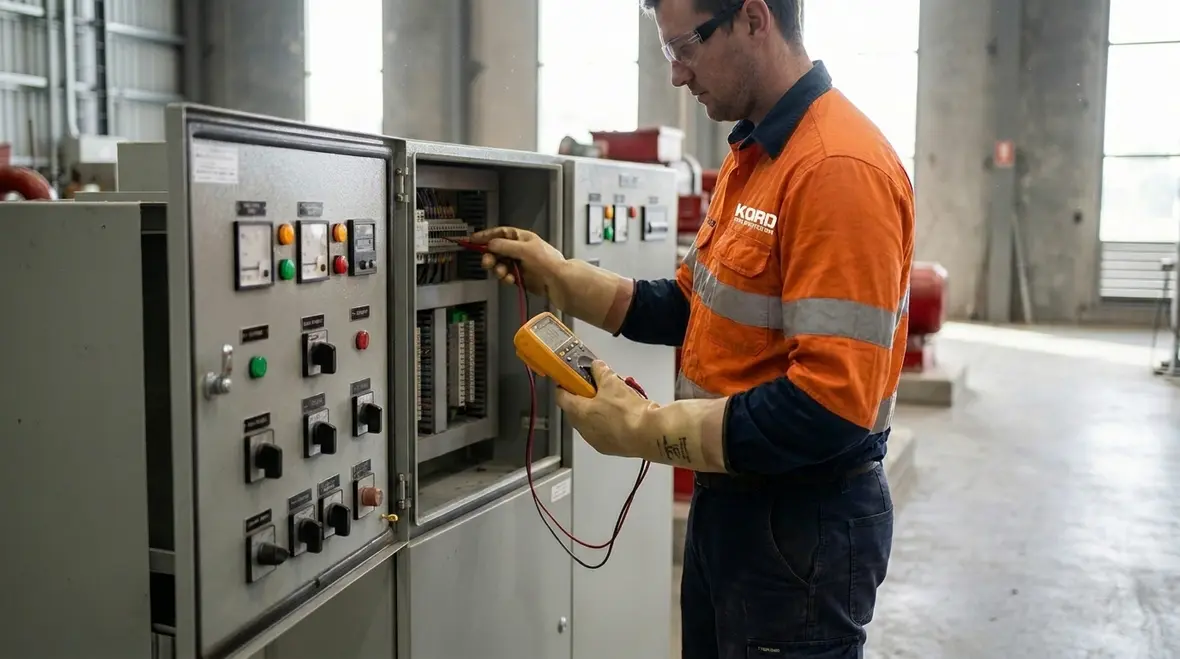
Personnel often notice issues through symptoms first, not through mysterious diagrams. As soon as alarms sound or pumps behave oddly, teams should capture the details: exact alarm text, start attempt times, running status, pressure readings, and any recent changes. Then they can move to electrical and control troubleshooting.
Typical symptoms include delayed pump start, repeated motor starter cycling, loss of phase, nuisance fault trips, or a control panel stuck in “manual” mode. In addition, some sites see pressure not building to setpoint, even though the pump seems to run. That can point to valve positions, sensor issues, or control logic set incorrectly. Still, electrical problems remain common, especially after maintenance, construction, weather exposure, or cable disturbance. Kord Fire Protection’s guide on why electric fire pump controllers fail reinforces that power issues, heat, settings, and inspection gaps regularly sit behind these symptoms. ([kordfire.com](https://kordfire.com/why-electric-fire-pump-controllers-fail-maintenance-guide/?utm_source=openai))
Also, let us be honest: every control panel eventually collects dust, moisture, and the occasional “we touched it last week” surprise. So, the first step is always verification, not guesswork.
What to record before opening the panel
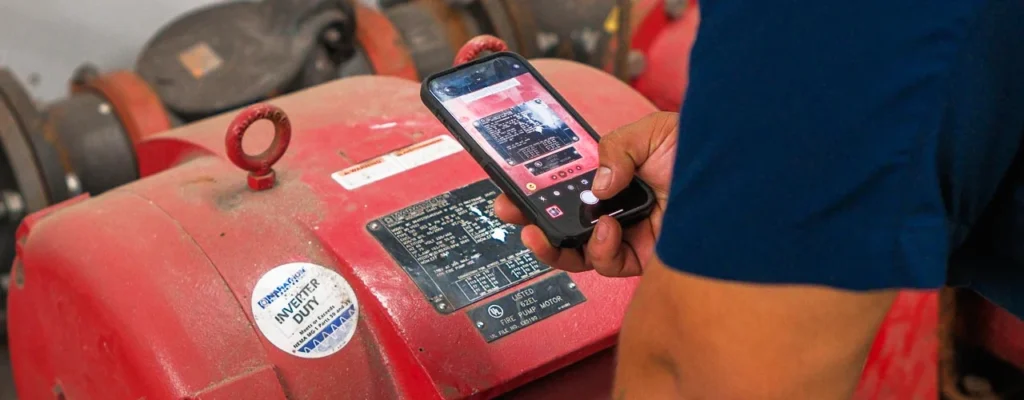
Before diving deeper, record alarm history, selector switch position, visible status lights, breaker positions, and whether the issue appeared after a shutdown, service visit, weather event, or BMS change. That simple discipline often turns a messy troubleshooting session into a short and useful one.
Power and incoming supply checks that prevent repeat outages
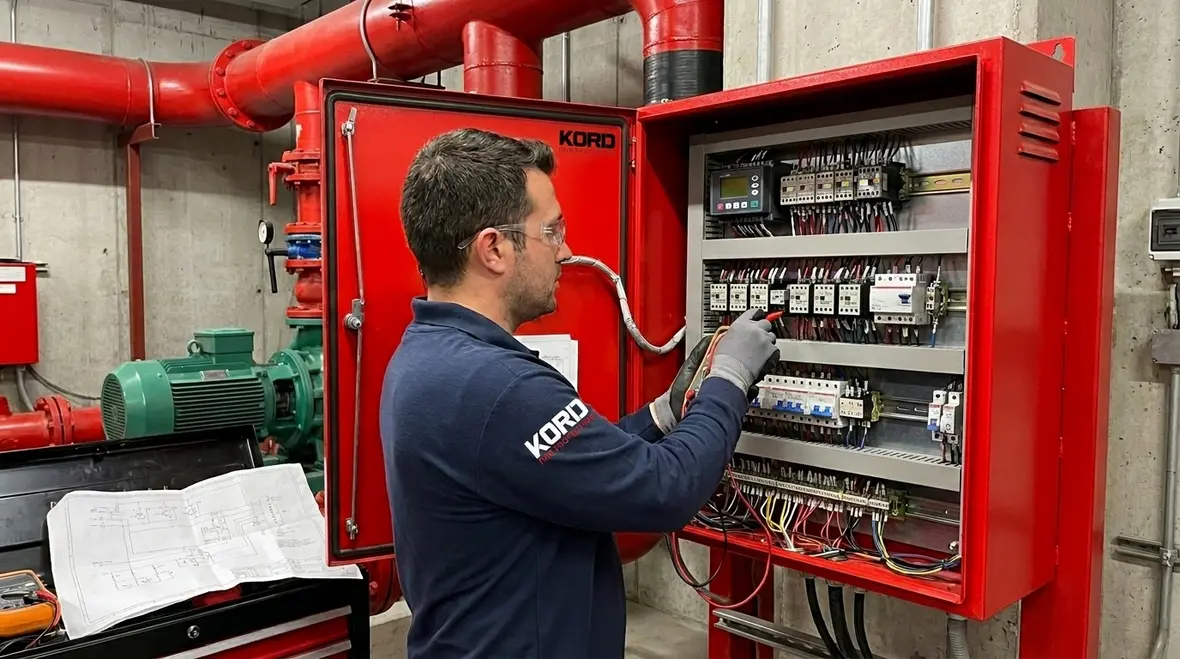
When power feeds wobble, control circuits can misbehave. Therefore, technicians should begin with incoming supply checks: measure voltage at the panel, verify phase balance, and confirm protective device ratings. If the panel uses an emergency source or changeover arrangement, that path must also be verified.
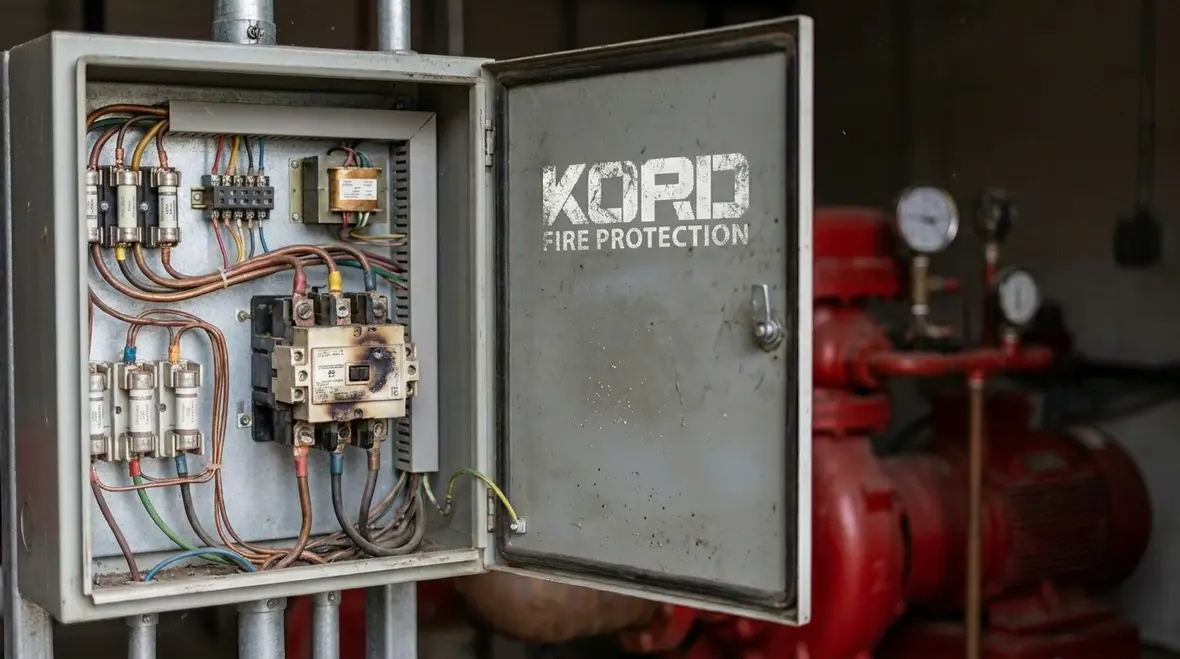
Next, inspect fuses, breakers, and terminal block seating. Loose conductors can create heat and intermittent faults that show up like a ghost. Then, check control transformer output and confirm the correct secondary voltage. If the transformer runs hot or the output voltage drops under load, the panel can reset at startup, which leads to confusing fault patterns.
Finally, confirm grounding and bonding. A poor ground path can trigger sensor errors, false trips, and communication problems. In industrial environments across Australia, where electrical noise can ride along long cable runs, solid bonding becomes the difference between stable operation and constant troubleshooting.
Why stable supply matters more than people think
A panel cannot make smart decisions with unstable power. If the controller browns out during start demand, every downstream signal can look guilty even when it is innocent. That is why supply verification belongs at the front of the process, not buried halfway through after everyone has already blamed the pressure switch.
Control logic failures and input signal problems
Once power checks pass, attention moves to signals that command the pump. Fire pump electrical control panels rely on input states such as pressure switch or transducer feedback, flow status, tank level or pressure maintenance conditions, and remote start commands. If any input misreports, the panel may refuse to start or may run continuously.
Technicians should verify sensor calibration dates, then test the input wiring. For pressure switches, check continuity and verify the switch operates at the correct setpoint. If a transducer feeds an analog signal, test for correct signal range and ensure wiring is shielded where required.
In addition, inspect control switches and selector positions. A system locked in the wrong mode can create delays that look like electrical failure. It sounds simple, yet teams still lose time chasing a “dead motor” that is actually a control interlock.
And when a site recently upgraded BMS or changed a relay interface, the control logic may have been subtly altered. Therefore, technicians should compare panel programming settings to the approved commissioning records. If changes exist without documentation, that is a red flag worth treating seriously.
Use approved records, not memory
A surprising number of control headaches come from undocumented changes. Someone adjusts a threshold, swaps a relay interface, or re-labels a circuit, and months later the panel behaves like it developed a personality. Comparing live settings to commissioning documents keeps the diagnosis grounded in facts.
Motor starter and contactor issues that cause cycling
If the motor starter engages and then disengages quickly, the panel may show a starter fault, overload trip, or phase issue. Therefore, technicians should inspect starter components: contactor contacts, coil integrity, overload relay settings, and interlock paths. Over time, contactor pitting reduces grip and increases resistance, which leads to heat and premature failure.
Technicians can also test for mechanical sticking. If the starter mechanism binds, the control may signal “start,” but the power contacts never fully close. After that, the system may attempt again and again, which can chew through parts and annoy anyone who has to reboot the panel at three in the morning. That is not a lifestyle; it is a schedule.
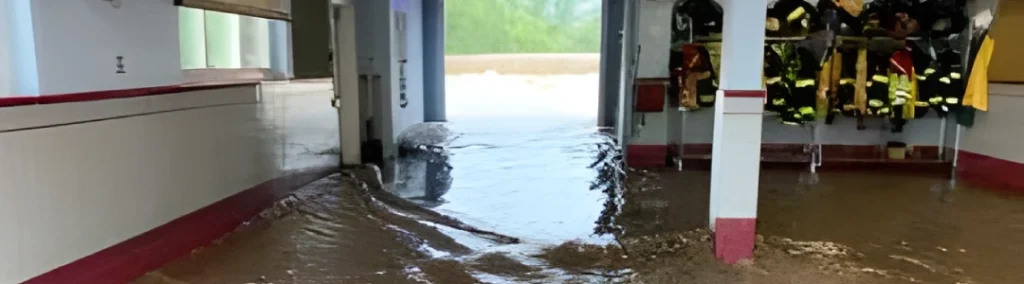
Next, check cabling between starter and motor for damage, water ingress, or insulation breakdown. In humid or coastal regions of Australia, moisture can creep into conduits and create ground faults. When ground fault protection trips during startup, the panel may log alarms that seem like logic errors, but the cause sits in power wiring.
Also verify motor overload devices. If overload settings drift from the original commissioning values, the system can trip early under normal starting current. So, the best practice is to confirm settings against original documentation and manufacturer guidance.
Cycling faults rarely stay isolated for long
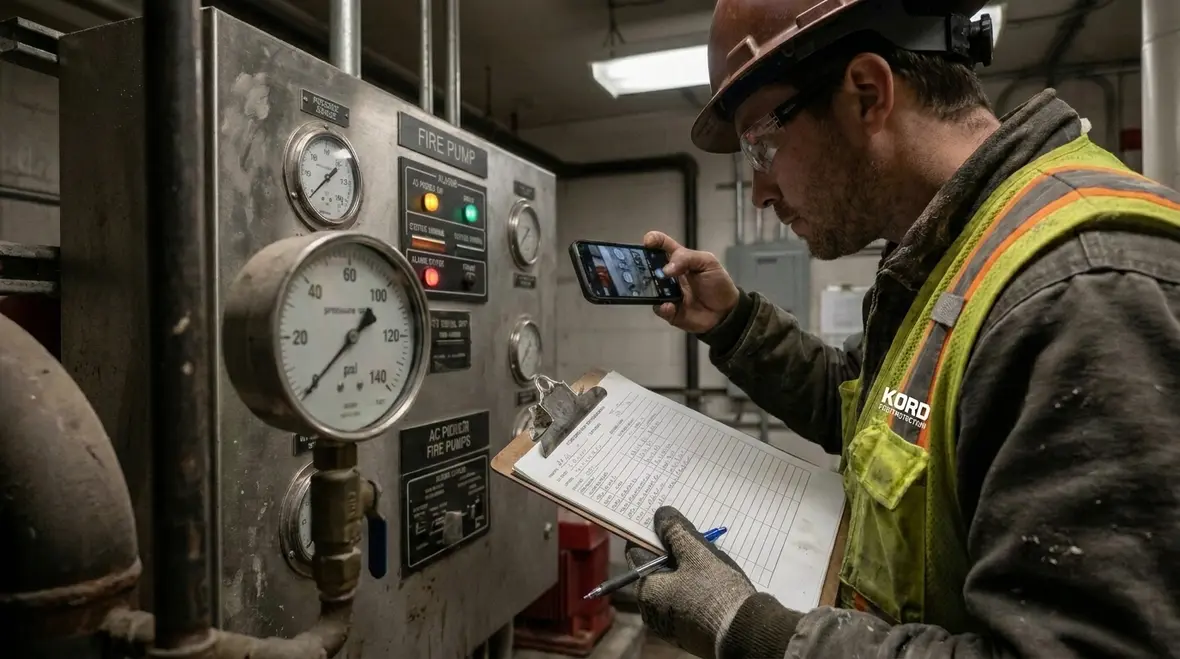
Repeated cycling is not just annoying. It creates heat, mechanical wear, and secondary faults that muddy the original problem. A starter issue can become a cable issue, then a relay issue, then a staff morale issue. Catching the first failure point saves parts, time, and several unnecessary conversations.
Pressure control, alarms, and nuisance trip prevention
Fire pump operation must hold the right pressure and respond quickly to demand. Consequently, technicians should analyze how the panel handles pressure control and alarms. If pressure rises too slowly, it can indicate a valve issue or a feedback mismatch. If pressure overshoots and oscillates, the control algorithm or setpoint tuning may need adjustment, provided the site allows controlled changes within compliance limits.
Next, examine alarm circuits and indication lights. Faulty auxiliary contacts or stuck relays can trigger nuisance alarms even when the pump performs correctly. Technicians should test relay coil supply and verify relay contacts switch cleanly under load.
For systems with remote signaling, verify communication paths between the panel and alarm interfaces. Faults sometimes originate in external wiring or signal modules, not inside the panel enclosure. Additionally, check the panel’s watchdog or supervision functions where fitted. If the panel supervises field sensors, the supervision may react to intermittent sensor signals.
To reduce nuisance events, technicians should also verify that drains, vents, and seals remain intact. A wet control enclosure can create small leakage currents that look random. Therefore, a quick visual inspection and insulation resistance test can prevent weeks of “why is it doing that” moments.
And yes, sometimes the simplest fix is the one nobody wants to do: tighten connections, clean terminals, and re-check cable glands. It is glamorous work, like polishing a trophy no one asked for.
Testing, documentation, and compliance across Australian sites
Industrial and commercial facilities across Australia often face strict compliance expectations. Therefore, troubleshooting should not end at “it works now.” Teams should document what they found, what they replaced or adjusted, and what tests confirm safe operation. That includes recording measurements, verifying start and run behavior, and checking alarm and supervisory functions.
Where applicable, technicians should perform functional checks that simulate demand and confirm the panel initiates the correct pump start sequence. They should also verify that stop conditions align with approved operating logic. In addition, inspection of labeling, circuit identification, and panel schedules matters for audit readiness.
This is where Kord Fire Protection can become a vital partner. They can support the service job with a broader fire protection perspective, help coordinate documentation, and ensure that panel repairs integrate properly with the site protection plan. In other words, they help the facility avoid a patchwork approach that later causes rework during inspections or commissioning reviews.
For facilities managers, the value is clear: less downtime, cleaner records, and a stronger path to system reliability. If backup power stability is part of the wider concern, Kord’s Fire Alarm System Reliability and Battery Health article is a useful companion because it emphasizes the same principle: dependable performance comes from disciplined verification, not assumptions. ([kordfire.com](https://kordfire.com/fire-alarm-system-reliability-and-battery-health/?utm_source=openai))
Good paperwork saves real time later
Clear records help the next technician, the facility manager, and the auditor. More importantly, they help the site avoid solving the same problem twice. A neat fault history is less exciting than emergency troubleshooting, but it is also far less expensive.
Working with Kord Fire Protection for faster, safer outcomes
In industrial, retail, and commercial environments, the control panel may not exist in isolation. It connects with pump hardware, detection systems, water supply arrangements, and external alarm pathways. Therefore, a partner that understands fire protection holistically can speed up troubleshooting and reduce the risk of missing related issues.
Kord Fire Protection can support a service workflow that starts with fault capture and ends with verified performance. They can help teams understand which tests matter most for the specific site arrangement, and they can align the service work with compliance expectations. That reduces the chance of “fixing” a symptom while leaving the real cause intact.
Plus, when multiple trades overlap, coordination matters. Kord Fire Protection can act as a stabilizing force so the panel does not become the blame game trophy at the next site meeting.
FAQ
Conclusion
Troubleshooting fire pump electrical control panels works best when teams diagnose methodically, verify inputs and power, and document every finding. A good process narrows the problem quickly, reduces repeat failures, and keeps the site better prepared for audits, inspections, and future maintenance.
When sites need speed, compliance clarity, and fewer repeat callouts, Kord Fire Protection can serve as a vital partner. If your industrial or commercial facility faces faults, cycling starters, or unreliable starts, contact Kord Fire Protection to schedule an expert assessment and get the system back on dependable duty.

Join Our Newsletter!
Get the latest fire safety tips delivered straight to your inbox From our Newsletter.