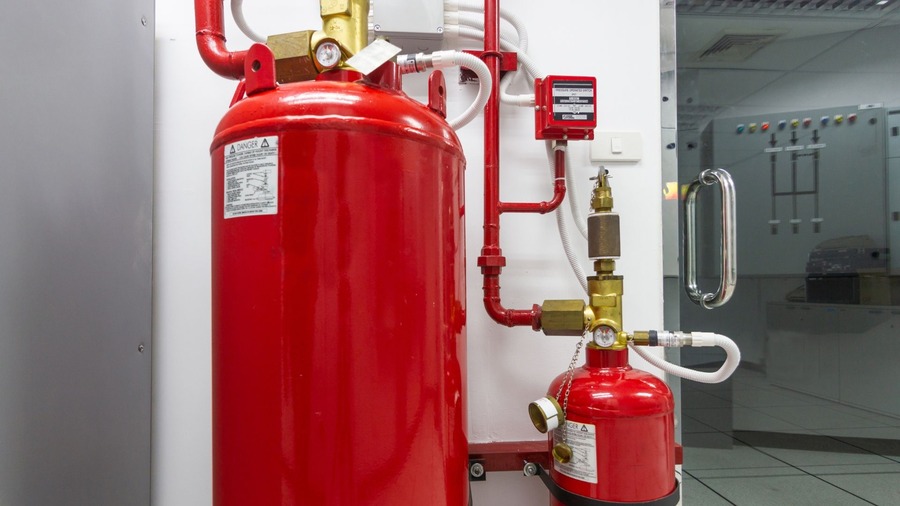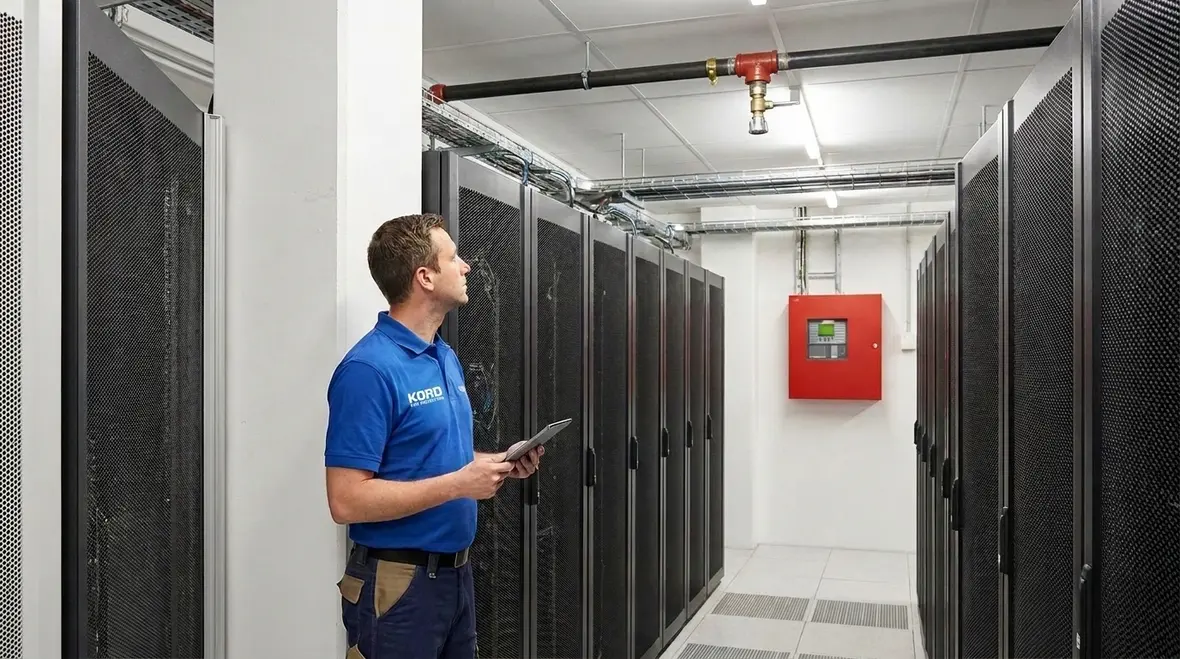
NFPA 2001 Section 6.1 Clean Agent Fire Suppression Checklist
Quick Answer
NFPA 2001 Section 6.1 sets the foundation for clean agent fire suppression design by demanding a careful system check from room size to agent flow, enclosure tightness, and release timing. For industrial, retail, and commercial sites across Australia, that means safer assets, less downtime, and a system that works when it matters most. Kord Fire Protection can help guide, design, install, and maintain that system with practical expertise.
If you are planning upgrades or a new protected space, Kord Fire’s clean agent fire suppression services fit naturally into this conversation because design, installation, testing, and maintenance all need to work as one joined up strategy. That support becomes even more useful when Section 6.1 starts asking the kinds of questions that expose weak assumptions before they turn into expensive surprises.
NFPA 2001 Section 6.1 Master System Design Checklist for Clean Agent Fire Suppression
NFPA 2001 system design requirements clean agent fire protection do not leave much room for guesswork. That is the point. In a world where one bad electrical fault can turn a control room, server space, or plant area into a very expensive campfire, Section 6.1 gives designers a clear path. It asks the right questions early, before anyone bolts hardware to a wall and hopes for the best. For Australian facilities, this matters even more because clean agent systems often protect critical operations that cannot afford long shutdowns or water damage.
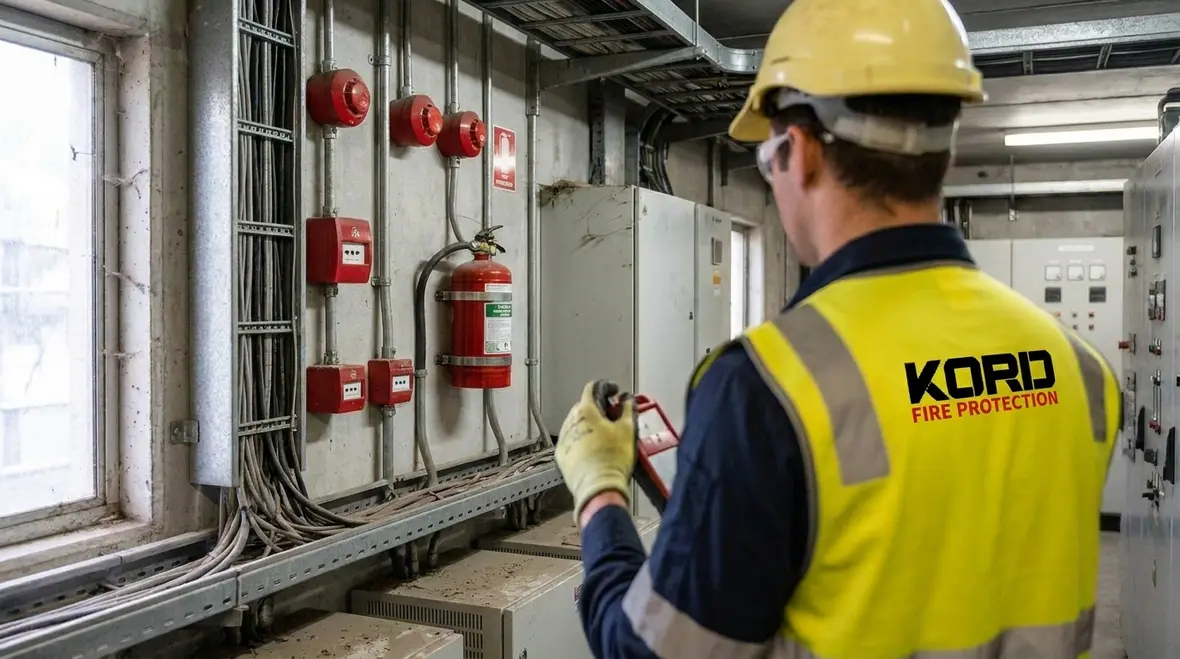
What Section 6.1 Really Demands
A system that works in the real room, not just on paper
Section 6.1 focuses on the overall system design process. In simple terms, it checks whether the system can do its job in the real room, not just on paper. It covers agent quantity, enclosure integrity, discharge time, nozzle placement, and the protected hazard itself. Therefore, the designer must confirm that every part of the room supports the clean agent fire suppression plan.
That means the system must match the hazard class, the room volume, and the risk level. It also means the design must suit the site, whether the space is a telecom room, a switch room, a data hall, a museum storage area, or an industrial control area. Because if the system is sized like a one size fits all suit, it will fit about as well as a tuxedo on a forklift.
Design Checklist for Clean Agent Fire Suppression
Core checks before the system goes live
Before a system goes live, the design team should review these points:
- Confirm the exact hazard area and what needs protection
- Measure room volume, ceiling height, and hidden voids
- Check what goods, equipment, and cable runs sit inside the space
- Verify the required agent concentration for the fire risk
- Test enclosure tightness so the agent stays in the room long enough
- Plan nozzle layout for even discharge across the protected area
- Review detection speed, alarms, and release controls
- Check shutdown links for power, ventilation, and fuel sources
- Confirm safe egress and warning signs for staff
- Document inspection, maintenance, and test needs from day one
Each item matters. Moreover, each one affects the others. A room can have the correct agent amount and still fail if leakage pulls the concentration down too fast. Likewise, a great nozzle layout cannot fix a poor hazard assessment. The system must work as one complete chain.
How the Design Process Works in Real Facilities
From site survey to hold time confidence
Industrial and commercial sites across Australia often use clean agents because the protected assets are too valuable for water based suppression. For example, a retail distribution hub may need to protect electrical rooms that support refrigeration, POS systems, and building control equipment. Meanwhile, a manufacturing site may need to protect control panels that keep production moving. In both cases, the design must reduce fire risk without causing extra damage.
The process usually starts with a site survey. Next, the team checks the room structure, openings, doors, cable penetrations, and service ducts. After that, they calculate the agent volume and confirm that the discharge can reach full design concentration fast enough. Because the room may leak agent after release, the design also has to account for hold time. In other words, the system should not behave like a magician with a hole in the hat.
This is also where related testing becomes essential. A clean agent design can look brilliant in drawings and still underperform once real world leakage, duct paths, or unnoticed penetrations enter the picture. That is why Kord Fire’s guidance on clean agent suppression systems and room integrity testing is such a useful companion topic. Enclosure performance is not a side quest. It is part of whether the whole plan actually works.
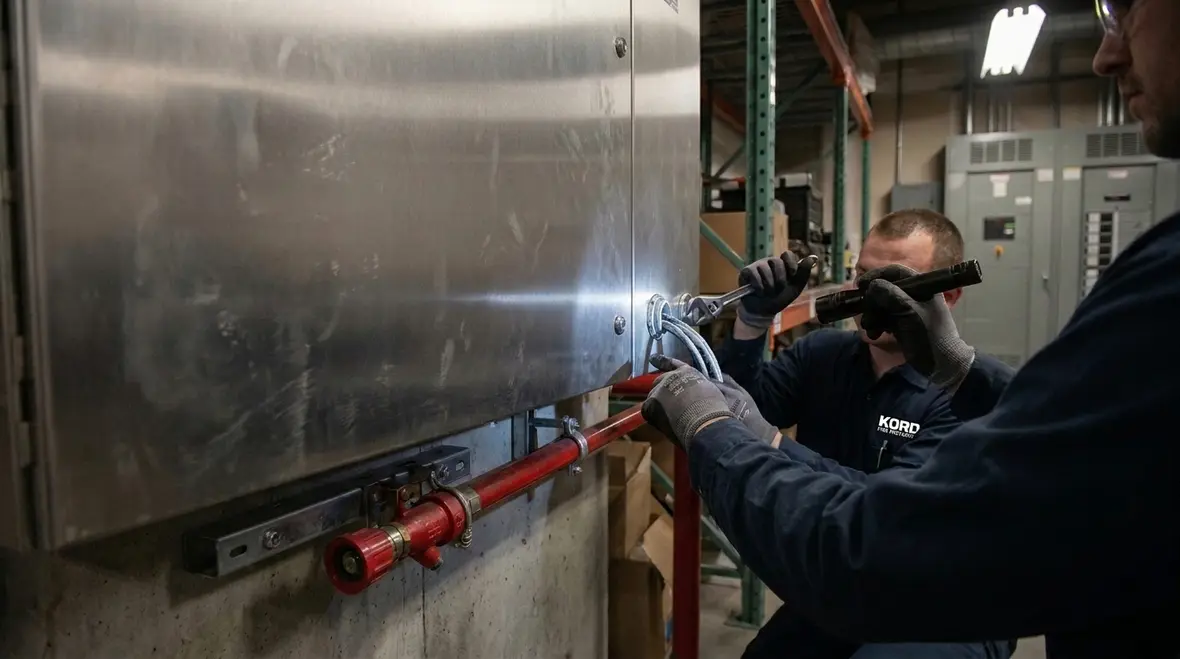
Dual Column Guide for Master Design Checks
| Design Area | Why It Matters |
| Enclosure tightness | Keeps the clean agent in place long enough to suppress fire |
| Nozzle coverage | Supports even agent spread across the whole risk area |
| Detection speed | Helps release the agent before fire spreads |
| Shutdown controls | Stops ventilation and fuel sources that can weaken the system |
| Room use | Ensures the design matches the real business activity in the space |
This simple guide helps project teams keep their focus on the checks that influence system performance most. It is especially useful during design review meetings, retrofit planning, and final verification before handover. When everyone can see how each design area links to system success, the conversation gets sharper and the paperwork parade becomes a little less theatrical.
It also creates a practical framework for ongoing review. If the room changes, if equipment loads increase, or if new penetrations appear, the table gives the team a quick way to reassess what might have been weakened. That kind of discipline is what keeps compliance from becoming a dusty binder on a shelf.
Why Kord Fire Protection Adds Real Value
Beyond product supply and basic compliance
Kord Fire Protection can become a vital partner because clean agent systems need more than products. They need proper design thinking, site knowledge, and ongoing care. A strong provider helps businesses move from basic compliance to real protection. That includes design review, installation support, testing, and maintenance planning.
Just as important, Kord Fire Protection can help site managers understand the trade offs before they become costly mistakes. For example, if a room changes use, adds new cable paths, or gains extra openings, the original design may no longer perform as intended. Therefore, a trusted partner helps keep the system aligned with the building as it evolves. And buildings do evolve, often with the grace of a plot twist in a Netflix series.
For readers who want a broader standards overview, Kord Fire also has a dedicated resource on NFPA 2001 guidelines for clean agent fire suppression systems. It fits naturally here because Section 6.1 is one part of a much larger conversation about how these systems are selected, designed, installed, and kept ready for real incidents.
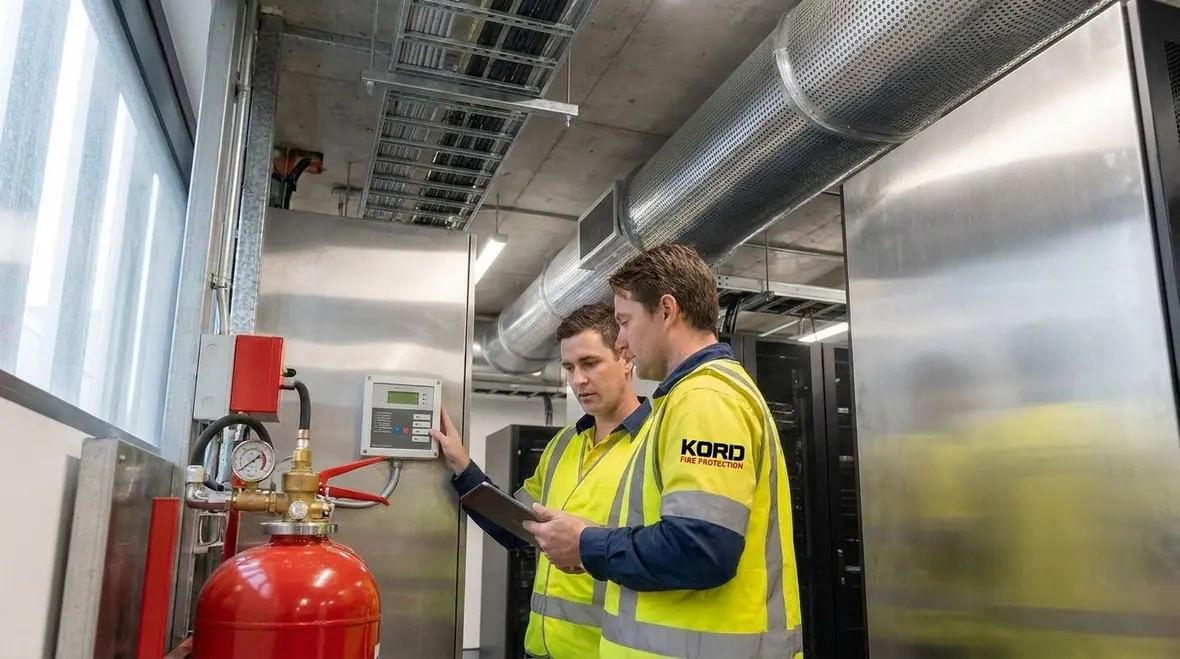
Common Mistakes to Avoid
The usual ways a strong design gets weakened
Many clean agent projects run into the same trouble spots. First, teams sometimes treat the hazard review like a box ticking exercise. Second, they may ignore small gaps around doors or cable entries. Third, they may assume a previous design still fits after a renovation. However, these gaps can reduce system performance fast.
Another common issue involves poor coordination between fire protection, electrical, and mechanical trades. When that happens, someone installs a vent, cable tray, or opening that weakens the enclosure. So the design team must stay involved through the full project, not just the first meeting and the paperwork parade.
One more mistake is treating maintenance like an afterthought. Clean agent systems are not decorative cylinders with commitment issues. They need routine checks, documentation, and periodic review whenever the room or hazard changes. The more critical the protected assets, the less room there is for casual assumptions.

FAQs
Conclusion
NFPA 2001 Section 6.1 gives businesses a clear path to better clean agent fire protection, but the real value comes from proper design and care. For Australian industrial, retail, and commercial facilities, Kord Fire Protection can help turn that standard into a practical, reliable system.
If the site needs a clean agent solution that is built with purpose, expert support should come first. The right checklist is not just paperwork. It is the difference between a system that looks compliant and one that actually shows up ready to work when the room tries to audition for a disaster movie.

Join Our Newsletter!
Get the latest fire safety tips delivered straight to your inbox From our Newsletter.