Fire Extinguisher Types Explained: ABC, CO2, Clean Agent, Wet Chemical, and More
Fire Extinguisher Types Explained: ABC, CO2, Clean Agent, Wet Chemical, and More
When people search for fire extinguisher types explained, they usually want straight answers. What do the letters mean. Which one goes in the kitchen. Why can one extinguisher save a server room while another ruins it. Within the first few minutes of any safety walkthrough, Kord Fire Protection technicians explain that not all fires burn the same, and therefore not all extinguishers fight the same. ABC, CO2, clean agent, and wet chemical models each serve a clear purpose. The right choice protects property and lives. The wrong choice can make a bad day worse. This guide walks through each type with clarity, confidence, and just enough wit to keep the smoke alarms from sounding in boredom.

The Science Behind Fire Classes and Why They Matter
Before diving into the cylinders themselves, it helps to understand the fire classes they combat. After all, extinguishers respond to fuel sources, not just flames. Kord Fire Protection technicians often begin training sessions by drawing a simple triangle on a whiteboard. Fuel. Heat. Oxygen. Remove one, and the fire collapses like a villain at the end of an action movie.
- Class A involves ordinary combustibles like wood, paper, cloth, and some plastics.
- Class B covers flammable liquids such as gasoline, oil, and solvents.
- Class C involves energized electrical equipment.
- Class D applies to combustible metals.
- Class K targets cooking oils and fats found in commercial kitchens.
Because each fire behaves differently, extinguishers use different agents to remove heat, displace oxygen, or interrupt the chemical reaction. Therefore, choosing correctly is not a suggestion. It is a responsibility. For a deeper dive into how NFPA 10 classifies these extinguishers and matches them to hazards, Kord Fire’s overview of portable extinguisher guidelines is a handy companion read.
NFPA 10: Portable Fire Extinguisher Guidelines expands on these classes and explains how codes translate into real-world layouts and mounting requirements.
ABC Fire Extinguishers and Their Versatility
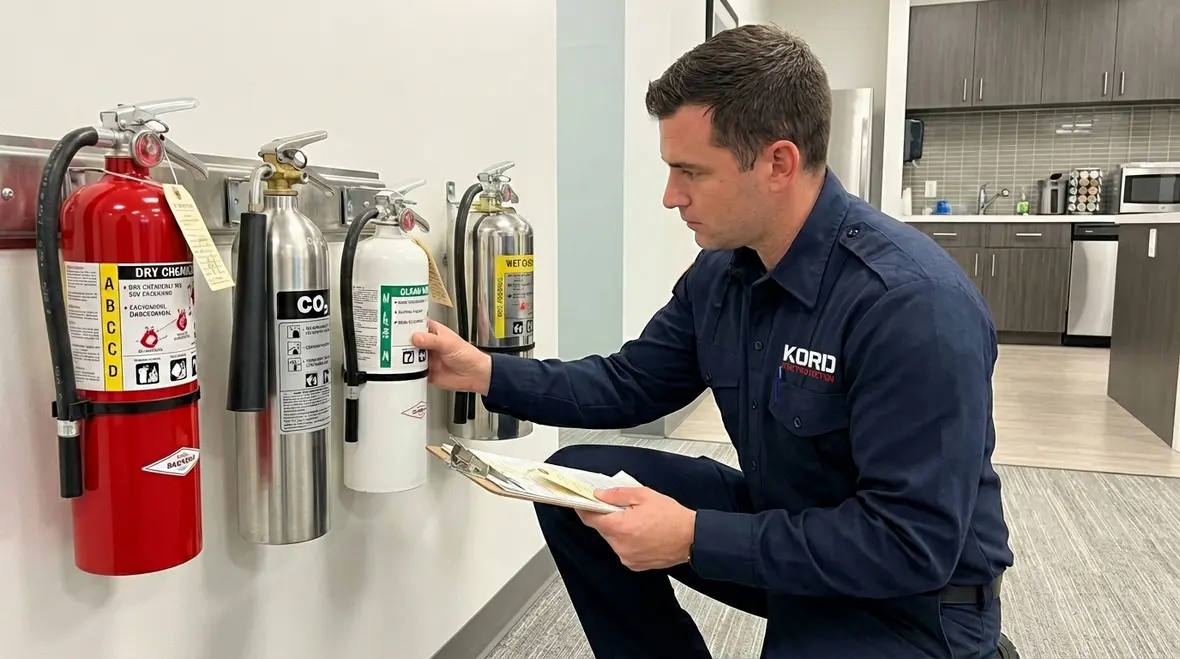
Among all models, ABC extinguishers are the multitaskers. If they had a résumé, it would be three pages long. They handle Class A, B, and C fires, which makes them common in offices, retail spaces, schools, and homes.
These units typically use a dry chemical agent known as monoammonium phosphate. When discharged, the powder coats the burning material and interrupts the chemical reaction. In addition, it creates a barrier between fuel and oxygen.
Kord Fire Protection technicians explain that while ABC extinguishers are versatile, they do leave residue. That fine yellow powder travels farther than most people expect. Consequently, cleanup can become extensive, especially around electronics. Still, for general protection, ABC units provide broad coverage and reliable performance.
They are often the first line of defense because they address the most common fire risks found in commercial buildings. However, they are not ideal for every setting. For example, a data center manager might hesitate before spraying powder over a million dollars in servers. Understandably so.
CO2 Extinguishers for Electrical and Liquid Fires
Carbon dioxide extinguishers specialize in Class B and Class C fires. Instead of powder, they release a high pressure cloud of CO2 gas. This gas displaces oxygen and cools the fire source.
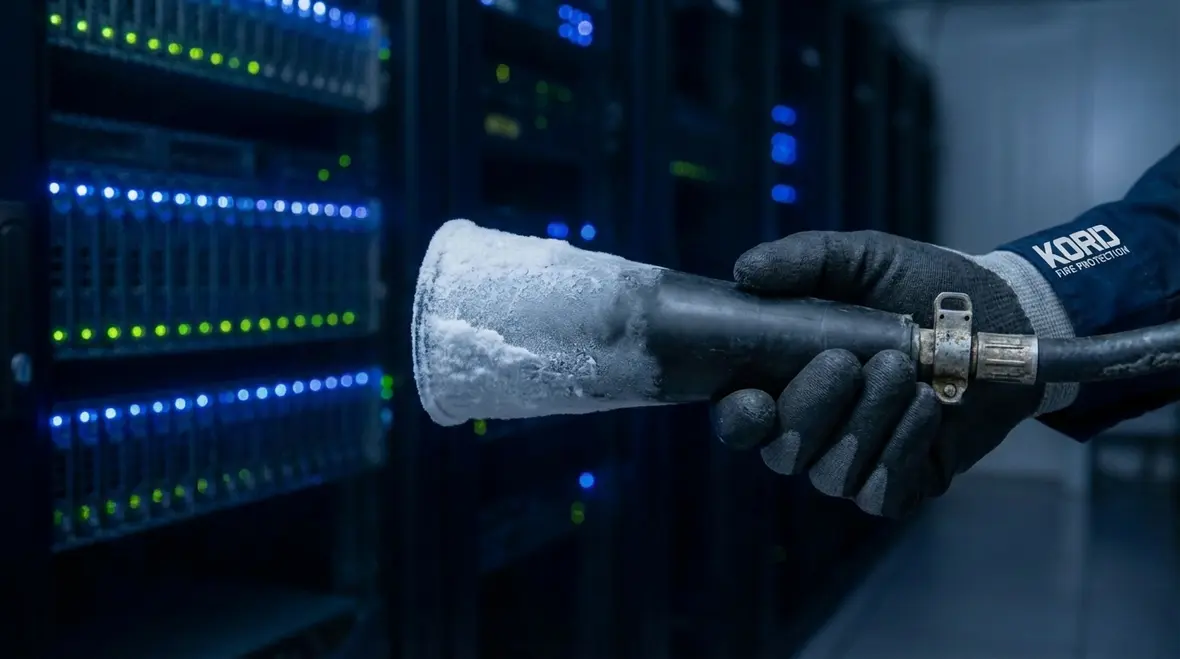
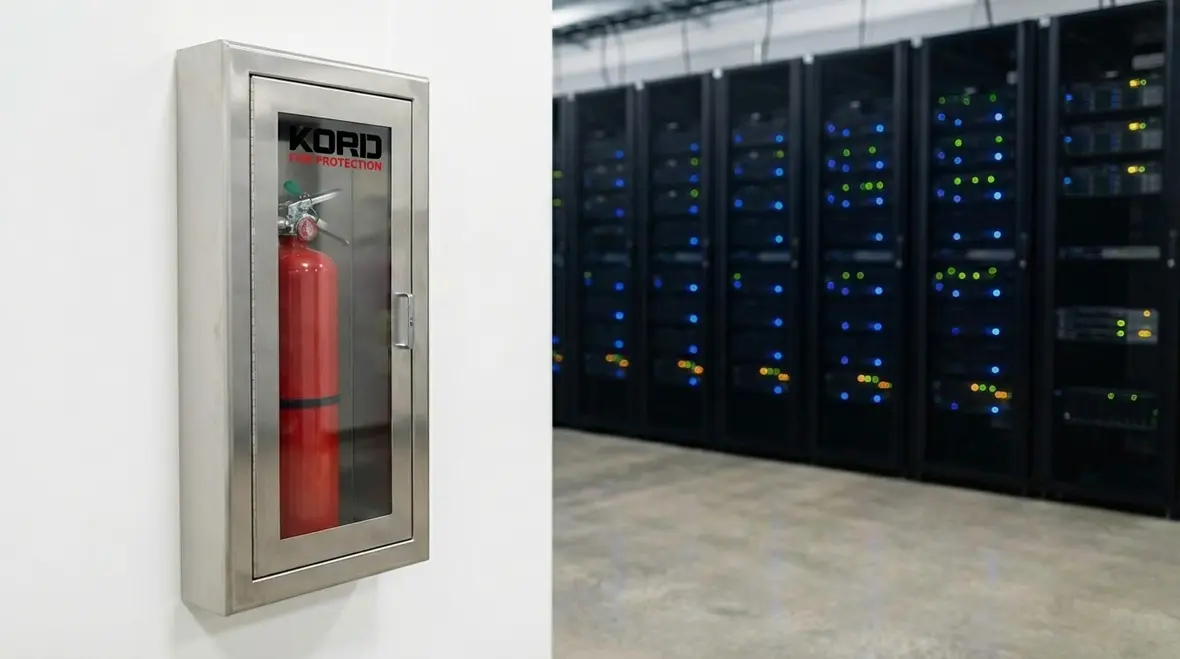
Because CO2 leaves no residue, it works well in areas with sensitive equipment. Server rooms, laboratories, and electrical panels benefit from its clean discharge. Moreover, the horn design helps direct the gas precisely where it is needed.
Kord Fire Protection technicians often demonstrate how cold the discharge becomes. The horn can frost over within seconds. Therefore, users should avoid touching the horn during operation. No one wants a frostbite story during a safety meeting.
Although CO2 extinguishers work effectively on liquid and electrical fires, they do not perform well on Class A materials. Since they do not soak into porous materials, the fire can reignite. For that reason, technicians recommend pairing CO2 units with other types in mixed risk environments.
Clean Agent Systems for Sensitive Environments
Clean agent extinguishers protect high value assets without leaving residue. They use agents such as FM 200 or similar compounds that interrupt the chemical reaction of fire at a molecular level. As a result, they extinguish flames quickly and evaporate without damaging equipment.
Data centers, medical facilities, museums, and telecommunication hubs rely on clean agents. In these spaces, water or powder would cause as much harm as the fire itself. Consequently, facility managers invest in solutions that balance speed with preservation.
Kord Fire Protection technicians explain that clean agent extinguishers are safe for occupied spaces when used properly. Nevertheless, rooms should still be ventilated after discharge. Safety never takes a day off.
Additionally, these systems often integrate with automatic detection systems. When heat or smoke triggers the system, the agent releases within seconds. That swift response can mean the difference between a minor incident and a headline. To see how modern clean agent systems are designed around NFPA 2001 and emerging environmental standards, Kord’s dedicated clean agent resources are worth bookmarking.
NFPA 2001 guidelines for clean agent fire suppression systems unpack the code side, while the clean agent fire suppression services page shows how those guidelines translate into real-world system design and maintenance.
Wet Chemical Extinguishers for Commercial Kitchens
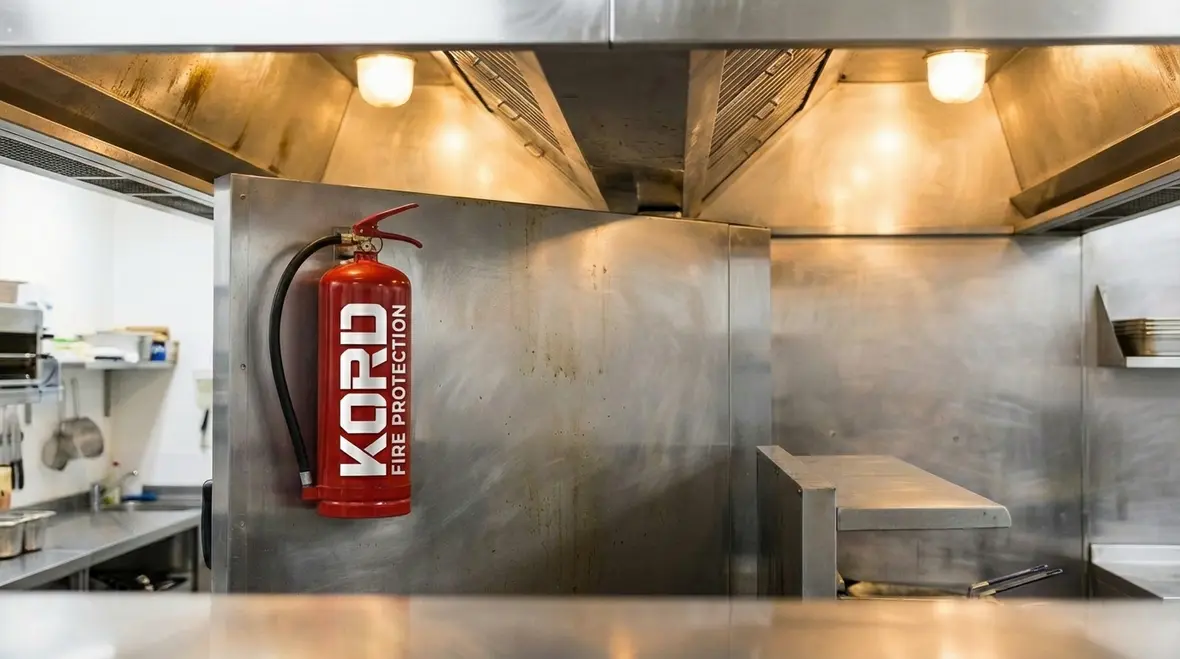
Commercial kitchens present a unique hazard. Cooking oils burn hotter and behave differently than gasoline or paper. When water hits burning grease, the result can look like a fireworks finale gone wrong.
Wet chemical extinguishers address Class K fires. They discharge a potassium based solution that reacts with hot oils to create a soapy foam layer. This process, called saponification, seals the surface and prevents re ignition.
Kord Fire Protection technicians emphasize that restaurants require properly rated extinguishers near cooking equipment. In addition, many jurisdictions mandate automatic suppression systems within hoods. The handheld wet chemical unit acts as backup protection.
Because kitchens operate at high temperatures daily, staff training becomes critical. Therefore, technicians conduct regular inspections and demonstrations to ensure employees know exactly when and how to respond.
Specialty Extinguishers for Unique Hazards
While ABC, CO2, clean agent, and wet chemical units cover most scenarios, certain industries require specialized solutions.
Class D extinguishers address combustible metals such as magnesium or titanium. These fires burn intensely and react violently to water. Accordingly, Class D agents use dry powders designed specifically for metal fires. Foundries, laboratories, and manufacturing plants often rely on them.
Water mist extinguishers represent another option. They discharge deionized water in a fine mist that cools and reduces oxygen. Because the droplets are non conductive, they can work on some electrical hazards. However, technicians always verify compatibility with the specific environment.
Each specialty unit exists for a reason. Therefore, a one size fits all mindset does not belong in fire protection planning.
Choosing the Right Extinguisher for a Facility
Selecting the correct equipment involves more than reading a label. Kord Fire Protection technicians conduct site assessments to evaluate layout, occupancy type, fuel sources, and regulatory requirements. They consider square footage, travel distance to exits, and potential ignition points.
Column One: Common Facility Type
- Office building
- Restaurant kitchen
- Server room
- Manufacturing plant
- Retail store
Column Two: Typical Recommended Extinguisher
- ABC units with supplemental CO2 near electrical panels
- Wet chemical with hood suppression system
- Clean agent or CO2
- ABC plus Class D if metals present
- Primarily ABC units
Although this overview provides guidance, technicians tailor final decisions to local codes and specific hazards. Consequently, no two protection plans look exactly alike.
If you operate in California, Kord’s location-specific guides, such as their guidelines for fire extinguishers in Anaheim or their county fire protection service pages, show how these recommendations shift with local requirements.
Fire Extinguisher Types Explained for Business Owners Seeking Compliance
Business owners often ask how to stay compliant without drowning in regulations. The answer begins with understanding extinguisher ratings and inspection schedules.
First, every extinguisher must carry a visible label indicating its class rating. Second, facilities must mount units at proper heights and within required travel distances. Third, monthly visual inspections and annual maintenance checks remain mandatory in most jurisdictions.
Kord Fire Protection technicians handle these inspections with methodical care. They check pressure gauges, examine hoses, verify mounting brackets, and document findings. Moreover, they ensure that employees understand the PASS method. Pull the pin. Aim at the base. Squeeze the handle. Sweep side to side.
Compliance is not simply about avoiding fines. Instead, it ensures readiness. When a small flame appears under a desk or behind a fryer, seconds matter. Properly maintained equipment transforms panic into controlled action. For a focused look at servicing intervals, Kord’s article on how often a fire extinguisher needs to be serviced walks through NFPA and OSHA expectations in plain language.
How often does a fire extinguisher need to be serviced? breaks down monthly inspections, annual maintenance, and hydrostatic testing in a way that pairs perfectly with this types overview.
Common Mistakes People Make With Extinguishers
Even with detailed guidance, mistakes happen. However, awareness prevents repeat errors.
- Using water on grease fires, which spreads flames rapidly.
- Choosing an undersized unit for a large hazard area.
- Blocking access with storage boxes or furniture.
- Ignoring expired inspection tags.
- Failing to train staff on proper use.
Kord Fire Protection technicians frequently remind clients that extinguishers are for small, contained fires only. If flames climb walls or heavy smoke fills the room, evacuation becomes the priority. No hero speeches required.
FAQ About Fire Extinguishers
Conclusion and Next Steps
Understanding extinguisher options turns confusion into confidence. From ABC versatility to clean agent precision, each tool serves a clear purpose. Kord Fire Protection technicians stand ready to assess facilities, recommend compliant solutions, and provide hands on training that empowers teams to act quickly and safely. Do not wait for smoke to test preparedness. Schedule a professional evaluation today and ensure every corner of the building holds the right protection at the right time.
If you are ready to match the right extinguisher types to your hazards, explore Kord Fire’s regional service hubs and suppression offerings. Their Sacramento County fire protection services page is one example of how they bundle extinguishers, training, and suppression systems into a single, code aligned plan.
For facilities with mixed risks, including kitchens, data rooms, and industrial spaces, the clean agent fire suppression services overview shows how portable extinguishers and engineered systems work together. Wherever your building sits on the map, Kord’s fire extinguisher and suppression teams make it easier to stay compliant, protected, and ready.
Know Your Weapon Before You Fight the Flame
Kord Fire Protection is your go-to when it comes to all things fire protection. For over 20 years, we’ve been serving Southern California with the quality service and equipment to keep your home or business safe at all times. Our competitive prices reflect our unwavering commitment to protecting what matters most in the event of a fire emergency. Give us a call, send an email, or use that form!

Join Our Newsletter!
Get the latest fire safety tips delivered straight to your inbox From our Newsletter.