

Best Electrical Fire Extinguisher for Live Equipment
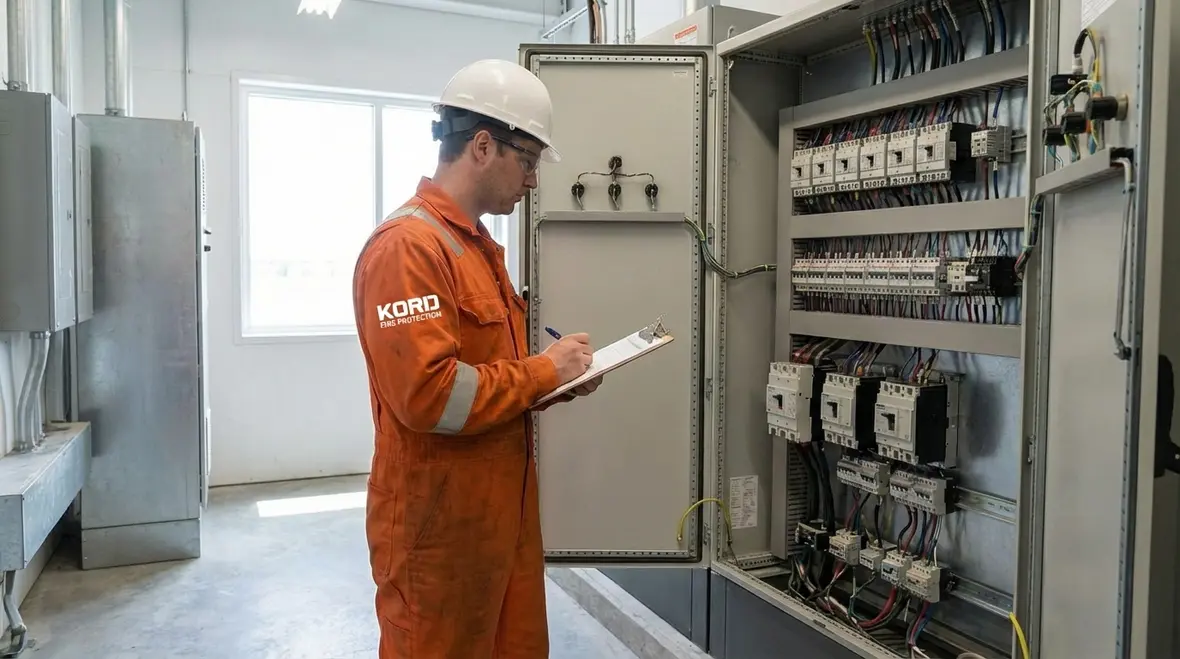
Electricity powers modern life. It lights offices, runs hospitals, and keeps coffee machines humming on a Monday morning. However, when something goes wrong, sparks can turn into flames in seconds. That is where our electrical fire extinguisher becomes more than a red cylinder on the wall. It becomes a first line of defense. Kord Fire Protection technicians often explain that not every extinguisher works on live equipment. In fact, using the wrong one can make a bad situation worse. Therefore, knowing what to use for energized systems is not just helpful. It is critical.
This guide walks through what works, what does not, and why trained professionals insist on the right tool for the job. Because when electricity meets fire, guesswork should stay far away.

Understanding Fires Involving Live Electrical Equipment
Electrical fires start differently from ordinary fires. While a trash bin blaze may begin with paper and heat, an electrical fire often begins inside wiring, panels, outlets, or machinery. Faulty insulation, overloaded circuits, and short circuits create intense heat. As a result, nearby materials ignite.
However, the real danger lies in the live current. Water and certain extinguishing agents conduct electricity. Therefore, spraying the wrong substance can send current through the stream and into the person holding it. That is not bravery. That is a shortcut to the emergency room.
Kord Fire Protection technicians frequently remind clients that electricity itself does not burn. Instead, it ignites surrounding materials. Yet as long as the power source remains active, the fire remains energized. Consequently, the extinguisher must handle both flame and electrical risk at the same time.
In addition, live equipment may reignite if the power stays on. That is why isolating the power supply is always the first choice when safe to do so. Still, when immediate action is required, selecting the correct suppression method makes all the difference.

Which Fire Extinguisher Is Safe For Electrical Fires?
For live electrical equipment, professionals recommend non conductive extinguishing agents. Most commonly, these include:
1. Carbon Dioxide CO2 Extinguishers
CO2 extinguishers displace oxygen and cool the fire. Because carbon dioxide does not conduct electricity, it is safe for energized equipment. Additionally, it leaves no residue. That makes it ideal for server rooms, control panels, and offices filled with expensive electronics.
2. Dry Chemical ABC Extinguishers
Dry chemical units interrupt the chemical reaction of fire. They are rated for Class C fires, which involve energized electrical equipment. However, they leave a powder residue. Therefore, cleanup can be extensive, especially around sensitive devices.
3. Clean Agent Extinguishers
Clean agents, such as FM 200 alternatives, suppress flames without residue and without conducting electricity. Consequently, they protect high value electronics while reducing downtime.
Kord Fire Protection technicians often explain it this way. If water is the enthusiastic but reckless hero in an action movie, CO2 is the calm professional who handles the situation without smashing the furniture.
To make sure your extinguishers are properly selected, inspected, and certified, many businesses rely on dedicated fire extinguisher service and certification programs that keep Class C protection ready when it is needed most.
What Never To Use On Live Electrical Equipment
Some extinguishers belong nowhere near energized systems.
Water Extinguishers
Water conducts electricity. Therefore, using it on live equipment risks shock or electrocution.
Foam Extinguishers
Foam contains water. As a result, it carries the same electrical hazard.
Although water works beautifully on wood and paper, electricity changes the rules. Kord Fire Protection technicians emphasize that people often assume all extinguishers are interchangeable. They are not. Using the wrong type can spread flames or injure the operator.
In short, if the label does not clearly state it is safe for Class C fires, it should not approach live electrical equipment.
How Professionals Evaluate Electrical Fire Risk
Choosing the correct extinguisher involves more than grabbing the nearest red cylinder. Professionals assess the environment carefully.
Risk Factor
Type of equipment
Voltage level
Room size
Presence of flammable materials
Business operations
Why It Matters
Servers require clean agents to avoid damage
Higher voltage increases shock risk
Small rooms need ventilation planning
Nearby combustibles raise spread potential
Downtime cost influences extinguisher choice
For example, a manufacturing floor with heavy machinery differs greatly from a small office server closet. Therefore, Kord Fire Protection technicians tailor recommendations to each space. They consider compliance codes, equipment sensitivity, and human traffic flow.
Moreover, they ensure proper mounting height and visibility. After all, an extinguisher hidden behind storage boxes helps no one.
Placement And Maintenance Of An Electrical Fire Extinguisher
Even the best extinguisher fails if neglected. Regular inspection ensures pressure levels remain correct and seals stay intact.
Technicians recommend:
Monthly visual checks
Confirm the gauge reads in the green zone and verify no damage exists.
Annual professional servicing
Certified experts examine internal components and verify compliance.
Hydrostatic testing
At required intervals, cylinders undergo pressure testing to confirm structural integrity.
In addition, proper placement reduces response time. Units should sit near exits and high risk areas but not so close that flames block access. It is a bit like parking near the door at a grocery store. Convenient, yes. Blocking the entrance, no.
Kord Fire Protection technicians also train staff on PASS. Pull the pin. Aim at the base. Squeeze the handle. Sweep side to side. Although it sounds simple, practice builds confidence. During an emergency, calm action beats panic every time.
If you are unsure whether your extinguishers are up to date on inspections, recharging, or testing, scheduling dedicated fire extinguisher maintenance and certification can close those gaps before an emergency exposes them.
Why Businesses Rely On Trained Technicians
Fire codes change. Equipment evolves. Liability concerns grow. Therefore, many businesses partner with certified professionals rather than managing compliance alone.
Kord Fire Protection technicians evaluate facilities, install the correct suppression systems, and provide documented inspections. As a result, businesses meet insurance requirements and safety regulations.
Furthermore, technicians educate teams about recognizing early warning signs. Flickering lights, warm outlets, and tripped breakers may signal underlying issues. Addressing these signs early prevents fires altogether.
Because while extinguishers are vital, prevention remains the true hero of the story.
How To Respond When An Electrical Fire Starts
When sparks appear or smoke rises from equipment, time matters. However, rushing without thinking makes things worse.
First, assess personal safety. If flames spread rapidly, evacuate and call emergency services. No piece of equipment outweighs a human life.
If the fire remains small and contained, disconnect power if safe. Then use a Class C rated unit such as a CO2 or clean agent extinguisher. Aim at the base of the flames and discharge in controlled bursts.
Afterward, monitor the area carefully. Electrical components can reignite. Therefore, never assume the danger has passed immediately.
Kord Fire Protection technicians often remind clients that courage is admirable. Yet wisdom keeps people alive. In other words, this is not the moment to channel an action movie star running toward explosions in slow motion.
Common Mistakes People Make With Electrical Fire Safety
Despite training and clear labeling, errors still happen.
Using the wrong extinguisher
In emergencies, people grab the closest device without checking the label.
Standing too close
Heat and electrical arcs require safe distance.
Ignoring maintenance
An uncharged unit provides false confidence.
Blocking access
Storage placed in front of extinguishers delays response time.
Therefore, regular drills and visible signage reinforce good habits. Kord Fire Protection technicians encourage routine reviews because familiarity reduces hesitation. And hesitation, in a fire scenario, can be costly.
FAQ About Electrical Fire Extinguishers
Final Thoughts And Next Steps
Electricity fuels progress, yet it demands respect. The right extinguisher, proper placement, and expert guidance form a strong line of defense. Kord Fire Protection technicians stand ready to assess, install, and maintain systems that protect both people and property.
From selecting the best Class C extinguisher for your server room to planning safe egress routes around high voltage gear, their experience turns abstract code requirements into real world protection for your team.
Do not leave safety to chance. Contact their team today, schedule a professional evaluation, and ensure your facility is equipped to handle electrical fire risks with confidence and control. If your extinguishers, clean agent systems, or CO2 units are overdue for inspection, start with a dedicated fire extinguisher service and certification visit or request support through one of Kord Fire Protection’s regional fire protection service locations in California.
The best electrical fire extinguisher is the one that is correctly chosen, properly maintained, and within reach when seconds count. Make sure yours checks all three boxes.
Know Your Weapon Before You Fight the Flame
Kord Fire Protection is your go-to when it comes to all things fire protection. For over 20 years, we’ve been serving Southern California with the quality service and equipment to keep your home or business safe at all times. Our competitive prices reflect our unwavering commitment to protecting what matters most in the event of a fire emergency. Give us a call, send an email, or use that form!

Join Our Newsletter!
Get the latest fire safety tips delivered straight to your inbox From our Newsletter.


