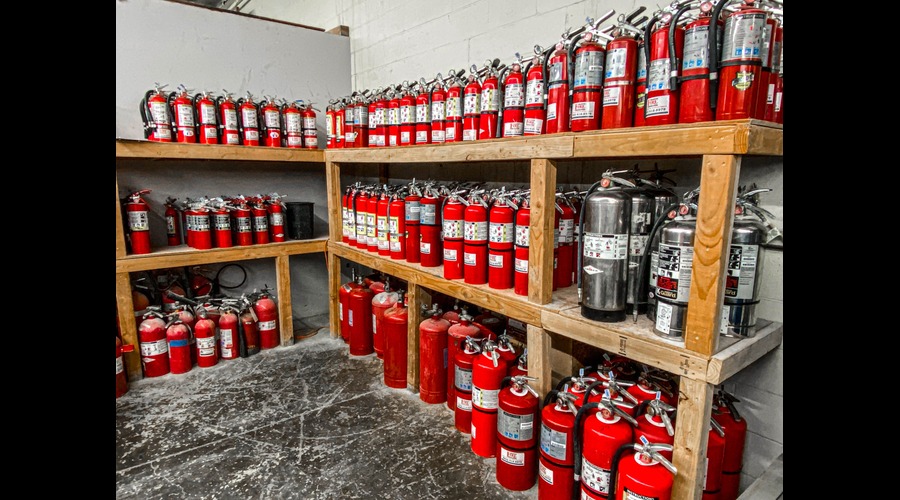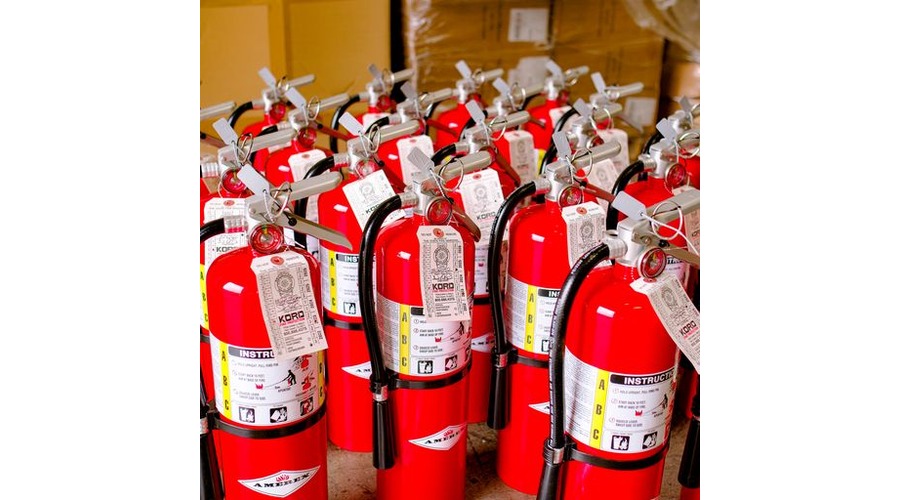
Fire Extinguisher Placement Strategies for Safer Coverage
Strategic fire extinguisher placement is one of those “boring until it saves your day” decisions. When a facility places extinguishers using fire extinguisher placement strategies, it can reduce response time, support evacuation routes, and match the real hazards inside the building. To get it right, Kord Fire Protection Technicians start with a quick walk through the site, then they plan locations that make sense during stress, not just during audits. In addition, they consider the path someone will take when the lights are off and adrenaline is on. Yes, that means thinking beyond the “perfect” wall spot and into the messy reality of how people actually move. Finally, they verify that each extinguisher is reachable, visible, and paired with the type of risk it must handle.
How Kord Fire Protection Technicians map hazards to safe locations
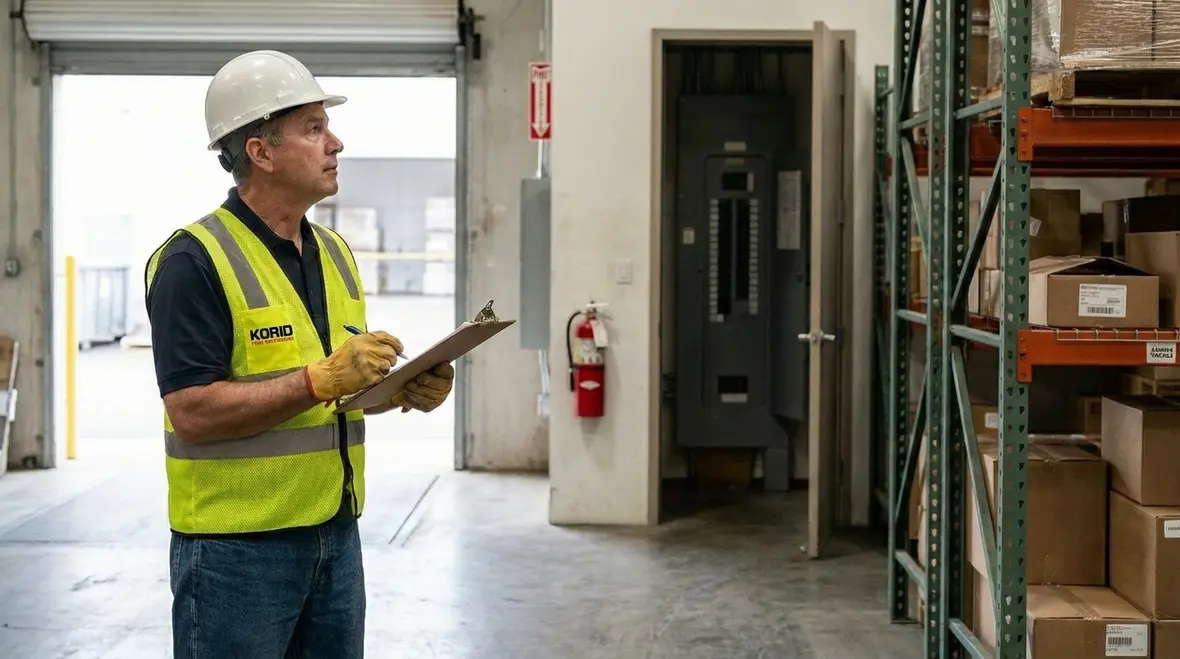
Third person teams often assume placement follows a simple rule: mount it somewhere near an exit and move on. However, Kord Fire Protection Technicians treat placement like a puzzle where every piece affects safety. They begin by identifying where a fire can start, such as kitchens, electrical rooms, storage areas, workshops, and mechanical spaces. Then they connect those hazard points to the most likely human routes during an emergency.
Next, they evaluate common failure points. For example, an extinguisher placed behind a door that swings into the path may become unreachable. Likewise, a unit blocked by stacked inventory will not matter if a small fire grows fast. Because of that, technicians also look at where people walk daily, where they pause, and where they would realistically turn if smoke rolled in. In short, the plan is built for real movement, not for an ideal diagram that ignores busy corridors and clutter.
Where extinguishers should be mounted for quick access

Fast access often depends on clear reach. Kord Fire Protection Technicians typically select mounting heights that allow staff to grab the handle quickly without needing a ladder or a dramatic leap. In addition, they place extinguishers where they can be seen without hunting. If someone must search for a sign in thick smoke, the extinguisher might as well be a prop from a movie set, and nobody wants that.
Then they confirm the extinguisher sits in a location with a safe approach. That means keeping the area clear and avoiding corners that block sightlines. They also consider doors, turns, and narrow aisles that slow a response. Furthermore, they check that the unit does not interfere with egress. Exits should stay the main escape route, while extinguishers support early action before people need to leave the building.
How far should extinguishers be from the fire risk
Distance matters, but it is not only about a number printed in a manual. Kord Fire Protection Technicians use building layout, travel paths, and the nature of the hazard. For instance, an extinguisher located too far from a server closet may delay response while a fire heats nearby components. Meanwhile, an extinguisher near a lounge area might be helpful even if the hazard is small, because people tend to notice and react there sooner.
To plan properly, technicians focus on coverage of the spaces where people work and move. Consequently, they avoid the mistake of placing units only by perimeter walls. Instead, they consider internal risks, travel lanes, and door access so that a responder can reach the extinguisher without stepping through the wrong area. In this way, fire extinguisher placement strategies support early intervention where it has the best chance to work.
Choosing the right extinguisher type by room hazard
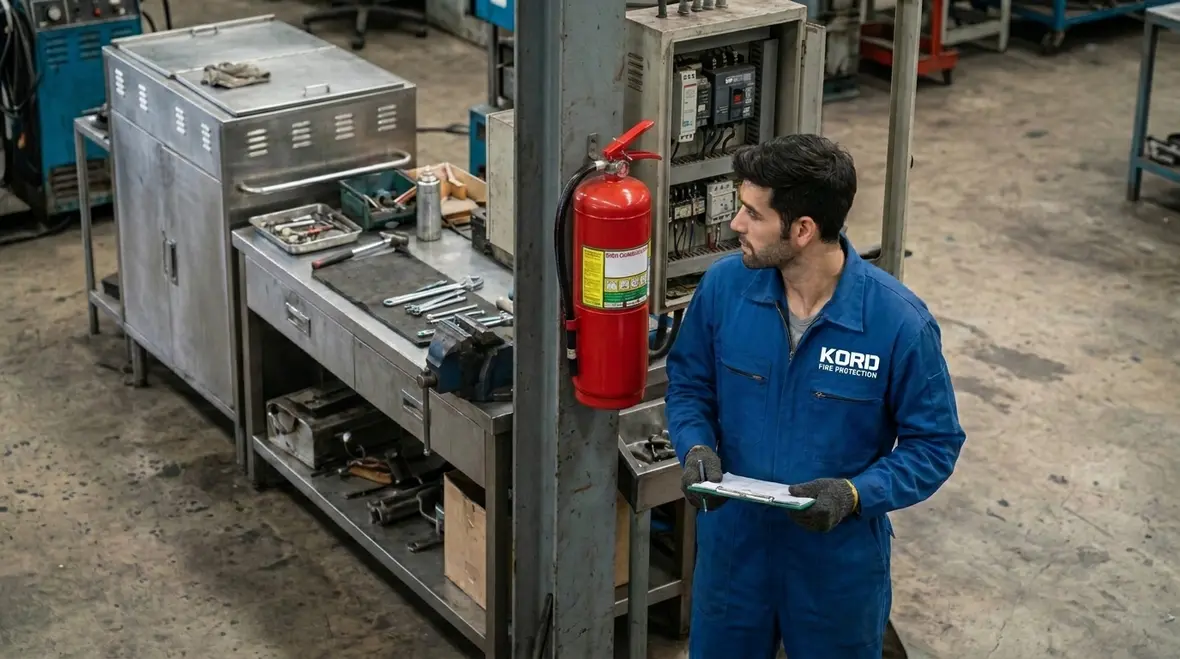
Placement without matching the extinguisher to the fuel source is like bringing a fishing net to a fire. Kord Fire Protection Technicians select extinguisher types based on the materials most likely to burn. Electrical hazards call for agents designed to reduce risk without making a bigger mess of the system. Kitchens and break rooms often need units that handle grease and cooking byproducts. Workshops and storage areas may need coverage for ordinary combustibles like wood, paper, and plastics.
Next, they consider how hazards behave. A small trash ignition in a waste room can spread faster than a person expects, especially if materials line the walls. Likewise, a battery area can present unique dangers, so technicians plan for safer access and correct suppression capability. When extinguisher type and placement line up, staff can respond with more confidence and less confusion.
Keeping routes clear and signage visible during daily operations
Even the best plan fails if daily life blocks it. Kord Fire Protection Technicians account for ongoing conditions: supply deliveries, seasonal storage, temporary displays, and contractor work. They place extinguishers where staff can reach them even during normal busy times. Then they help facilities think about controls that keep the area usable.
- Monthly spot checks to confirm nothing blocks the unit or its approach
- Quarterly walk-through reviews when workflow changes, storage shifts, or contractors arrive
- Post-renovation verification to ensure coverage and reach still match the hazard plan
Common placement mistakes that quietly reduce safety
Many facilities mean well, but a few patterns keep showing up. First, extinguishers get placed too close to hazards, so a responder risks walking into heat or smoke to grab the unit. Second, units get mounted in hallways that look accessible, yet doors or stored items block the path during peak traffic. Third, some sites treat every floor the same and ignore how layout changes between levels.
Also, teams sometimes forget that emergency conditions change the building. Smoke reduces visibility, and people may move differently than they do in daylight. Therefore, Kord Fire Protection Technicians plan with sightlines, approach paths, and practical movement in mind. In other words, they design coverage so staff does not need perfect conditions to succeed. Because if the fire is real, no one gets a “do-over” like in a video game.
FAQ: Featured snippet answers on extinguisher placement
What to do next for stronger facility safety coverage
A solid plan does not happen by accident. Kord Fire Protection Technicians can review a facility’s layout, identify hazard hotspots, and verify that coverage supports fast, safe response. If the building has new equipment, reorganized storage, or recent changes, it is the perfect time to check placement and confirm extinguisher types match the risks.
Reach out to schedule an assessment and get a placement plan that works under real conditions, not just on paper. And yes, it will be far more useful than a smoke alarm that only looks pretty. For deeper system reliability, explore routine fire pump inspections and connect with a professional fire protection service team to strengthen your overall safety strategy.

Join Our Newsletter!
Get the latest fire safety tips delivered straight to your inbox From our Newsletter.