Fire Sprinkler System Zoning for Smart Fire Response
Fire sprinkler system zoning sets the stage for smart fire response

In large commercial buildings, fire sprinkler system zoning is not a buzzword. It is the practical way crews control water delivery so alarms, valves, and flow conditions line up with real fire behavior. When Kord Fire Protection technicians plan zoning, they treat the building like a map, not a mystery novel. Each zone helps limit water damage, supports faster troubleshooting, and makes sure the system reacts the way the code expects.
This approach is rooted in clarity. Every valve has a purpose, every alarm has meaning, and every section of the system behaves predictably under pressure. When zoning is done right, it reduces chaos during emergencies and keeps response focused. And yes, nobody wants the sprinkler system to act like a “spray and pray” comedian during a serious event. Smart zoning replaces randomness with control.
How Kord Fire Protection technicians think about zoning in big buildings
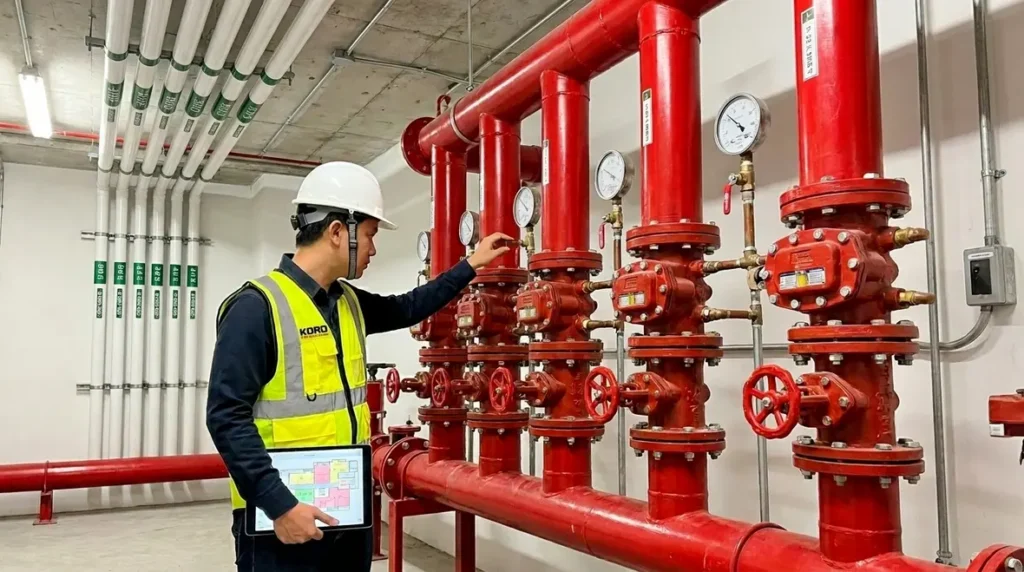
Kord Fire Protection technicians start by slowing down and observing how a building actually functions day to day. Instead of jumping straight into drawings, they study occupancy type, storage practices, ceiling structures, and airflow behavior. These details shape how heat and smoke travel, which directly affects how a sprinkler system should respond.
They also think about access and usability. A zoning plan that looks perfect on paper but requires acrobatics to reach a valve during an emergency is not a good plan. So technicians align system design with real-world conditions, ensuring everything is accessible, labeled, and logically organized.
Another key factor is system control. Zoning determines how alarms report, how supervisory signals behave, and how quickly someone can locate the right section during service. In large facilities, this matters more than people expect. The difference between clear zoning and confusing layout often shows up during inspections, troubleshooting, or when seconds count.
Defining zones by hazard, not by floor number
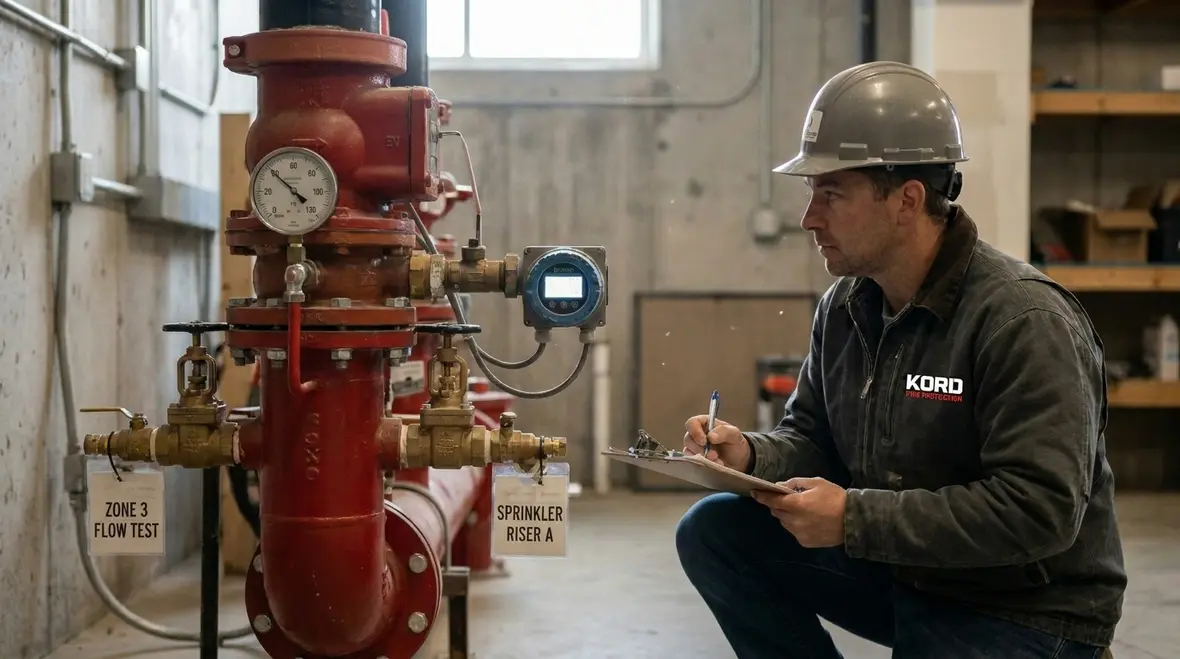
One of the most common misconceptions is that zoning should follow floor levels. While floors can provide a starting point, they rarely reflect actual fire risk. A single floor might contain office space, storage areas, and mechanical rooms, each with very different hazards and water demands.
That is why effective zoning focuses on hazard classification. Areas with similar fire loads and sprinkler requirements are grouped together. This ensures the system delivers the right amount of water where it is needed, instead of overreacting or underperforming.
Ceiling conditions also play a major role. Spaces with beams, joists, or concealed cavities behave differently than open ceilings. Add in factors like draft curtains, plenums, or loading docks, and the way smoke and heat move becomes even more complex. Zoning that respects these variables allows the system to respond with precision rather than assumption.
Balancing performance and water damage with smart valve control
Zoning is always a balancing act. Larger zones can lead to unnecessary water spread, while overly small zones can complicate maintenance and response. The goal is to create sections that are efficient during emergencies and practical during routine service.
Kord Fire Protection technicians approach this by analyzing hydraulic demand, flow rates, and piping layout. They design zones that maintain performance while minimizing disruption. When a system activates, it should target the problem area without soaking unrelated spaces.
Smart valve control also improves diagnostics. When alarms clearly indicate which zone is affected, crews can respond faster and more accurately. It eliminates guesswork and keeps the system behaving like a coordinated safety tool instead of something unpredictable.
Layout and piping strategies that keep zoning stable
In large buildings, piping design has a direct impact on how well zoning works. Clean layouts with minimal crossovers make it easier to isolate zones and maintain system integrity. When piping becomes overly complex, zoning loses clarity and troubleshooting becomes more difficult.
Technicians prioritize accessible valve locations and clear labeling. They also evaluate how shared risers, headers, and system components interact. If multiple areas depend on a single segment without proper separation, zoning effectiveness drops significantly.
Supporting components like backflow preventers and pressure regulating devices must also be positioned correctly. When everything is aligned, zoning remains consistent under both normal conditions and fire flow. When it is not, the system can quickly become confusing to operate.
Coordinating zones with code, inspections, and ongoing service
Zoning does not stop at design. It must hold up through inspections, plan reviews, and daily building use. Technicians ensure valve access remains clear, identification stays visible, and system signals align with the intended zoning layout.
Buildings evolve over time. Renovations, tenant changes, and storage updates can all affect hazard levels. Without periodic review, zoning can drift out of alignment with actual conditions. That is why ongoing evaluation is essential.
A strong zoning plan includes a process for updates. When changes occur, technicians reassess hazards, adjust layouts, and verify that documentation reflects reality. This keeps the system reliable and prevents confusion during critical moments.
Commissioning and testing: proving the zoning works
After installation, commissioning ensures the zoning plan performs as expected. Technicians verify valve supervision, alarm reporting, and flow indicator accuracy. Every component must align with the intended design.
Documentation is also confirmed during this stage. Zone maps, labels, and as-built drawings must match field conditions. This step is critical for future maintenance and emergency response, as accurate information reduces delays and confusion.
Training plays a role as well. Facility teams need to understand how zoning works and how to interpret system signals. When everyone involved knows what to expect, response becomes faster and more coordinated.
FAQ about sprinkler zoning in commercial buildings
Next steps for efficient zoning
Efficient zoning protects people, limits damage, and keeps operations running smoothly. A thoughtful design today prevents confusion tomorrow.
Work with Kord Fire Protection
Kord Fire Protection helps evaluate hazard layouts, valve control, and alarm mapping to create zoning that performs under pressure and passes inspection.

Join Our Newsletter!
Get the latest fire safety tips delivered straight to your inbox From our Newsletter.