
Fire Extinguisher Placement for Office Guide
Fire Extinguisher Placement for Offices: A Practical Layout Guide
When it comes to workplace safety, few topics carry as much quiet authority as fire extinguisher placement for office environments. It is not flashy. It does not trend on social media. Yet, in the rare moment when smoke curls under a door or a trash bin flares up like it is auditioning for a disaster movie, proper placement becomes the hero of the day. Within the first few steps of an emergency, location matters. Accessibility matters. Timing matters.
Kord Fire Protection technicians often explain it this way. An extinguisher that cannot be found quickly might as well be a decorative wall ornament. And while no one wants their office to resemble a fire safety showroom, thoughtful positioning blends protection with practicality. This guide walks through smart, compliant, and realistic fire extinguisher placement strategies that protect people without turning the workspace into a maze of red canisters.
Understanding the Purpose Behind Office Fire Protection Layout
Before discussing walls and walkways, it helps to understand why layout matters in the first place. Offices contain more hazards than most people assume. Electrical panels hum behind locked doors. Break rooms host microwaves that have seen things. Storage closets hide paper stacks that could rival a small forest.
Therefore, extinguisher placement must reflect risk, not guesswork. Kord Fire Protection technicians emphasize that fire extinguishers exist to control small, early stage fires. They are not meant to replace sprinklers or the fire department. Instead, they buy time and reduce damage.
Additionally, correct positioning ensures compliance with safety standards. While local codes vary, most regulations focus on three essentials. Travel distance, visibility, and accessibility. Each of these factors shapes how a workplace designs its fire extinguisher layout.
Consequently, planning is not about placing one unit near the front desk and calling it a day. It requires mapping risk zones and understanding human behavior under stress. In an emergency, people do not calmly scan hallways like they are browsing in a bookstore. They move quickly and often with limited visibility.
How layout supports real emergency behavior
In those first tense seconds, people instinctively move toward exits, familiar corridors, and gathering points. A well-planned layout takes advantage of these natural movement patterns so that extinguishers appear exactly where someone is likely to look next. That is where intentional planning beats improvisation every time.
How Far Apart Should Extinguishers Be in an Office?
This is the one question that managers frequently type into search engines at 2 am. The short answer is this. It depends on the hazard type and the extinguisher rating.
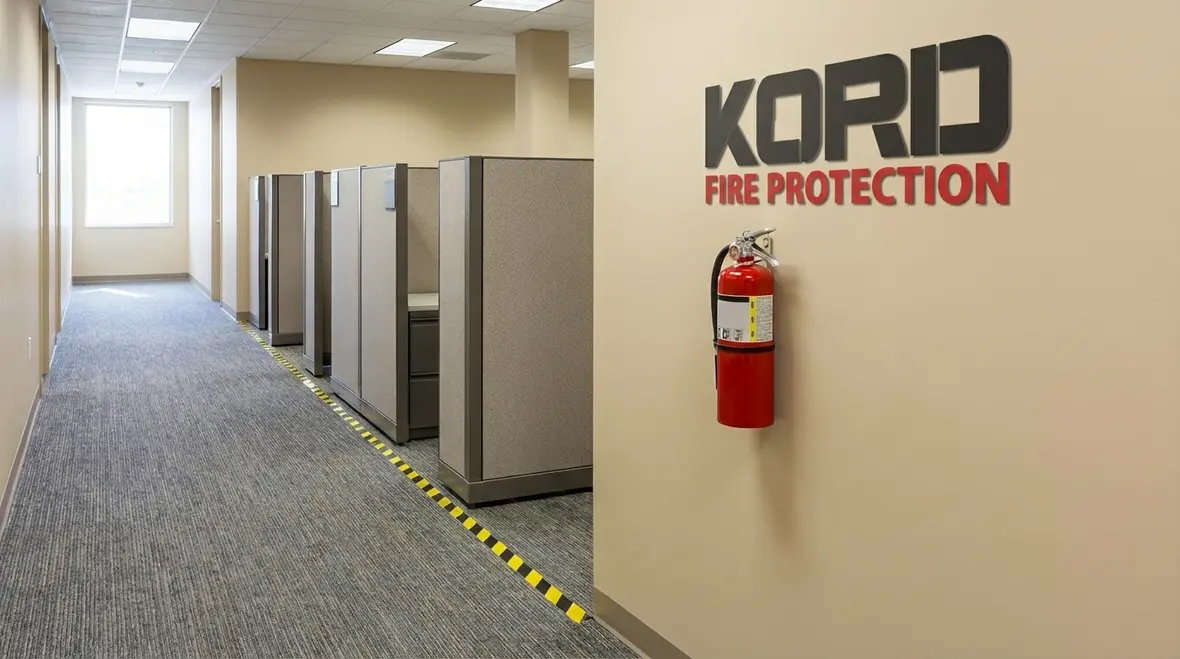
However, for most standard office environments with ordinary combustibles such as paper, furniture, and packaging materials, extinguishers rated for Class A fires typically must be accessible within a maximum travel distance of 75 feet. That means an employee should not have to travel farther than that to reach one.
Meanwhile, areas with electrical equipment often require Class C rated extinguishers, though many modern multipurpose units handle both A and C classifications. As Kord Fire Protection technicians explain during inspections, combination units simplify compliance because offices rarely contain just one type of hazard.
Furthermore, travel distance is measured along the natural walking path. It is not a straight line through cubicles, desks, or the marketing department’s suspiciously tall plant collection. The route must be clear and realistic.
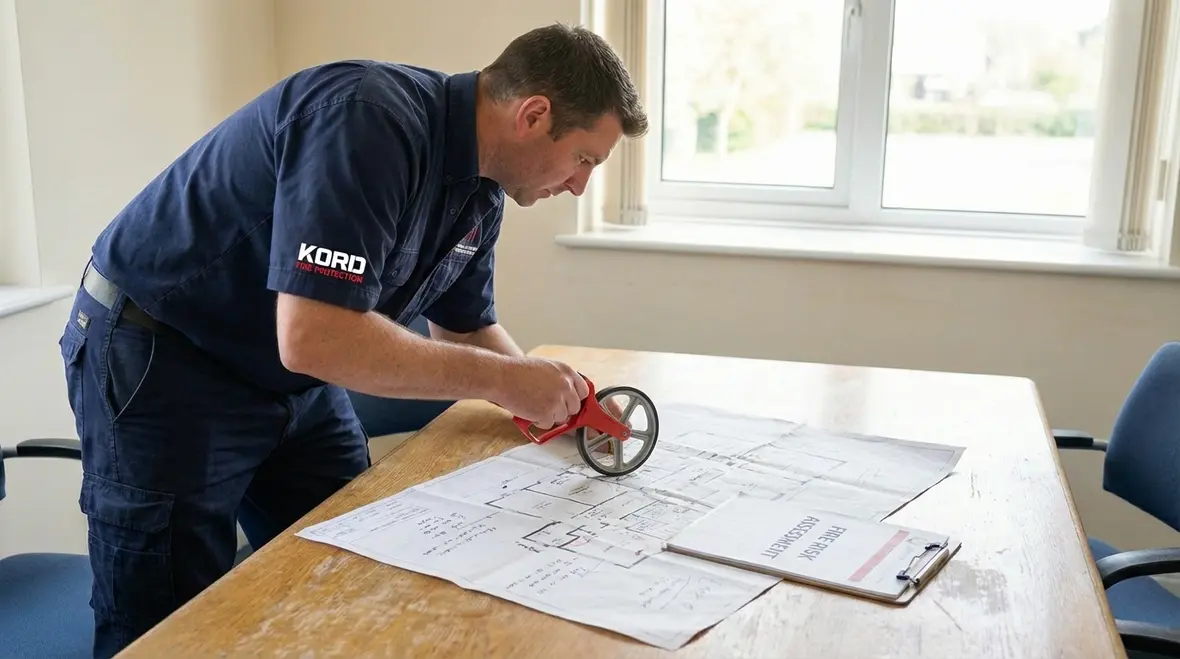
Because of this, larger office floors often require multiple extinguishers spaced strategically so that no corner feels forgotten. Smart fire extinguisher placement for office layouts begin with a floor plan and a measuring wheel, not a guess. For deeper technical guidance, Kord Fire’s resource on NFPA 10 portable extinguisher guidelines breaks down travel distance, mounting height, and visibility requirements in more detail.
View NFPA 10 portable fire extinguisher guidelines for more placement insights specific to commercial buildings.
Linking office layouts to NFPA 10 recommendations
When technicians design layouts, they use the 75-foot travel distance for Class A hazards as a backbone, then tighten coverage around high-risk areas. That blend of code compliance and real-world traffic patterns keeps protection consistent across open workspaces, private offices, and long hallways.
High Risk Areas That Demand Strategic Attention
Not all square footage carries equal risk. Therefore, some areas deserve extra focus.
Break rooms and kitchenettes
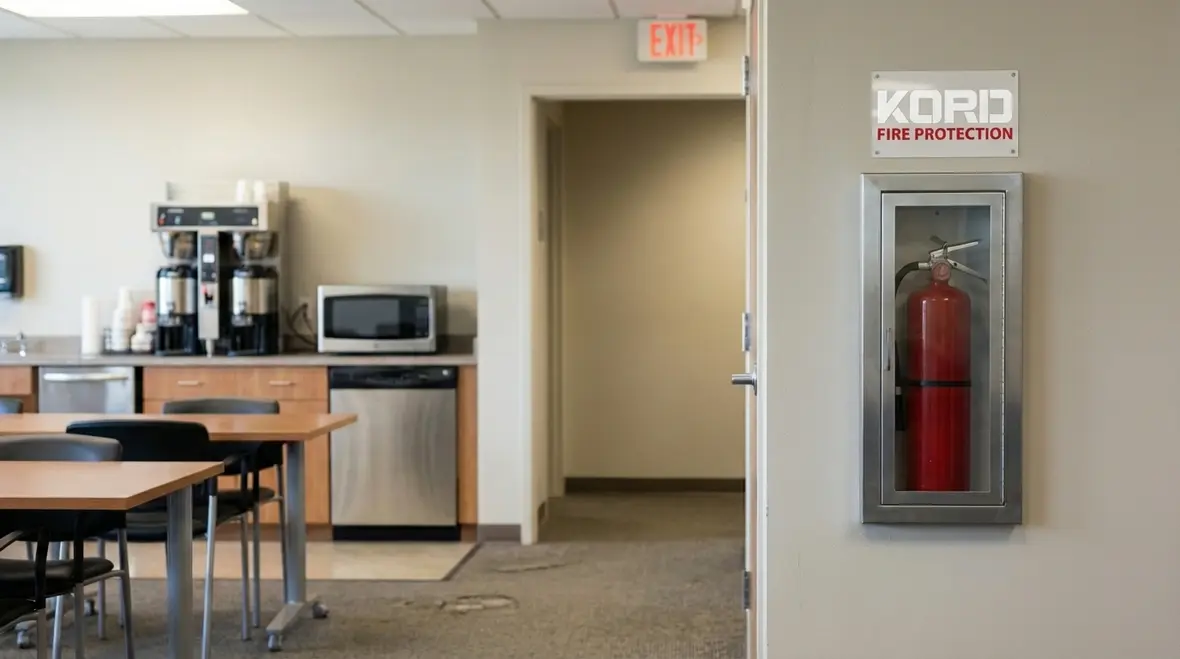
Break rooms top the list. Microwaves, toasters, coffee machines, and refrigerators share outlets in ways that make electricians nervous. Even so, extinguishers should not sit directly beside cooking appliances. Instead, they belong near the exit of the room. This allows a person to grab the unit while keeping a clear escape path behind them.
Electrical rooms and IT spaces
Next, electrical rooms require careful planning. Because energized equipment can ignite, a properly rated extinguisher should mount just outside the room, not deep inside it. That way, an employee does not have to enter a potentially hazardous space to access protection.
Storage rooms and file archives
Storage areas also deserve coverage. Paper files, office supplies, and archived documents create fuel loads that can spread fire quickly. Consequently, extinguishers should sit near entry points, visible and unobstructed.
Server rooms and specialized systems
Kord Fire Protection technicians often remind facility managers that server rooms present a special case. While portable extinguishers are required, many businesses also install clean agent systems for sensitive electronics. Nonetheless, placement still matters because manual response remains part of the safety plan.
Visibility and Mounting Height Done Right
An extinguisher hidden behind a coat rack is not safety. It is optimism.
Therefore, visibility plays a crucial role in fire extinguisher placement for office spaces. Units should mount along normal paths of travel, near exits, and in open areas where employees can spot them without searching.
Height also matters. Generally, extinguishers weighing 40 pounds or less should have their top no more than five feet above the floor. Heavier units require a lower mounting height. Additionally, the bottom of the extinguisher should sit at least four inches above the floor to prevent damage and allow cleaning access.
Clear signage improves response time. Even in well lit offices, smoke can reduce visibility. Therefore, placing visible identification signs above each unit helps employees locate them quickly.
Kord Fire Protection technicians explain mounting with a simple comparison. Think of it like hanging a picture frame. Too high and no one sees it. Too low and it becomes a tripping hazard. Just right, and it blends into the environment while staying ready for action.
Balancing Compliance and Office Aesthetics
Some business owners worry that adding multiple extinguishers will disrupt the office design. After all, modern offices often aim for clean lines and minimalist appeal. No one wants their lobby to resemble a fire academy hallway.
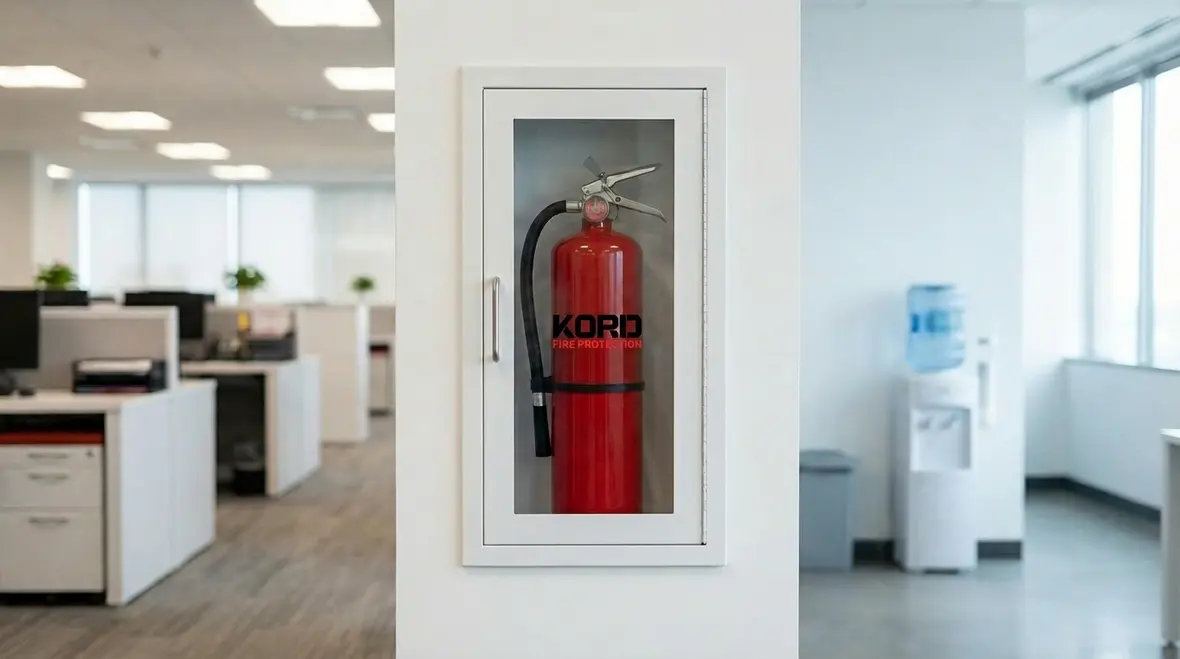
However, safety and style can coexist. Recessed cabinets allow extinguishers to sit flush with the wall while remaining visible. Glass front enclosures protect units without hiding them. Moreover, consistent placement across floors creates a professional look rather than a random collection of equipment.
Importantly, extinguishers must never be blocked by furniture, décor, or seasonal decorations. That festive holiday display might boost morale, yet it should not obstruct emergency tools.
Kord Fire Protection technicians frequently advise companies to involve safety planning early in renovation projects. By integrating fire extinguisher placement for office layouts during design, businesses avoid last minute compromises.
Practical Layout Planning: From Floor Plan to Installation
Effective planning begins with a walk through. Facility managers should review each area, identify hazards, and measure travel distances. Then, they can mark potential mounting spots near exits and along main corridors.
Below is a simplified two column overview that technicians often use when advising clients.
Area Type Main office floor Break room Electrical room Storage room Lobby and reception | Placement Focus Within 75 feet travel distance along exit paths Near exit door, not beside appliances Just outside the room entrance Near entry, visible from doorway Visible but discreet, near primary exit |
After mapping locations, installation must follow manufacturer guidelines. Units require secure wall brackets or approved cabinets. Furthermore, serial numbers and inspection tags should face outward for easy access during monthly checks.
Because safety does not end with installation, offices must schedule regular inspections. Kord Fire Protection technicians perform annual maintenance, checking pressure levels, seals, hoses, and overall condition. Meanwhile, staff should conduct quick monthly visual checks to confirm units remain in place and unobstructed.
For organizations that want help managing monthly and annual inspection schedules, Kord Fire offers dedicated fire extinguisher monthly inspection and annual service programs that keep every office floor compliant and ready.
Training Employees to Support the Layout
Even the best fire extinguisher placement for office spaces loses value if employees do not know where to look. Therefore, orientation sessions should include a brief walkthrough of extinguisher locations.
During training, supervisors can explain the PASS method. Pull the pin. Aim at the base of the fire. Squeeze the handle. Sweep side to side. Simple steps. Clear actions.
However, Kord Fire Protection technicians often add one critical reminder. If the fire grows beyond control or smoke fills the room, evacuation comes first. Extinguishers handle small incidents. They are not invitations to heroics.
Additionally, periodic drills reinforce memory. When employees repeatedly see extinguisher locations during practice, response becomes instinctive rather than hesitant.
Common Mistakes That Undermine Office Fire Safety
Despite good intentions, offices sometimes make preventable errors.
Only protecting perimeter exits
One common mistake involves placing extinguishers only near exits at the building perimeter. While exit proximity is important, interior zones must also meet travel distance requirements. Otherwise, employees deep inside the floor plan may struggle to reach protection quickly.
Allowing furniture to creep into access space
Another issue involves blocking access with furniture. A filing cabinet that slowly migrates in front of an extinguisher over time creates a silent hazard. Therefore, routine walkthroughs should confirm clear access.
Skipping inspections or using the wrong type
Expired or uninspected units present another risk. An extinguisher with low pressure will not perform when needed. Regular servicing ensures readiness.
Finally, some offices install the wrong type of extinguisher. Water based units in areas with electrical equipment create danger rather than safety. Kord Fire Protection technicians assess each space carefully to match hazard with rating.
FAQ: Fire Extinguisher Placement for Offices
Building a Safer Office Environment
Fire safety rarely earns applause. Yet, it protects reputations, property, and people in quiet, steady ways. Thoughtful fire extinguisher placement for office settings reflects leadership that values preparation over panic.
Kord Fire Protection technicians approach each building with methodical care, mapping risks and explaining solutions in clear terms. Because safety works best when it feels simple, their guidance turns complex codes into practical steps.
Every mounted unit represents foresight. Every clear pathway represents intention. And while everyone hopes those extinguishers gather nothing more than dust, proper planning ensures that if the unexpected occurs, the response will be swift and steady.
Take Action Today
Do not wait for a close call to rethink your layout. Review your office floor plan, assess your risk areas, and consult experienced professionals who understand compliance and practicality. Kord Fire Protection technicians stand ready to evaluate your space and recommend smart, efficient solutions. A safer workplace begins with intentional placement. Make the call, schedule the assessment, and give your team the quiet confidence of real protection.
To go beyond extinguisher placement and address your full fire protection strategy, explore Kord Fire’s full fire protection services, including sprinklers, alarms, and suppression systems tailored to your building.
Know Your Weapon Before You Fight the Flame
Kord Fire Protection is your go-to when it comes to all things fire protection. For over 20 years, we’ve been serving Southern California with the quality service and equipment to keep your home or business safe at all times. Our competitive prices reflect our unwavering commitment to protecting what matters most in the event of a fire emergency. Give us a call, send an email, or use that form!

Join Our Newsletter!
Get the latest fire safety tips delivered straight to your inbox From our Newsletter.


