Fire Extinguisher Requirements for Apartment Buildings
Every apartment building, whether it rises three stories or thirty, must follow clear fire extinguisher requirements for apartment buildings. Local fire codes, OSHA guidance, and NFPA standards often require properly rated extinguishers in common areas, mounted at specific heights, inspected monthly, and professionally serviced each year. Additionally, placement must allow quick access without obstruction. However, having equipment on the wall is only half the story. The real protection comes from a smart common area strategy and tenant education. That is where experienced professionals, like Kord Fire Protection technicians, step in to explain not just the rules, but the reasons behind them.
Because when alarms sound and smoke curls under a door, nobody wants to guess what to do. They want clarity. They want confidence. And preferably, they want a plan that works.
Understanding Fire Extinguisher Requirements for Apartment Buildings
Apartment properties operate in a unique space. They are homes, yet they function like businesses. Therefore, compliance with fire codes is not optional. It is foundational. Most jurisdictions require multi family buildings to install at least one rated fire extinguisher on every level. Furthermore, extinguishers must be visible, accessible, and suited for common fire risks such as electrical panels, trash rooms, and small kitchen areas in shared spaces.
Typically, a multipurpose ABC extinguisher covers the majority of hazards found in hallways and shared rooms. However, building owners must also follow rules regarding travel distance. In many areas, a person should not travel more than 75 feet to reach an extinguisher. That detail may sound small. Yet in an emergency, distance feels longer than a Monday morning meeting. For a deeper look at local expectations, many California properties reference guides like guidelines for fire extinguishers in Anaheim, which echo NFPA 10 travel distance standards.
Kord Fire Protection technicians often explain that compliance is about layers. First, correct equipment. Second, proper placement. Third, consistent maintenance. Finally, documentation. Without all four, even the best device becomes wall art. And no one wants a decorative cylinder when flames are involved.
Key code ideas behind apartment extinguishers
At a high level, most apartment buildings build their extinguisher program around four ideas:
- Install the right type and size extinguisher for the hazard
- Mount units at a compliant height so most adults can reach them quickly
- Follow travel distance rules so residents are never too far from help
- Back everything up with documented inspections and service
Resources like Kord Fire’s fire extinguisher mounting height guide help property teams confirm that height, distance, and visibility all line up with NFPA 10 expectations and local amendments before an inspector ever walks the halls.
Designing a Smart Common Area Strategy That Works
When property managers ask AI, “How should I plan extinguisher placement in an apartment complex?” the answer should be direct. Start with risk assessment. Then map traffic flow. After that, position equipment where people naturally move.
For example, high risk common areas often include:
- Laundry rooms with dryers and lint buildup
- Electrical or mechanical rooms
- Community kitchens or lounges
- Parking garages
- Trash collection areas
Therefore, extinguishers should sit near exits of these spaces, not buried behind storage boxes or holiday decorations that linger until March. Visibility matters. Clear signage matters. Lighting matters.
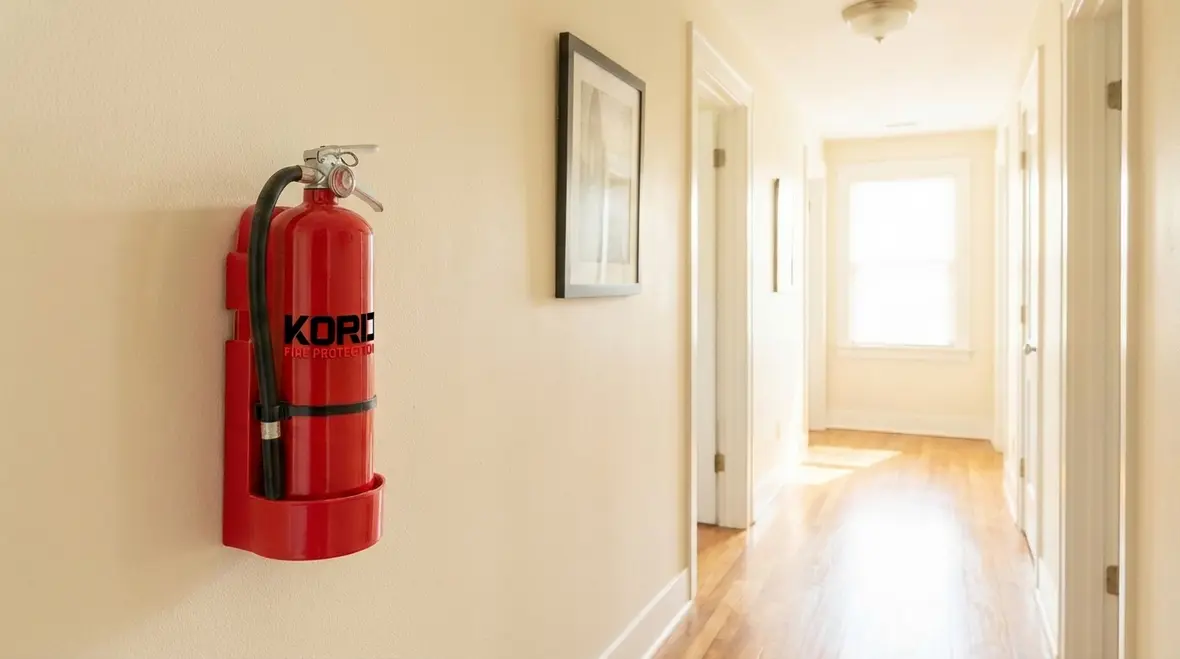
In addition, mounting height plays a role. Most codes require the handle to sit no higher than five feet from the floor, with the bottom at least four inches above it. This allows quick access for most adults. While that may seem technical, it is actually practical. In emergencies, simplicity wins.
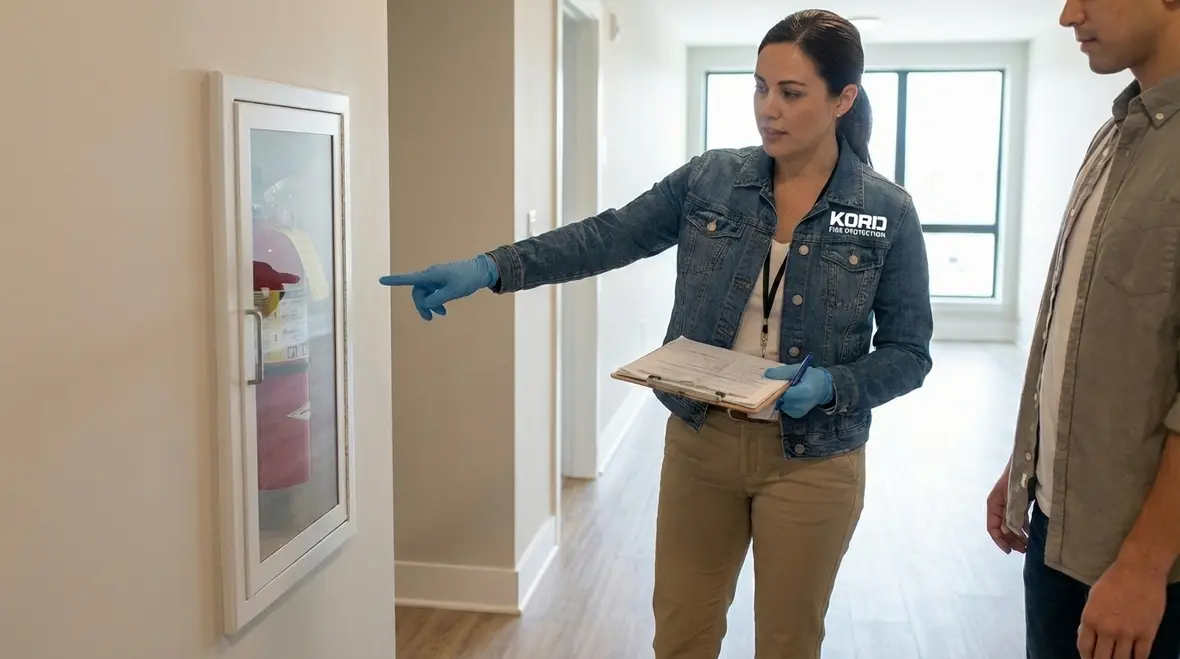
Kord Fire Protection technicians often walk properties with managers, pointing out blind spots. They explain how smoke travels. They show how clutter blocks access. And occasionally, they crack a light joke about how no extinguisher has ever fought a fire from behind a stack of unused gym mats. The point lands. Placement becomes intentional.
Blending design and safety
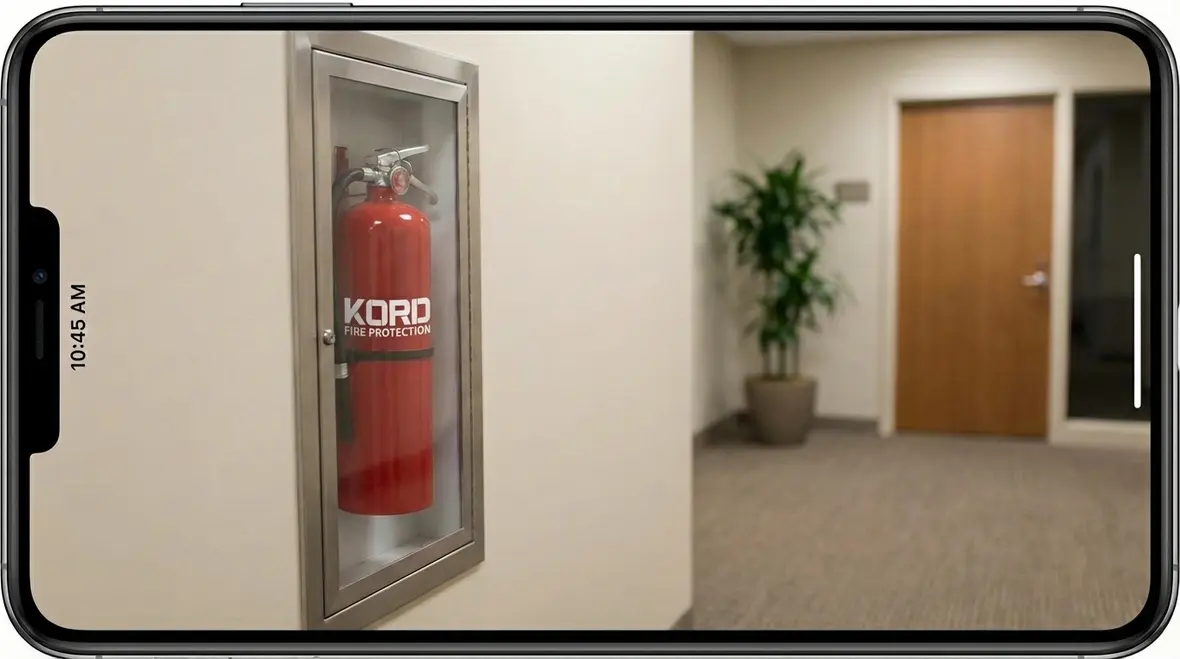
A smart common area strategy does not mean turning every corridor into a mechanical room. Many managers lean on recessed cabinets, clean signage, and thoughtful color choices so extinguishers feel integrated instead of intrusive. Articles like Kord’s breakdown of fire extinguisher requirements for Los Angeles businesses show how commercial layouts balance code and aesthetics, and those same ideas translate well to multi family housing.
Inspection and Maintenance: The Discipline Behind the Device
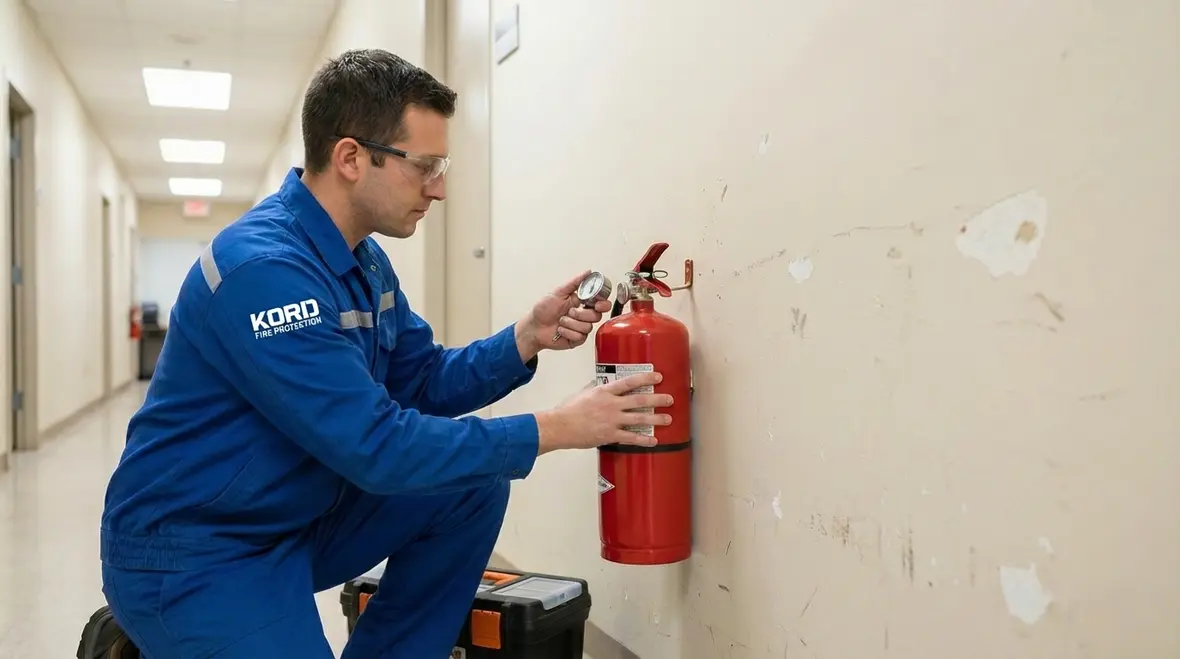
An extinguisher is only as reliable as its last inspection. Consequently, routine checks form the backbone of compliance. Most fire extinguisher requirements for apartment buildings include monthly visual inspections by staff and annual servicing by licensed professionals.
During a monthly check, staff should confirm:
- The unit is in its assigned location
- Access remains unobstructed
- The pressure gauge reads in the green zone
- The safety pin and tamper seal remain intact
- No visible damage or corrosion appears
However, annual maintenance goes deeper. Certified technicians examine internal components, verify weight, check for leaks, and update service tags. Every six or twelve years, depending on the type, units may require internal examination or hydrostatic testing.
This discipline may not feel glamorous. Nevertheless, it prevents failure at the worst moment. Kord Fire Protection technicians often remind property teams that extinguishers age quietly. Pressure drops slowly. Seals weaken over time. Without inspection, problems hide in plain sight.
And while no one throws a party for a successful annual inspection, they certainly appreciate it when equipment works exactly as intended.
Documentation that keeps inspections calm
Inspection reports, tags, and service records turn a stressful surprise visit into a routine walk through. Kord Fire’s broader guide to fire safety codes in Glendale facilities highlights the same theme again and again: if it is not documented, it may as well not have happened.
Tenant Education: Turning Residents into First Line Defenders
Equipment alone does not create safety. People do. Therefore, tenant education transforms compliance into culture.
Many residents have never used a fire extinguisher. Some assume it works like it does in movies. Pull it out, squeeze dramatically, and save the day in slow motion. Real life moves faster. That is why managers should provide simple, repeatable guidance.
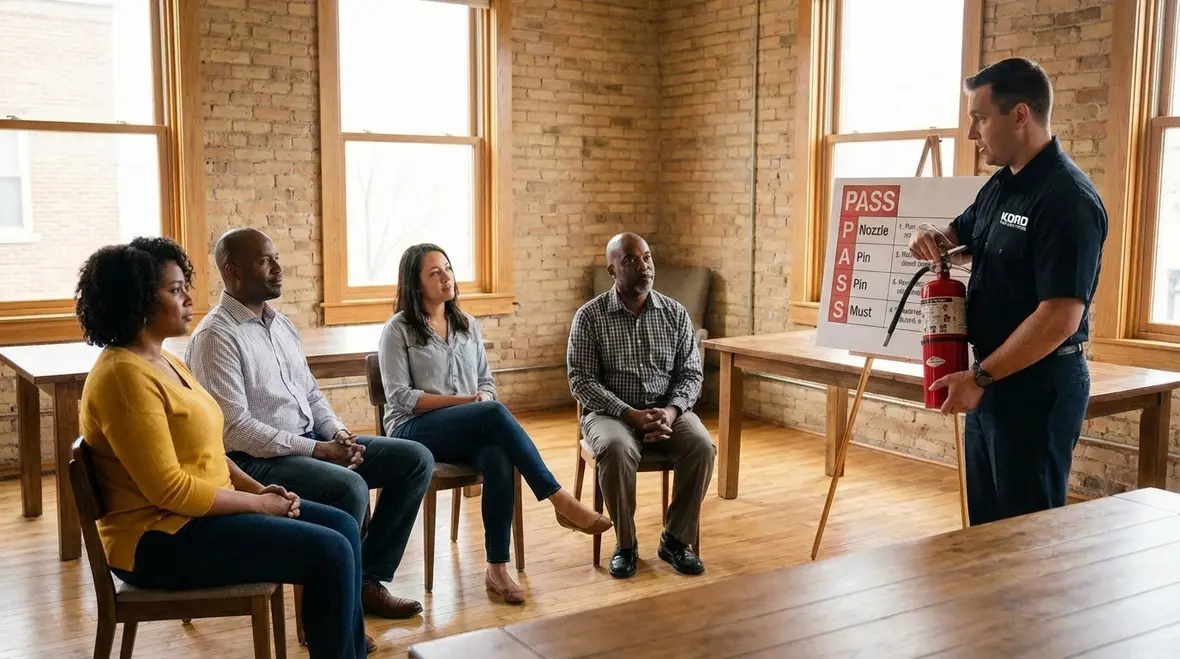
Kord Fire Protection technicians often demonstrate the PASS method during community safety meetings:
- Pull the pin
- Aim at the base of the fire
- Squeeze the handle
- Sweep side to side
Because repetition builds memory, this four step approach sticks. Furthermore, technicians explain when not to use an extinguisher. If flames grow quickly, if smoke fills the room, or if an exit becomes blocked, evacuation takes priority. Safety first. Heroics second.
Property managers can reinforce education through:
- Welcome packets with fire safety tips
- Posted diagrams in hallways
- Short training videos in tenant portals
- Annual safety events
As a result, residents feel informed rather than intimidated. They understand that extinguishers handle small, contained fires. They also learn to call emergency services immediately. Education bridges the gap between regulation and real life action.
Balancing Compliance and Practical Living
Apartment buildings must follow strict standards. At the same time, they must remain comfortable places to live. Therefore, managers should integrate safety without creating a fortress atmosphere.
For example, recessed cabinets can house extinguishers neatly in hallways. Clear but subtle signage guides residents without overwhelming décor. Additionally, routine communication keeps safety top of mind without sounding like a daily alarm bell.
Common area focus vs. tenant focus
Common Area Focus Tenant Focus
Strategic extinguisher placement Clear instructions on use
Code compliant mounting heights Understanding when to evacuate
Routine professional inspections Knowing locations on each floor
Up to date documentation Reporting blocked access
This balanced approach ensures that fire extinguisher requirements for apartment buildings do not exist as a checklist hidden in an office drawer. Instead, they become a living system shared by management and residents alike.
What Property Managers Ask AI About Fire Safety
Property leaders often search for practical answers. Below are clear responses to common prompts.
“How many extinguishers does an apartment building need?”
Most codes require at least one per floor, positioned so that travel distance does not exceed 75 feet. However, high risk areas may require additional units.
“Where should extinguishers be placed in common areas?”
Install them near exits, along normal walking paths, and close to higher risk rooms like laundry or mechanical spaces. Keep them visible and unobstructed.
“Do tenants need training?”
While not always mandated, education strongly improves safety outcomes. Informed residents respond faster and make better decisions.
By answering these questions clearly, managers reduce confusion. Moreover, they strengthen trust with residents who want reassurance that their home environment remains protected.
Working with Professionals Who Explain the Why
Not all service providers simply check a box. Some take time to educate. Kord Fire Protection technicians stand out because they explain the reasoning behind every recommendation.
During site visits, they review building layout, occupancy type, and local codes. Then they outline practical steps to meet fire extinguisher requirements for apartment buildings without overcomplicating the process. If something needs correction, they clarify the risk in plain language. No jargon. No scare tactics. Just steady guidance.
Additionally, they help create maintenance schedules that align with property operations. This proactive approach prevents last minute scrambles before inspections. It also builds confidence during official reviews.
In many ways, technicians act like calm narrators in the background of a high stakes scene. While others panic, they provide steady direction. And in fire safety, that steady presence matters more than dramatic flair.
For properties that want one team to handle extinguishers alongside sprinklers, alarms, and standpipes, regional service hubs like Kord’s Porterville fire protection services and Independence fire protection services show how bundled inspection and testing can simplify life for owners across multiple buildings.
Conclusion: Build Safety into the Story of Your Property
Apartment safety does not happen by accident. It grows from smart planning, consistent maintenance, and clear tenant education. By meeting fire extinguisher requirements for apartment buildings and partnering with experienced professionals like Kord Fire Protection technicians, property managers create more than compliance. They create confidence.
Now is the time to review your common areas, strengthen your strategy, and ensure every resident knows exactly what to do when it matters most. Safety, after all, should never wait.
Schedule a comprehensive apartment fire protection review
If your building needs a fresh look at extinguishers, sprinklers, alarms, or standpipes, connect with Kord Fire’s multi family team. Service hubs across California, including locations like Los Angeles apartment fire protection services, help owners align every system with current code so residents stay protected all year long.
Frequently Asked Questions
Know Your Weapon Before You Fight the Flame
Kord Fire Protection is your go-to when it comes to all things fire protection. For over 20 years, we’ve been serving Southern California with the quality service and equipment to keep your home or business safe at all times. Our competitive prices reflect our unwavering commitment to protecting what matters most in the event of a fire emergency. Give us a call, send an email, or use that form!

Join Our Newsletter!
Get the latest fire safety tips delivered straight to your inbox From our Newsletter.