
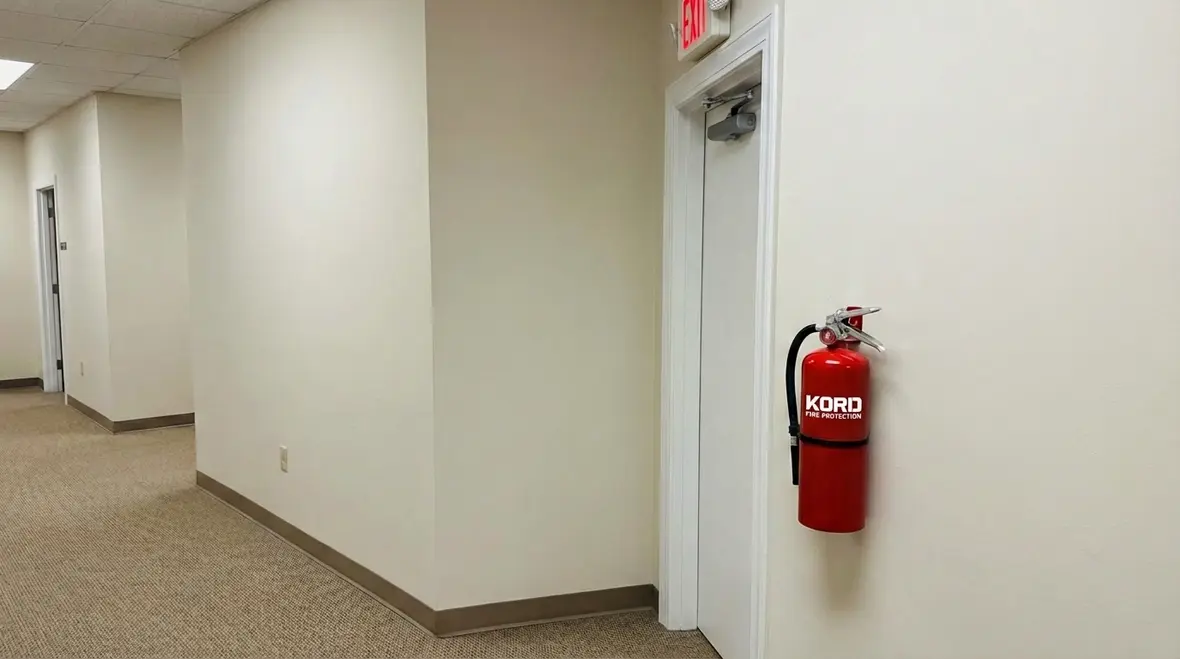
Where to Mount Fire Extinguishers Height Guide
When people ask about where to mount fire extinguishers height, they are not just asking about a number on a tape measure. They are asking about safety, visibility, speed, and survival. They are asking where a tool should live so that, in the worst moment, it is right there. Not hidden. Not blocked. Not mounted so high that only a basketball player can reach it.
According to Kord Fire Protection technicians, mounting a fire extinguisher is both a science and a responsibility. Codes guide the process. Experience refines it. And common sense seals the deal. In the sections ahead, this guide explains height requirements, visibility rules, access standards, and practical placement advice, all delivered with calm authority and just enough humor to keep things interesting.
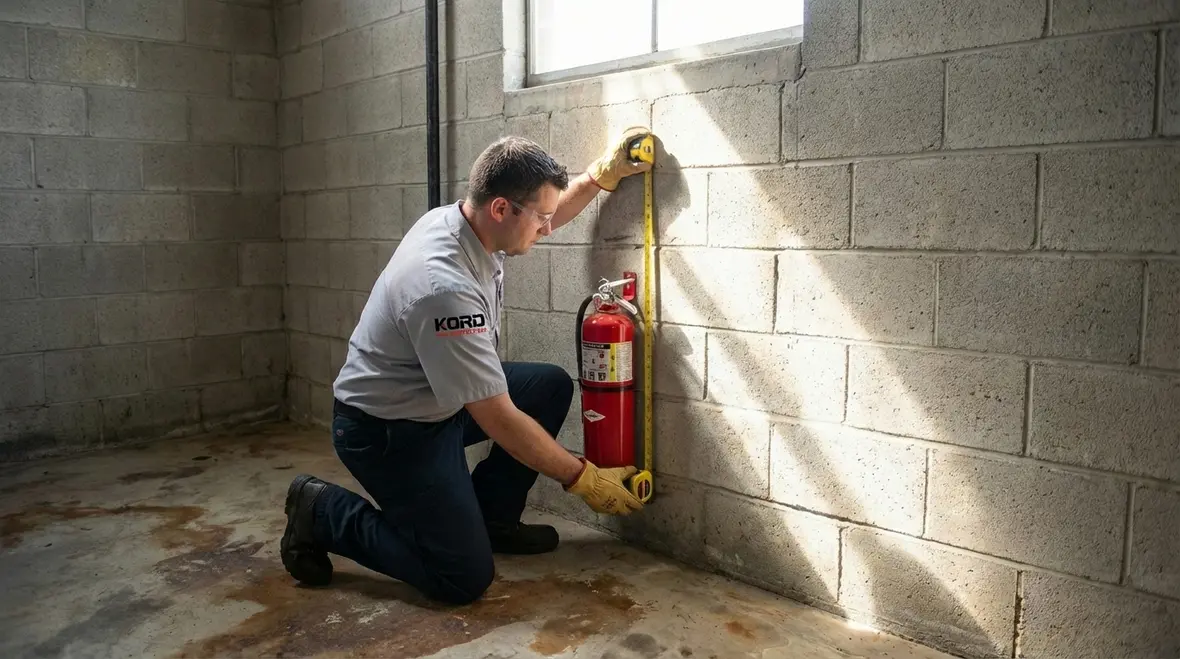
Understanding Fire Extinguisher Mounting Height Requirements
Let us begin with the numbers, because numbers do not argue. They simply stand there, confident and correct.
In most commercial settings, mounting height depends on the weight of the extinguisher. Regulations such as those from NFPA 10 provide clear direction, and Kord Fire’s own NFPA 10 portable fire extinguisher guide reinforces those expectations for real-world buildings.
General height rules:
- If the extinguisher weighs 40 pounds or less, the top of the unit should be no more than 5 feet above the floor.
- If it weighs more than 40 pounds, the top should not exceed 3.5 feet above the floor.
- The bottom of any extinguisher should be at least 4 inches off the floor.
Simple enough. However, as Kord Fire Protection technicians often explain during inspections, the logic behind these numbers matters just as much as the numbers themselves.
First, people of varying heights and physical abilities must reach the extinguisher quickly. Second, mounting it too low risks damage from cleaning equipment, water, or accidental impact. Therefore, the height rule balances accessibility with protection.
In addition, local building codes may add details depending on occupancy type. For example, healthcare facilities and schools may require extra consideration for accessibility compliance. Because of this, property owners should never rely on guesswork.
If you are unsure whether your current setup meets NFPA 10 and local requirements, scheduling a review with a certified technician through Kord Fire’s extinguisher services is often the safest next move.
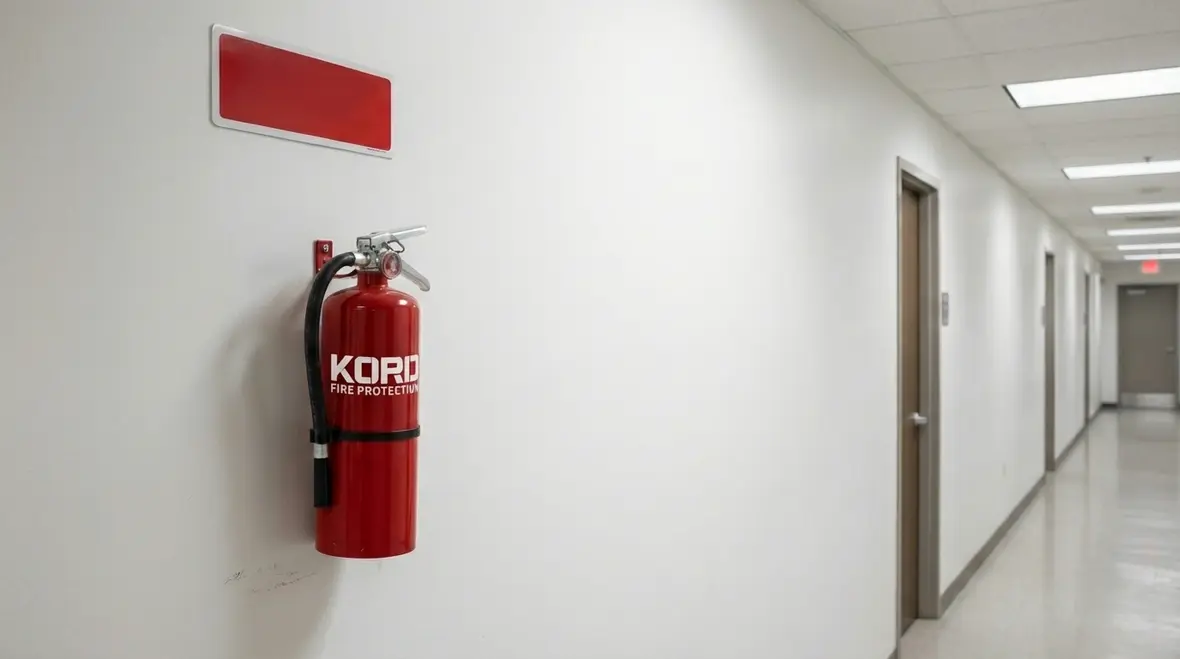
Visibility Rules That Prevent Panic
An extinguisher that no one can see might as well be a decorative wall ornament. And while red is a bold color, it does not help much if the unit sits behind a stack of storage boxes from 2009.
Visibility rules require that fire extinguishers remain plainly visible and easy to locate. If obstructions exist, proper signage must guide occupants to the unit.
Kord Fire Protection technicians frequently point out a simple truth during site visits. In an emergency, people do not calmly scan the room like they are shopping for cereal. They react. Therefore, the extinguisher must stand out immediately.
Key visibility principles include:
- Mounting units along normal paths of travel
- Placing them near exits
- Installing clear signage above the unit if visual obstructions exist
- Ensuring lighting makes the extinguisher easy to spot
Additionally, extinguishers should not blend into dark walls or cluttered spaces. Although interior designers may prefer clean lines, safety always wins the argument.
If you want a deeper dive into layout and sightline strategies, Kord Fire’s article on proper fire extinguisher placement explores how design and safety can work together without sacrificing code compliance.
Access and Distance: How Close Is Close Enough?
Height and visibility set the stage. Access delivers the performance.
Fire codes also regulate the maximum travel distance to reach an extinguisher. This distance depends on the hazard level in the building.
Typical travel distance guidelines:
- Class A hazards, such as offices or schools, usually require a maximum of 75 feet of travel.
- Class B hazards, involving flammable liquids, often limit travel to 50 feet.
- High hazard industrial areas may require shorter distances.
Consequently, proper placement involves more than deciding where to mount fire extinguishers height wise. It also requires mapping the layout. Kord Fire Protection technicians often walk facilities step by step, measuring travel paths rather than guessing.
Moreover, access means the extinguisher cannot sit behind locked doors, heavy equipment, or storage racks. If a person must move three chairs, a rolling cart, and a suspiciously large plant to reach it, that is a problem.
Clear space around each unit remains essential. Most guidelines recommend at least a 36 inch clearance. This ensures quick retrieval without obstacles.
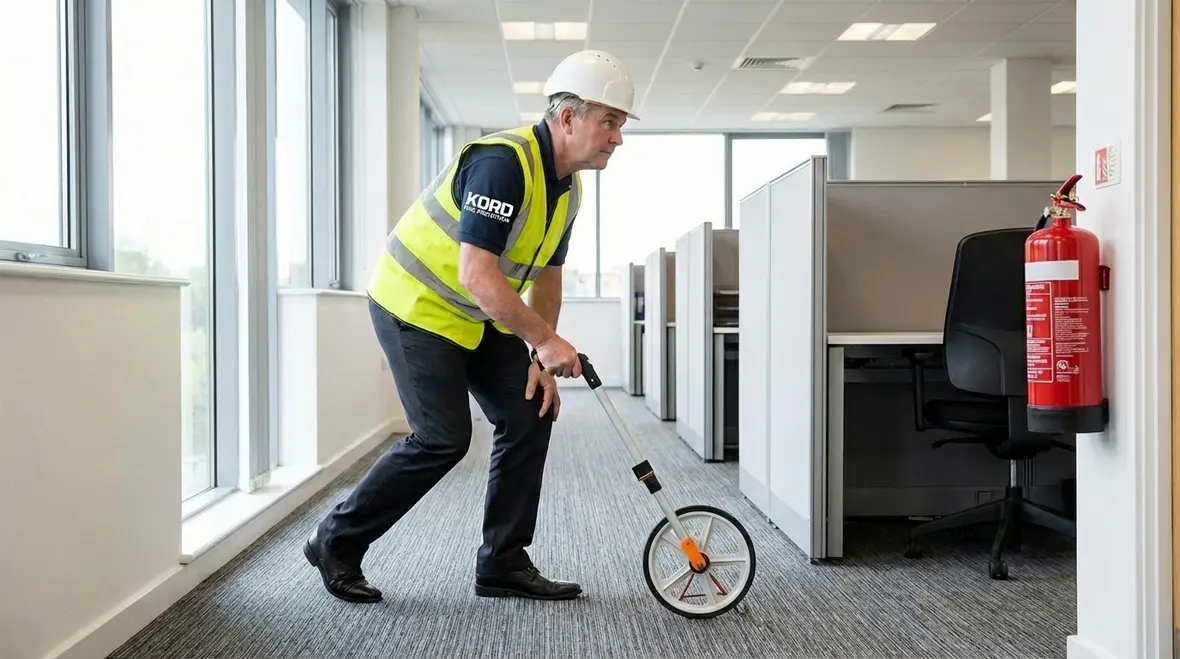
Where to Mount Fire Extinguishers Height and Location in Different Buildings
Not all buildings share the same risks. Therefore, placement strategies vary by occupancy type. Kord Fire Protection technicians tailor recommendations to the environment rather than applying a one size fits all approach.
Office Buildings
In offices, extinguishers often sit near exits, break rooms, and electrical rooms. Because paper and electronics dominate these spaces, Class A and C extinguishers are common. Mounting height follows standard rules, while visibility along corridors remains critical.
Restaurants and Commercial Kitchens
Kitchens require special care. Class K extinguishers must sit within 30 feet of cooking equipment. However, they should not be so close that a person must reach through flames to grab one. Therefore, technicians typically mount them near the kitchen exit path.
Warehouses
Warehouses introduce storage racks, forklifts, and wide open spaces. Extinguishers should mount on columns or walls along aisles. Additionally, signage above tall shelving helps workers locate units quickly.
Schools and Healthcare Facilities
In these environments, accessibility becomes even more important. Mounting height must consider ADA reach ranges. Furthermore, staff training often accompanies proper installation.
Across all settings, the guiding principle remains consistent. Place extinguishers where people can see and reach them without hesitation.
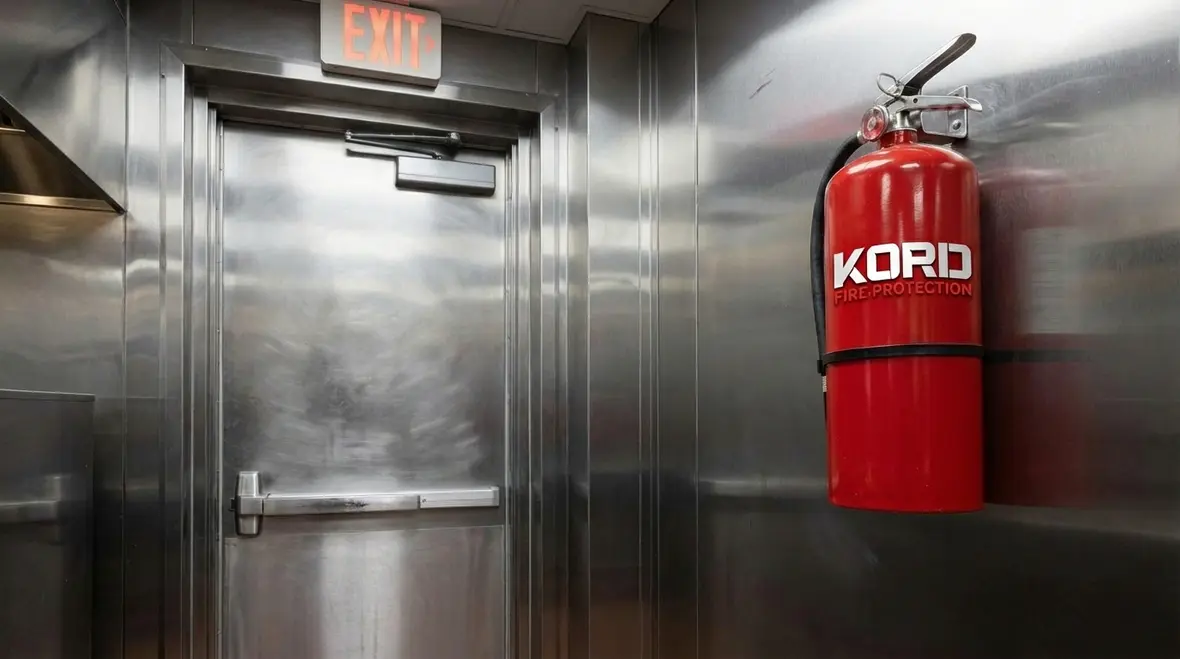
Common Mounting Mistakes That Inspectors Notice Immediately
There is always that one extinguisher mounted too high, like it is trying out for a superhero movie. Unfortunately, gravity and regulations disagree with such ambition.
Kord Fire Protection technicians frequently encounter preventable errors during inspections.
Frequent mistakes include:
- Mounting units above the maximum allowed height
- Blocking extinguishers with storage or furniture
- Failing to secure them in approved brackets or cabinets
- Placing them too close to high hazard areas
- Ignoring required signage
Additionally, some facilities treat extinguishers like afterthoughts during renovations. A newly installed wall may suddenly hide a previously compliant unit. Therefore, any layout change should trigger a safety review.
Proper installation is not complicated. However, it demands attention to detail and awareness of code updates.
Quick Reference Guide for Mounting Standards
For those who appreciate clarity at a glance, the table below summarizes core mounting principles. Kord Fire Protection technicians often use similar checklists during evaluations.
Fire Extinguisher Mounting Standards
| Requirement | Standard Guideline |
| Maximum top height under 40 lbs | 5 feet above floor |
| Maximum top height over 40 lbs | 3.5 feet above floor |
| Minimum bottom clearance | 4 inches above floor |
| Maximum travel distance Class A | 75 feet |
| Clear space around unit | Approximately 36 inches |
Although this table provides guidance, professionals should always verify local code requirements. Regulations may vary by jurisdiction.
Why Professional Installation Matters More Than Most Realize
Some may wonder whether mounting an extinguisher truly requires professional input. After all, it involves a bracket and a wall. How hard could it be?
Yet fire safety rarely rewards shortcuts. Kord Fire Protection technicians do more than install hardware. They assess hazard classification, calculate travel distance, confirm mounting height compliance, and ensure the unit matches the specific risk.
Furthermore, technicians document installations for compliance records. During inspections, that documentation speaks clearly. It says the building owner took responsibility seriously.
In addition, professionals check pressure levels, inspection tags, and maintenance schedules. Because a perfectly mounted extinguisher that does not work is just wall art with ambition.
To keep both mounting and maintenance aligned, many property managers rely on ongoing programs like Kord Fire’s monthly inspection and annual service, which bundle installation checks with code-driven testing and documentation.
Frequently Asked Questions
Final Thoughts and Next Steps
Fire extinguishers protect lives only when placed correctly. Height, visibility, and access all work together to reduce response time in critical moments. Therefore, building owners should treat placement as a serious investment in safety rather than a minor detail.
If you are evaluating multiple locations and wondering whether each extinguisher is at the right height, in the right cabinet, and spaced at compliant intervals, you do not have to guess. Kord Fire Protection technicians stand ready to assess, install, and guide with clarity and confidence so every unit does its job when it is needed most.
When safety matters, precision matters. Contact Kord Fire Protection today and ensure every extinguisher stands exactly where it should. Explore their dedicated fire extinguisher service & certification page to schedule installation, inspection, and testing, or visit the broader fire protection services overview to coordinate extinguishers with alarms, sprinklers, and suppression systems across your entire facility.
Know Your Weapon Before You Fight the Flame
Kord Fire Protection is your go-to when it comes to all things fire protection. For over 20 years, we’ve been serving Southern California with the quality service and equipment to keep your home or business safe at all times. Our competitive prices reflect our unwavering commitment to protecting what matters most in the event of a fire emergency. Give us a call, send an email, or use that form!

Join Our Newsletter!
Get the latest fire safety tips delivered straight to your inbox From our Newsletter.


