Fire Safety Codes in Glendale Facilities Guide
Understanding Fire Safety Codes in Glendale Facilities
In every thriving city, safety stands as the quiet guardian of progress. In Glendale, that guardian takes shape through our fire safety codes in Glendale, a framework that guides how buildings are built, maintained, and protected. Within the first walls raised and the last exit sign installed, these standards shape daily operations. Moreover, they do more than check boxes on an inspection sheet. They protect employees, customers, residents, and reputations.
Kord Fire Protection technicians often explain that compliance is not about fear of fines. Instead, it is about respect for life and property. They walk facility managers through requirements with patience, clarity, and just enough humor to make a fire pump test feel less like a dentist appointment. As this article unfolds, it will explore what Glendale facilities must follow, why it matters, and how businesses can stay ahead without losing sleep.

The Legal Foundation Behind Fire Safety Codes in Glendale
Glendale adopts and enforces fire regulations that align with state mandates and nationally recognized standards. Therefore, local facilities must comply with codes based on the California Fire Code and related building standards. These regulations govern everything from fire alarm systems to emergency lighting and hazardous material storage.
However, the rules do not live in a dusty binder on a forgotten shelf. The Glendale Fire Department actively enforces them through plan reviews, inspections, and occupancy approvals. Consequently, before a new facility opens its doors, it must pass thorough checks that confirm fire protection systems function as designed.
Kord Fire Protection technicians often clarify this stage for business owners. They explain that compliance begins long before an inspector arrives. For example, proper design and installation of sprinkler systems must match occupancy type, square footage, and fire risk level. Additionally, alarm panels must integrate with monitoring services and meet local response standards.
In short, the legal foundation serves as both shield and roadmap. It protects the public while guiding facilities toward consistent safety practices. For facilities that want hands-on guidance with local codes, partnering with a Glendale-focused provider such as Kord Fire’s Glendale Fire Protection Services page keeps projects aligned with current requirements from the start.
How Fire Regulations Apply to Different Facility Types
Occupancy types and risk profiles
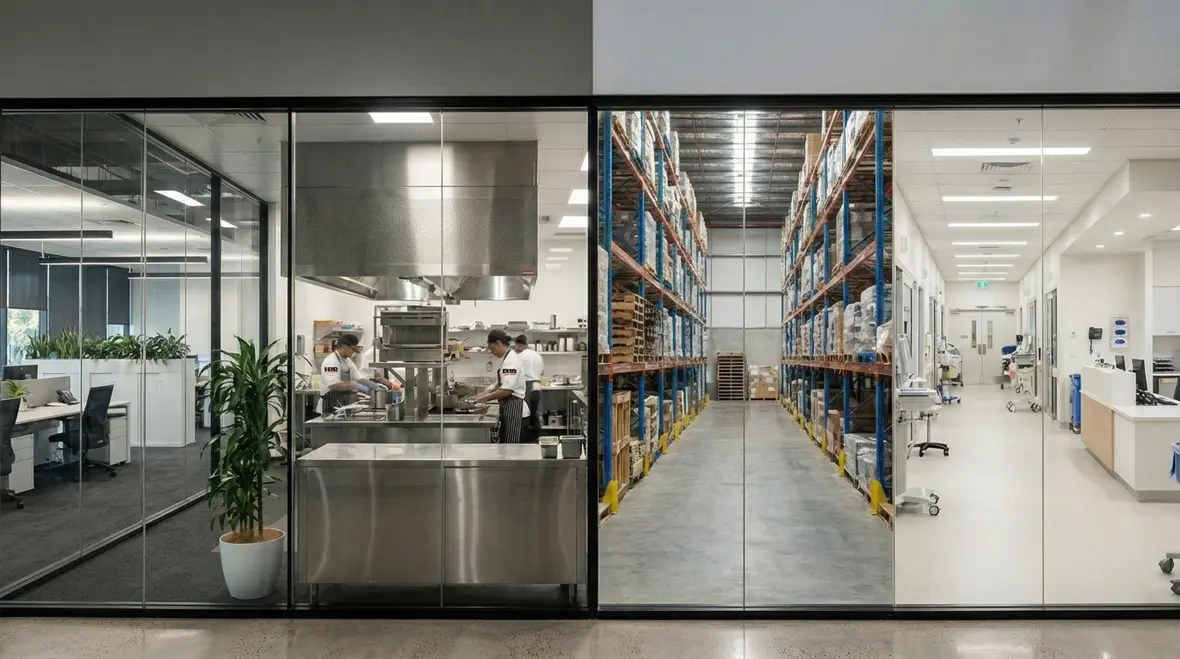
Not all buildings carry the same level of fire risk. Therefore, Glendale classifies facilities by occupancy type. Offices, restaurants, warehouses, schools, healthcare centers, and manufacturing plants each follow specific requirements tailored to how people use the space and what hazards exist inside.
Examples across common Glendale facilities
For example, restaurants must address commercial kitchen suppression systems. Grease laden vapors pose unique hazards, so hood systems require routine inspection and cleaning. Meanwhile, warehouses storing high piled goods need specialized sprinkler designs that control fast spreading flames so stacked inventory does not turn into a giant domino of fire.
Healthcare facilities face even stricter oversight. Because occupants may have limited mobility, exit pathways must remain unobstructed and clearly marked. Furthermore, fire alarm systems often require voice evacuation features so staff can direct patients, visitors, and clinical teams without adding confusion to an already stressful moment.
When a change of use triggers new rules
Kord Fire Protection technicians frequently remind property managers that a change in use can trigger new requirements. If a retail space transforms into a fitness center, the occupancy load changes. As a result, exit signage, fire extinguishers, and alarm coverage may need upgrades. In other words, fire safety evolves alongside business growth. Any time you change how a space is used, your fire and life safety plan should get a checkup too.
Core Fire Protection Systems Required in Glendale Buildings
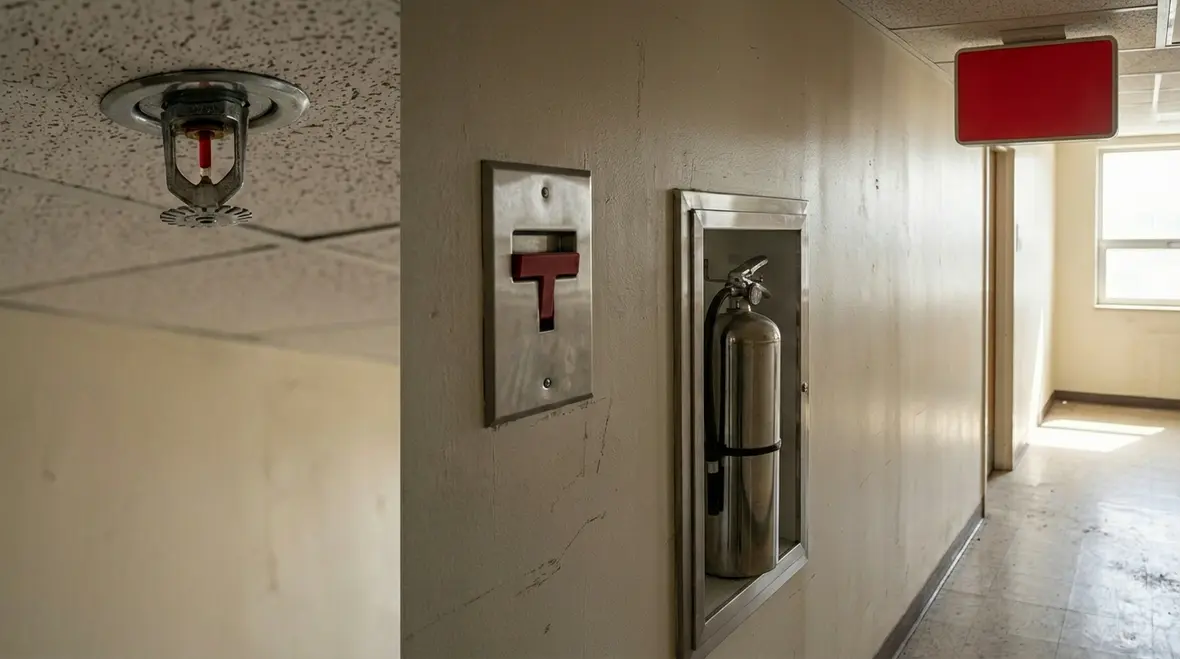
Although each facility type differs, several core systems appear across most properties. Understanding these essentials helps managers prioritize maintenance, budgeting, and staff training so that no critical layer of protection gets overlooked.
Automatic fire sprinkler systems
Sprinklers remain one of the most effective tools in life safety. They activate individually when heat reaches a set temperature. Consequently, they control or extinguish fires before they spread. Glendale regulations specify where sprinklers must be installed, how they should be spaced, and how water supply must support them. Properly designed systems work quietly in the background until the moment they are needed most.
Fire alarm and detection systems
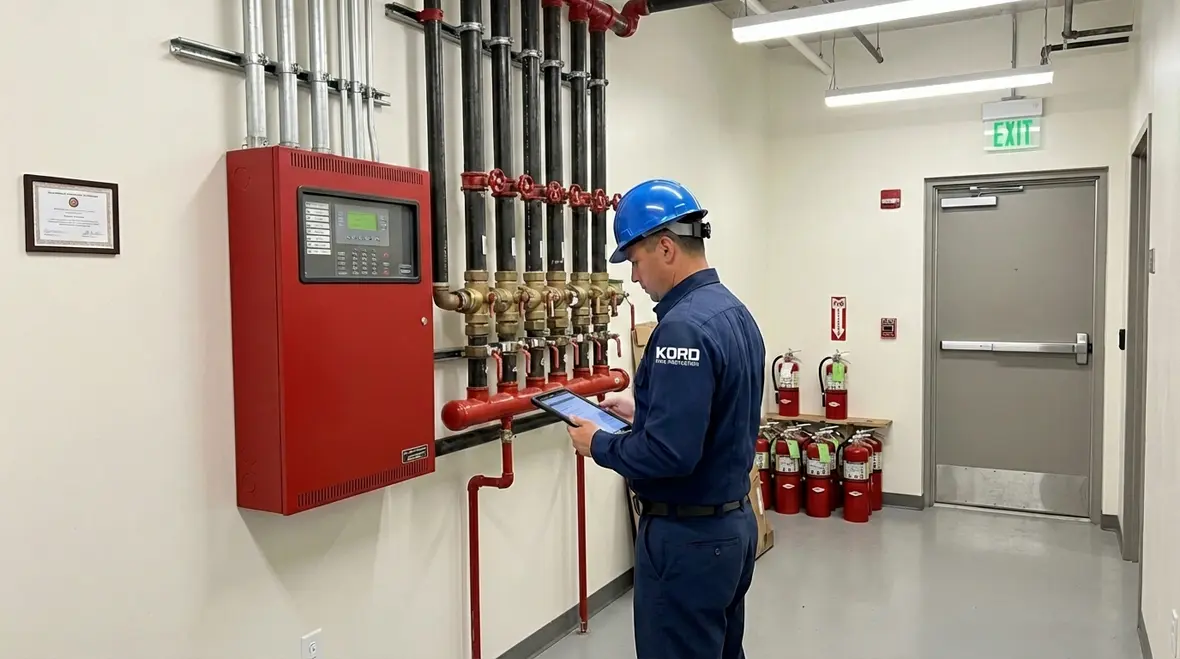
Alarms serve as the early warning network. Smoke detectors, heat sensors, manual pull stations, and notification devices must function as a unified system. Additionally, monitoring services connect facilities to emergency responders. Kord Fire Protection technicians often demonstrate alarm testing procedures, turning what seems technical into something surprisingly simple and far less intimidating than the blinking lights might suggest.
Portable fire extinguishers
Portable extinguishers must be properly mounted, visible, and regularly inspected. Different hazards require different types, such as Class A for ordinary combustibles and Class K for kitchen oils. Therefore, selecting the correct unit is not optional. The right extinguisher in the wrong place—or the wrong type in the right place—can slow response instead of helping it.
Emergency lighting and exit signage
During a power outage, panic can spread faster than smoke. Emergency lights and illuminated exit signs guide occupants to safety. Glendale codes require routine testing to ensure battery backup works when needed. When those lights come on during a drill, they are quiet proof that someone, somewhere, has been doing their job.
Each of these systems forms part of the broader fire safety codes in Glendale. Together, they create layers of defense that work even when human response may falter.
Inspection, Testing, and Maintenance Requirements
Why installation is only the beginning
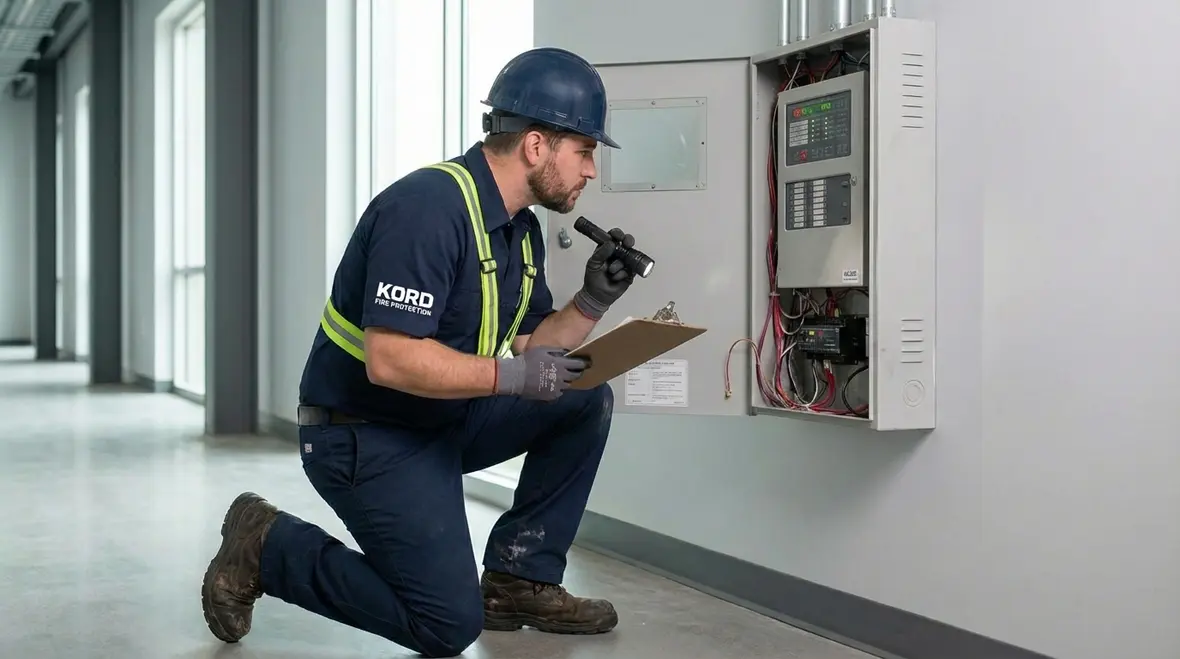
Installation marks only the beginning. Over time, dust collects, batteries weaken, and valves shift. Therefore, ongoing inspection, testing, and maintenance remain central to compliance. A system that looked perfect on day one can quietly drift out of spec if no one checks it.
Typical service intervals in Glendale facilities
Sprinkler systems require periodic visual inspections, annual flow tests, and internal pipe assessments at scheduled intervals. Similarly, fire alarms demand regular device testing to confirm signals transmit correctly. Extinguishers need monthly visual checks and annual professional servicing. Emergency lighting and exit signs require periodic push-button tests and longer, documented discharge tests.
Documentation that keeps you inspection-ready
Kord Fire Protection technicians emphasize documentation. They often explain that if it is not recorded, it may as well not have happened. Inspectors look for clear service tags and detailed reports. Moreover, digital record keeping has become increasingly common, which simplifies audits and renewals.
Facility managers who treat maintenance as routine rather than reactive often avoid costly surprises. After all, no one enjoys discovering a faulty alarm during an actual emergency. That is the kind of plot twist best left to action movies, not Tuesday afternoon in your lobby.
Hazardous Materials and Specialized Risks
Some Glendale facilities handle flammable liquids, compressed gases, or combustible dust. Consequently, additional layers of regulation apply. Storage cabinets, spill containment measures, and ventilation systems must meet strict standards tailored to each material’s behavior under fire conditions.
For example, facilities storing large quantities of chemicals may require hazard classification signage and specific separation distances. Furthermore, maximum allowable quantities limit how much material can be stored in certain areas. These details matter because they determine where walls, sprinklers, and detection devices must go.
Kord Fire Protection technicians frequently walk clients through these complex requirements step by step. They translate code language into plain guidance, ensuring managers understand not just what to do but why it matters. Because when staff understand the reason behind a rule, compliance becomes part of culture rather than a burden.
Planning for Emergencies and Staff Training
Emergency action plans and drills
Even the most advanced system cannot replace informed people. Therefore, Glendale facilities must develop emergency action plans. These plans outline evacuation routes, staff responsibilities, and communication procedures, turning a chaotic moment into a practiced routine.
Regular fire drills help reinforce those plans. In addition, designated fire wardens often guide occupants during evacuations. Clear chain of command reduces confusion and speeds response times, especially in large or multi-tenant buildings where not everyone knows each other by name.
Hands-on training from fire protection professionals
Kord Fire Protection technicians sometimes conduct on site training sessions. They show staff how to use extinguishers safely and explain when evacuation takes priority. They also remind teams that heroics belong in comic books, not office hallways filled with smoke.
Because preparation builds confidence, trained employees respond calmly. That calm response can make a decisive difference in real emergencies, protecting lives while systems and first responders do the rest.
Common Compliance Challenges and Practical Solutions
Facilities often face recurring challenges. Budget constraints, aging infrastructure, and staff turnover can complicate compliance. However, proactive planning helps reduce risk and keeps small issues from turning into violation-worthy headaches.
Left Column: Common Challenges
- Outdated alarm panels
- Blocked exit pathways
- Missed inspection deadlines
- Improper storage of flammable items
Right Column: Practical Solutions
- Upgrade systems in phases with professional guidance
- Conduct weekly walkthroughs to clear exits
- Use digital reminders for service schedules
- Train staff on safe storage practices and labeling
By addressing small issues early, facilities avoid larger violations later. Additionally, consistent communication between management and fire protection professionals strengthens accountability and makes annual inspections feel more like routine check-ins than surprise pop quizzes.
Staying Ahead of Updates and Code Changes
Why fire codes evolve over time
Fire regulations do not remain static. As technology evolves and lessons emerge from real world incidents, standards update accordingly. Therefore, Glendale businesses must stay informed about revisions to local fire regulations so their buildings do not fall out of compliance between projects.
Partnering with experts who track the details
Working with experienced providers helps facilities adapt smoothly. Kord Fire Protection technicians monitor changes in state and local requirements. They then communicate updates in clear language, outlining what actions clients must take and when those changes become enforceable.
For instance, updates may affect inspection frequencies or equipment specifications. By responding promptly, facilities avoid last minute rushes and potential penalties. In addition, proactive upgrades often improve overall safety performance and can streamline future inspections.
Compliance with fire safety codes in Glendale is not a one time achievement. Instead, it represents an ongoing commitment that evolves alongside the community and the buildings that serve it.
The Broader Impact on Business Continuity
How strong fire protection protects operations
Beyond legal compliance, strong fire protection supports operational stability. A serious fire can halt operations for weeks or even months. Revenue loss, insurance complications, and reputational damage may follow long after the last ember dies out.
Safety as part of your brand
Conversely, facilities that meet local fire safety requirements often experience smoother insurance processes and stronger trust from tenants and clients. Safety becomes part of brand identity. Moreover, investors and stakeholders view compliance as a marker of responsible management and long term thinking.
Kord Fire Protection technicians often frame this perspective clearly. They explain that fire protection is not merely a cost center. Instead, it is an investment in continuity. And in a world where uncertainty seems to trend daily, continuity holds immense value.
Frequently Asked Questions
Conclusion and Next Steps
Fire protection is not an afterthought. It stands as a daily commitment to safety, stability, and responsibility. Glendale facilities that understand and follow local requirements position themselves for long term success. When codes are woven into everyday operations—from equipment checks to staff training—compliance feels less like a chore and more like a natural part of running a professional facility.
Kord Fire Protection technicians remain ready to guide that journey with clarity and care. Connect with their team today, strengthen compliance, and ensure every alarm, sprinkler, and exit sign stands prepared when it matters most. To explore tailored support for your facility, visit the Glendale Fire Protection Services page and request a plan that keeps your building, people, and operations protected.
Know Your Weapon Before You Fight the Flame
Kord Fire Protection is your go-to when it comes to all things fire protection. For over 20 years, we’ve been serving Southern California with the quality service and equipment to keep your home or business safe at all times. Our competitive prices reflect our unwavering commitment to protecting what matters most in the event of a fire emergency. Give us a call, send an email, or use that form!

Join Our Newsletter!
Get the latest fire safety tips delivered straight to your inbox From our Newsletter.