
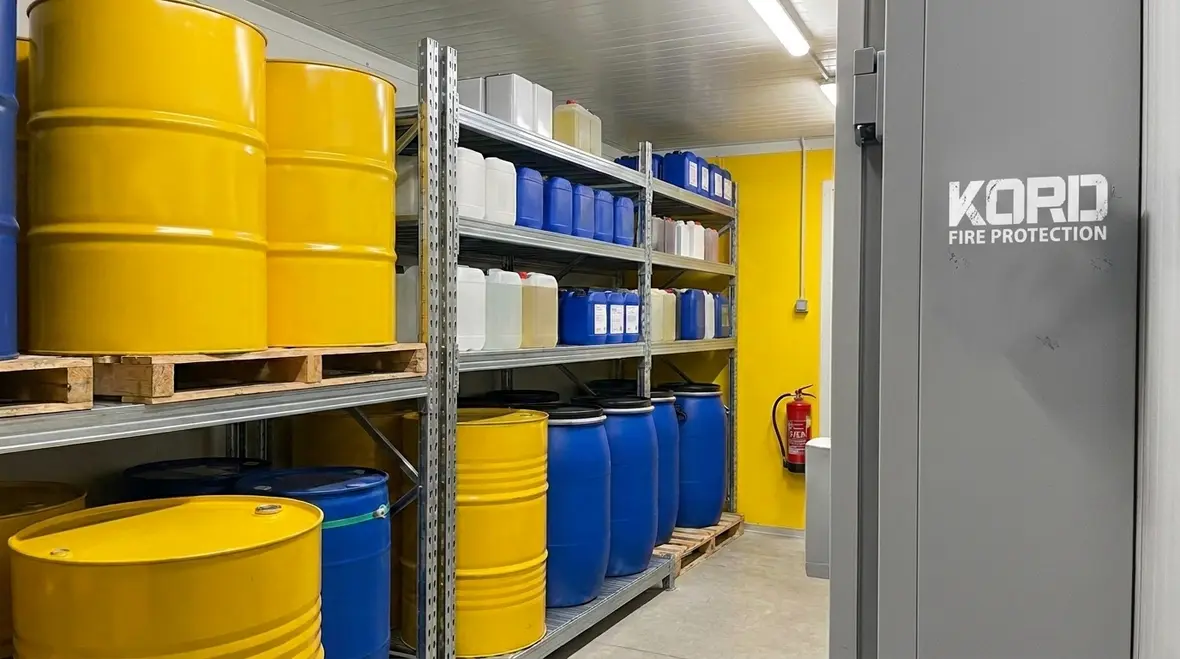
NFPA 33 Section 16.4: Storing Organic Peroxides Safely
Quick Answer: NFPA 33 Section 16.4 requires hazard informed storage controls for organic peroxides, including compatibility management, temperature and ventilation controls, segregation practices, and inspection readiness. Following the NFPA 33 organic peroxide storage requirements helps facilities prevent decomposition, leakage, and fire escalation while supporting defensible compliance.
For facilities building a stronger compliance program, it also helps to review warehouse fire protection strategy planning early, especially where chemical storage, staging, and inspection workflows overlap.
Why NFPA 33 organic peroxide storage requirements matter in day to day operations
Organic peroxides present a distinctive fire and process safety challenge because they can decompose under heat, contamination, or confinement. In commercial, industrial, and retail settings, the compliance issue rarely stays theoretical. It shows up during routine receiving, inventory rotation, housekeeping audits, equipment checks, and emergency readiness drills.
NFPA 33 provides the framework for practical controls so facilities can maintain safe storage conditions before an incident starts. Section 16.4 focuses on operational safeguards that reduce the likelihood of decomposition and limit the consequences if abnormal conditions occur. For facility managers, this means designing storage areas and routines that work in real workflows, not just on paper.
What NFPA 33 Section 16.4 expects for organic peroxide storage
NFPA 33 Section 16.4 centers on controlling the conditions that drive peroxide decomposition and preventing release pathways that can intensify a fire scenario. The core themes typically include:
- Proper classification and compatibility. Storage practices must reflect the peroxide type and the compatibility limitations that prevent dangerous interactions.
- Temperature control and monitoring. Storage conditions must maintain peroxide stability within the limits established for the specific product packaging and hazard profile.
- Segregation and spatial separation. Storage must prevent mixing with incompatible materials, ignition sources, and contaminants that can accelerate decomposition.
- Containment and spill readiness. Facilities need a method to manage leaks or spills promptly while maintaining safe access and ventilation.
- Integrity of storage equipment. Containers, secondary containment, and storage rooms or cabinets must remain in reliable condition.
Operationally, the compliance performance depends on whether staff follow a repeatable receiving and inspection process, and whether the storage area stays aligned with the hazard conditions required for each product.
How facilities implement safe segregation, compatibility, and inventory control
The most common failure point in organic peroxide storage programs is not the absence of a policy. It is the breakdown of consistency across receiving, storage, staging, and maintenance activities.
1) Receiving controls that prevent the wrong product from entering the wrong space
Facilities should standardize receiving checks that verify:
- The peroxide name or identifier matches the chemical documentation.
- The packaging condition shows no damage, loss of integrity, or evidence of contamination.
- The required storage condition, including temperature limits, matches the peroxide’s hazard requirements.
When facilities skip or shortcut these checks, they increase the probability of misplacement or improper stacking. Misplacement can turn a localized release into a wider decomposition event.
2) Compatibility based layout for storage rooms, cabinets, and staging zones
Segregation must consider more than “same chemical goes together.” Compatibility also depends on contaminants and adjacent materials. A commercial site may store peroxide drums near solvents, flammables, oxidizers, or cleaning agents. NFPA 33 organic peroxide storage requirements aim to prevent interactions that can elevate heat or reactivity.
To make segregation auditable, the facility should label storage locations clearly, maintain a mapping or inventory grid, and restrict access so that only trained personnel can make substitutions or changes.
3) Inventory rotation that prevents stale or out of condition peroxide containers
Organic peroxides can have sensitivity to time and environmental factors. A robust rotation practice reduces the chance of storing questionable containers for long periods. Facilities should track lot information, expiration or shelf life, and confirm that containers remain in the correct state for storage.
Temperature control, ventilation, and containment mechanisms that prevent escalation
Safe storage under NFPA 33 depends on keeping peroxide stability. That means the building and the equipment supporting the storage area must work as intended every day.
Temperature control: keep stability within the allowable envelope
Facilities should use temperature monitoring designed for reliability. This typically includes continuous or frequently checked temperature measurement, alarm thresholds aligned with the product requirements, and documented response procedures for excursions.
Common operational gaps include:
- Alarms that no one responds to because ownership is unclear.
- Temperature sensors that are out of calibration or poorly located.
- Storage areas that drift from setpoints because maintenance deferred repairs.
When temperature control fails, peroxide decomposition risk increases. That is why maintenance and calibration routines must be scheduled and verified.
Ventilation and air management: reduce accumulation and support safe response
Ventilation must support the safe storage environment and emergency response goals. Facilities should ensure ventilation pathways remain unobstructed and that exhaust systems function properly when required.
In practice, housekeeping mistakes, blocked vents, and improper storage of packaging material can reduce ventilation effectiveness. That is why storage area inspections should include air management checks and access verification.
Containment and spill response: manage release pathways quickly
Secondary containment supports rapid containment of leakage and reduces the spread of contaminants. Facilities should confirm that spill response materials and procedures match the peroxide hazard profile and that staff know when to escalate response actions.
Containment and spill readiness also intersect with fire protection planning. When a release occurs, the ability to control the situation depends on safe access, ventilation status, and readiness of emergency procedures.
Inspection, testing, and maintenance: how compliance stays defensible
NFPA 33 organic peroxide storage requirements become defensible when facilities can demonstrate inspection results, corrective action, and ongoing equipment reliability. This requires more than periodic walk throughs.
Daily and weekly checks that staff can actually complete
Facilities should implement structured checks that cover:
- Storage area housekeeping and segregation integrity.
- Condition of containers and secondary containment.
- Verification that access controls and labels remain intact.
- Visual checks for signs of leaks, corrosion, residue, or abnormal packaging conditions.
Maintenance for refrigeration, alarms, and monitoring systems
Temperature control systems require documented maintenance. This typically includes:
- Calibration checks and verification of monitoring accuracy.
- Alarm functional testing with documented response steps.
- Preventive maintenance for refrigeration components or environmental control systems, as applicable.
Failure to maintain these systems can lead to silent deterioration. That creates a compliance gap because the storage area may appear acceptable until an excursion or release event occurs.
Commercial service partner support for ongoing compliance
Kord Fire Protection supports commercial facilities with inspection readiness, testing coordination, and maintenance planning that align with fire and life safety compliance needs. When organizations treat fire protection and storage monitoring as a managed program, they reduce downtime surprises and improve audit outcomes.
To strengthen your safety program around peroxide hazards and facility readiness, Kord Fire Protection can help align operational checklists, documentation, and testing schedules with your broader safety system. For more information, visit Kord Fire Protection or explore fire safety system documentation for compliance to tighten the paper trail that auditors always seem to love more than anyone else does.
Common compliance challenges in retail and industrial storage areas
Even well intentioned programs can drift. The following issues frequently show up during internal reviews and third party evaluations:
- Misplaced containers during staging. Temporary staging near incompatible materials can create unacceptable exposure even if the items later move.
- Inadequate labeling or unclear storage maps. If staff cannot quickly identify the correct location and separation, errors become more likely.
- Deferred maintenance on monitoring equipment. A failed temperature sensor or recurring alarm issue erodes confidence and increases risk.
- Insufficient training refreshers. Personnel turnover and partial onboarding cause inconsistencies in handling, inspection, and response steps.
- Incomplete documentation of corrective actions. Auditors look for evidence that issues get resolved and verified.
These challenges do not require reinventing the entire program. They require tightening the operational loop: receiving, placement, monitoring, inspection, corrective action, and verification.
Frequently Asked Questions
Conclusion and next step
NFPA 33 Section 16.4 focuses on preventing peroxide decomposition and limiting consequences through consistent segregation, temperature control, containment readiness, and verified maintenance. Facilities that treat monitoring, inspections, and documentation as an ongoing program stay more audit ready and respond faster when conditions drift. Contact Kord Fire Protection to review your organic peroxide storage practices, align inspection and testing schedules, and strengthen defensible compliance documentation.

Join Our Newsletter!
Get the latest fire safety tips delivered straight to your inbox From our Newsletter.



